Loading...
This comparison has not been analyzed yet.
One-time AI generation (~1 minute). Scores and timeline are already available below.
Bal Gangadhar Tilak vs Ghazi Muhammad
Bal Gangadhar Tilak leads by 6.9 pts · 2 figures compared
…
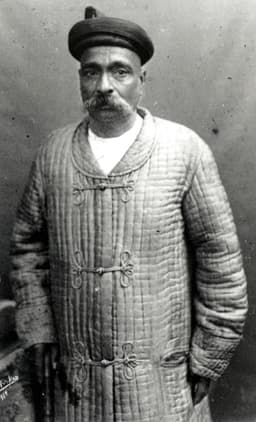
Bal Gangadhar Tilak
Revolutionary · Modern
52.9Total

Ghazi Muhammad
Revolutionary · Modern
46.0Total
Basic Information
Born
1856
1793
Died
1920
1832
Era
Modern
Modern
Nationality
India
Dagestan
Occupation
Revolutionary
Revolutionary
Civilization
Indian
Middle Eastern
Score Comparison
Military (10%)
50.0
40.0
Political (20%)
48.0
39.4
Influence (20%)
58.3
50.2
Legacy (20%)
56.0
41.7
Leadership (15%)
50.7
47.3
Strategy (15%)
45.0
60.0
TOTAL
52.9
46.0
Bal Gangadhar Tilak — Complete Timeline
1881 AD
Launch of the Maratha and Kesari NewspapersCultural◆ Major
Tilak founded the Marathi-language newspaper 'Kesari' and the English-language 'Maratha' to spread nationalist ideas. These newspapers became influential platforms for criticizing British rule and mobilizing public opinion.
MediaNationalism
Impact: nationalconstructive
1897 AD
Imprisonment for SeditionPolitical Action◆ Major
Tilak was arrested and sentenced to 18 months imprisonment for sedition after publishing articles critical of British rule. His imprisonment increased his popularity and made him a martyr for the nationalist cause.
ImprisonmentSedition
Impact: national
1905 AD
Introduction of Swadeshi MovementPolitical Action◆ Major
Bal Gangadhar Tilak promoted the Swadeshi movement, advocating for the boycott of British goods and the use of Indian-made products. This movement gained widespread support and became a key part of the Indian independence struggle.
NationalismEconomic Boycott
Impact: nationalconstructive
1908 AD
Lucky Ali TrialPolitical Action◆ Major
Tilak was tried and sentenced to six years in Mandalay prison for sedition after defending the use of violence against British officials. His trial and imprisonment further galvanized the Indian independence movement.
TrialImprisonment
Impact: national
1916 AD
Formation of the Home Rule LeaguePolitical Action◆ Major
Tilak founded the Indian Home Rule League in 1916, demanding self-government for India within the British Empire. The movement gained mass support and pressured the British government to consider political reforms.
Political MovementSelf-Government
Impact: nationalconstructive
Ghazi Muhammad — Complete Timeline
1828 AD
Proclaimed First Imam of DagestanPolitical Action
Ghazi Muhammad was elected as the first imam of the Caucasian Imamate, leading the resistance against Russian rule. He called for the implementation of Sharia law and jihad against the Russian Empire, uniting various tribes under his leadership.
Caucasian WarLeadershipJihad
Impact: regionalconstructive
1830 AD
Capture of GimryWar◆ Major
Ghazi Muhammad's forces captured the village of Gimry, which became his headquarters. This victory established his control over central Dagestan and inspired further uprisings against Russian forces.
Caucasian WarVictoryDagestan
constructive
1832 AD
Battle of GimryWar
Russian forces under General Velyaminov besieged Gimry. Ghazi Muhammad was killed in the final assault, fighting alongside his followers. His death elevated him to martyr status and inspired continued resistance under his successors.
Caucasian WarDeathMartyrdom
Impact: regionaltragic
This comparison has not been analyzed yet.
One-time AI generation (~1 minute). Scores and timeline are already available below.
Rankings
🥇
Bal Gangadhar TilakLeader
Mil: 50.0Pol: 48.0Inf: 58.3
52.9
🥈
Ghazi Muhammad
Mil: 40.0Pol: 39.4Inf: 50.2
46.0
+6.9 behind
How This Comparison Works
Algorithm
Each figure is scored on 6 dimensions (0—100 scale) based on structured historical data: Military (10%), Political (20%), Influence (20%), Legacy (20%), Leadership (15%), Strategy (15%). The weighted total produces the final ranking.
Data Sources
Scores are computed from structured sub-indicators in the database. Scale factors adjust for era (Ancient ×0.85, Modern ×1.0) and civilization size (Eastern ×1.05, Other ×0.80) to account for differences in population and military scale.
Maximum 3 Figures
Comparisons are limited to 2—3 figures to ensure readability and statistical meaningfulness.
Error Margins
±5 points per dimension — Sub-scores are derived from historical records with inherent uncertainty. Two figures within 5 points on a dimension should be considered roughly equivalent in that area.
Total Score Accuracy
±3 points overall — The weighted combination of 6 dimensions produces a total score with approximately ±3 points of uncertainty. Differences of less than 3 points are not statistically significant— the figures are effectively tied.
Known Limitations
- Historical records are incomplete and uneven across civilizations
- Figures from oral-tradition societies may be underrepresented
- Occupation labels can misclassify multi-role figures
- Scores measure capability and impact, not moral character
- Quantitative scoring is a comparison tool, not absolute truth
Capability Radar
Military (10%) — Battles & Warfare
Battles
23
45
Win Rate
30
40
Expansion
30
45
Political (20%) — Governance & Reform
Reform
70
55
Diplomacy
60
35
Economy
20
30
Influence (20%) — Cultural & Global Reach
Cultural
65
40
Global
55
30
Legacy (20%) — Historical Impact
Historical
70
45
Longevity
60
35
Leadership (15%) — Power & Stability
Tenure
30
40
Stability
40
25
Strategy (15%) — Tactics & Innovation
Strategy
37
50
Tactics
39
55
Reform
43
60
Similar Comparisons
Comments & Discussion
No comments yet. Be the first to share your thoughts!