Loading...
Bal Gangadhar Tilak vs Ho Chi Minh
Ho Chi Minh leads by 10.0 pts · 2 figures compared
…
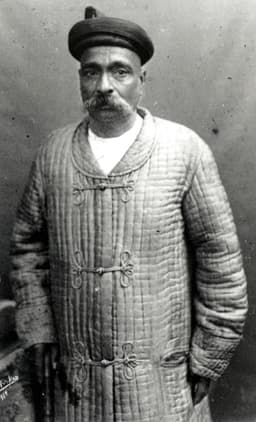
Bal Gangadhar Tilak
Revolutionary · Modern
52.9Total
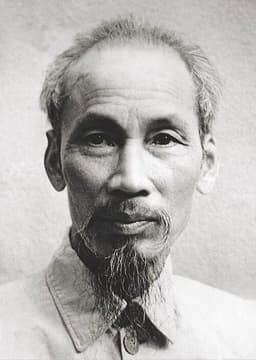
Ho Chi Minh
Revolutionary · Modern
62.9Total
Basic Information
Born
1856
1890
Died
1920
1969
Era
Modern
Modern
Nationality
India
Vietnam
Occupation
Revolutionary
Revolutionary
Civilization
Indian
Eastern
Score Comparison
Military (10%)
50.0
55.0
Political (20%)
48.0
72.0
Influence (20%)
58.3
62.0
Legacy (20%)
56.0
58.0
Leadership (15%)
50.7
72.0
Strategy (15%)
45.0
58.0
TOTAL
52.9
62.9
Bal Gangadhar Tilak — Complete Timeline
1881 AD
Launch of the Maratha and Kesari NewspapersCultural◆ Major
Tilak founded the Marathi-language newspaper 'Kesari' and the English-language 'Maratha' to spread nationalist ideas. These newspapers became influential platforms for criticizing British rule and mobilizing public opinion.
MediaNationalism
Impact: nationalconstructive
1897 AD
Imprisonment for SeditionPolitical Action◆ Major
Tilak was arrested and sentenced to 18 months imprisonment for sedition after publishing articles critical of British rule. His imprisonment increased his popularity and made him a martyr for the nationalist cause.
ImprisonmentSedition
Impact: national
1905 AD
Introduction of Swadeshi MovementPolitical Action◆ Major
Bal Gangadhar Tilak promoted the Swadeshi movement, advocating for the boycott of British goods and the use of Indian-made products. This movement gained widespread support and became a key part of the Indian independence struggle.
NationalismEconomic Boycott
Impact: nationalconstructive
1908 AD
Lucky Ali TrialPolitical Action◆ Major
Tilak was tried and sentenced to six years in Mandalay prison for sedition after defending the use of violence against British officials. His trial and imprisonment further galvanized the Indian independence movement.
TrialImprisonment
Impact: national
1916 AD
Formation of the Home Rule LeaguePolitical Action◆ Major
Tilak founded the Indian Home Rule League in 1916, demanding self-government for India within the British Empire. The movement gained mass support and pressured the British government to consider political reforms.
Political MovementSelf-Government
Impact: nationalconstructive
Ho Chi Minh — Complete Timeline
1941 AD
Establishment of the Viet MinhPolitical Action◆ Major
Ho Chi Minh founded the Viet Minh (League for the Independence of Vietnam) in southern China. This coalition of nationalist and communist groups became the primary force for Vietnamese independence, fighting both Japanese occupation and French colonialism.
Viet MinhIndependence MovementWorld War II
Impact: nationalconstructive
1945 AD
Declaration of Independence of VietnamPolitical Action
Ho Chi Minh proclaimed the Democratic Republic of Vietnam in Hanoi's Ba Dinh Square, citing the US Declaration of Independence. This established the Viet Minh government and began the struggle for independence from French colonial rule.
IndependenceVietnamDecolonization
Impact: nationalconstructive
1954 AD
Battle of Dien Bien PhuWar
Ho Chi Minh's Viet Minh forces, under General Giap, defeated the French garrison at Dien Bien Phu. This victory ended French colonial rule in Indochina and led to the Geneva Accords dividing Vietnam at the 17th parallel.
Vietnam WarDecolonizationFrench Indochina
Impact: regional
Geneva AccordsPolitical Action◆ Major
Ho Chi Minh's delegation signed the Geneva Accords, temporarily dividing Vietnam at the 17th parallel. The agreement promised nationwide elections in 1956, which were never held, leading to the permanent division of Vietnam.
Geneva ConferenceDivision of VietnamDiplomacy
Impact: regional
1959 AD
Start of the Vietnam WarWar
Ho Chi Minh's government in North Vietnam authorized armed struggle against the US-backed South Vietnamese regime. This escalated into the Vietnam War, a prolonged conflict that resulted in millions of deaths and US withdrawal in 1973.
Vietnam WarCold WarCommunism
Impact: globaldestructive
Expert Analysis
Bal Gangadhar Tilak vs Ho Chi Minh
# The Revolutionary’s Path: Ho Chi Minh and Bal Gangadhar Tilak
In the summer of 1911, a young Vietnamese man boarded a French steamer in Saigon, working as a galley hand, bound for Marseille. He called himself Ba, and he was twenty-one years old. Half a world away, in the dusty courtroom of a British magistrate in Bombay, a fifty-two-year-old Indian lawyer named Bal Gangadhar Tilak stood trial for sedition, his voice carrying the weight of a nation that had not yet been born. Both men would become fathers of their countries’ independence movements. Yet one would see his nation free in his lifetime, leading it through war and revolution; the other would die in 1920, his dream of *Swaraj* still a distant hope, his legacy a flame passed to others. Why did their paths diverge so sharply? The answer lies not only in their characters but in the very soil of their eras.
Origins
Ho Chi Minh was born Nguyen Sinh Cung in 1890 in Nghe An province, a region of Vietnam known for its fierce resistance to French colonial rule. His father, a Confucian scholar, lost his job for refusing to learn French, and the young Ho grew up in a world where tradition clashed violently with foreign domination. He left home young, traveling the globe as a sailor and cook, living in London, New York, and Paris. By the time he founded the Vietnamese Communist Party in 1930, he had absorbed the ideologies of Lenin, the frustrations of colonial subjects, and the pragmatism of a man who had seen empires from their kitchens.
Bal Gangadhar Tilak, born in 1856 in Ratnagiri, Maharashtra, came from a different world. His father was a schoolteacher and Sanskrit scholar, and Tilak was raised in the heart of British India’s educational system. He earned a law degree, taught mathematics, and immersed himself in Hindu scripture and Maratha history. While Ho Chi Minh’s identity was forged in exile and poverty, Tilak’s was shaped by the intellectual ferment of a colonized elite—men who could quote Shakespeare and the Vedas in the same breath. His rebellion was not that of a rootless wanderer but of a rooted scholar who demanded the British honor their own promises.
Rise to Power
Ho Chi Minh’s rise was slow, patient, and global. He spent decades organizing among Vietnamese expatriates in China and Thailand, learning from the Chinese Communist Party, and courting Soviet support. His turning point came in 1941, when he established the Viet Minh, a nationalist coalition that blended communist ideology with the universal cry for independence. In 1945, he declared Vietnam’s independence in Hanoi’s Ba Dinh Square, quoting the American Declaration of Independence—a masterstroke of political theater. But the French returned, and Ho’s path became one of guerrilla war.
Tilak’s rise was meteoric and confrontational. In 1881, he launched the newspapers *Kesari* and *Maratha*, turning journalism into a weapon. By 1897, he was imprisoned for sedition, his articles calling for resistance against British rule. He became the voice of the “extremist” faction within the Indian National Congress, demanding *Swaraj* (self-rule) not as a distant goal but as an immediate right. In 1908, he was sentenced to six years in Mandalay prison for defending the use of violence against British officials. When he emerged, he was a martyr. In 1916, he founded the Home Rule League, demanding self-government within the British Empire. His power came from the street, the courtroom, and the newspaper—not from the jungle or the diplomatic backchannel.
Leadership & Governance
Ho Chi Minh was a master of strategy and adaptation. He led a war against France that culminated in the Battle of Dien Bien Phu in 1954, where General Vo Nguyen Giap’s forces crushed the French garrison. The Geneva Accords that followed temporarily divided Vietnam at the 17th parallel, but Ho accepted this as a tactical pause. When the Vietnam War began in 1959, he authorized armed struggle against the US-backed South, understanding that patience and sacrifice would outlast American will. His leadership was austere, charismatic, and deeply ideological—yet also pragmatic. He could quote Confucius to a peasant and Lenin to a comrade.
Tilak was a different kind of leader. He never commanded an army or governed a state. His genius was in mobilizing public opinion and creating a political vocabulary for Indian nationalism. He introduced the Swadeshi movement in 1905, urging Indians to boycott British goods and revive indigenous industries. He revived the Ganpati festival as a public celebration of Hindu culture, weaving religion into politics. His leadership was fiery, uncompromising, and at times divisive—he alienated moderate Congress leaders like Gopal Krishna Gokhale. But he understood that for a colonized people, the first revolution must be in the mind.
Triumph & Tragedy
Ho Chi Minh’s greatest triumph was seeing the French defeated at Dien Bien Phu in 1954—a victory that echoed across the colonial world. His tragedy was that he did not live to see Vietnam unified. He died in 1969, six years before Saigon fell. The war he started consumed millions of lives and left his country scarred, but his vision of a unified, independent Vietnam was realized.
Tilak’s triumph was more subtle. He transformed Indian nationalism from a polite petitioning of the British into a mass movement. His imprisonment in Mandalay turned him into a legend. But his tragedy was that he died in 1920, just as Mahatma Gandhi was rising. He never saw independence in 1947. He was the fire that burned before the dawn, but not the light that guided the final march.
Character & Destiny
Ho Chi Minh was a man of masks and patience. He called himself “Uncle Ho,” projecting humility and wisdom. He could be ruthless—his regime purged rivals—but he was also capable of extraordinary political subtlety. His character was shaped by decades of exile; he learned to wait, to compromise, and to strike when the moment was right. His destiny was to be a revolutionary who became a statesman, leading a war that defined the Cold War.
Tilak was a man of conviction and confrontation. He famously declared, “Swaraj is my birthright, and I shall have it.” He was willing to go to prison, to suffer, and to provoke. He was less a strategist than a prophet, less a diplomat than a tribune. His character was forged in the classroom and the courtroom, not the jungle or the conference hall. His destiny was to be the father of Indian unrest, as the British called him—a title he accepted with pride.
Legacy
Ho Chi Minh is remembered as the founding father of modern Vietnam. His image adorns every home and office in the country. His legacy is both a nation and a war—a symbol of anti-colonial resistance that inspired movements from Africa to Latin America. Yet his legacy is also complicated: the Vietnam he created is a communist state that has since embraced market capitalism, and his methods remain controversial.
Tilak is remembered as the “Father of Indian Unrest,” a title that has become one of honor. He is revered in Maharashtra, but his influence is felt across India. His ideas of Swadeshi and Swaraj were absorbed by Gandhi and later leaders. He did not lead India to independence, but he made independence thinkable. His legacy is not a state but a spirit—the belief that freedom must be demanded, not requested.
Conclusion
Ho Chi Minh and Bal Gangadhar Tilak were both revolutionaries, but they lived in different ages of empire. Tilak fought the British when they were at their zenith, secure in their power and confident in their mission. Ho fought the French and then the Americans when the colonial world was crumbling, and the superpowers were exhausted. Tilak’s tools were newspapers, courtrooms, and festivals; Ho’s were jungles, tunnels, and diplomacy. One died before his dream came true; the other lived to see it, but not to enjoy it. Both understood that the hardest part of revolution is not the fighting—it is the waiting.
Rankings
🥇
Ho Chi MinhLeader
Mil: 55.0Pol: 72.0Inf: 62.0
62.9
🥈
Bal Gangadhar Tilak
Mil: 50.0Pol: 48.0Inf: 58.3
52.9
+10.0 behind
How This Comparison Works
Algorithm
Each figure is scored on 6 dimensions (0—100 scale) based on structured historical data: Military (10%), Political (20%), Influence (20%), Legacy (20%), Leadership (15%), Strategy (15%). The weighted total produces the final ranking.
Data Sources
Scores are computed from structured sub-indicators in the database. Scale factors adjust for era (Ancient ×0.85, Modern ×1.0) and civilization size (Eastern ×1.05, Other ×0.80) to account for differences in population and military scale.
Maximum 3 Figures
Comparisons are limited to 2—3 figures to ensure readability and statistical meaningfulness.
Error Margins
±5 points per dimension — Sub-scores are derived from historical records with inherent uncertainty. Two figures within 5 points on a dimension should be considered roughly equivalent in that area.
Total Score Accuracy
±3 points overall — The weighted combination of 6 dimensions produces a total score with approximately ±3 points of uncertainty. Differences of less than 3 points are not statistically significant— the figures are effectively tied.
Known Limitations
- Historical records are incomplete and uneven across civilizations
- Figures from oral-tradition societies may be underrepresented
- Occupation labels can misclassify multi-role figures
- Scores measure capability and impact, not moral character
- Quantitative scoring is a comparison tool, not absolute truth
Capability Radar
Military (10%) — Battles & Warfare
Battles
23
65
Win Rate
30
60
Expansion
30
55
Political (20%) — Governance & Reform
Reform
70
85
Diplomacy
60
90
Economy
20
40
Influence (20%) — Cultural & Global Reach
Cultural
65
75
Global
55
75
Legacy (20%) — Historical Impact
Historical
70
85
Longevity
60
70
Leadership (15%) — Power & Stability
Tenure
30
70
Stability
40
50
Strategy (15%) — Tactics & Innovation
Strategy
37
80
Tactics
39
70
Reform
43
75
Similar Comparisons
Comments & Discussion
TilakTheStrategist6/16/2026
Tilak was the smarter revolutionary. Ho Chi Minh traded on Marxist slogans that alienated half his potential allies, but Tilak built the Ganapati and Shivaji festivals to unite Hindus across caste lines. That’s nation-building from the ground up, not from Moscow’s playbook. Ho’s success was circumstantial—a vacuum left by Japan’s defeat. Tilak’s 1907 Surat split with moderates was tactical suicide? No, it was honesty about colonial reality. He lit the fire; others just fanned it.
革命火种师6/16/2026
把信教群众和民族精英强行缝合?霍志明那套国际主义在越南丛林里根本水土不服,他晚年搞的土改杀人比法国兵还狠。提拉克至少知道本土根基在哪——用《薄伽梵歌》的“无私行动”动员农民,而不是空谈阶级。霍从巴黎和会空手而归时,提拉克的《狮报》已在马哈拉施特拉种下自治基因。谁更懂自己的土地?别拿胜利者偏见当真理。