Loading...
Bal Gangadhar Tilak vs Jose Rizal
Bal Gangadhar Tilak leads by 6.2 pts · 2 figures compared
…
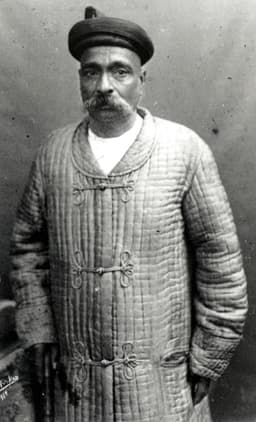
Bal Gangadhar Tilak
Revolutionary · Modern
52.9Total
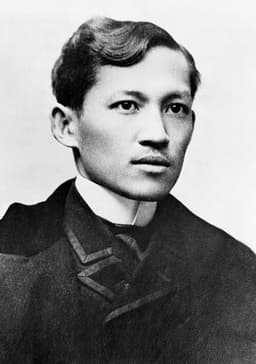
Jose Rizal
Revolutionary · Modern
46.7Total
Basic Information
Born
1856
1861
Died
1920
1896
Era
Modern
Modern
Nationality
India
Philippines
Occupation
Revolutionary
Revolutionary
Civilization
Indian
Eastern
Score Comparison
Military (10%)
50.0
11.9
Political (20%)
48.0
33.6
Influence (20%)
58.3
62.0
Legacy (20%)
56.0
58.0
Leadership (15%)
50.7
40.4
Strategy (15%)
45.0
44.5
TOTAL
52.9
46.7
Bal Gangadhar Tilak — Complete Timeline
1881 AD
Launch of the Maratha and Kesari NewspapersCultural◆ Major
Tilak founded the Marathi-language newspaper 'Kesari' and the English-language 'Maratha' to spread nationalist ideas. These newspapers became influential platforms for criticizing British rule and mobilizing public opinion.
MediaNationalism
Impact: nationalconstructive
1897 AD
Imprisonment for SeditionPolitical Action◆ Major
Tilak was arrested and sentenced to 18 months imprisonment for sedition after publishing articles critical of British rule. His imprisonment increased his popularity and made him a martyr for the nationalist cause.
ImprisonmentSedition
Impact: national
1905 AD
Introduction of Swadeshi MovementPolitical Action◆ Major
Bal Gangadhar Tilak promoted the Swadeshi movement, advocating for the boycott of British goods and the use of Indian-made products. This movement gained widespread support and became a key part of the Indian independence struggle.
NationalismEconomic Boycott
Impact: nationalconstructive
1908 AD
Lucky Ali TrialPolitical Action◆ Major
Tilak was tried and sentenced to six years in Mandalay prison for sedition after defending the use of violence against British officials. His trial and imprisonment further galvanized the Indian independence movement.
TrialImprisonment
Impact: national
1916 AD
Formation of the Home Rule LeaguePolitical Action◆ Major
Tilak founded the Indian Home Rule League in 1916, demanding self-government for India within the British Empire. The movement gained mass support and pressured the British government to consider political reforms.
Political MovementSelf-Government
Impact: nationalconstructive
Jose Rizal — Complete Timeline
1887 AD
Publication of Noli Me TangereCultural
Rizal published his first novel, Noli Me Tangere, in Berlin. The book exposed the corruption and abuses of Spanish colonial rule and the Catholic Church in the Philippines, sparking nationalist sentiment among Filipinos.
LiteratureNationalismColonial Critique
Impact: nationalprogressive
1891 AD
Publication of El FilibusterismoCultural◆ Major
Rizal published his second novel, El Filibusterismo, in Ghent, Belgium. A darker sequel to Noli Me Tangere, it advocated for revolution and further criticized Spanish oppression, intensifying calls for reform and independence.
LiteratureRevolutionColonial Critique
Impact: nationalprogressive
1892 AD
Exile to DapitanPolitical Action◆ Major
Rizal was exiled by Spanish authorities to Dapitan in Mindanao for his alleged involvement in revolutionary activities. During his four-year exile, he practiced medicine, taught, and conducted scientific research, but remained under surveillance.
ExileSpanish ColonialismDapitan
Impact: nationaltragic
1896 AD
Execution of José RizalPolitical Action
Rizal was executed by firing squad in Manila on charges of sedition and rebellion, following a trial by Spanish military court. His martyrdom galvanized the Philippine Revolution, making him a national hero and symbol of resistance.
ExecutionMartyrdomPhilippine Revolution
Impact: nationaltragic
Expert Analysis
Jose Rizal vs Bal Gangadhar Tilak
# Two Martyrs, Two Paths: Rizal and Tilak and the Birth of Asian Nationalism
In the summer of 1908, a courtroom in Bombay fell silent as Bal Gangadhar Tilak, a man already called the father of Indian unrest, heard his sentence: six years of exile in the distant prison of Mandalay. Twelve years earlier and five thousand miles away, another Asian intellectual had faced his own final judgment—José Rizal, standing before a Spanish firing squad in Manila, turned to face his executioners and then fell, his body riddled with bullets at age thirty-five. Both men died for their nations, yet one died by violence and the other survived to see his dream take shape. Why did their fates diverge so sharply? The answer lies not merely in their circumstances, but in the very different philosophies they brought to the struggle against empire.
Origins
José Rizal was born in 1861 into a prosperous Filipino *ilustrado* family in Calamba, Laguna. His world was one of Catholic piety and Spanish education, where a bright native son could study medicine in Madrid and Paris, write poetry in German, and sculpt in clay. Rizal was a polymath in the European mold—an ophthalmologist, novelist, linguist, and ethnologist whose mind had been shaped by the Enlightenment ideals of Voltaire and the liberal reforms of nineteenth-century Spain. He was, in every sense, a creature of the colonial system he would come to challenge.
Bal Gangadhar Tilak, born five years earlier in 1856 in Ratnagiri, Maharashtra, came from a different world entirely. His father was a schoolteacher and Sanskrit scholar, and young Tilak was steeped in Hindu scripture and Maratha history from childhood. Where Rizal looked to Europe for his intellectual tools, Tilak looked inward—to the *Bhagavad Gita*, to the legacy of Shivaji, to the festivals and pilgrimages that bound India's villages together. He studied law but never felt at home in British courts. His mind was forged in the tension between a proud ancient civilization and an occupying power that dismissed it as barbaric.
Rise to Power
Rizal entered history through the printed page. In 1887, in Berlin, he published *Noli Me Tangere*, a novel that peeled back the veneer of Spanish colonial benevolence to reveal a world of clerical corruption, official brutality, and the degradation of Filipinos in their own land. The book was an earthquake. When he followed it in 1891 with *El Filibusterismo*, a darker and more incendiary sequel published in Ghent, the Spanish authorities understood they faced not a mere writer but a revolutionary armed with ink.
Tilak, meanwhile, took a different road. In 1881 he launched the newspapers *Kesari* (in Marathi) and *Maratha* (in English), using journalism as his weapon. But where Rizal wrote novels for the educated elite, Tilak spoke to the masses. He understood that Indian nationalism could not be built in English-speaking drawing rooms—it had to be rooted in the soil, in the temples and marketplaces where ordinary Indians lived. He transformed the Ganpati festival from a private family observance into a public celebration of Maratha pride. He turned the annual Shivaji commemoration into a political rally. By 1897, when he was imprisoned for sedition after publishing articles critical of British rule, he had already become a symbol of resistance that no jail could contain.
Leadership & Governance
The contrast in their leadership styles is stark. Rizal was a reformer who believed in the power of reason and education. He founded the La Liga Filipina, a civic organization that advocated peaceful change through legal means—representation in the Spanish Cortes, equality before the law, and Filipino priests to replace Spanish friars. He explicitly rejected violence, writing that "the pen is mightier than the sword." His leadership was intellectual, almost Socratic: he sought to awaken his people through truth, not to command them through force.
Tilak was a different breed entirely. He was the first Indian leader to declare that "Swaraj is my birthright and I shall have it." Where Rizal petitioned, Tilak demanded. Where Rizal wrote novels, Tilak organized boycotts. In 1905, he launched the Swadeshi movement, calling on Indians to burn British cloth and embrace their own products. It was a strategy of economic warfare that hit the British where it hurt—in their pockets. He founded the Home Rule League in 1916, modeling it on the Irish movement, and built a political organization that could actually negotiate with the British. His genius was not in philosophy but in mobilization.
Triumph & Tragedy
Rizal's greatest moment was also his last. In December 1896, after a show trial by Spanish military court, he was sentenced to death. On the morning of his execution, he wrote his farewell poem "Mi Último Adiós," hid it in an alcohol burner, and walked calmly to Bagumbayan Field. He refused a blindfold and turned to face the firing squad. His death made him a martyr, and the revolution he had never led exploded in his wake. The tragedy is that he died believing his nonviolent approach had failed—that his novels had only brought suffering to his family and friends.
Tilak's triumph came in survival. He endured six years in Mandalay, reading the *Gita* and writing his commentary on its philosophy of action without attachment to results. When he emerged in 1914, he was more powerful than ever. He negotiated with the British, allied with Gandhi (though they disagreed profoundly on methods), and lived to see the Montagu-Chelmsford Reforms of 1919, which granted Indians limited self-government. He died in 1920 at age sixty-four, not as a martyr but as a statesman who had laid the foundations for independence.
Character & Destiny
What drove these different outcomes? Rizal was a man of the nineteenth century—optimistic, rational, believing that truth would inevitably triumph. His fatal flaw was a faith that the Spanish Empire could be reformed from within. He refused to lead the revolution because he believed violence would corrupt the Filipino soul. "I do not want a revolution," he wrote, "for I see its unfortunate consequences." This moral clarity was also a political blindness. He could not see that empires do not reform themselves.
Tilak was a man of the twentieth century—pragmatic, relentless, understanding that power yields only to power. He embraced the *Gita*'s teaching that one must act without attachment to outcomes, which freed him from the paralysis of moral absolutism. He could organize boycotts, defend revolutionaries in court, and then negotiate with the same British officials he had denounced. His flexibility was his strength. He understood that nationalism was not a philosophy to be perfected but a movement to be built.
Legacy
Today, Rizal's image appears on the Philippine one-peso coin, and his novels are required reading in every Filipino school. He is remembered as the national hero, the man whose death gave birth to a nation. But his legacy is ambiguous—a saint of nonviolence whose death inspired a bloody revolution.
Tilak's legacy is more complex. He is revered as the "Lokmanya" (beloved of the people) and credited with making Indian nationalism a mass movement. But his embrace of Hindu symbolism also sowed seeds of division, and his defense of violence alienated Gandhi's followers. He is remembered not as a martyr but as a builder—the man who transformed a petitioning elite into a demanding nation.
Conclusion
Standing at the edge of the twentieth century, both men faced the same question: how does a colonized people reclaim their dignity? Rizal answered with the pen, Tilak with the podium. One died believing he had failed; the other died knowing his work was unfinished. Yet both understood something that their European contemporaries often missed—that nationalism in Asia would be not a copy of Western models but a fusion of local traditions and modern aspirations. Rizal gave his people a story; Tilak gave his people a movement. Neither was complete without the other. And in the long arc of decolonization, both the martyr and the organizer proved essential.
Rankings
🥇
Bal Gangadhar TilakLeader
Mil: 50.0Pol: 48.0Inf: 58.3
52.9
🥈
Jose Rizal
Mil: 11.9Pol: 33.6Inf: 62.0
46.7
+6.2 behind
How This Comparison Works
Algorithm
Each figure is scored on 6 dimensions (0—100 scale) based on structured historical data: Military (10%), Political (20%), Influence (20%), Legacy (20%), Leadership (15%), Strategy (15%). The weighted total produces the final ranking.
Data Sources
Scores are computed from structured sub-indicators in the database. Scale factors adjust for era (Ancient ×0.85, Modern ×1.0) and civilization size (Eastern ×1.05, Other ×0.80) to account for differences in population and military scale.
Maximum 3 Figures
Comparisons are limited to 2—3 figures to ensure readability and statistical meaningfulness.
Error Margins
±5 points per dimension — Sub-scores are derived from historical records with inherent uncertainty. Two figures within 5 points on a dimension should be considered roughly equivalent in that area.
Total Score Accuracy
±3 points overall — The weighted combination of 6 dimensions produces a total score with approximately ±3 points of uncertainty. Differences of less than 3 points are not statistically significant— the figures are effectively tied.
Known Limitations
- Historical records are incomplete and uneven across civilizations
- Figures from oral-tradition societies may be underrepresented
- Occupation labels can misclassify multi-role figures
- Scores measure capability and impact, not moral character
- Quantitative scoring is a comparison tool, not absolute truth
Capability Radar
Military (10%) — Battles & Warfare
Battles
23
14
Win Rate
30
21
Expansion
30
22
Political (20%) — Governance & Reform
Reform
70
15
Diplomacy
60
20
Economy
20
5
Influence (20%) — Cultural & Global Reach
Cultural
65
75
Global
55
65
Legacy (20%) — Historical Impact
Historical
70
80
Longevity
60
75
Leadership (15%) — Power & Stability
Tenure
30
0
Stability
40
5
Strategy (15%) — Tactics & Innovation
Strategy
37
27
Tactics
39
28
Reform
43
28
Similar Comparisons
Comments & Discussion
RizalRevolution6/16/2026
Rizal's fatal flaw was trusting Spanish reform. Tilak understood that colonial masters never grant freedom—it must be seized. Rizal's novels educated, but Tilak's Ganapati festivals mobilized millions. One wrote beautifully for the elite; the other spoke fiercely to the masses. That's why Rizal got a firing squad and Tilak got exile. The pen is weak without the crowd behind it.
碑石与火药6/16/2026
把Rizal比作甘地式的改良派完全误解了他。他的《不许犯我》不是请愿书,是手术刀——解剖了整个殖民体系。但问题在于他相信手术刀能治愈病人,而不是直接换掉病人。Tilak聪明,知道病人已病入膏肓。Rizal错在太文明,文明到以为暴政也有良心。
DataDeity6/16/2026
Comparing their death tolls alone tells the story. Rizal's execution sparked a revolution that killed over 200,000 Filipinos within a decade. Tilak's exile? Zero immediate casualties. Tilak's methodology—mass media, public festivals, legal defense—produced measurable results without mass slaughter. Statistically, Tilak's path was objectively superior. Rizal's martyrdom was beautiful cinema; Tilak's was effective engineering.
诗人与斗士6/16/2026
Tilak骂英国人"统治者残酷如猛虎"时,Rizal还在写诗问"为什么我们跪着祈祷"?一个是战士,一个是诗人,区别就在这里。Rizal的遗嘱是"原谅所有人",Tilak的宣言是"自由是我的天赋权利"。菲律宾人等了四百年才明白,原谅解决不了问题,斗争才行。可惜Rizal到死都没弄懂这个道理。