Loading...
Bal Gangadhar Tilak vs Lajos Kossuth
Bal Gangadhar Tilak leads by 0.3 pts · 2 figures compared
…
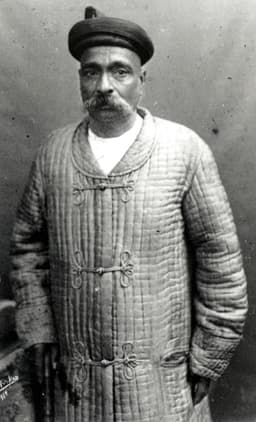
Bal Gangadhar Tilak
Revolutionary · Modern
52.9Total

Lajos Kossuth
Revolutionary · Modern
52.6Total
Basic Information
Born
1856
1802
Died
1920
1894
Era
Modern
Modern
Nationality
India
Hungary
Occupation
Revolutionary
Revolutionary
Civilization
Indian
Western
Score Comparison
Military (10%)
50.0
50.0
Political (20%)
48.0
68.0
Influence (20%)
58.3
58.0
Legacy (20%)
56.0
49.2
Leadership (15%)
50.7
47.3
Strategy (15%)
45.0
35.0
TOTAL
52.9
52.6
Bal Gangadhar Tilak — Complete Timeline
1881 AD
Launch of the Maratha and Kesari NewspapersCultural◆ Major
Tilak founded the Marathi-language newspaper 'Kesari' and the English-language 'Maratha' to spread nationalist ideas. These newspapers became influential platforms for criticizing British rule and mobilizing public opinion.
MediaNationalism
Impact: nationalconstructive
1897 AD
Imprisonment for SeditionPolitical Action◆ Major
Tilak was arrested and sentenced to 18 months imprisonment for sedition after publishing articles critical of British rule. His imprisonment increased his popularity and made him a martyr for the nationalist cause.
ImprisonmentSedition
Impact: national
1905 AD
Introduction of Swadeshi MovementPolitical Action◆ Major
Bal Gangadhar Tilak promoted the Swadeshi movement, advocating for the boycott of British goods and the use of Indian-made products. This movement gained widespread support and became a key part of the Indian independence struggle.
NationalismEconomic Boycott
Impact: nationalconstructive
1908 AD
Lucky Ali TrialPolitical Action◆ Major
Tilak was tried and sentenced to six years in Mandalay prison for sedition after defending the use of violence against British officials. His trial and imprisonment further galvanized the Indian independence movement.
TrialImprisonment
Impact: national
1916 AD
Formation of the Home Rule LeaguePolitical Action◆ Major
Tilak founded the Indian Home Rule League in 1916, demanding self-government for India within the British Empire. The movement gained mass support and pressured the British government to consider political reforms.
Political MovementSelf-Government
Impact: nationalconstructive
Lajos Kossuth — Complete Timeline
1848 AD
Hungarian Revolution of 1848Political Action◆ Major
Lajos Kossuth emerged as a leader of the Hungarian Revolution against Habsburg rule. He gave a famous speech demanding constitutional reforms and national independence.
RevolutionIndependenceHabsburg
Impact: regional
1849 AD
Defeat and ExileWar◆ Major
The Hungarian revolutionary army was defeated by the combined forces of Austria and Russia. Kossuth fled into exile, first to the Ottoman Empire and later to the United States and Europe.
DefeatExile
Impact: regionaltragic
Declaration of Hungarian IndependencePolitical Action◆ Major
Lajos Kossuth declared Hungary's independence from the Habsburg Empire and was appointed Governor-President. The declaration was a key moment in the revolution.
IndependenceDeclaration
Impact: regionalconstructive
1851 AD
Exile in the United StatesPolitical Action
Lajos Kossuth toured the United States, giving speeches to raise support for Hungarian independence. He was received as a hero by many Americans but failed to secure official intervention.
ExileDiplomacyUnited States
Impact: global
Expert Analysis
Origins
Bal Gangadhar Tilak was born on 23 July 1856 in Ratnagiri, Maharashtra, into a middle-class Chitpavan Brahmin family. His father, Gangadhar Tilak, was a schoolteacher and a Sanskrit scholar. Tilak studied at the Deccan College in Pune and later earned a law degree from the University of Bombay. His early exposure to Sanskrit texts and Western education shaped his nationalist ideology.
Lajos Kossuth was born on 19 September 1802 in Monok, Hungary, into a Lutheran noble family. His father, Laszlo Kossuth, was a lawyer. Kossuth studied at the University of Pest, focusing on law and politics. He worked as a lawyer and later as a journalist, advocating for Hungarian national rights within the Habsburg Empire.
Rise to Power
Tilak entered politics in the 1880s, joining the Indian National Congress in 1890. He quickly became a leader of the extremist faction, advocating for direct action against British rule. In 1896-1897, he organized the Swadeshi movement and the Boycott of British goods, following the partition of Bengal in 1905. His newspapers 'Kesari' and 'Maratha', launched in 1881, became powerful tools for spreading nationalist ideas. His imprisonment for sedition in 1897 (18 months) and again in 1908 (six years in Mandalay) transformed him into a martyr and a national hero.
Kossuth rose to prominence in the 1830s as a journalist and member of the Hungarian Diet. In 1841, he founded the newspaper 'Pesti Hirlap', which became the voice of Hungarian nationalism. His demand for constitutional reforms and civil liberties made him a leading figure in the Hungarian Revolution of 1848. In April 1849, he declared Hungary's independence from the Habsburgs and was appointed Governor-President. His leadership united various factions but also alienated some minority groups.
Leadership & Governance
Tilak's leadership style was confrontational and mass-oriented. He pioneered the use of religious symbols (like the Ganapati festival) and public spectacles to mobilize the masses. He advocated for Swaraj (self-rule) as a birthright and emphasized the importance of education and self-reliance. His governance approach was decentralized, focusing on building local networks of support through schools, newspapers, and public meetings. He scored 50.7 in leadership, reflecting his ability to inspire but also his authoritarian tendencies.
Kossuth led through oratory and legal acumen. As Governor-President, he attempted to implement liberal reforms, including the emancipation of serfs and the establishment of a responsible ministry. However, his governance was hampered by the ongoing war and internal divisions. He struggled to maintain unity among Hungarians and with ethnic minorities, which ultimately weakened the revolution. His leadership score of 47.3 indicates his charisma but also his tactical shortcomings.
Triumph & Tragedy
Tilak's greatest triumph was his role in transforming the Indian National Congress from an elite debating society into a mass movement. His Swadeshi movement and the Home Rule League (founded 1916) laid the groundwork for later independence struggles. However, his greatest failure was his inability to bridge the gap between Hindus and Muslims, and his support for the partition of Bengal remained controversial. His imprisonment, while raising his profile, also removed him from active politics during critical years.
Kossuth's triumph was leading the Hungarian Revolution and declaring independence in 1849, which inspired nationalist movements across Europe. His speeches in the United States in 1851-1852 raised international awareness for Hungary's cause. However, his failure was the revolution's defeat due to military miscalculations and lack of foreign support. The intervention of Russia (200,000 troops) and the internal ethnic conflicts (e.g., with Croats and Serbs) led to capitulation. Kossuth spent the rest of his life in exile, never returning to Hungary.
Character & Destiny
Tilak was determined, uncompromising, and deeply religious. His belief in the righteousness of his cause made him a formidable opponent to British rule. He once said, "Swaraj is my birthright and I shall have it." This steadfastness, however, also made him rigid, leading to conflicts with moderates like Gokhale. His character shaped his destiny as a perpetual agitator, often in and out of prison.
Kossuth was eloquent, idealistic, and passionate. His charisma attracted widespread support, but his idealism sometimes blinded him to practical realities. He refused to compromise on full independence, which may have been unrealistic given the balance of power. His destiny was that of an exile, a symbol of freedom but unable to achieve it in his lifetime.
Legacy
Tilak's legacy is immense in India. He is remembered as the "Father of Indian Unrest" and a pioneer of mass nationalism. The Swadeshi movement influenced Gandhi's non-cooperation movement. His emphasis on education led to the founding of the Deccan Education Society and Fergusson College. His political score of 48.0 and influence score of 58.3 reflect his lasting impact on Indian politics.
Kossuth's legacy is central to Hungarian national identity. He is revered as a national hero, and his ideas influenced the Austro-Hungarian Compromise of 1867, which granted Hungary autonomy. However, his failure to secure independence meant his legacy is more symbolic than practical. His influence score of 58.0 is comparable to Tilak's, but his legacy score of 49.2 is lower, reflecting the incomplete nature of his achievements.
Conclusion
While both leaders scored nearly identically (Tilak 52.9, Kossuth 52.6), Tilak had a greater impact on the eventual independence of his nation. Kossuth's revolution, though inspiring, was crushed and did not lead to immediate independence. Tilak's methods and ideas were adopted by later leaders, including Gandhi, and directly contributed to India's freedom in 1947. Therefore, Tilak's influence on the trajectory of history is more substantial than Kossuth's.
Rankings
🥇
Bal Gangadhar TilakLeader
Mil: 50.0Pol: 48.0Inf: 58.3
52.9
🥈
Lajos Kossuth
Mil: 50.0Pol: 68.0Inf: 58.0
52.6
+0.3 behind
How This Comparison Works
Algorithm
Each figure is scored on 6 dimensions (0—100 scale) based on structured historical data: Military (10%), Political (20%), Influence (20%), Legacy (20%), Leadership (15%), Strategy (15%). The weighted total produces the final ranking.
Data Sources
Scores are computed from structured sub-indicators in the database. Scale factors adjust for era (Ancient ×0.85, Modern ×1.0) and civilization size (Eastern ×1.05, Other ×0.80) to account for differences in population and military scale.
Maximum 3 Figures
Comparisons are limited to 2—3 figures to ensure readability and statistical meaningfulness.
Error Margins
±5 points per dimension — Sub-scores are derived from historical records with inherent uncertainty. Two figures within 5 points on a dimension should be considered roughly equivalent in that area.
Total Score Accuracy
±3 points overall — The weighted combination of 6 dimensions produces a total score with approximately ±3 points of uncertainty. Differences of less than 3 points are not statistically significant— the figures are effectively tied.
Known Limitations
- Historical records are incomplete and uneven across civilizations
- Figures from oral-tradition societies may be underrepresented
- Occupation labels can misclassify multi-role figures
- Scores measure capability and impact, not moral character
- Quantitative scoring is a comparison tool, not absolute truth
Capability Radar
Military (10%) — Battles & Warfare
Battles
23
30
Win Rate
30
25
Expansion
30
20
Political (20%) — Governance & Reform
Reform
70
70
Diplomacy
60
60
Economy
20
40
Influence (20%) — Cultural & Global Reach
Cultural
65
65
Global
55
55
Legacy (20%) — Historical Impact
Historical
70
70
Longevity
60
55
Leadership (15%) — Power & Stability
Tenure
30
45
Stability
40
20
Strategy (15%) — Tactics & Innovation
Strategy
37
40
Tactics
39
35
Reform
43
55
Similar Comparisons
Comments & Discussion
No comments yet. Be the first to share your thoughts!