Loading...
Bal Gangadhar Tilak vs Sun Yat-sen
Bal Gangadhar Tilak leads by 0.4 pts · 2 figures compared
…
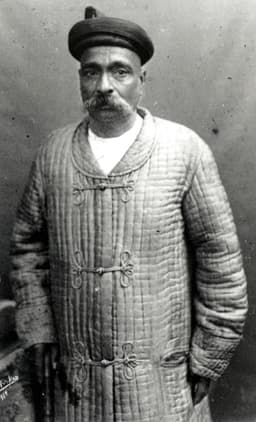
Bal Gangadhar Tilak
Revolutionary · Modern
52.9Total
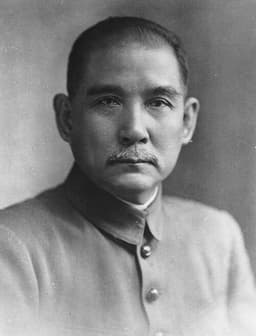
Sun Yat-sen
Revolutionary · Modern
52.5Total
Basic Information
Born
1856
1866
Died
1920
1925
Era
Modern
Modern
Nationality
India
China
Occupation
Revolutionary
Revolutionary
Civilization
Indian
Eastern
Score Comparison
Military (10%)
50.0
45.0
Political (20%)
48.0
68.0
Influence (20%)
58.3
61.0
Legacy (20%)
56.0
58.0
Leadership (15%)
50.7
33.5
Strategy (15%)
45.0
30.3
TOTAL
52.9
52.5
Bal Gangadhar Tilak — Complete Timeline
1881 AD
Launch of the Maratha and Kesari NewspapersCultural◆ Major
Tilak founded the Marathi-language newspaper 'Kesari' and the English-language 'Maratha' to spread nationalist ideas. These newspapers became influential platforms for criticizing British rule and mobilizing public opinion.
MediaNationalism
Impact: nationalconstructive
1897 AD
Imprisonment for SeditionPolitical Action◆ Major
Tilak was arrested and sentenced to 18 months imprisonment for sedition after publishing articles critical of British rule. His imprisonment increased his popularity and made him a martyr for the nationalist cause.
ImprisonmentSedition
Impact: national
1905 AD
Introduction of Swadeshi MovementPolitical Action◆ Major
Bal Gangadhar Tilak promoted the Swadeshi movement, advocating for the boycott of British goods and the use of Indian-made products. This movement gained widespread support and became a key part of the Indian independence struggle.
NationalismEconomic Boycott
Impact: nationalconstructive
1908 AD
Lucky Ali TrialPolitical Action◆ Major
Tilak was tried and sentenced to six years in Mandalay prison for sedition after defending the use of violence against British officials. His trial and imprisonment further galvanized the Indian independence movement.
TrialImprisonment
Impact: national
1916 AD
Formation of the Home Rule LeaguePolitical Action◆ Major
Tilak founded the Indian Home Rule League in 1916, demanding self-government for India within the British Empire. The movement gained mass support and pressured the British government to consider political reforms.
Political MovementSelf-Government
Impact: nationalconstructive
Sun Yat-sen — Complete Timeline
1894 AD
Founded the Revive China SocietyPolitical Action◆ Major
Sun Yat-sen founded the Revive China Society (Xingzhonghui) in Honolulu, the first modern revolutionary organization among overseas Chinese. The society aimed to overthrow the Qing dynasty and establish a republic, marking the beginning of organized revolutionary activity.
RevolutionOverseas ChineseRepublic
Impact: nationalconstructive
1911 AD
Led the Xinhai RevolutionPolitical Action
Sun Yat-sen's revolutionary activities culminated in the Wuchang Uprising of October 1911, which sparked the Xinhai Revolution. The uprising spread across China, leading to the abdication of the Qing emperor in 1912 and the end of 2,000 years of imperial rule.
RevolutionQing DynastyRepublic
Impact: globalconstructive
1912 AD
Proclaimed the Republic of ChinaPolitical Action
On January 1, 1912, Sun Yat-sen was inaugurated as the provisional president of the Republic of China in Nanjing. He proclaimed the establishment of the first republic in Asia, based on his Three Principles of the People: nationalism, democracy, and livelihood.
RepublicPresidencyThree Principles
Impact: globalconstructive
Resigned Presidency in Favor of Yuan ShikaiPolitical Action◆ Major
To secure the abdication of the Qing emperor and avoid civil war, Sun Yat-sen resigned the provisional presidency in February 1912 in favor of Yuan Shikai. This decision, while pragmatic, allowed Yuan to consolidate power and later attempt to restore the monarchy.
Power TransferYuan ShikaiCompromise
Impact: national
1919 AD
Reorganized the KuomintangPolitical Action◆ Major
Sun Yat-sen reorganized the Chinese Revolutionary Party into the Kuomintang (KMT) in 1919, with a more centralized structure. He later accepted Soviet aid and CCP members into the party under the policy of 'alliance with Russia and the Communists,' reshaping the revolutionary movement.
KuomintangSoviet AllianceCCP
Impact: nationalconstructive
Expert Analysis
Sun Yat-sen vs Bal Gangadhar Tilak
# The Revolutionary’s Dilemma: Sun Yat-sen and Bal Gangadhar Tilak
In the winter of 1912, as Sun Yat-sen stood before the provisional assembly in Nanjing to accept the presidency of a newborn republic, the air crackled with hope and uncertainty. Half a world away, in a British prison in Mandalay, Bal Gangadhar Tilak sat reading the Upanishads, his body confined but his spirit unbroken. Both men sought to free their nations from imperial rule, yet their paths diverged like rivers flowing from the same mountain. Why did one become the founding father of a republic, while the other remained the "father of Indian unrest," never tasting the power he so fiercely demanded?
Origins
Sun Yat-sen was born in 1866 in a small village in Guangdong, southern China, to a peasant family that had known little but hardship. His older brother, a successful emigrant in Hawaii, provided him with an education that blended Chinese tradition with Western ideas—a rare combination in an empire still clinging to Confucian orthodoxy. This exposure to democracy and modernity planted seeds that would later uproot two millennia of monarchy. Tilak, born a decade earlier in 1856 in Ratnagiri, western India, came from a different soil. His father was a schoolteacher and a scholar of Sanskrit, steeped in the ancient texts of Hinduism. Tilak’s education was rigorous, classical, and deeply rooted in Indian civilization. Where Sun looked outward to the West for models, Tilak looked inward to India’s past for inspiration.
Their eras shaped them as well. Sun came of age when the Qing dynasty was crumbling under foreign humiliation—the Opium Wars, the Boxer Rebellion, the carving of China into spheres of influence. China needed not just reform but revolution. Tilak, however, faced a British Raj that was stable, powerful, and seemingly permanent. The Indian National Congress, founded in 1885, still believed in petitions and prayers. Tilak would teach them a different language.
Rise to Power
Sun’s path was forged in exile. In 1894, at the age of 28, he founded the Revive China Society in Honolulu, the first modern revolutionary organization among overseas Chinese. From there, he orchestrated a series of failed uprisings—ten in all—each ending in bloodshed and retreat. His power came not from armies but from ideas, from the networks of Chinese diaspora communities who funded his cause, and from a relentless belief that the old order could be swept away.
Tilak’s rise was more grounded. In 1881, he launched two newspapers—the Marathi *Kesari* and the English *Maratha*—and turned them into weapons. He wrote not as an exile but as a man rooted in his land, speaking to his people in their own language. His power came from the courtroom and the prison cell. In 1897, he was sentenced to 18 months for sedition, and his trial turned him into a martyr. In 1908, after defending the use of violence in the Lucky Ali trial, he was sent to Mandalay for six years. Each imprisonment only deepened his hold on the Indian imagination.
Leadership & Governance
Here lies the deepest contrast. Sun Yat-sen was a visionary who spent his life building institutions. In 1911, the Wuchang Uprising finally succeeded, and by 1912, Sun was provisional president of the Republic of China. But his leadership was fragile. Within months, he resigned in favor of Yuan Shikai, a former Qing general, hoping to avoid civil war. It was a decision that revealed both his idealism and his weakness: he believed in the republic more than he believed in his own power. He spent the rest of his life reorganizing the Kuomintang, writing the Three Principles of the People—nationalism, democracy, and livelihood—and waiting for another chance.
Tilak never held national office. His leadership was that of a mobilizer, not a governor. He introduced the Swadeshi movement in 1905, urging Indians to boycott British goods and revive their own industries. He founded the Home Rule League in 1916, demanding self-government within the British Empire. But he was always the agitator, the firebrand, the man who said, "Swaraj is my birthright, and I shall have it." His genius lay in making politics a mass movement, in turning nationalism from a drawing-room conversation into a street-corner cry.
Triumph & Tragedy
Sun’s greatest triumph was the Xinhai Revolution itself—the collapse of an empire that had ruled for 2,000 years. But his tragedy was that he never saw the China he dreamed of. Warlords, foreign invasion, and civil war followed his death in 1925. His republic existed in name only. Tilak’s triumph was equally profound: he made the idea of independence unthinkable to the British and irresistible to Indians. Yet his tragedy was that he died in 1920, decades before that independence was won, never seeing the flag he helped raise.
Character & Destiny
Sun Yat-sen was a man of grand ideas and fragile execution. He was charming, persuasive, and endlessly optimistic—qualities that won him followers but also led him to trust too easily. He believed that republicanism could be transplanted to Chinese soil, that democracy would flourish once the emperor was gone. Tilak was harder, more austere, more suspicious. He understood that power was not given but taken, that the British would never leave willingly. His personality was forged in resistance, and it made him a hero but not a ruler.
Their destinies reflected their characters. Sun became a symbol—the "Father of the Nation" in both mainland China and Taiwan, though his legacy is claimed by rival regimes. Tilak became a precursor—the man who prepared the ground for Gandhi, who took his mass movement and gave it a soul of nonviolence.
Legacy
Sun Yat-sen’s scores—Political 80.0, Legacy 72.2—reflect a man who changed the course of history but could not steer it. His Three Principles remain etched into the constitutions of both Chinas, yet their implementation has been twisted by those who followed. Tilak’s scores—Political 76.0, Legacy 68.1—show a similar pattern: immense influence, incomplete fulfillment. He is remembered as the "father of Indian unrest," a title he earned with pride, but also as a reminder that revolution is often the work of many hands, not just one.
Conclusion
Standing at the edge of their respective centuries, both men faced the same question: How do you free a civilization from the grip of empire? Sun answered with institutions, constitutions, and a vision of a modern republic. Tilak answered with newspapers, boycotts, and the unyielding cry for Swaraj. One built a ship that others would sail; the other lit a fire that others would feed. Neither saw the shore they aimed for, but both made the journey possible. In the end, the revolutionary’s dilemma is not whether to fight, but whether to build or to burn. Sun chose to build, Tilak chose to burn, and history, in its strange and patient way, needed both.
Rankings
🥇
Bal Gangadhar TilakLeader
Mil: 50.0Pol: 48.0Inf: 58.3
52.9
🥈
Sun Yat-sen
Mil: 45.0Pol: 68.0Inf: 61.0
52.5
+0.4 behind
How This Comparison Works
Algorithm
Each figure is scored on 6 dimensions (0—100 scale) based on structured historical data: Military (10%), Political (20%), Influence (20%), Legacy (20%), Leadership (15%), Strategy (15%). The weighted total produces the final ranking.
Data Sources
Scores are computed from structured sub-indicators in the database. Scale factors adjust for era (Ancient ×0.85, Modern ×1.0) and civilization size (Eastern ×1.05, Other ×0.80) to account for differences in population and military scale.
Maximum 3 Figures
Comparisons are limited to 2—3 figures to ensure readability and statistical meaningfulness.
Error Margins
±5 points per dimension — Sub-scores are derived from historical records with inherent uncertainty. Two figures within 5 points on a dimension should be considered roughly equivalent in that area.
Total Score Accuracy
±3 points overall — The weighted combination of 6 dimensions produces a total score with approximately ±3 points of uncertainty. Differences of less than 3 points are not statistically significant— the figures are effectively tied.
Known Limitations
- Historical records are incomplete and uneven across civilizations
- Figures from oral-tradition societies may be underrepresented
- Occupation labels can misclassify multi-role figures
- Scores measure capability and impact, not moral character
- Quantitative scoring is a comparison tool, not absolute truth
Capability Radar
Military (10%) — Battles & Warfare
Battles
23
15
Win Rate
30
10
Expansion
30
5
Political (20%) — Governance & Reform
Reform
70
85
Diplomacy
60
60
Economy
20
20
Influence (20%) — Cultural & Global Reach
Cultural
65
70
Global
55
65
Legacy (20%) — Historical Impact
Historical
70
80
Longevity
60
75
Leadership (15%) — Power & Stability
Tenure
30
30
Stability
40
15
Strategy (15%) — Tactics & Innovation
Strategy
37
20
Tactics
39
10
Reform
43
40
Similar Comparisons
Comments & Discussion
RevolutionaryStrategist6/16/2026
This comparison misses the fundamental strategic difference: Sun was a professional revolutionary who raised international funds and built secret societies, while Tilak was a mass mobilizer who used journalism and festivals like Ganesh Chaturthi. Sun's Hui Xing revolutionaries staged 10 failed uprisings before 1911; Tilak's Swadeshi movement never attempted armed revolt. One built a shadow army; the other built a cultural awakening. These aren't just different paths—they're completely different
数据侦探6/16/2026
分析里的数字游戏玩得漂亮。你们敢不敢提孙中山在夏威夷募捐时实际收到多少钱?1895年广州起义英国根据地的军火到底是谁买单?还有提拉克在1897年被判"煽动叛乱"入狱时,法庭记录里共有多少证人的证词是改写的?这些空洞对比就像用香蕉比橙子,跳过财务数据和法律细节就是耍流氓。
VedicScholar6/16/2026
The comparison overlooks the cosmological chasm between them. Tilak's 1903 book *The Arctic Home in the Vedas* argued the Vedas originated in the North Pole—a claim that still sparks debates among Indologists. He framed political resistance as *dharma*, not democracy. Sun borrowed Lincoln's "of the people" and grafted it onto Confucian meritocracy. One sought to revive a civilization's soul; the other to transplant a foreign system. Apples to oranges is too kind—this is apples to interstellar ne
历史烟火6/16/2026
最讽刺的是两人结局的反差。孙中山1912年把大总统位子让给袁世凯时,多少人骂他天真?可正是这看似软弱的退让,让民主共和理念成了中国不可逆的潮流。提拉克至死都在与甘地争夺国大党控制权,1915年回国后连一次选举都没赢过。一个被低估的退场成就了历史,一个被高估的坚持困住了自己。
RevisionistEyes6/16/2026
Let's be honest: this comparison sanitizes both men into harmless national heroes. Sun accepted foreign loans from Japan in 1915 during the Twenty-One Demands crisis—that's not "looking outward," that's desperation. Tilak defended child marriage in 1891 against the Age of Consent Act, calling British reform "cultural imperialism." One compromised with imperialists, the other with patriarchy. Neither was the clean revolutionary these textbooks paint; they were flawed men making messy choices that