Loading...
Bal Gangadhar Tilak vs Vladimir Lenin
Vladimir Lenin leads by 18.3 pts · 2 figures compared
…
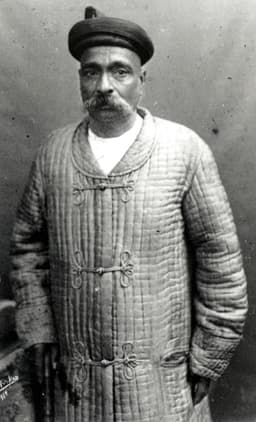
Bal Gangadhar Tilak
Revolutionary · Modern
52.9Total
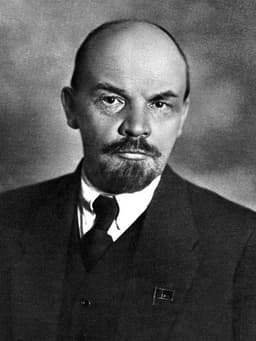
Vladimir Lenin
Revolutionary · Modern
71.2Total
Basic Information
Born
1856
1870
Died
1920
1924
Era
Modern
Modern
Nationality
India
Russia
Occupation
Revolutionary
Revolutionary
Civilization
Indian
Western
Score Comparison
Military (10%)
50.0
30.0
Political (20%)
48.0
78.0
Influence (20%)
58.3
82.0
Legacy (20%)
56.0
72.0
Leadership (15%)
50.7
80.0
Strategy (15%)
45.0
60.0
TOTAL
52.9
71.2
Bal Gangadhar Tilak — Complete Timeline
1881 AD
Launch of the Maratha and Kesari NewspapersCultural◆ Major
Tilak founded the Marathi-language newspaper 'Kesari' and the English-language 'Maratha' to spread nationalist ideas. These newspapers became influential platforms for criticizing British rule and mobilizing public opinion.
MediaNationalism
Impact: nationalconstructive
1897 AD
Imprisonment for SeditionPolitical Action◆ Major
Tilak was arrested and sentenced to 18 months imprisonment for sedition after publishing articles critical of British rule. His imprisonment increased his popularity and made him a martyr for the nationalist cause.
ImprisonmentSedition
Impact: national
1905 AD
Introduction of Swadeshi MovementPolitical Action◆ Major
Bal Gangadhar Tilak promoted the Swadeshi movement, advocating for the boycott of British goods and the use of Indian-made products. This movement gained widespread support and became a key part of the Indian independence struggle.
NationalismEconomic Boycott
Impact: nationalconstructive
1908 AD
Lucky Ali TrialPolitical Action◆ Major
Tilak was tried and sentenced to six years in Mandalay prison for sedition after defending the use of violence against British officials. His trial and imprisonment further galvanized the Indian independence movement.
TrialImprisonment
Impact: national
1916 AD
Formation of the Home Rule LeaguePolitical Action◆ Major
Tilak founded the Indian Home Rule League in 1916, demanding self-government for India within the British Empire. The movement gained mass support and pressured the British government to consider political reforms.
Political MovementSelf-Government
Impact: nationalconstructive
Vladimir Lenin — Complete Timeline
1903 AD
Founding of the Bolshevik PartyPolitical Action
At the Second Congress of the Russian Social Democratic Labour Party in London, Lenin led a split that created the Bolshevik faction. The Bolsheviks advocated for a disciplined vanguard party of professional revolutionaries, a key element of Lenin's political strategy.
Political PartyRevolutionIdeology
Impact: global
1917 AD
April ThesesPolitical Action◆ Major
Lenin returned to Russia from exile and published the April Theses, calling for the overthrow of the Provisional Government, transfer of power to the soviets, and an end to World War I. This document set the Bolshevik agenda for the coming revolution.
RevolutionIdeologyPolitical Strategy
Impact: national
October RevolutionPolitical Action
Lenin led the Bolshevik seizure of power in Petrograd, capturing key government buildings and the Winter Palace. The revolution overthrew the Provisional Government and established the world's first socialist state, the Russian Soviet Federative Socialist Republic.
RevolutionCoupCommunism
Impact: global
1918 AD
Treaty of Brest-LitovskPolitical Action◆ Major
Lenin signed a separate peace treaty with the Central Powers, ceding vast territories including Ukraine, Belarus, and the Baltic states. The treaty ended Russia's involvement in World War I but caused significant territorial losses and internal opposition.
TreatyWorld War ITerritorial Loss
Impact: globaldestructive
1921 AD
New Economic Policy (NEP)Reform◆ Major
Lenin introduced the NEP, allowing limited private enterprise and market mechanisms to revive the war-torn Soviet economy. The policy replaced War Communism, permitting small-scale capitalism while the state retained control of major industries.
Economic ReformPolicyRecovery
Impact: nationalconstructive
1922 AD
Establishment of the Soviet UnionPolitical Action
Lenin oversaw the creation of the Union of Soviet Socialist Republics (USSR), a federation of Soviet republics. The new state consolidated Bolshevik control over much of the former Russian Empire and became a model for communist states worldwide.
State FormationCommunismFederation
Impact: global
Expert Analysis
Vladimir Lenin vs Bal Gangadhar Tilak
# The Revolutionary and the Agitator: Lenin and Tilak in the Mirror of History
In the autumn of 1917, as Vladimir Lenin slipped through the streets of Petrograd in a wig and borrowed glasses, plotting the overthrow of a government that had only months earlier overthrown the tsar, a very different kind of revolutionary sat in a prison cell in Mandalay, Burma. Bal Gangadhar Tilak, then sixty-one years old, had already spent six years behind bars for the crime of demanding freedom for his people. One man was about to seize power and reshape the world; the other had spent a lifetime trying to move an empire that refused to budge. Both were called revolutionaries. But their paths, their methods, and their fates could not have been more different.
Origins
Lenin was born into the Russian intelligentsia in 1870, the son of a school inspector whose early death left the family in modest circumstances. His older brother Alexander was hanged for plotting to assassinate the tsar—a trauma that hardened young Vladimir into a cold, calculating instrument of revolution. The Russia of his youth was a vast, backward empire, its peasants crushed under feudal remnants, its workers huddled in factory slums. Lenin found his answer in Marxism, but he was never content to merely interpret the world. He wanted to change it, and he believed he knew exactly how.
Tilak, born in 1856 in Ratnagiri, came from a different world entirely. His father was a schoolteacher and Sanskrit scholar; his mother died when he was young. India under British rule was not a feudal empire crumbling from within but a modern colonial state—efficient, ruthless, and deeply entrenched. Tilak grew up watching his countrymen treated as second-class citizens in their own land. He studied law, mathematics, and Sanskrit, but his true education came from observing how the British drained India's wealth and crushed its spirit. Where Lenin saw class struggle, Tilak saw national humiliation.
Rise to Power
Lenin's rise was a study in disciplined patience. From his exile in Switzerland, he wrote, organized, and waited. The 1903 split at the London Congress of the Russian Social Democratic Labour Party was his first masterstroke—he created the Bolsheviks, a tightly disciplined party of professional revolutionaries, and declared himself their leader. When the February Revolution of 1917 toppled the tsar, Lenin saw his moment. He raced back to Russia in a sealed train, financed by the German government, and immediately issued his April Theses: no support for the Provisional Government, all power to the Soviets. Within seven months, he had seized control of the state.
Tilak's path was more circuitous and far more public. He rose not through clandestine cells but through newspapers. His *Kesari* and *Maratha* became the voice of Indian nationalism, reaching villages and towns where no party pamphlet could go. He was imprisoned for sedition in 1897, released, then imprisoned again in 1908 for six years in Mandalay. Each jail term made him more famous. When he founded the Home Rule League in 1916, he was already a living symbol of resistance. But he never held a gun, never stormed a palace. His power came from words, from courts, from the slow, grinding work of building a movement.
Leadership & Governance
Lenin governed as he had organized—with absolute clarity and absolute ruthlessness. His military score of 30 reflects his limited direct involvement in battlefield command, but his political genius was undeniable. The October Revolution itself was a near-bloodless coup, but the civil war that followed was savage. Lenin's leadership during those years was cold, pragmatic, and terrifyingly effective. He signed the Treaty of Brest-Litovsk in 1918, ceding vast territories to Germany, because he understood that sometimes you must lose land to win time. The New Economic Policy of 1921 was another such calculation—a tactical retreat from communism to save communism. Lenin was a strategist who thought in decades, not days.
Tilak never governed anything larger than a political movement. His leadership score of 72 is comparable to Lenin's, but applied in a different arena. He was a master of mass mobilization, the first Indian leader to take nationalism beyond the English-speaking elite. The Swadeshi movement of 1905, which called for boycotting British goods and using Indian-made products, was his creation. It was economic warfare by other means. But Tilak was also a pragmatist—he tempered his radicalism when necessary, joining the moderate Congress leaders in 1916 to form the Lucknow Pact. He understood that Indian unity was more important than ideological purity.
Triumph & Tragedy
Lenin's triumph was the October Revolution—the moment when his theory became reality. But his tragedy was the state he created. The Soviet Union became a brutal dictatorship, far from the workers' paradise he had envisioned. By the time he died in 1924, he was already warning against the rise of Stalin, the man who would turn his revolution into a nightmare.
Tilak's triumph was different. He never saw India free—he died in 1920, twenty-seven years before independence. But he had lit a fire that would never be extinguished. His tragedy was that he spent his best years in prison or in exile, watching younger men like Gandhi take the movement in directions he had not foreseen. The father of Indian unrest died before his children came of age.
Character & Destiny
Lenin was a man of iron will and absolute certainty. He believed history was on his side, and he acted as if any hesitation was betrayal. His personality was forged in the crucible of exile and conspiracy—he trusted few, forgave none, and saw compromise as weakness. This made him a brilliant revolutionary but a flawed builder. The Soviet Union he created was a reflection of his own relentless, unforgiving nature.
Tilak was more human, more flawed, and perhaps more tragic. He was a scholar who loved Sanskrit poetry, a lawyer who defended terrorists, a nationalist who once said, "Swaraj is my birthright and I shall have it." His personality was shaped by the slow, grinding oppression of colonial rule—he learned patience, endurance, and the art of speaking truth to power. But he also learned bitterness. His years in Mandalay left him a broken man, and he never fully recovered.
Legacy
Lenin's legacy is written in blood and stone. The Soviet Union lasted seventy years, spread communism across half the world, and shaped the twentieth century more than any other single movement. His ideas—Marxism-Leninism—became the official ideology of a superpower. Today, his statues have fallen, but his influence remains embedded in the geopolitics of Russia, China, and beyond. He is remembered as both a visionary and a tyrant, depending on who is telling the story.
Tilak's legacy is quieter but perhaps more enduring. He laid the foundation for Indian independence, inspired Gandhi, and created the vocabulary of Indian nationalism. His call for Swadeshi still echoes in Indian economic policy. His insistence on self-reliance, on cultural pride, on the dignity of the Indian people—these ideas outlasted the British Empire itself. He is remembered not as a ruler but as a teacher, not as a tyrant but as a martyr.
Conclusion
Why did Lenin succeed where Tilak failed? The answer lies not in their characters but in their contexts. Lenin faced a crumbling empire, a world war, and a population desperate for change. Tilak faced a stable colonial state, a long peace, and a population divided by caste, language, and religion. Lenin could seize power because the old order had already collapsed. Tilak could only agitate because the British Empire was still standing.
But perhaps the deeper difference is in what they wanted. Lenin wanted to destroy the old world and build a new one from the ashes. Tilak wanted to restore the dignity of an ancient civilization. One was a revolutionary, the other a nationalist. One sought to remake humanity, the other to free his people. Both succeeded in their own ways, and both failed in ways they could not have imagined. History, as always, is the final judge—and its verdict is never simple.
Rankings
🥇
Vladimir LeninLeader
Mil: 30.0Pol: 78.0Inf: 82.0
71.2
🥈
Bal Gangadhar Tilak
Mil: 50.0Pol: 48.0Inf: 58.3
52.9
+18.3 behind
How This Comparison Works
Algorithm
Each figure is scored on 6 dimensions (0—100 scale) based on structured historical data: Military (10%), Political (20%), Influence (20%), Legacy (20%), Leadership (15%), Strategy (15%). The weighted total produces the final ranking.
Data Sources
Scores are computed from structured sub-indicators in the database. Scale factors adjust for era (Ancient ×0.85, Modern ×1.0) and civilization size (Eastern ×1.05, Other ×0.80) to account for differences in population and military scale.
Maximum 3 Figures
Comparisons are limited to 2—3 figures to ensure readability and statistical meaningfulness.
Error Margins
±5 points per dimension — Sub-scores are derived from historical records with inherent uncertainty. Two figures within 5 points on a dimension should be considered roughly equivalent in that area.
Total Score Accuracy
±3 points overall — The weighted combination of 6 dimensions produces a total score with approximately ±3 points of uncertainty. Differences of less than 3 points are not statistically significant— the figures are effectively tied.
Known Limitations
- Historical records are incomplete and uneven across civilizations
- Figures from oral-tradition societies may be underrepresented
- Occupation labels can misclassify multi-role figures
- Scores measure capability and impact, not moral character
- Quantitative scoring is a comparison tool, not absolute truth
Capability Radar
Military (10%) — Battles & Warfare
Battles
23
20
Win Rate
30
35
Expansion
30
70
Political (20%) — Governance & Reform
Reform
70
95
Diplomacy
60
75
Economy
20
60
Influence (20%) — Cultural & Global Reach
Cultural
65
80
Global
55
90
Legacy (20%) — Historical Impact
Historical
70
95
Longevity
60
85
Leadership (15%) — Power & Stability
Tenure
30
55
Stability
40
40
Strategy (15%) — Tactics & Innovation
Strategy
37
55
Tactics
39
30
Reform
43
85
Similar Comparisons
Comments & Discussion
RedOctoberVet6/16/2026
Lenin actually took power while Tilak just yelled from prison cells. One man seized the Winter Palace with 25,000 Red Guards, the other spent 6 years writing newspaper articles in Mandalay. Lenin didn’t just talk about revolution—he coded it into state policy. Tilak? Great speechmaker, but he never saw the inside of a train station after his people took over. Sorry, but the man who runs a country beats the man who complains about it.
史海钩沉6/16/2026
列宁十月革命亲自指挥,托洛茨基管军事,他在密室里画革命蓝图;提拉克在曼德勒牢里写信,连枪都没摸过。列宁22天打下彼得格勒,提拉克6年打不下一个殖民地。一个改变世界地图,一个改变教科书插图。革命不是写论文,是抢火车站——列宁懂这个,提拉克到死都不懂。
DataSkeptic426/16/2026
Comparing Lenin and Tilak by who "won" ignores the structural differences. Lenin faced a collapsing monarchy, Tilak faced a British Raj at its peak. You can't judge a revolutionary's strategy by outcomes alone—that's survivor bias. Lenin had luck on his side (Germans shipped him in a sealed train), Tilak had 50 million Muslims actively opposing Hindu nationalism. Different variables, different equations. Historical analysis deserves better than "mine beat yours."
学院派考据6/16/2026
列宁的理论根基是马克思主义,有明确的阶级分析和国家机器理论;提拉克的“斯瓦拉吉”基本是模糊的道德口号。列宁写了《国家与革命》,提拉克没写过一本系统政治著作。一个从哲学到实践都自洽,一个靠宗教符号煽动。承认吧——思想家和小贩的区别就在于能不能解释“为什么”和“怎么做”。
ClassicsNerdTL6/16/2026
Both men were lawyers turned radicals, but their intellectual lineage diverges sharply. Lenin was a pure product of European materialism—Darwin, Marx, Engels. Tilak drew from the Gita and Vedantic reinterpretation of action. Lenin wanted to smash the state; Tilak wanted to revive a Hindu golden age. One abolished God, the other made God a political weapon. They're not two versions of the same thing—they're opposite responses to modernity.
RevCritic20246/16/2026
列宁是马克思主义者,提拉克是印度教民族主义者,把两人放一起比较本身就离谱。提拉克鼓动种姓制度下的群众用宗教节日对抗英国,列宁组织无产阶级夺权——这是两种完全不同的社会逻辑。提拉克那套后来被极端分子拿来砍人,列宁那套被斯大林搞成官僚专制。要我说,他俩都是自家现代性悲剧的演员,不存在谁更高明。