Loading...
Baldwin I of Jerusalem vs Pachacuti
Pachacuti leads by 13.3 pts · 2 figures compared
…
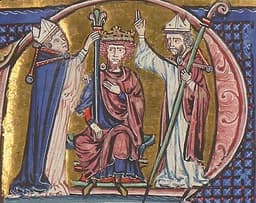
Baldwin I of Jerusalem
Emperor · Medieval
56.1Total
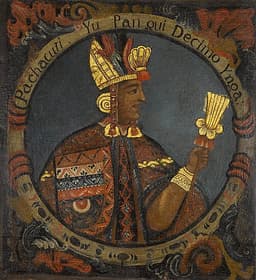
Pachacuti
Emperor · Medieval
69.4Total
Basic Information
Born
1058
1418
Died
1118
1472
Era
Medieval
Medieval
Nationality
Jerusalem
Inca Empire
Occupation
Emperor
Emperor
Civilization
Western
Other
Score Comparison
Military (10%)
72.5
78.5
Political (20%)
46.6
58.1
Influence (20%)
57.2
65.0
Legacy (20%)
50.0
72.0
Leadership (15%)
62.2
78.0
Strategy (15%)
57.5
69.2
TOTAL
56.1
69.4
Baldwin I of Jerusalem — Complete Timeline
1100 AD
Coronation as First King of JerusalemPolitical Action
Baldwin I was crowned as the first king of Jerusalem on Christmas Day 1100, after the death of his brother Godfrey. He transformed the Crusader state from a lordship into a monarchy, centralizing power and expanding its territory.
CoronationCrusader KingdomJerusalem
Impact: regionalconstructive
1101 AD
Capture of Arsuf and CaesareaWar◆ Major
Baldwin I captured the coastal cities of Arsuf and Caesarea with the help of Genoese and Pisan fleets. These victories secured Crusader control over the Palestinian coast and provided access to Mediterranean trade routes.
ConquestCrusader KingdomCoastal Cities
Impact: regional
1104 AD
Siege of AcreWar◆ Major
Baldwin I besieged and captured the port city of Acre after a four-year blockade, with support from a Genoese fleet. Acre became the most important Crusader port and a major commercial center in the Levant.
SiegeCrusader KingdomAcre
Impact: regional
1105 AD
Defense of the Kingdom against Seljuk AttacksWar◆ Major
Baldwin I defeated a Seljuk Turkish army at the Battle of Ramla in 1105, securing the kingdom's eastern frontier. This victory prevented the Seljuks from recapturing Jerusalem and stabilized Crusader rule.
BattleSeljuksCrusader Kingdom
Impact: regional
1118 AD
Invasion of EgyptWar
Baldwin I led a campaign into Fatimid Egypt, reaching the Nile Delta. He died during the campaign near Al-Arish, possibly from illness. The invasion failed to conquer territory but demonstrated Crusader ambitions beyond the Levant.
InvasionEgyptCrusader Kingdom
Impact: regional
Pachacuti — Complete Timeline
1438 AD
Conquest of the Chanka KingdomWar
Pachacuti led the Inca army to defeat the Chanka, a powerful rival, in a decisive battle near Cusco. This victory secured his position as Sapa Inca and initiated a period of rapid expansion, transforming the Inca from a small kingdom into a vast empire.
ConquestInca ExpansionChanka
Impact: regional
1440 AD
Reconstruction of CuscoCultural◆ Major
Pachacuti rebuilt Cusco as the imperial capital, designing it in the shape of a puma and constructing massive stone structures like Sacsayhuam
Urban PlanningArchitectureInca Empire
Impact: regionalconstructive
1450 AD
Initiation of Machu Picchu's ConstructionCultural◆ Major
Pachacuti ordered the construction of Machu Picchu, a royal estate and ceremonial site high in the Andes. The complex featured sophisticated dry-stone masonry and terraced agriculture, serving as a symbol of Inca engineering and a retreat for the emperor.
ArchitectureRoyal EstateInca Engineering
Impact: regionalconstructive
Expert Analysis
Origins
Baldwin I of Jerusalem was born around 1060 in Boulogne, France, as the son of Eustace II, Count of Boulogne, and Ida of Lorraine. He was originally a cleric but left the church to join the First Crusade. His brother Godfrey of Bouillon was a prominent crusade leader. Pachacuti Inca Yupanqui was born in 1418 in Cusco, the son of the Sapa Inca Viracocha. He was not the initial heir but proved his capabilities during the Chanka crisis. Both came from ruling families but took different paths to power.
Rise to Power
Baldwin I rose after the death of his brother Godfrey in 1100. He was crowned King of Jerusalem on Christmas Day 1100, transforming the Crusader state from a defensive outpost into an expansionist kingdom. His key allies were Italian maritime republics, especially Genoa and Pisa, whose fleets enabled coastal conquests. Pachacuti rose to power in 1438 when the Chanka attacked Cusco. He led the defense, defeating the Chanka in a decisive battle, and then deposed his father Viracocha to become Sapa Inca. This victory marked the beginning of Inca expansion.
Leadership & Governance
Baldwin I ruled as a military monarch, leading campaigns personally. He focused on capturing coastal cities to secure trade routes. He granted trading privileges to Genoa and Pisa, fostering economic growth. His governance was feudal, relying on Crusader lords. Pachacuti transformed the Inca state through centralization. He rebuilt Cusco as a puma-shaped capital, established a system of provincial governors, and implemented mandatory labor (mita) for public works. His administrative reforms included the quipu record-keeping system. While Baldwin's leadership scored 62.2, Pachacuti's scored 78.0, reflecting his more systematic governance.
Triumph & Tragedy
Baldwin's greatest triumph was capturing Acre in 1104 after a four-year siege, making it the kingdom's main port. He also defeated Seljuk forces at Ramla in 1105. His tragedy was his failed invasion of Egypt in 1118, where he died near Al-Arish, possibly from illness. The campaign overextended his resources. Pachacuti's triumph was the conquest of the Chanka and subsequent expansion that created the Inca Empire. He also initiated Machu Picchu, a masterpiece of engineering. His tragedy was the lack of a clear succession plan; his son Túpac Inca Yupanqui faced challenges after his death. Pachacuti's military score of 78.5 surpasses Baldwin's 72.5, but both suffered from overambition.
Character & Destiny
Baldwin I was pragmatic and ruthless, often prioritizing expansion over consolidation. He alienated some Crusader lords by centralizing power. His death in Egypt reflected his aggressive nature. Pachacuti was visionary and methodical, focusing on infrastructure and administration. His rebuilding of Cusco and establishment of Machu Picchu show long-term planning. However, his consolidation of power led to rebellions among conquered peoples. Historical assessments note that Baldwin's legacy was limited by the kingdom's fragility, while Pachacuti's empire endured for generations.
Legacy
Baldwin I established the Kingdom of Jerusalem, which lasted until 1291. His coastal conquests secured Crusader access to the Mediterranean. However, the kingdom remained dependent on European support. Pachacuti created the Inca Empire, the largest in pre-Columbian America, spanning 2,500 miles. His administrative and architectural innovations influenced Andean culture. The Inca road system and terraced agriculture persisted after the Spanish conquest. Pachacuti's legacy score of 72.0 far exceeds Baldwin's 50.0.
Conclusion
Pachacuti had a greater impact than Baldwin I. His total score of 69.4 versus Baldwin's 56.1 reflects superior military, political, and administrative achievements. Pachacuti transformed a small kingdom into an empire with enduring infrastructure, while Baldwin's kingdom was a fragile Crusader state that collapsed within two centuries. Pachacuti's influence on Andean civilization is profound, whereas Baldwin's legacy is tied to a failed colonial enterprise. The data supports Pachacuti as the more significant historical figure.
Rankings
🥇
PachacutiLeader
Mil: 78.5Pol: 58.1Inf: 65.0
69.4
🥈
Baldwin I of Jerusalem
Mil: 72.5Pol: 46.6Inf: 57.2
56.1
+13.3 behind
How This Comparison Works
Algorithm
Each figure is scored on 6 dimensions (0—100 scale) based on structured historical data: Military (10%), Political (20%), Influence (20%), Legacy (20%), Leadership (15%), Strategy (15%). The weighted total produces the final ranking.
Data Sources
Scores are computed from structured sub-indicators in the database. Scale factors adjust for era (Ancient ×0.85, Modern ×1.0) and civilization size (Eastern ×1.05, Other ×0.80) to account for differences in population and military scale.
Maximum 3 Figures
Comparisons are limited to 2—3 figures to ensure readability and statistical meaningfulness.
Error Margins
±5 points per dimension — Sub-scores are derived from historical records with inherent uncertainty. Two figures within 5 points on a dimension should be considered roughly equivalent in that area.
Total Score Accuracy
±3 points overall — The weighted combination of 6 dimensions produces a total score with approximately ±3 points of uncertainty. Differences of less than 3 points are not statistically significant— the figures are effectively tied.
Known Limitations
- Historical records are incomplete and uneven across civilizations
- Figures from oral-tradition societies may be underrepresented
- Occupation labels can misclassify multi-role figures
- Scores measure capability and impact, not moral character
- Quantitative scoring is a comparison tool, not absolute truth
Capability Radar
Military (10%) — Battles & Warfare
Battles
55
85
Win Rate
60
90
Expansion
65
90
Political (20%) — Governance & Reform
Reform
40
92
Diplomacy
55
75
Economy
35
80
Influence (20%) — Cultural & Global Reach
Cultural
45
85
Global
40
65
Legacy (20%) — Historical Impact
Historical
55
80
Longevity
45
70
Leadership (15%) — Power & Stability
Tenure
50
85
Stability
30
82
Strategy (15%) — Tactics & Innovation
Strategy
60
88
Tactics
55
80
Reform
30
85
Similar Comparisons
Comments & Discussion
No comments yet. Be the first to share your thoughts!