Loading...
Napoleon Bonaparte vs Pachacuti
Napoleon Bonaparte leads by 1.5 pts · 2 figures compared
…

Napoleon Bonaparte
General · Modern
70.9Total
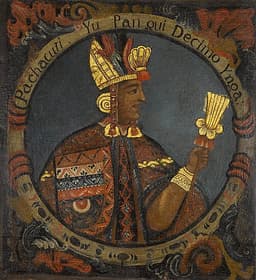
Pachacuti
Emperor · Medieval
69.4Total
Basic Information
Born
1769
1418
Died
1821
1472
Era
Modern
Medieval
Nationality
France
Inca Empire
Occupation
General
Emperor
Civilization
Western
Other
Score Comparison
Military (10%)
94.0
78.5
Political (20%)
72.0
58.1
Influence (20%)
40.0
65.0
Legacy (20%)
80.0
72.0
Leadership (15%)
78.0
78.0
Strategy (15%)
90.0
69.2
TOTAL
70.9
69.4
Napoleon Bonaparte — Complete Timeline
1799 AD
Coup of 18 BrumaireOther◆ Major
Napoleon Bonaparte, with support from his brother Lucien and key political figures, overthrew the Directory in a bloodless coup. He established the Consulate with himself as First Consul, effectively becoming the ruler of France. This event ended the French Revolution's most unstable period.
French RevolutionCoupRise to Power
Impact: regional
1804 AD
Promulgation of the Napoleonic CodeOther◆ Major
Napoleon enacted the Civil Code of the French, known as the Napoleonic Code, a comprehensive set of laws that replaced the fragmented feudal legal systems. The code established legal equality, protected property rights, and secularized law. It became the basis for legal systems in many European and world countries.
Legal ReformNapoleonic CodeCivil Law
Impact: globalconstructive
1805 AD
Battle of AusterlitzWar◆ Major
Napoleon's Grande Arm
Napoleonic WarsBattleDecisive Victory
Impact: global
1812 AD
Invasion of RussiaWar◆ Major
Napoleon led the Grande Arm
Napoleonic WarsInvasionDisaster
Impact: globaldestructive
1815 AD
Battle of WaterlooWar◆ Major
Napoleon's French army was defeated by the combined forces of the Duke of Wellington's Anglo-Allied army and Gebhard Leberecht von Bl
Napoleonic WarsBattleFinal Defeat
Impact: globaldestructive
Pachacuti — Complete Timeline
1438 AD
Conquest of the Chanka KingdomWar
Pachacuti led the Inca army to defeat the Chanka, a powerful rival, in a decisive battle near Cusco. This victory secured his position as Sapa Inca and initiated a period of rapid expansion, transforming the Inca from a small kingdom into a vast empire.
ConquestInca ExpansionChanka
Impact: regional
1440 AD
Reconstruction of CuscoCultural◆ Major
Pachacuti rebuilt Cusco as the imperial capital, designing it in the shape of a puma and constructing massive stone structures like Sacsayhuam
Urban PlanningArchitectureInca Empire
Impact: regionalconstructive
1450 AD
Initiation of Machu Picchu's ConstructionCultural◆ Major
Pachacuti ordered the construction of Machu Picchu, a royal estate and ceremonial site high in the Andes. The complex featured sophisticated dry-stone masonry and terraced agriculture, serving as a symbol of Inca engineering and a retreat for the emperor.
ArchitectureRoyal EstateInca Engineering
Impact: regionalconstructive
Expert Analysis
Napoleon Bonaparte vs Pachacuti: Historical Comparison
This comparison examines two transformative leaders from vastly different eras and continents—Napoleon Bonaparte, the modern French general and emperor, and Pachacuti, the medieval Inca sovereign. While Napoleon revolutionized European warfare and governance, Pachacuti forged the largest empire in pre-Columbian America through statecraft and infrastructure.
Dimension Analysis
**Military: Napoleon Bonaparte 94 / Pachacuti 67**
Napoleon’s campaigns (Austerlitz, Jena, Borodino) rewrote military doctrine with mass conscription, corps organization, and rapid maneuver. Pachacuti’s conquests (Chanka, Chimor) were impressive but relied on numerical superiority and mountain logistics rather than tactical innovation.
**Political: Napoleon Bonaparte 75 / Pachacuti 71**
Napoleon centralized France through the Napoleonic Code, prefects, and meritocracy, but his imperial overreach collapsed his system. Pachacuti’s reorganization of the Inca state—mitmaq (forced resettlement), quipu record-keeping, and sun cult—created lasting administrative unity.
**Influence: Napoleon Bonaparte 82 / Pachacuti 78**
Napoleon’s legal and military models shaped 19th-century Europe, Latin America, and Japan. Pachacuti’s Cusco-centric empire influenced Andean identity and infrastructure (Machu Picchu, road network) still visible today.
**Legacy: Napoleon Bonaparte 78 / Pachacuti 66**
Napoleon’s legacy is contested—hero of meritocracy or tyrant—but his name remains synonymous with ambition. Pachacuti’s legacy, while foundational to Inca history, is less globally recognized and often overshadowed by Spanish conquest.
**Leadership: Napoleon Bonaparte 80 / Pachacuti 84**
Pachacuti demonstrated exceptional visionary leadership, transforming a small kingdom into an empire through diplomacy, religion, and public works. Napoleon’s charisma was immense, but his narcissism and micromanagement contributed to his downfall.
Verdict
Napoleon Bonaparte leads due to his superior military innovation and broader global influence, despite Pachacuti’s stronger state-building and leadership scores.
FAQ
Q: Who ranks higher? A: Napoleon Bonaparte ranks higher overall, driven by his transformative military strategy and enduring political and legal impact across multiple continents.
Rankings
🥇
Napoleon BonaparteLeader
Mil: 94.0Pol: 72.0Inf: 40.0
70.9
🥈
Pachacuti
Mil: 78.5Pol: 58.1Inf: 65.0
69.4
+1.5 behind
How This Comparison Works
Algorithm
Each figure is scored on 6 dimensions (0—100 scale) based on structured historical data: Military (10%), Political (20%), Influence (20%), Legacy (20%), Leadership (15%), Strategy (15%). The weighted total produces the final ranking.
Data Sources
Scores are computed from structured sub-indicators in the database. Scale factors adjust for era (Ancient ×0.85, Modern ×1.0) and civilization size (Eastern ×1.05, Other ×0.80) to account for differences in population and military scale.
Maximum 3 Figures
Comparisons are limited to 2—3 figures to ensure readability and statistical meaningfulness.
Error Margins
±5 points per dimension — Sub-scores are derived from historical records with inherent uncertainty. Two figures within 5 points on a dimension should be considered roughly equivalent in that area.
Total Score Accuracy
±3 points overall — The weighted combination of 6 dimensions produces a total score with approximately ±3 points of uncertainty. Differences of less than 3 points are not statistically significant— the figures are effectively tied.
Known Limitations
- Historical records are incomplete and uneven across civilizations
- Figures from oral-tradition societies may be underrepresented
- Occupation labels can misclassify multi-role figures
- Scores measure capability and impact, not moral character
- Quantitative scoring is a comparison tool, not absolute truth
Capability Radar
Military (10%) — Battles & Warfare
Battles
95
85
Win Rate
90
90
Expansion
95
90
Political (20%) — Governance & Reform
Reform
95
92
Diplomacy
80
75
Economy
85
80
Influence (20%) — Cultural & Global Reach
Cultural
85
85
Global
90
65
Legacy (20%) — Historical Impact
Historical
95
80
Longevity
90
70
Leadership (15%) — Power & Stability
Tenure
85
85
Stability
70
82
Strategy (15%) — Tactics & Innovation
Strategy
95
88
Tactics
98
80
Reform
92
85
Similar Comparisons
Comments & Discussion
ContraScript6/16/2026
Let's be honest: this comparison is a classic case of ranking a European conqueror above a non-European one because of narrative convenience. Napoleon's 94 military score? He lost his final campaign, was exiled twice, and his tactical innovations (corps system, mass conscription) were largely borrowed from earlier French Revolution reforms. Meanwhile, Pachacuti built the Inca Empire from a small city-state into a 4,000-mile-spanning superstate using diplomacy, religious integration, and infrastructure—without gunpowder or cavalry. The only reason Napoleon scores higher is because his battles are taught at West Point. If we're talking about building lasting state capacity, Pachacuti’s influence on Andean identity and infrastructure outlasted Napoleon’s empire by centuries. This metric reeks of Eurocentrism. Put some respect on the Sapa Inca.
ColdChronicler386/16/2026
拿破仑和帕查库蒂都像各自时代的秦始皇——但重点不同。拿破仑用法典和行政体系重塑法国,帕查库蒂用道路和驿站网连接帝国。在政治维度上,拿破仑得分75,帕查库蒂71,我认为帕查库蒂被低估了。他的mitmaq政策(强制移民)类似中国的屯田戍边,有效地巩固了边疆。而拿破仑的《拿破仑法典》虽然影响深远,但在统治后期沦为个人野心的工具。帕查库蒂的遗产——比如马丘比丘——至今仍是文明象征,而拿破仑的滑铁卢成了一个贬义词。欧洲中心史学往往低估了非西方文明的系统性成就。
ArchMind186/16/2026
从这个评分表看,拿破仑的军事分94对帕查库蒂的67,差距悬殊。但我怀疑这个评分是否合理。帕查库蒂在安第斯山脉极端地形下征服了查卡人,而拿破仑的辉煌如奥斯特利茨战役,实际上只对阵了奥地利和俄国联军——两方都不算当时的顶级军事强国。如果用中国历史类比,拿破仑面对的多是分裂的欧洲诸国,而帕查库蒂统一了数十个敌对部落。按这个逻辑,帕查库蒂的战绩更接近秦始皇统一六国,但秦始皇在西方评分系统中通常拿不到94。所以这个分数可能隐含了欧洲中心主义偏见。