Loading...
Baldwin II of Jerusalem vs James IV of Scotland
James IV of Scotland leads by 9.3 pts · 2 figures compared
…
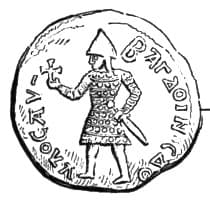
Baldwin II of Jerusalem
Emperor · Medieval
49.0Total

James IV of Scotland
Emperor · Medieval
58.3Total
Basic Information
Born
1060
1473
Died
1131
1513
Era
Medieval
Medieval
Nationality
Kingdom of Jerusalem
Scotland
Occupation
Emperor
Emperor
Civilization
Western
Western
Score Comparison
Military (10%)
20.0
50.0
Political (20%)
43.7
60.0
Influence (20%)
52.5
59.0
Legacy (20%)
45.8
48.3
Leadership (15%)
65.7
72.0
Strategy (15%)
60.0
66.3
TOTAL
49.0
58.3
Baldwin II of Jerusalem — Complete Timeline
1118 AD
Elected as King of JerusalemPolitical Action◆ Major
Baldwin II was elected King of Jerusalem after the death of Baldwin I. As a capable military leader, he expanded the kingdom's territory and secured its borders against Muslim forces, including capturing Tyre in 1124.
Crusader StatesMonarchyTerritorial Expansion
Impact: regionalconstructive
1123 AD
Captured by Artuqids at Battle of HabWar◆ Major
Baldwin II was captured by the Artuqid Turkish ruler Belek Ghazi during a campaign near the Euphrates. He was held prisoner for over a year until being ransomed for 80,000 dinars, a significant financial blow to the kingdom.
CaptureRansomCrusader-Muslim Wars
Impact: regionaltragic
1124 AD
Captured by Egyptians at Battle of AscalonWar
Shortly after his release, Baldwin II was captured again by Egyptian forces near Ascalon. He was imprisoned in Cairo for several months before being ransomed a second time, demonstrating the precariousness of Crusader leadership.
CaptureRansomEgypt
Impact: regionaltragic
1129 AD
Arranged Marriage of Melisende to FulkPolitical Action◆ Major
Baldwin II arranged the marriage of his daughter Melisende to Fulk V of Anjou, securing a powerful European ally. This dynastic union ensured the succession and strengthened ties between Jerusalem and Western Europe.
Dynastic MarriageSuccessionAlliance
Impact: regionalconstructive
James IV of Scotland — Complete Timeline
1495 AD
Foundation of the University of AberdeenCultural
James IV issued a papal bull to found the University of Aberdeen, Scotland's third university. The university was established to promote education and learning in the north of Scotland, reflecting James's interest in Renaissance humanism.
FoundationEducationRenaissance
Impact: nationalconstructive
1496 AD
Support for Perkin WarbeckPolitical Action
James IV supported the pretender Perkin Warbeck, who claimed to be Richard of Shrewsbury, by invading northern England. The invasion failed, and James later abandoned Warbeck, but the episode strained relations with England.
InvasionPretenderAnglo-Scottish Relations
Impact: regionaldestructive
1503 AD
Marriage to Margaret TudorPolitical Action◆ Major
James IV married Margaret Tudor, daughter of Henry VII of England, under the Treaty of Perpetual Peace. The marriage united the Scottish and English royal houses and later gave James VI a claim to the English throne.
MarriageTreatyUnion of Crowns
Impact: nationalconstructive
1511 AD
Construction of the Great MichaelOther
James IV commissioned the construction of the Great Michael, the largest warship in Europe at the time. The ship was built at Newhaven and cost a fortune, but it was sold to France after Flodden and never saw significant action.
ShipbuildingNavyExpense
Impact: national
1513 AD
Battle of FloddenWar
James IV led a Scottish invasion of England but was defeated at the Battle of Flodden Field near Branxton, Northumberland. James IV was killed along with many Scottish nobles, making it one of Scotland's worst military defeats.
BattleDefeatDeath
Impact: nationaltragic
Expert Analysis
Origins
Baldwin II of Jerusalem was born Baldwin of Bourcq around 1075, likely in Rethel, France. He was the son of Hugh I, Count of Rethel, and a cousin of the first crusader king, Baldwin I. He arrived in the Holy Land during the First Crusade and initially served as Count of Edessa from 1100. His early years were shaped by the precarious existence of the crusader states, surrounded by Muslim powers. In contrast, James IV of Scotland was born on March 17, 1473, at Stirling Castle, the son of King James III and Margaret of Denmark. He was raised in a period of relative stability, though his father's reign was marred by internal conflict. James IV received a humanist education, becoming fluent in Latin, French, and even learning Gaelic, reflecting the Renaissance ideals spreading across Europe.
Rise to Power
Baldwin II was elected King of Jerusalem in 1118 after the death of his cousin Baldwin I without direct heirs. His election was contested but ultimately secured due to his military reputation and noble support. As king, he immediately faced threats from the Seljuk Turks and Fatimid Egyptians. James IV came to power after the death of his father at the Battle of Sauchieburn in 1488, where James IV's supporters defeated James III. Though only 15, James IV assumed control and quickly consolidated power, executing or exiling his father's counselors. He proved a capable ruler, establishing a strong central authority in Scotland.
Leadership & Governance
Baldwin II's leadership was defined by military necessity. He personally led campaigns to expand and defend the Kingdom of Jerusalem, capturing Tyre in 1124 with Venetian naval assistance. His governance relied on feudal structures, granting lands to crusader lords. He scored 65.7 in leadership, reflecting his ability to command loyalty despite repeated captures. James IV, with a leadership score of 72.0, governed a more stable kingdom. He strengthened royal authority, reformed the legal system, and patronized the arts and education. He founded the University of Aberdeen in 1495 and supported the printing press. Unlike Baldwin, James IV focused on internal development and diplomacy, including the Treaty of Perpetual Peace with England in 1502, sealed by his marriage to Margaret Tudor.
Triumph & Tragedy
Baldwin II's greatest triumph was expanding the crusader kingdom to its largest extent, including the capture of Tyre and the securing of Antioch and Edessa. However, his repeated captivity—first by the Artuqids after the Battle of Hab in 1123, then by the Egyptians near Ascalon in 1124—highlighted the kingdom's vulnerability. He was ransomed twice, costing vast sums. James IV's triumph was his effective rule and cultural patronage, making Scotland a Renaissance kingdom. His tragedy was the Battle of Flodden in 1513, where he invaded England in support of the Auld Alliance with France. He was killed along with many nobles, a catastrophic defeat that destabilized Scotland for years.
Character & Destiny
Baldwin II was a resilient and pragmatic leader. Despite his captures, he never lost the will to fight, but his reliance on ransom payments drained the kingdom's resources. His decision to marry his daughter Melisende to Fulk of Anjou ensured dynastic continuity but also set the stage for future succession disputes. James IV was ambitious and chivalric, but his fatal flaw was overconfidence. He ignored advice to avoid pitched battle at Flodden and insisted on leading his army personally, resulting in his death and the loss of a generation of Scottish leadership.
Legacy
Baldwin II's legacy is mixed. He expanded the Kingdom of Jerusalem but left it dependent on European support. His dynasty continued through Melisende, but the kingdom never regained its earlier strength. He is remembered as a capable but unlucky crusader king. James IV's legacy is more positive. He is seen as a Renaissance monarch who modernized Scotland, fostered education, and maintained peace with England until Flodden. His death marked the end of Scottish independence for a time, as his infant son James V faced a regency.
Conclusion
James IV had a greater impact on his nation's development. His political score of 60.0 vs Baldwin's 43.7, and leadership score of 72.0 vs 65.7, reflect his more effective governance. While Baldwin II's military and strategic scores (20.0 and 60.0) were lower, James IV's overall total of 58.3 exceeds Baldwin's 49.0. James IV's legacy of cultural and educational advancement, along with his diplomatic marriage that eventually led to the Union of the Crowns, outweighs Baldwin's territorial gains that were soon lost. Therefore, James IV of Scotland was the more successful ruler.
Rankings
🥇
James IV of ScotlandLeader
Mil: 50.0Pol: 60.0Inf: 59.0
58.3
🥈
Baldwin II of Jerusalem
Mil: 20.0Pol: 43.7Inf: 52.5
49.0
+9.3 behind
How This Comparison Works
Algorithm
Each figure is scored on 6 dimensions (0—100 scale) based on structured historical data: Military (10%), Political (20%), Influence (20%), Legacy (20%), Leadership (15%), Strategy (15%). The weighted total produces the final ranking.
Data Sources
Scores are computed from structured sub-indicators in the database. Scale factors adjust for era (Ancient ×0.85, Modern ×1.0) and civilization size (Eastern ×1.05, Other ×0.80) to account for differences in population and military scale.
Maximum 3 Figures
Comparisons are limited to 2—3 figures to ensure readability and statistical meaningfulness.
Error Margins
±5 points per dimension — Sub-scores are derived from historical records with inherent uncertainty. Two figures within 5 points on a dimension should be considered roughly equivalent in that area.
Total Score Accuracy
±3 points overall — The weighted combination of 6 dimensions produces a total score with approximately ±3 points of uncertainty. Differences of less than 3 points are not statistically significant— the figures are effectively tied.
Known Limitations
- Historical records are incomplete and uneven across civilizations
- Figures from oral-tradition societies may be underrepresented
- Occupation labels can misclassify multi-role figures
- Scores measure capability and impact, not moral character
- Quantitative scoring is a comparison tool, not absolute truth
Capability Radar
Military (10%) — Battles & Warfare
Battles
45
55
Win Rate
40
40
Expansion
40
45
Political (20%) — Governance & Reform
Reform
35
75
Diplomacy
55
65
Economy
30
70
Influence (20%) — Cultural & Global Reach
Cultural
30
55
Global
25
30
Legacy (20%) — Historical Impact
Historical
45
50
Longevity
30
40
Leadership (15%) — Power & Stability
Tenure
60
70
Stability
25
60
Strategy (15%) — Tactics & Innovation
Strategy
55
50
Tactics
50
60
Reform
30
65
Similar Comparisons
Comments & Discussion
No comments yet. Be the first to share your thoughts!