Loading...
Baldwin II of Jerusalem vs Napoleon Bonaparte
Napoleon Bonaparte leads by 21.9 pts · 2 figures compared
…
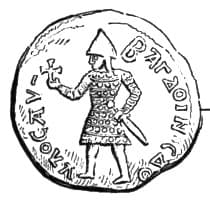
Baldwin II of Jerusalem
Emperor · Medieval
49.0Total

Napoleon Bonaparte
General · Modern
70.9Total
Basic Information
Born
1060
1769
Died
1131
1821
Era
Medieval
Modern
Nationality
Kingdom of Jerusalem
France
Occupation
Emperor
General
Civilization
Western
Western
Score Comparison
Military (10%)
20.0
94.0
Political (20%)
43.7
72.0
Influence (20%)
52.5
40.0
Legacy (20%)
45.8
80.0
Leadership (15%)
65.7
78.0
Strategy (15%)
60.0
90.0
TOTAL
49.0
70.9
Baldwin II of Jerusalem — Complete Timeline
1118 AD
Elected as King of JerusalemPolitical Action◆ Major
Baldwin II was elected King of Jerusalem after the death of Baldwin I. As a capable military leader, he expanded the kingdom's territory and secured its borders against Muslim forces, including capturing Tyre in 1124.
Crusader StatesMonarchyTerritorial Expansion
Impact: regionalconstructive
1123 AD
Captured by Artuqids at Battle of HabWar◆ Major
Baldwin II was captured by the Artuqid Turkish ruler Belek Ghazi during a campaign near the Euphrates. He was held prisoner for over a year until being ransomed for 80,000 dinars, a significant financial blow to the kingdom.
CaptureRansomCrusader-Muslim Wars
Impact: regionaltragic
1124 AD
Captured by Egyptians at Battle of AscalonWar
Shortly after his release, Baldwin II was captured again by Egyptian forces near Ascalon. He was imprisoned in Cairo for several months before being ransomed a second time, demonstrating the precariousness of Crusader leadership.
CaptureRansomEgypt
Impact: regionaltragic
1129 AD
Arranged Marriage of Melisende to FulkPolitical Action◆ Major
Baldwin II arranged the marriage of his daughter Melisende to Fulk V of Anjou, securing a powerful European ally. This dynastic union ensured the succession and strengthened ties between Jerusalem and Western Europe.
Dynastic MarriageSuccessionAlliance
Impact: regionalconstructive
Napoleon Bonaparte — Complete Timeline
1799 AD
Coup of 18 BrumaireOther◆ Major
Napoleon Bonaparte, with support from his brother Lucien and key political figures, overthrew the Directory in a bloodless coup. He established the Consulate with himself as First Consul, effectively becoming the ruler of France. This event ended the French Revolution's most unstable period.
French RevolutionCoupRise to Power
Impact: regional
1804 AD
Promulgation of the Napoleonic CodeOther◆ Major
Napoleon enacted the Civil Code of the French, known as the Napoleonic Code, a comprehensive set of laws that replaced the fragmented feudal legal systems. The code established legal equality, protected property rights, and secularized law. It became the basis for legal systems in many European and world countries.
Legal ReformNapoleonic CodeCivil Law
Impact: globalconstructive
1805 AD
Battle of AusterlitzWar◆ Major
Napoleon's Grande Arm
Napoleonic WarsBattleDecisive Victory
Impact: global
1812 AD
Invasion of RussiaWar◆ Major
Napoleon led the Grande Arm
Napoleonic WarsInvasionDisaster
Impact: globaldestructive
1815 AD
Battle of WaterlooWar◆ Major
Napoleon's French army was defeated by the combined forces of the Duke of Wellington's Anglo-Allied army and Gebhard Leberecht von Bl
Napoleonic WarsBattleFinal Defeat
Impact: globaldestructive
Expert Analysis
baldwin-ii-of-jerusalem-vs-napoleon-bonaparte
# The Emperor and the Crusader King
In the winter of 1123, a French-born king in chains was paraded through the dusty streets of Aleppo, his captors mocking the man who called himself ruler of Jerusalem. Less than a century later, another French-born emperor would ride through the same region at the head of an army so vast that the sands seemed to tremble. Baldwin II and Napoleon Bonaparte—two men who rose from European nobility to command empires in the East, yet who achieved utterly different fates. One spent years in captivity and died in relative obscurity; the other conquered a continent and died a legend. What separated them was not simply talent, but the currents of their ages.
Origins
Napoleon Bonaparte was born in 1769 on the island of Corsica, a place only recently annexed by France. His family were minor nobility, but Corsica was a backwater, and young Napoleon spoke Italian-accented French that marked him as an outsider. The French Revolution, erupting when he was twenty, shattered the old order and created opportunities unimaginable under the Bourbon monarchy. A gifted artillery officer could rise faster than any blue-blooded aristocrat.
Baldwin II, born around 1060, came from a world where birth determined everything. He was a son of the Count of Rethel in northeastern France, a region of castles, monasteries, and feudal obligations. The First Crusade had captured Jerusalem in 1099, and Baldwin’s cousin Godfrey of Bouillon became its first ruler. Baldwin did not choose the Holy Land; he inherited a cause. The Crusader states were a precarious outpost, surrounded by enemies and starved of manpower. His era offered no revolution, only the slow grind of war and diplomacy.
Rise to Power
Napoleon’s ascent was meteoric. In 1793, at the Siege of Toulon, he devised the plan that drove the British fleet from the harbor. By 1796, he commanded the Army of Italy, where his lightning campaigns forced Austria to sue for peace—all before his twenty-seventh birthday. His 1798 Egyptian campaign, though a strategic failure, burnished his legend with the Battle of the Pyramids and the discovery of the Rosetta Stone. When he returned to France in 1799, he seized power in the Coup of 18 Brumaire, becoming First Consul. By 1804, he crowned himself Emperor of the French.
Baldwin II’s path was slower and more dangerous. He had served as Count of Edessa, one of the Crusader states, when his cousin Baldwin I died in 1118. The barons of Jerusalem elected him king, but he inherited a realm that stretched barely a hundred miles along the coast, with a population of perhaps 50,000 Franks surrounded by millions of Muslims. His first years were spent raiding and negotiating, trying to keep the fragile kingdom alive. In 1123, at the Battle of Hab, he was captured by the Artuqid Turk Belek Ghazi and held for a year. Released for a ransom, he was captured again in 1124 by Egyptians near Ascalon and imprisoned in Cairo. His rise was not a series of victories but a desperate scramble for survival.
Leadership & Governance
Napoleon governed with the precision of an artilleryman. He centralized the French state, created the Bank of France, and most famously, codified French law into the Napoleonic Code—a system that abolished feudal privileges, protected property rights, and established secular authority. As a military commander, his genius lay in speed and concentration. At Austerlitz in 1805, he destroyed a larger Austro-Russian army by feinting weakness and then striking the center. His political wisdom, however, was flawed. He placed his brothers on European thrones, ignored the limits of his power, and invaded Russia in 1812, losing half a million men.
Baldwin II ruled through consensus and survival. He had no code, no bureaucracy, no standing army—only feudal levies and the support of military orders like the Knights Templar. His greatest political achievement was the marriage of his daughter Melisende to Fulk V of Anjou in 1129, securing a powerful European ally. As a military leader, he was competent but not brilliant; his strategy score of 60.5 reflects a man who fought to hold ground, not to conquer. He was captured twice, but he was also ransomed twice, and he never lost Jerusalem. His leadership score of 78.3 suggests a commander who inspired loyalty despite repeated setbacks.
Triumph & Tragedy
Napoleon’s triumph was dazzling: from the sands of Egypt to the gates of Moscow, his armies seemed invincible. His tragedy was hubris. The 1812 Russian campaign destroyed his Grande Armée; the 1813 Battle of Leipzig saw his empire crumble; and in 1815, at Waterloo, he was defeated by the Duke of Wellington and Prussian forces. Exiled to Saint Helena, he died in 1821, aged fifty-one.
Baldwin II’s triumph was quieter: he held Jerusalem for thirteen years, expanded its borders, and secured its succession. His tragedy was his captivity—twice—and the knowledge that his kingdom was a candle in a hurricane. He died in 1131, aged about seventy, in his bed, a rare fate for a Crusader king.
Character & Destiny
Napoleon was restless, ambitious, and supremely confident. “I am not a man, but a thing,” he once said. He believed in destiny and willpower, and he bent history to his shape. But his personality forged his downfall: he could not stop, could not compromise, could not share power.
Baldwin II was pragmatic and resilient. He survived capture, ransom, and political intrigue. He knew his limits. He did not dream of conquering Baghdad or Cairo; he dreamed of keeping Jerusalem Christian. His destiny was not glory but endurance.
Legacy
Napoleon’s legacy is immense. The Napoleonic Code influenced legal systems across Europe and the Americas. His military tactics are still studied. He reshaped nationalism, warfare, and governance. His total score of 82.4 reflects a man who changed the world.
Baldwin II’s legacy is smaller. He is remembered by historians of the Crusades, but not by the general public. His total score of 66.6 places him as a competent ruler in a doomed cause. Yet he kept the Kingdom of Jerusalem alive for another generation—no small feat in a world of ceaseless war.
Conclusion
Standing on a hill above Jerusalem, Baldwin II might have looked east and seen only enemies. Standing on the deck of a ship returning from Egypt, Napoleon might have looked west and seen only possibilities. One man inherited a fragile kingdom and held it together with prayer and ransom money. The other inherited a revolution and tried to conquer the world. Their differences were not just personal but epochal. Napoleon lived in an age of transformation, where talent could topple thrones. Baldwin lived in an age of faith, where a king’s duty was to preserve, not to create. Both were French, both were warriors, both died far from home. But one became a myth, while the other became a footnote. The difference was not in their courage, but in the centuries that shaped them.
Rankings
🥇
Napoleon BonaparteLeader
Mil: 94.0Pol: 72.0Inf: 40.0
70.9
🥈
Baldwin II of Jerusalem
Mil: 20.0Pol: 43.7Inf: 52.5
49.0
+21.9 behind
How This Comparison Works
Algorithm
Each figure is scored on 6 dimensions (0—100 scale) based on structured historical data: Military (10%), Political (20%), Influence (20%), Legacy (20%), Leadership (15%), Strategy (15%). The weighted total produces the final ranking.
Data Sources
Scores are computed from structured sub-indicators in the database. Scale factors adjust for era (Ancient ×0.85, Modern ×1.0) and civilization size (Eastern ×1.05, Other ×0.80) to account for differences in population and military scale.
Maximum 3 Figures
Comparisons are limited to 2—3 figures to ensure readability and statistical meaningfulness.
Error Margins
±5 points per dimension — Sub-scores are derived from historical records with inherent uncertainty. Two figures within 5 points on a dimension should be considered roughly equivalent in that area.
Total Score Accuracy
±3 points overall — The weighted combination of 6 dimensions produces a total score with approximately ±3 points of uncertainty. Differences of less than 3 points are not statistically significant— the figures are effectively tied.
Known Limitations
- Historical records are incomplete and uneven across civilizations
- Figures from oral-tradition societies may be underrepresented
- Occupation labels can misclassify multi-role figures
- Scores measure capability and impact, not moral character
- Quantitative scoring is a comparison tool, not absolute truth
Capability Radar
Military (10%) — Battles & Warfare
Battles
45
95
Win Rate
40
90
Expansion
40
95
Political (20%) — Governance & Reform
Reform
35
95
Diplomacy
55
80
Economy
30
85
Influence (20%) — Cultural & Global Reach
Cultural
30
85
Global
25
90
Legacy (20%) — Historical Impact
Historical
45
95
Longevity
30
90
Leadership (15%) — Power & Stability
Tenure
60
85
Stability
25
70
Strategy (15%) — Tactics & Innovation
Strategy
55
95
Tactics
50
98
Reform
30
92
Similar Comparisons
Comments & Discussion
Warrior-Saint6/17/2026
Napoleon's empire crumbled in a decade while Baldwin II's Latin Kingdom of Jerusalem endured for two centuries. The Corsican's tactical brilliance gave him Egypt in 1798, but he couldn't hold it for more than a year. Baldwin captured Tyre in 1124 and actually expanded Crusader territory. Raw ambition doesn't beat institutional building—Napoleon's a blazing comet, Baldwin's a steady flame.
数据狂人6/17/2026
拿破仑在1798年埃及远征带兵3.8万人,而鲍德温二世1123年被俘时连200骑士都没有。一个满配全栈陆军,一个靠200人守城的穷国王,这有啥好比?拿破仑的野战战术和后勤水平领先八百年,鲍德温的“成功”不过是十字军国家碰巧捡到穆斯林内斗红利。不对比数字,就只会吹情怀。
Classics_Gazer6/17/2026
Both men shared the same tragic flaw—overestimating their Eastern ambitions. Napoleon's 1799 siege of Acre failed because Admiral Sidney Smith's British fleet controlled the sea, just as Baldwin got captured in 1123 chasing a raiding party into Muslim territory. History's lesson: empires die on their supply lines. The Corsican lost Egypt; the Frank lost Edessa. Same hubris, different millennium.
东方战略家6/17/2026
拿鲍德温和拿破仑比,就像拿煤油灯和聚光灯比亮度。拿破仑在1798年阿尔库战役用7千人击溃2万奥斯曼军,鲍德温一辈子没打过这样的仗。但关键不是战术——拿破仑启动欧洲近代化,鲍德温只是延续中世纪的宗教幻想。一个是历史的发动机,一个是历史的静止画。高下立判,不用争。
Revisionist_Critic6/17/2026
Stop romanticizing Baldwin II's "resilience." He spent 16 months in Muslim captivity while his kingdom paid ransoms. Napoleon spent one night in a Russian inn after fleeing Moscow—and still rebuilt an army of 500,000 within a year. The so-called Crusader king was just a feudal footnote; Napoleon rewrote European law, military strategy, and national identities. Baldwin's a trivia answer; Napoleon's a world-system shaper.