Loading...
Baldwin IV of Jerusalem vs Tailapa II
Tailapa II leads by 6.9 pts · 2 figures compared
…
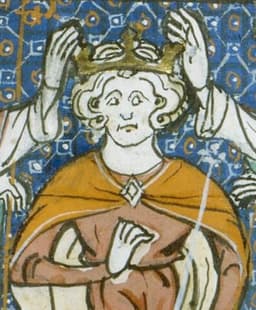
Baldwin IV of Jerusalem
Emperor · Medieval
53.5Total
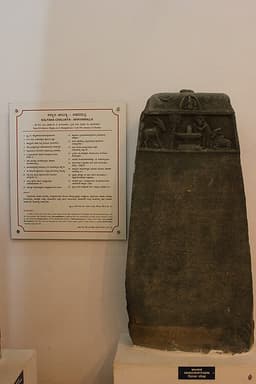
Tailapa II
Emperor · Medieval
60.4Total
Basic Information
Born
1161
957
Died
1185
997
Era
Medieval
Medieval
Nationality
Jerusalem
India
Occupation
Emperor
Emperor
Civilization
Western
Indian
Score Comparison
Military (10%)
40.0
74.7
Political (20%)
43.7
53.8
Influence (20%)
57.2
61.0
Legacy (20%)
54.0
52.0
Leadership (15%)
65.7
72.0
Strategy (15%)
52.5
58.0
TOTAL
53.5
60.4
Baldwin IV of Jerusalem — Complete Timeline
1177 AD
Battle of MontgisardWar
Baldwin IV, despite suffering from leprosy, led a small force to victory against Saladin's larger army at Montgisard. Saladin was forced to retreat to Egypt, and the victory boosted Christian morale in the Kingdom of Jerusalem.
Crusader StatesBattleSaladin
Impact: regional
1183 AD
Siege of KerakWar◆ Major
Baldwin IV led a relief force to the Siege of Kerak, where Saladin was besieging the castle. Baldwin's arrival forced Saladin to lift the siege, demonstrating Baldwin's continued military leadership despite his illness.
Crusader StatesSiegeSaladin
Impact: regional
Appointment of Guy of Lusignan as RegentPolitical Action◆ Major
Due to his worsening leprosy, Baldwin appointed Guy of Lusignan as regent. This decision proved disastrous, as Guy's incompetence led to internal strife and ultimately the loss of Jerusalem.
Crusader StatesPoliticsRegency
Impact: regionaltragic
Coronation of Baldwin VPolitical Action◆ Major
Baldwin IV had his nephew, Baldwin V, crowned co-king to ensure a smooth succession and prevent Guy of Lusignan from inheriting the throne. This move aimed to stabilize the kingdom but failed after Baldwin IV's death.
Crusader StatesSuccession
Impact: regional
Tailapa II — Complete Timeline
973 AD
Founding of the Western Chalukya DynastyPolitical Action◆ Major
Tailapa II overthrew the Rashtrakuta ruler Karka II and established the Western Chalukya dynasty. This marked the end of Rashtrakuta rule in the Deccan and the beginning of a new Chalukya era.
Impact: regional
995 AD
Defeat of the Paramara King MunjaWar◆ Major
Tailapa II defeated and captured the Paramara king Munja of Malwa. This victory consolidated Western Chalukya control over the northern Deccan and established their military reputation.
Impact: regional
Expert Analysis
Origins
Baldwin IV was born in 1161 into the royal House of Anjou, ruling the Crusader Kingdom of Jerusalem. His father was King Amalric I, and his mother was Agnes of Courtenay. Baldwin was diagnosed with leprosy in childhood, a disease that progressively debilitated him. He received military training from William of Tyre and showed early promise despite his condition.
Tailapa II was born around 950 in the Deccan region of India, a feudatory of the Rashtrakuta Empire. He belonged to the Chalukya dynasty of Vengi, but his family had lost power to the Rashtrakutas. Tailapa's early life was spent as a vassal, biding his time to reclaim his heritage. Little is known of his education, but he proved a capable military leader.
Rise to Power
Baldwin IV became king at age 13 in 1174, after the death of his father Amalric I. Despite his leprosy, he was crowned with the support of the High Court. His early reign was marked by the threat of Saladin, who unified Muslim forces. Baldwin's first major test came in 1177 at the Battle of Montgisard, where he led a small force to a stunning victory over Saladin's larger army, forcing Saladin to retreat. This victory cemented Baldwin's reputation as a warrior king.
Tailapa II rose to power by overthrowing the Rashtrakuta ruler Karka II in 973. He led a rebellion from his base in Bijapur, exploiting Rashtrakuta weakness after a series of weak rulers. Tailapa's decisive victory at the Battle of Kalyan in 973 ended Rashtrakuta rule and established the Western Chalukya dynasty. He then consolidated his rule by defeating neighboring kingdoms.
Leadership & Governance
Baldwin IV's leadership was defined by his physical limitations. He relied on capable advisors like Raymond III of Tripoli and Reynald of Châtillon. He maintained a policy of aggressive defense, launching raids into Muslim territory. However, his worsening leprosy forced him to appoint regents. His decision to make Guy of Lusignan regent in 1183 proved disastrous, as Guy's incompetence led to internal strife. Baldwin's governance was reactive, focused on survival rather than expansion.
Tailapa II ruled with a firm hand, establishing a centralized administration. He issued land grants to Brahmins and temples, gaining religious legitimacy. He maintained the feudal system but curbed the power of local chiefs. Tailapa's governance was expansionist; he conquered parts of Malwa and Gujarat. He scored 72.0 in leadership compared to Baldwin's 65.7, reflecting his more stable rule.
Triumph & Tragedy
Baldwin IV's greatest triumph was the victory at Montgisard (1177), where he defeated Saladin despite being outnumbered. He also relieved the Siege of Kerak in 1183, forcing Saladin to withdraw. However, his tragedy was his disease and the succession crisis. His leprosy led to internal divisions, and his appointment of Guy of Lusignan as regent weakened the kingdom. His death in 1185 at age 24 left a fractured realm that fell to Saladin in 1187.
Tailapa II's triumph was founding the Western Chalukya dynasty and defeating the Paramara king Munja in 1008, which consolidated his northern frontier. He also expanded into the Konkan coast. However, his tragedy was the eventual decline of his dynasty after his death, as successors faced rebellions. His later years saw a failed campaign against the Chola Empire, weakening his forces.
Character & Destiny
Baldwin IV was determined and courageous, fighting despite his debilitating illness. He was a skilled tactician but poor at long-term planning. His character — stubborn and trusting of flawed allies — led to his kingdom's downfall. Historians note his piety and sense of duty, but his inability to secure a stable succession sealed Jerusalem's fate.
Tailapa II was ambitious and ruthless, as seen in his overthrow of the Rashtrakutas. He was a patient strategist, waiting for the right moment to strike. His character — pragmatic and decisive — enabled him to build a dynasty. However, his later campaigns overreached, suggesting hubris.
Legacy
Baldwin IV is remembered as the 'Leper King' who fought Saladin against all odds. His legacy is romanticized in popular culture, but his actual impact was limited. The Kingdom of Jerusalem fell two years after his death, and his efforts only delayed the inevitable. He scored 54.0 in legacy, reflecting his symbolic rather than enduring influence.
Tailapa II's legacy is more substantial: he founded the Western Chalukya dynasty that ruled for over two centuries. His reign revived Chalukya power and influenced Deccan architecture and literature. The dynasty's temples, like the Kasivisvesvara Temple, stand as monuments. He scored 52.0 in legacy, slightly lower than Baldwin due to less global recognition.
Conclusion
Tailapa II had greater impact than Baldwin IV. While Baldwin's story is dramatic, his political score of 43.7 and military score of 40.0 are lower than Tailapa's 53.8 and 74.7. Tailapa founded a dynasty that shaped the Deccan for centuries, while Baldwin's kingdom collapsed. Tailapa's total score of 60.4 exceeds Baldwin's 53.5, and his leadership score of 72.0 indicates more effective rule. Therefore, Tailapa II is the more significant historical figure.
Rankings
🥇
Tailapa IILeader
Mil: 74.7Pol: 53.8Inf: 61.0
60.4
🥈
Baldwin IV of Jerusalem
Mil: 40.0Pol: 43.7Inf: 57.2
53.5
+6.9 behind
How This Comparison Works
Algorithm
Each figure is scored on 6 dimensions (0—100 scale) based on structured historical data: Military (10%), Political (20%), Influence (20%), Legacy (20%), Leadership (15%), Strategy (15%). The weighted total produces the final ranking.
Data Sources
Scores are computed from structured sub-indicators in the database. Scale factors adjust for era (Ancient ×0.85, Modern ×1.0) and civilization size (Eastern ×1.05, Other ×0.80) to account for differences in population and military scale.
Maximum 3 Figures
Comparisons are limited to 2—3 figures to ensure readability and statistical meaningfulness.
Error Margins
±5 points per dimension — Sub-scores are derived from historical records with inherent uncertainty. Two figures within 5 points on a dimension should be considered roughly equivalent in that area.
Total Score Accuracy
±3 points overall — The weighted combination of 6 dimensions produces a total score with approximately ±3 points of uncertainty. Differences of less than 3 points are not statistically significant— the figures are effectively tied.
Known Limitations
- Historical records are incomplete and uneven across civilizations
- Figures from oral-tradition societies may be underrepresented
- Occupation labels can misclassify multi-role figures
- Scores measure capability and impact, not moral character
- Quantitative scoring is a comparison tool, not absolute truth
Capability Radar
Military (10%) — Battles & Warfare
Battles
55
70
Win Rate
60
75
Expansion
20
75
Political (20%) — Governance & Reform
Reform
30
65
Diplomacy
55
60
Economy
35
65
Influence (20%) — Cultural & Global Reach
Cultural
45
55
Global
40
40
Legacy (20%) — Historical Impact
Historical
60
60
Longevity
55
50
Leadership (15%) — Power & Stability
Tenure
45
70
Stability
40
60
Strategy (15%) — Tactics & Innovation
Strategy
60
70
Tactics
65
65
Reform
30
60
Similar Comparisons
Comments & Discussion
No comments yet. Be the first to share your thoughts!