Loading...
Alexios I Komnenos vs Tailapa II
Alexios I Komnenos leads by 18.0 pts · 2 figures compared
…
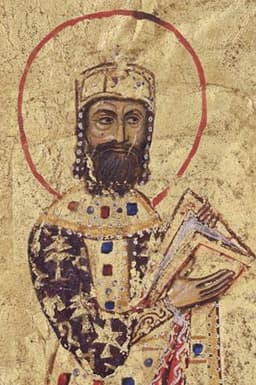
Alexios I Komnenos
Emperor · Medieval
78.4Total
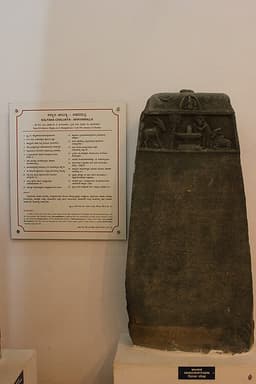
Tailapa II
Emperor · Medieval
60.4Total
Basic Information
Born
1048
957
Died
1118
997
Era
Medieval
Medieval
Nationality
Byzantine Empire
India
Occupation
Emperor
Emperor
Civilization
Western
Indian
Score Comparison
Military (10%)
61.7
74.7
Political (20%)
78.0
53.8
Influence (20%)
88.0
61.0
Legacy (20%)
80.0
52.0
Leadership (15%)
78.0
72.0
Strategy (15%)
68.0
58.0
TOTAL
78.4
60.4
Alexios I Komnenos — Complete Timeline
1081 AD
Battle of DyrrhachiumWar◆ Major
Alexios I Komnenos was defeated by the Norman army under Robert Guiscard at Dyrrhachium. The Byzantine forces were routed, and Alexios barely escaped. This loss allowed the Normans to occupy much of the western Balkans, though Alexios later recovered some territory.
Norman InvasionDefeatBalkans
Impact: regionaltragic
1090 AD
Reforms of the Byzantine Military and EconomyReform◆ Major
Alexios I implemented a series of reforms to restore Byzantine power. He reorganized the army by relying more on foreign mercenaries, reformed the currency (the hyperpyron), and granted tax exemptions to the Church. These measures stabilized the empire after decades of decline.
Military ReformEconomic ReformKomnenian Restoration
Impact: nationalconstructive
1095 AD
Appeal to the West: Council of PiacenzaPolitical Action
Alexios I sent envoys to Pope Urban II at the Council of Piacenza, requesting military aid against the Seljuk Turks. This appeal contributed to Urban's call for the First Crusade at the Council of Clermont later that year, initiating the Crusader movement.
First CrusadePope Urban IISeljuk Turks
Impact: global
1097 AD
First Crusade: Siege of NicaeaWar◆ Major
Alexios I cooperated with the Crusader army to besiege and capture Nicaea from the Seljuk Turks. The city was surrendered to Byzantine control, and Alexios used the Crusaders to recover key territories in Anatolia, though tensions later arose over land claims.
First CrusadeNicaeaByzantine-Crusader Relations
Impact: regionalconstructive
Tailapa II — Complete Timeline
973 AD
Founding of the Western Chalukya DynastyPolitical Action◆ Major
Tailapa II overthrew the Rashtrakuta ruler Karka II and established the Western Chalukya dynasty. This marked the end of Rashtrakuta rule in the Deccan and the beginning of a new Chalukya era.
Impact: regional
995 AD
Defeat of the Paramara King MunjaWar◆ Major
Tailapa II defeated and captured the Paramara king Munja of Malwa. This victory consolidated Western Chalukya control over the northern Deccan and established their military reputation.
Impact: regional
Expert Analysis
Alexios I Komnenos vs Tailapa II
# The Emperor and the Rebel: Two Paths to Power in a Medieval World
In the autumn of 1081, a Byzantine emperor stood watching his army collapse on the plains of Dyrrhachium. Norman cavalry under Robert Guiscard had shattered the imperial lines, and Alexios I Komnenos—only months into his reign—fled the battlefield in disgrace. Half a world away and nearly a century earlier, another ruler was staging a very different kind of debut. In 973, Tailapa II, a obscure Chalukya prince, raised a rebellion against the mighty Rashtrakuta empire, and when the dust settled, he had not only won but founded a dynasty that would rule the Deccan for two centuries. How did two men, both rising amid the wreckage of fallen empires, meet such different fates? The answer lies not in their ambitions, which were equally fierce, but in the worlds they inhabited and the choices they made.
Origins
Alexios Komnenos was born into the purple—literally. His family, the Komnenoi, were among the most powerful aristocratic clans of Byzantium, a civilization that had endured for nearly eight centuries. The Byzantine Empire in 1048 was a weathered titan, rich in culture and bureaucracy but hollowed by internal decay. Alexios grew up among court intrigues, military coups, and the constant threat of Seljuk Turks gnawing at Anatolia. His education was that of a prince: military tactics, imperial administration, and the art of survival in a court where one wrong word could mean blinding or exile.
Tailapa II emerged from a different world entirely. The Deccan plateau of the 10th century was a patchwork of warring kingdoms, where power shifted with the monsoon rains and the edge of a sword. The Rashtrakuta empire, which had dominated for two centuries, was crumbling under weak successors. Tailapa was a member of the Chalukya clan, a line that had once ruled but been reduced to vassalage. He grew up not in a palace but in the shadow of a fallen throne, learning war from the saddle and politics from the battlefield. Where Alexios inherited a system, Tailapa had to build one from rubble.
Rise to Power
Alexios rose through the ranks of the Byzantine military, proving himself a capable general in campaigns against the Turks and the Norman mercenaries who plagued the empire. But his path to the throne was not one of conquest—it was a coup. In 1081, he and his brother Isaac led a rebellion against the unpopular Emperor Nikephoros III, seizing Constantinople through a combination of military force and careful bribery. Alexios was crowned in Hagia Sophia, but his crown was tarnished: the treasury was empty, the army was in shambles, and the Normans were already invading from the west.
Tailapa’s rise was more elemental. For years, he bided his time as a minor feudatory under the Rashtrakutas, watching their empire rot from within. In 973, he struck. Gathering a coalition of local chiefs and disaffected nobles, he marched against Karka II, the Rashtrakuta emperor, and defeated him in battle. There was no grand capital to seize, no ancient bureaucracy to co-opt—just a crown won by the sword. Tailapa proclaimed himself king of the Western Chalukyas, reviving a dynasty that had been dead for two centuries. His power was raw, personal, and rooted in the loyalty of warriors who had seen him fight.
Leadership & Governance
Alexios governed as a survivor. His military reforms, launched around 1090, were desperate measures: he relied increasingly on foreign mercenaries, including the Varangian Guard and Norman knights, because the native Byzantine army had been decimated. He debased the currency, raised taxes, and granted vast estates to his family and loyalists—creating the Komnenian system that would stabilize the empire but also sow the seeds of its later decay. His political genius lay in diplomacy: he played the Seljuks against the Normans, the Venetians against the Pechenegs, and above all, he turned to the West.
In 1095, Alexios sent envoys to Pope Urban II at the Council of Piacenza, begging for military aid. This appeal, carefully framed as a plea for Christian unity, would ignite the First Crusade. It was a masterstroke of statecraft—but also a gamble that would ultimately slip beyond his control.
Tailapa governed as a conqueror. His reign was a constant campaign: against the Paramaras of Malwa, whom he defeated and captured in 995, and against the rising power of the Chola dynasty in the south. He had no need for mercenaries or foreign alliances; his army was composed of feudal levies from loyal chieftains, bound to him by personal ties and the promise of plunder. His administration was simple—land grants to warriors, tribute from defeated kings, and a firm hand over the Deccan’s fractious nobility. Where Alexios built a system, Tailapa built a following.
Triumph & Tragedy
Alexios’s greatest triumph was the First Crusade. In 1097, he cooperated with the Crusader army to besiege and capture Nicaea, the Seljuk capital in Anatolia. The city surrendered to his agents, not the Crusaders, a diplomatic victory that restored a key province to the empire. But the triumph was hollow. The Crusaders marched on to Jerusalem, ignoring his demands for conquered lands, and the Norman prince Bohemond—son of his old enemy Guiscard—would later wage war against him in Antioch. Alexios died in 1118, having restored Byzantine power but at the cost of unleashing forces he could not control.
Tailapa’s tragedy was different. His defeat of the Paramara king Munja in 995 was a stunning victory that secured his western frontier and cemented his reputation. But he died only two years later, in 997, leaving a new dynasty that was still fragile. His son Satyashraya would struggle to hold the kingdom together, facing invasions from both the Paramaras and the Cholas. Tailapa’s triumph was personal, not institutional; he built no lasting administrative structure, and his empire would crumble within a generation.
Character & Destiny
Alexios was a pragmatist. He was not a great warrior—his military score of 71.2 is modest—but he was a master of survival. His political score of 80.0 reflects a mind that saw the chessboard of international politics and moved pieces accordingly. He could be ruthless, even treacherous, but he was also capable of genuine piety and family loyalty. His reign was a constant balancing act between the need to preserve the empire and the impossibility of doing so without making compromises that would haunt his successors.
Tailapa was a warrior-king. His military score of 67.3 and strategy score of 55.4 suggest he was more of a brawler than a tactician, but his leadership score of 73.3 indicates a man who inspired fierce loyalty. He was direct, unsubtle, and utterly determined. He did not negotiate with his enemies—he defeated them. But that same directness was a weakness: he could not build the institutions that would outlast him. His legacy was personal, not structural.
Legacy
Alexios I Komnenos founded a dynasty that would rule Byzantium for a century, overseeing a cultural and military revival known as the Komnenian Restoration. His appeal to the West changed the course of history, unleashing the Crusades that would reshape the Mediterranean world. His legacy score of 75.0 reflects a figure who is remembered not just as a ruler but as a catalyst—for better and for worse.
Tailapa II is less known outside India, but his legacy score of 66.9 understates his importance. He revived the Chalukya name and established a dynasty that would rule the Deccan until the 12th century, building the magnificent temples of Badami and Pattadakal. But his empire was always fragile, and his achievements were overshadowed by the greater Chola and Hoysala kingdoms that followed.
Conclusion
Standing at the edge of the Deccan plateau, one can almost see the ghost of Tailapa II riding out to meet his enemies, a king who trusted only his sword. And in the halls of the Blachernae Palace in Constantinople, one can imagine Alexios I, weary and calculating, writing letters to popes and princes, trying to hold together a world that was slipping away. Both men succeeded in their own ways—one by building an empire, the other by reviving one. But their differences reveal a deeper truth: that power in the medieval world was not a single thing. It could be won by the sword or preserved by the pen, built on loyalty or bought with gold. The question was not which way was better, but which way the times demanded.
Rankings
🥇
Alexios I KomnenosLeader
Mil: 61.7Pol: 78.0Inf: 88.0
78.4
🥈
Tailapa II
Mil: 74.7Pol: 53.8Inf: 61.0
60.4
+18.0 behind
How This Comparison Works
Algorithm
Each figure is scored on 6 dimensions (0—100 scale) based on structured historical data: Military (10%), Political (20%), Influence (20%), Legacy (20%), Leadership (15%), Strategy (15%). The weighted total produces the final ranking.
Data Sources
Scores are computed from structured sub-indicators in the database. Scale factors adjust for era (Ancient ×0.85, Modern ×1.0) and civilization size (Eastern ×1.05, Other ×0.80) to account for differences in population and military scale.
Maximum 3 Figures
Comparisons are limited to 2—3 figures to ensure readability and statistical meaningfulness.
Error Margins
±5 points per dimension — Sub-scores are derived from historical records with inherent uncertainty. Two figures within 5 points on a dimension should be considered roughly equivalent in that area.
Total Score Accuracy
±3 points overall — The weighted combination of 6 dimensions produces a total score with approximately ±3 points of uncertainty. Differences of less than 3 points are not statistically significant— the figures are effectively tied.
Known Limitations
- Historical records are incomplete and uneven across civilizations
- Figures from oral-tradition societies may be underrepresented
- Occupation labels can misclassify multi-role figures
- Scores measure capability and impact, not moral character
- Quantitative scoring is a comparison tool, not absolute truth
Capability Radar
Military (10%) — Battles & Warfare
Battles
75
70
Win Rate
70
75
Expansion
60
75
Political (20%) — Governance & Reform
Reform
85
65
Diplomacy
90
60
Economy
70
65
Influence (20%) — Cultural & Global Reach
Cultural
70
55
Global
75
40
Legacy (20%) — Historical Impact
Historical
85
60
Longevity
80
50
Leadership (15%) — Power & Stability
Tenure
80
70
Stability
75
60
Strategy (15%) — Tactics & Innovation
Strategy
85
70
Tactics
80
65
Reform
75
60
Similar Comparisons
Comments & Discussion
中亚迷踪6/16/2026
Tailapa II的崛起更有血性,别拿Alexios的宫廷游戏来比。Alexios Komnenos在1081年丢盔弃甲逃出Dyrrhachium战场时,Tailapa II早就在973年凭一把刀杀出了Rashtrakuta帝国的尸山血海。一个靠家族名号苟活于世,一个靠野性推翻老牌王朝。别拿拜占庭的腐败文牍来吹捧Alexios的“韧性”,真正的猛人从废墟里捏出新帝国,不是当逃跑皇帝。
PURPLE-BORN SURVIVOR6/16/2026
Alexios I Komnenos is often romanticized as a brilliant emperor, but let's be honest: his rise was pure luck and nepotism. Growing up in the Komnenoi clan, he got military training and court connections handed to him on a silver platter. Tailapa II, on the other hand, started as an obscure prince with no silver spoon—just grit and a rebellion against the Rashtrakuta colossus in 973. One was a product of decayed privilege; the other, a self-made storm. I’ll take Tailapa’s audacity over Alexios’s
COUNTERFACTUAL KNIGHT6/16/2026
Tailapa II’s victory in 973 was over a dying Rashtrakuta empire already fractured by internal revolts. Alexios faced a tougher beast: the Norman war machine under Robert Guiscard, the most disciplined military force west of Constantinople. Tailapa picked his moment smartly, but Alexios had to rebuild from a genuine catastrophe at Dyrrhachium in 1081. I respect both, but Alexios’s comeback—consolidating Byzantium amid Seljuk and Norman vultures—shows a depth of strategic craft that Tailapa’s swif
铁幕破译者6/16/2026
历史不是偶像剧:Tailapa II的崛起是撬动结构腐朽的大胆赌博,而Alexios Komnenos的统治不过是亚细亚帝国内耗的延续。Tailapa在973年推翻Rashtrakuta时,不只靠英雄主义,更靠精准的联盟网和西北贵族策反。Alexios则局限于君士坦丁堡的阴谋圈,连十字军都玩不懂。一个创造新帝国,一个修补旧棺材,别混为一谈。Tailapa才是重写规则的人。
DATA SHARD ANALYST6/16/2026
Let’s crunch the raw stats: Alexios reigned 1081-1118 (37 years) and left a stabilized but smaller empire; Tailapa II ruled 973-997 (24 years) and founded a dynasty lasting over 200 years. By any metric of enduring impact—dynastic longevity, territorial consolidation, cultural renaissance—Tailapa wins hands down. Alex