Loading...
Balian of Ibelin vs Jan Zizka
Jan Zizka leads by 7.4 pts · 2 figures compared
…

Balian of Ibelin
General · Medieval
48.3Total
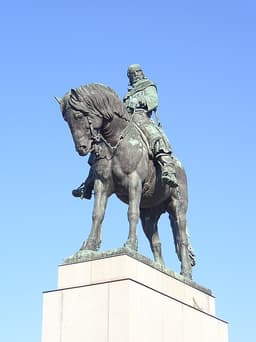
Jan Zizka
General · Medieval
55.7Total
Basic Information
Born
1140
1360
Died
1193
1424
Era
Medieval
Medieval
Nationality
Kingdom of Jerusalem
Bohemia
Occupation
General
General
Civilization
Western
Western
Score Comparison
Military (10%)
40.0
65.0
Political (20%)
39.4
40.8
Influence (20%)
51.0
57.2
Legacy (20%)
45.0
50.0
Leadership (15%)
61.1
54.2
Strategy (15%)
52.5
81.6
TOTAL
48.3
55.7
Balian of Ibelin — Complete Timeline
1177 AD
Battle of MontgisardWar◆ Major
Balian of Ibelin fought alongside King Baldwin IV and a small force of Templars against Saladin's larger army at Montgisard. The Crusader victory halted Saladin's advance and temporarily secured the Kingdom of Jerusalem.
CrusadesBattleSaladin
Impact: regional
1183 AD
Siege of KerakWar
Balian participated in the defense of Kerak Castle against Saladin's siege. The Crusader relief force, including Balian, forced Saladin to withdraw after a prolonged siege, preserving the strategic fortress.
CrusadesSiegeSaladin
Impact: regional
1187 AD
Battle of HattinWar
Balian of Ibelin was among the Crusader commanders at Hattin. The army was decisively defeated by Saladin, leading to the capture of King Guy and the collapse of the Kingdom of Jerusalem's field forces.
CrusadesBattleSaladinDefeat
Impact: regionaltragic
Defense of JerusalemWar◆ Major
After Hattin, Balian led the defense of Jerusalem against Saladin's siege. With only a few knights, he organized the city's resistance and negotiated its surrender, securing safe passage for most inhabitants.
CrusadesSiegeJerusalemSaladin
Impact: regionalconstructive
Negotiated Surrender of JerusalemPolitical Action◆ Major
Balian negotiated the terms of Jerusalem's surrender with Saladin. He secured the ransom of thousands of inhabitants and the city's peaceful transfer, preventing a massacre and establishing a precedent for negotiated capitulations.
CrusadesDiplomacyJerusalemSaladin
Impact: regionalconstructive
1191 AD
Third Crusade CampaignWar◆ Major
Balian participated in the Third Crusade under Richard the Lionheart. He fought at the Battle of Arsuf and was involved in the negotiations that led to the Treaty of Jaffa, which secured Crusader coastal holdings.
CrusadesThird CrusadeRichard the Lionheart
Impact: regional
Jan Zizka — Complete Timeline
1420 AD
Battle of SudoměřWar◆ Major
Jan Žižka led a Hussite force to victory against a larger Catholic army at Sudoměř. Using a wagon fort formation, he repelled the attack and established the tactical superiority of the Hussite war wagons, a key innovation in medieval warfare.
Hussite WarsWagon FortSudoměř
Impact: regional
Battle of Vítkov HillWar◆ Major
Žižka defended Prague against a crusader army at Vítkov Hill. His small force of Hussites defeated the attacking Imperial troops, securing the city and preventing the fall of the Hussite movement. The victory made Žižka a national hero.
PragueVítkovCrusade
Impact: regional
Development of Wagon Fort TacticsInvention◆ Major
Žižka perfected the use of the wagon fort (Wagenburg) as a mobile defensive structure. He armed wagons with cannons and crossbows, creating a fortified position that could move on the battlefield. This innovation revolutionized medieval warfare.
Wagon FortTacticsInnovation
Impact: globalconstructive
1422 AD
Battle of Německý BrodWar◆ Major
Žižka defeated a second crusader army at Německý Brod. He used a feigned retreat to lure the enemy into a trap, then destroyed them with his wagon fort. The victory ended the second crusade against the Hussites.
CrusadeNěmecký BrodFeigned Retreat
Impact: regional
1424 AD
Battle of MalešovWar◆ Major
Žižka won his final battle at Malešov against a coalition of Catholic and Utraquist forces. Despite being blind in one eye, he commanded his army to a decisive victory, demonstrating his tactical genius and the effectiveness of the wagon fort.
MalešovUtraquistsFinal Battle
Impact: regional
Expert Analysis
Origins
Balian of Ibelin was born around 1143 into a noble family in the Kingdom of Jerusalem. His father, Barisan of Ibelin, had established the family’s prominence in the crusader states. Balian inherited the lordship of Ibelin and later married Maria Comnena, the dowager queen of Jerusalem, gaining significant political connections. His early life was shaped by the constant warfare between crusaders and Muslims under leaders like Nur ad-Din and Saladin.
Jan Zizka was born around 1360 in Trocnov, Bohemia (modern Czech Republic), into a minor noble family. He lost an eye in his youth, likely in a local skirmish. Zizka gained military experience fighting for various lords, including the Teutonic Knights in the Polish–Lithuanian–Teutonic War (1410). He later became a mercenary leader, but his life changed when he embraced the Hussite movement, a reformist Christian sect inspired by Jan Hus.
Rise to Power
Balian rose to prominence through family ties and military service. He fought at the Battle of Montgisard in 1177, where a small crusader force defeated Saladin’s larger army. This victory boosted his reputation. After King Baldwin IV’s death, Balian became a key figure in the faction supporting Princess Sibylla and Guy of Lusignan. However, he opposed Guy’s leadership, which led to internal strife. His turning point came after the disastrous Battle of Hattin in 1187, where the crusader army was annihilated by Saladin. Balian escaped and became the de facto leader of Jerusalem’s defense.
Jan Zizka rose to power during the Hussite Wars. After Jan Hus was burned at the stake in 1415, Bohemia erupted in rebellion against the Catholic Church and Holy Roman Emperor Sigismund. Zizka emerged as a military leader for the Hussite forces. His first major victory was at the Battle of Sudoměř in 1420, where he used a wagon fort (Wagenburg) to defeat a larger Catholic army. This battle established his reputation as a brilliant tactician. He then defended Prague at the Battle of Vítkov Hill in 1420, securing the city and becoming the foremost Hussite commander.
Leadership & Governance
Balian’s leadership was marked by pragmatism and negotiation. During the siege of Jerusalem in 1187, he organized a defense with only a few knights, using makeshift fortifications and rallying the populace. When Saladin offered terms, Balian negotiated the surrender, securing the ransom of thousands of inhabitants (set at 30,000 bezants) and ensuring safe passage for many. His governance focused on preserving lives over glory. However, his political influence was limited; he often played a secondary role to more powerful nobles like Raymond of Tripoli.
Jan Zizka commanded with strict discipline and innovative tactics. He trained his peasant army to use the wagon fort as a mobile fortress, arming wagons with cannons and crossbows. His leadership style was authoritarian but effective; he punished deserters harshly and rewarded loyalty. Zizka also implemented a military code that emphasized unity and religious fervor. Despite losing his remaining eye in 1421, he continued to lead, relying on his commanders. His governance extended to organizing the Hussite army into a cohesive fighting force, which allowed him to never lose a battle.
Triumph & Tragedy
Balian’s greatest triumph was the negotiated surrender of Jerusalem. By securing terms that allowed many inhabitants to leave safely, he minimized bloodshed and preserved the city’s infrastructure. His defense of Jerusalem, though ultimately unsuccessful, delayed Saladin’s conquest and bought time for the Third Crusade. However, his failures include the loss of Jerusalem itself and his inability to prevent the internal divisions that weakened the crusader kingdom. He also suffered personal tragedy: his wife and children were captured by Saladin but later ransomed.
Jan Zizka’s triumphs are numerous: he won every major battle he fought, including Sudoměř (1420), Vítkov Hill (1420), Německý Brod (1422), and Malešov (1424). His wagon fort tactics revolutionized medieval warfare, allowing a peasant army to defeat professional knights. However, his tragedy lies in the brutality of the Hussite Wars, which devastated Bohemia and led to civil strife among Hussite factions. Zizka also died of plague in 1424 before the wars ended, leaving his army leaderless.
Character & Destiny
Balian was a pragmatic nobleman who prioritized survival over honor. He negotiated with Saladin despite being a crusader, showing flexibility. His decision to surrender Jerusalem was controversial but saved lives. Historians like Steven Runciman note that Balian’s actions were “the only sensible course” given the situation. His character shaped a destiny of relative obscurity; he remained a minor figure in the Third Crusade and died around 1193, his legacy tied to one event.
Jan Zizka was a determined and innovative leader, driven by religious conviction. He was known for his ruthlessness and tactical genius. His blindness did not diminish his command; he inspired fierce loyalty. Zizka’s character led to a destiny of military legend—he never lost a battle, and his tactics influenced warfare for centuries. However, his inflexible stance against Catholics and Hussite moderates prolonged the conflict.
Legacy
Balian’s legacy is tied to the fall of Jerusalem. He is remembered as the defender who negotiated a humane surrender. In popular culture, he is often idealized (e.g., in the film *Kingdom of Heaven*). His military scores are modest: Military 40.0, Strategy 52.5. His influence (51.0) and legacy (45.0) are limited to crusader history.
Jan Zizka’s legacy is far-reaching. He is a national hero in the Czech Republic, and his wagon fort tactics are studied in military history. His leadership (54.2) and strategy (81.6) scores reflect his innovation. The Hussite Wars led to the eventual recognition of Utraquist practices in Bohemia, a precursor to the Reformation. Zizka’s influence (57.2) and legacy (50.0) surpass Balian’s.
Conclusion
Jan Zizka had greater impact than Balian of Ibelin. With a total score of 55.7 versus Balian’s 48.3, Zizka’s military innovations and undefeated record changed warfare. While Balian’s negotiated surrender was humane, it did not alter the course of history as significantly as Zizka’s tactics, which influenced European military strategy for generations. Zizka’s legacy as a national symbol and military reformer solidifies his higher standing.
Rankings
🥇
Jan ZizkaLeader
Mil: 65.0Pol: 40.8Inf: 57.2
55.7
🥈
Balian of Ibelin
Mil: 40.0Pol: 39.4Inf: 51.0
48.3
+7.4 behind
How This Comparison Works
Algorithm
Each figure is scored on 6 dimensions (0—100 scale) based on structured historical data: Military (10%), Political (20%), Influence (20%), Legacy (20%), Leadership (15%), Strategy (15%). The weighted total produces the final ranking.
Data Sources
Scores are computed from structured sub-indicators in the database. Scale factors adjust for era (Ancient ×0.85, Modern ×1.0) and civilization size (Eastern ×1.05, Other ×0.80) to account for differences in population and military scale.
Maximum 3 Figures
Comparisons are limited to 2—3 figures to ensure readability and statistical meaningfulness.
Error Margins
±5 points per dimension — Sub-scores are derived from historical records with inherent uncertainty. Two figures within 5 points on a dimension should be considered roughly equivalent in that area.
Total Score Accuracy
±3 points overall — The weighted combination of 6 dimensions produces a total score with approximately ±3 points of uncertainty. Differences of less than 3 points are not statistically significant— the figures are effectively tied.
Known Limitations
- Historical records are incomplete and uneven across civilizations
- Figures from oral-tradition societies may be underrepresented
- Occupation labels can misclassify multi-role figures
- Scores measure capability and impact, not moral character
- Quantitative scoring is a comparison tool, not absolute truth
Capability Radar
Military (10%) — Battles & Warfare
Battles
35
85
Win Rate
30
95
Expansion
15
60
Political (20%) — Governance & Reform
Reform
20
50
Diplomacy
70
45
Economy
30
30
Influence (20%) — Cultural & Global Reach
Cultural
40
60
Global
35
55
Legacy (20%) — Historical Impact
Historical
55
70
Longevity
45
65
Leadership (15%) — Power & Stability
Tenure
40
40
Stability
45
35
Strategy (15%) — Tactics & Innovation
Strategy
60
80
Tactics
55
95
Reform
10
90
Similar Comparisons
Comments & Discussion
No comments yet. Be the first to share your thoughts!