Loading...
Balian of Ibelin vs Bertrand du Guesclin
Bertrand du Guesclin leads by 11.7 pts · 2 figures compared
…

Balian of Ibelin
General · Medieval
48.3Total
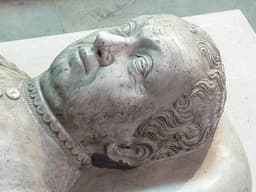
Bertrand du Guesclin
General · Medieval
60.0Total
Basic Information
Born
1140
1320
Died
1193
1380
Era
Medieval
Medieval
Nationality
Kingdom of Jerusalem
France
Occupation
General
General
Civilization
Western
Western
Score Comparison
Military (10%)
40.0
67.3
Political (20%)
39.4
54.7
Influence (20%)
51.0
56.4
Legacy (20%)
45.0
48.3
Leadership (15%)
61.1
80.0
Strategy (15%)
52.5
69.1
TOTAL
48.3
60.0
Balian of Ibelin — Complete Timeline
1177 AD
Battle of MontgisardWar◆ Major
Balian of Ibelin fought alongside King Baldwin IV and a small force of Templars against Saladin's larger army at Montgisard. The Crusader victory halted Saladin's advance and temporarily secured the Kingdom of Jerusalem.
CrusadesBattleSaladin
Impact: regional
1183 AD
Siege of KerakWar
Balian participated in the defense of Kerak Castle against Saladin's siege. The Crusader relief force, including Balian, forced Saladin to withdraw after a prolonged siege, preserving the strategic fortress.
CrusadesSiegeSaladin
Impact: regional
1187 AD
Battle of HattinWar
Balian of Ibelin was among the Crusader commanders at Hattin. The army was decisively defeated by Saladin, leading to the capture of King Guy and the collapse of the Kingdom of Jerusalem's field forces.
CrusadesBattleSaladinDefeat
Impact: regionaltragic
Defense of JerusalemWar◆ Major
After Hattin, Balian led the defense of Jerusalem against Saladin's siege. With only a few knights, he organized the city's resistance and negotiated its surrender, securing safe passage for most inhabitants.
CrusadesSiegeJerusalemSaladin
Impact: regionalconstructive
Negotiated Surrender of JerusalemPolitical Action◆ Major
Balian negotiated the terms of Jerusalem's surrender with Saladin. He secured the ransom of thousands of inhabitants and the city's peaceful transfer, preventing a massacre and establishing a precedent for negotiated capitulations.
CrusadesDiplomacyJerusalemSaladin
Impact: regionalconstructive
1191 AD
Third Crusade CampaignWar◆ Major
Balian participated in the Third Crusade under Richard the Lionheart. He fought at the Battle of Arsuf and was involved in the negotiations that led to the Treaty of Jaffa, which secured Crusader coastal holdings.
CrusadesThird CrusadeRichard the Lionheart
Impact: regional
Bertrand du Guesclin — Complete Timeline
1364 AD
Battle of CocherelWar◆ Major
Bertrand du Guesclin led French forces to victory at the Battle of Cocherel against the forces of Charles II of Navarre. The victory secured the French throne for Charles V and established du Guesclin as a leading commander.
Hundred Years' WarBattle
Impact: regional
Battle of AurayWar◆ Major
Du Guesclin was defeated and captured at the Battle of Auray while fighting for the French in the Breton War of Succession. The defeat was a setback for French ambitions in Brittany.
Hundred Years' WarBattleDefeat
Impact: regionaltragic
1370 AD
Campaign in AquitaineWar◆ Major
Du Guesclin led a successful campaign in Aquitaine, using Fabian tactics to avoid pitched battles and recapture castles and towns from the English. His strategy weakened English control in the region.
Hundred Years' WarCampaign
Impact: regional
Appointment as Constable of FrancePolitical Action◆ Major
King Charles V appointed Bertrand du Guesclin as Constable of France, the highest military office. Du Guesclin was tasked with leading the French campaign to recover territory from the English.
FranceAppointment
Impact: nationalconstructive
1380 AD
Death at the Siege of Châteauneuf-de-RandonWar◆ Major
Bertrand du Guesclin died during the siege of Ch
Hundred Years' WarSiegeDeath
Impact: nationaltragic
Expert Analysis
Origins
Balian of Ibelin was born around 1143 into a noble family in the Kingdom of Jerusalem, the son of Barisan of Ibelin. He grew up in the crusader states, inheriting the lordship of Ibelin and later Nablus through marriage. His early life was shaped by the constant threat of Muslim reconquest and the complex politics of the Latin East.
Bertrand du Guesclin was born around 1320 in Brittany, France, to a minor noble family. He was the eldest son of Robert du Guesclin, lord of Broons. Bertrand's early life was marked by his reputation as a tough and resourceful fighter, but he was initially considered an unpromising child. He gained experience in the Breton War of Succession, fighting for Charles of Blois.
Rise to Power
Balian rose to prominence as a leading baron in the Kingdom of Jerusalem. He was a key figure in the court of King Baldwin IV, participating in campaigns against Saladin. His most significant turning point came after the Battle of Hattin in 1187, where he was one of the few commanders to escape. He then organized the defense of Jerusalem, negotiating its surrender to Saladin in October 1187, securing safe passage for thousands of inhabitants.
Bertrand du Guesclin's rise began with his victory at the Battle of Cocherel in 1364, where he defeated the forces of Charles II of Navarre. However, he was defeated and captured at the Battle of Auray later that year. Despite this, King Charles V of France recognized his abilities and appointed him Constable of France in 1370, the highest military office. Du Guesclin then led a series of campaigns to recover territory from the English during the Hundred Years' War.
Leadership & Governance
Balian's leadership was characterized by pragmatism and negotiation rather than aggressive military action. With a military score of 40.0 and leadership of 61.1, he was more a diplomat than a commander. During the defense of Jerusalem, he organized the city's resistance with only a few knights but ultimately chose to negotiate rather than fight to the death. His political score of 39.4 reflects his limited influence in the crusader kingdom's power structure.
Bertrand du Guesclin was a military leader with a leadership score of 80.0 and strategy of 69.1. He favored Fabian tactics—avoiding pitched battles and instead using sieges, raids, and attrition to weaken the English. His governance focused on military efficiency, and he was known for his discipline and ability to control mercenary companies. His political score of 54.7 shows he was more politically adept than Balian, but still not a primary statesman.
Triumph & Tragedy
Balian's greatest triumph was the negotiated surrender of Jerusalem. He secured the ransom of about 60,000 inhabitants and prevented a massacre, earning respect from both sides. His tragedy was the fall of Jerusalem itself—he could not prevent the loss of the city after Hattin. He also participated in the Third Crusade but had limited success, and his later life saw the continued decline of the crusader states.
Bertrand du Guesclin's triumphs include the recovery of much of Aquitaine and other territories from the English, reversing the gains made by Edward the Black Prince. He captured numerous castles and towns, such as Poitiers and La Rochelle. His tragedy was his death during the siege of Châteauneuf-de-Randon in 1380, just as his campaigns were succeeding. He also suffered a major defeat at Auray in 1364, which set back the French cause in Brittany.
Character & Destiny
Balian was a pragmatic and honorable nobleman, willing to negotiate with his enemies to save lives. His decision to surrender Jerusalem rather than fight to the death was controversial but arguably saved the city's inhabitants. His character was shaped by the realities of crusader politics, where survival often required compromise. Historical assessments note his courage but also his limited strategic vision.
Bertrand du Guesclin was a tenacious and cunning commander, known for his strategic patience and ability to inspire loyalty. He was not a brilliant tactician in open battle but excelled in guerrilla-style warfare. His character was marked by resilience—he was captured several times but always ransomed and returned to service. Historians credit him with laying the groundwork for French victories in the later Hundred Years' War.
Legacy
Balian's legacy is tied to the defense of Jerusalem and the negotiated surrender. He is remembered as a symbol of chivalric negotiation, but his impact on history is limited—the crusader states continued to decline. His influence score of 51.0 and legacy of 45.0 reflect his minor role in broader history.
Bertrand du Guesclin's legacy is more substantial. He is celebrated as a national hero in France, a key figure in the recovery of French territory. His Fabian tactics influenced later French military strategy, and his constableship set a precedent for centralized military command. His influence score of 56.4 and legacy of 48.3 are higher than Balian's, but still modest compared to other medieval figures.
Conclusion
Bertrand du Guesclin had a greater impact than Balian of Ibelin. Du Guesclin's military achievements (67.3 vs 40.0) directly contributed to the French recovery in the Hundred Years' War, shaping the political map of Europe. Balian's actions, while honorable, were ultimately defensive and did not alter the course of the crusades. Du Guesclin's strategic innovations and leadership (80.0 vs 61.1) had lasting effects on warfare, whereas Balian's legacy is confined to a single event. The score gap of 11.7 points in total (60.0 vs 48.3) reflects this difference in historical significance.
Rankings
🥇
Bertrand du GuesclinLeader
Mil: 67.3Pol: 54.7Inf: 56.4
60.0
🥈
Balian of Ibelin
Mil: 40.0Pol: 39.4Inf: 51.0
48.3
+11.7 behind
How This Comparison Works
Algorithm
Each figure is scored on 6 dimensions (0—100 scale) based on structured historical data: Military (10%), Political (20%), Influence (20%), Legacy (20%), Leadership (15%), Strategy (15%). The weighted total produces the final ranking.
Data Sources
Scores are computed from structured sub-indicators in the database. Scale factors adjust for era (Ancient ×0.85, Modern ×1.0) and civilization size (Eastern ×1.05, Other ×0.80) to account for differences in population and military scale.
Maximum 3 Figures
Comparisons are limited to 2—3 figures to ensure readability and statistical meaningfulness.
Error Margins
±5 points per dimension — Sub-scores are derived from historical records with inherent uncertainty. Two figures within 5 points on a dimension should be considered roughly equivalent in that area.
Total Score Accuracy
±3 points overall — The weighted combination of 6 dimensions produces a total score with approximately ±3 points of uncertainty. Differences of less than 3 points are not statistically significant— the figures are effectively tied.
Known Limitations
- Historical records are incomplete and uneven across civilizations
- Figures from oral-tradition societies may be underrepresented
- Occupation labels can misclassify multi-role figures
- Scores measure capability and impact, not moral character
- Quantitative scoring is a comparison tool, not absolute truth
Capability Radar
Military (10%) — Battles & Warfare
Battles
35
65
Win Rate
30
60
Expansion
15
60
Political (20%) — Governance & Reform
Reform
20
45
Diplomacy
70
70
Economy
30
40
Influence (20%) — Cultural & Global Reach
Cultural
40
55
Global
35
45
Legacy (20%) — Historical Impact
Historical
55
60
Longevity
45
50
Leadership (15%) — Power & Stability
Tenure
40
60
Stability
45
55
Strategy (15%) — Tactics & Innovation
Strategy
60
75
Tactics
55
70
Reform
10
55
Similar Comparisons
Comments & Discussion
No comments yet. Be the first to share your thoughts!