Loading...
This comparison has not been analyzed yet.
One-time AI generation (~1 minute). Scores and timeline are already available below.
Banda Singh Bahadur vs Hojo Ujinao
Banda Singh Bahadur leads by 18.0 pts · 2 figures compared
…

Banda Singh Bahadur
General · Modern
56.1Total
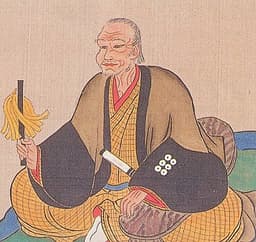
Hojo Ujinao
General · Modern
38.1Total
Basic Information
Born
1670
1562
Died
1716
1591
Era
Modern
Modern
Nationality
India
Japan
Occupation
General
General
Civilization
Indian
Eastern
Score Comparison
Military (10%)
72.5
25.9
Political (20%)
42.2
30.8
Influence (20%)
59.0
47.9
Legacy (20%)
56.0
39.2
Leadership (15%)
47.3
40.4
Strategy (15%)
66.3
30.3
TOTAL
56.1
38.1
Banda Singh Bahadur — Complete Timeline
1709 AD
Led the Sikh Rebellion Against Mughal RuleWar◆ Major
Banda Singh Bahadur, a disciple of Guru Gobind Singh, led a Sikh uprising against the Mughal Empire. He captured Sirhind and other territories, establishing a short-lived Sikh state in Punjab.
RebellionSikh StateMughal Empire
Impact: regional
1710 AD
Captured and Executed Wazir Khan at SirhindWar◆ Major
Banda Singh Bahadur's forces defeated the Mughal army at Sirhind and executed Wazir Khan, the governor who had ordered the martyrdom of Guru Gobind Singh's sons. This victory avenged the Chhota Sahibzade.
BattleSirhindRevenge
Impact: regional
Established a Sikh Administration at LohgarhPolitical Action◆ Major
Banda Singh Bahadur established a Sikh government at Lohgarh, issuing coins and a calendar. This marked the first Sikh attempt at sovereign rule, though it was short-lived.
GovernmentSikh SovereigntyLohgarh
Impact: regionalconstructive
1715 AD
Defeated and Captured by Mughal ForcesWar◆ Major
Banda Singh Bahadur was besieged at Gurdas Nangal and captured by Mughal forces after a prolonged siege. He was taken to Delhi for trial.
DefeatCaptureMughal
Impact: regionaltragic
1716 AD
Executed in DelhiPolitical Action◆ Major
Banda Singh Bahadur was tortured and executed in Delhi by the Mughal emperor Farrukhsiyar. His death ended the first Sikh rebellion but inspired future Sikh resistance.
ExecutionMartyrdomSikhism
Impact: regionaltragic
Hojo Ujinao — Complete Timeline
1590 AD
Surrendered Odawara CastleWar◆ Major
Ujinao, as the head of the Hojo clan, surrendered Odawara Castle to Toyotomi Hideyoshi after a three-month siege. This act ended the Hojo clan's resistance and led to their destruction.
SurrenderHojoOdawara
Impact: nationaldestructive
Exile to Mount KōyaPolitical Action◆ Major
After surrendering, Ujinao was exiled to Mount K
ExileMonkHideyoshi
Impact: regionaltragic
1591 AD
Death in exileOther
Ujinao died in exile on Mount K
DeathExileHojo
tragic
This comparison has not been analyzed yet.
One-time AI generation (~1 minute). Scores and timeline are already available below.
Rankings
🥇
Banda Singh BahadurLeader
Mil: 72.5Pol: 42.2Inf: 59.0
56.1
🥈
Hojo Ujinao
Mil: 25.9Pol: 30.8Inf: 47.9
38.1
+18.0 behind
How This Comparison Works
Algorithm
Each figure is scored on 6 dimensions (0—100 scale) based on structured historical data: Military (10%), Political (20%), Influence (20%), Legacy (20%), Leadership (15%), Strategy (15%). The weighted total produces the final ranking.
Data Sources
Scores are computed from structured sub-indicators in the database. Scale factors adjust for era (Ancient ×0.85, Modern ×1.0) and civilization size (Eastern ×1.05, Other ×0.80) to account for differences in population and military scale.
Maximum 3 Figures
Comparisons are limited to 2—3 figures to ensure readability and statistical meaningfulness.
Error Margins
±5 points per dimension — Sub-scores are derived from historical records with inherent uncertainty. Two figures within 5 points on a dimension should be considered roughly equivalent in that area.
Total Score Accuracy
±3 points overall — The weighted combination of 6 dimensions produces a total score with approximately ±3 points of uncertainty. Differences of less than 3 points are not statistically significant— the figures are effectively tied.
Known Limitations
- Historical records are incomplete and uneven across civilizations
- Figures from oral-tradition societies may be underrepresented
- Occupation labels can misclassify multi-role figures
- Scores measure capability and impact, not moral character
- Quantitative scoring is a comparison tool, not absolute truth
Capability Radar
Military (10%) — Battles & Warfare
Battles
55
15
Win Rate
60
10
Expansion
55
5
Political (20%) — Governance & Reform
Reform
40
10
Diplomacy
25
20
Economy
20
15
Influence (20%) — Cultural & Global Reach
Cultural
55
10
Global
30
5
Legacy (20%) — Historical Impact
Historical
60
15
Longevity
50
10
Leadership (15%) — Power & Stability
Tenure
30
25
Stability
15
10
Strategy (15%) — Tactics & Innovation
Strategy
60
15
Tactics
65
20
Reform
50
5
Similar Comparisons
Comments & Discussion
No comments yet. Be the first to share your thoughts!