Loading...
Banda Singh Bahadur vs Liu Bocheng
Liu Bocheng leads by 6.7 pts · 2 figures compared
…

Banda Singh Bahadur
General · Modern
56.1Total
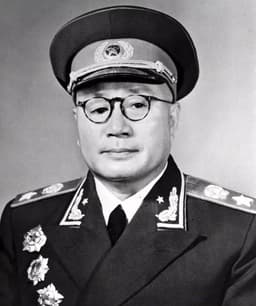
Liu Bocheng
General · Modern
62.8Total
Basic Information
Born
1670
1892
Died
1716
1986
Era
Modern
Modern
Nationality
India
China
Occupation
General
General
Civilization
Indian
Eastern
Score Comparison
Military (10%)
72.5
74.0
Political (20%)
42.2
72.0
Influence (20%)
59.0
55.0
Legacy (20%)
56.0
55.0
Leadership (15%)
47.3
68.0
Strategy (15%)
66.3
69.2
TOTAL
56.1
62.8
Banda Singh Bahadur — Complete Timeline
1709 AD
Led the Sikh Rebellion Against Mughal RuleWar◆ Major
Banda Singh Bahadur, a disciple of Guru Gobind Singh, led a Sikh uprising against the Mughal Empire. He captured Sirhind and other territories, establishing a short-lived Sikh state in Punjab.
RebellionSikh StateMughal Empire
Impact: regional
1710 AD
Captured and Executed Wazir Khan at SirhindWar◆ Major
Banda Singh Bahadur's forces defeated the Mughal army at Sirhind and executed Wazir Khan, the governor who had ordered the martyrdom of Guru Gobind Singh's sons. This victory avenged the Chhota Sahibzade.
BattleSirhindRevenge
Impact: regional
Established a Sikh Administration at LohgarhPolitical Action◆ Major
Banda Singh Bahadur established a Sikh government at Lohgarh, issuing coins and a calendar. This marked the first Sikh attempt at sovereign rule, though it was short-lived.
GovernmentSikh SovereigntyLohgarh
Impact: regionalconstructive
1715 AD
Defeated and Captured by Mughal ForcesWar◆ Major
Banda Singh Bahadur was besieged at Gurdas Nangal and captured by Mughal forces after a prolonged siege. He was taken to Delhi for trial.
DefeatCaptureMughal
Impact: regionaltragic
1716 AD
Executed in DelhiPolitical Action◆ Major
Banda Singh Bahadur was tortured and executed in Delhi by the Mughal emperor Farrukhsiyar. His death ended the first Sikh rebellion but inspired future Sikh resistance.
ExecutionMartyrdomSikhism
Impact: regionaltragic
Liu Bocheng — Complete Timeline
1916 AD
Lost an Eye in BattleWar
Liu Bocheng was shot in the eye during a battle against warlord forces. The injury required surgery without anesthesia, earning him the nickname 'One-eyed Dragon.' He continued to serve as a commander despite the injury.
InjuryWarlord Era
Impact: nationaltragic
1940 AD
Commander of the 129th Division in the Hundred Regiments OffensiveWar◆ Major
Liu Bocheng commanded the 129th Division of the Eighth Route Army in the Hundred Regiments Offensive against Japanese forces. The campaign involved large-scale guerrilla attacks on Japanese supply lines and positions.
Second Sino-Japanese WarGuerrilla Warfare
Impact: regional
1945 AD
Co-commander of the Second Field Army in the Chinese Civil WarWar◆ Major
Liu Bocheng co-commanded the Second Field Army with Deng Xiaoping. They led campaigns that captured key cities in central and southwestern China, including the Battle of Huaihai, a decisive Communist victory.
Chinese Civil WarMilitary Campaign
Impact: nationaldestructive
1951 AD
President of the Military Academy of the People's Liberation ArmyPolitical Action◆ Major
Liu Bocheng was appointed president of the newly established Military Academy of the PLA. He modernized military education, introducing Soviet-style training and emphasizing professional military science.
Military EducationModernization
Impact: nationalconstructive
Expert Analysis
Origins
Banda Singh Bahadur was born in 1670 in Rajouri, present-day Jammu and Kashmir, into a Rajput family. Initially a Bairagi ascetic, he became a disciple of Guru Gobind Singh in 1708, who tasked him with leading the Sikh rebellion against Mughal oppression. His early life was marked by spiritual seeking, and his transformation into a military leader was sudden and profound.
Liu Bocheng was born in 1892 in Kaixian, Sichuan, China, into a poor peasant family. He received some classical education and later attended the Yunnan Military Academy, graduating in 1915. He joined the Chinese Communist Party in 1926 and participated in the Nanchang Uprising in 1927, establishing his credentials as a revolutionary soldier.
Rise to Power
Banda Singh Bahadur's rise began after receiving Guru Gobind Singh's blessing. He gathered a small army and in 1709 defeated Mughal forces at Samana, capturing wealth and arms. His major turning point was the Battle of Sirhind in 1710, where he led a coalition of Sikhs and local Jats to defeat the Mughal governor Wazir Khan. This victory allowed him to establish a Sikh state at Lohgarh, issuing coins and a calendar, marking the first Sikh sovereign rule.
Liu Bocheng's rise came through his military acumen in the Chinese Civil War. He was a key commander in the Long March (1934-1935) and later commanded the 129th Division during the Hundred Regiments Offensive (1940) against Japanese forces. His partnership with Deng Xiaoping in the Second Field Army was crucial; they captured major cities like Nanjing and Shanghai in 1949. He was appointed president of the PLA Military Academy in 1951, shaping modern Chinese military education.
Leadership & Governance
Banda Singh Bahadur's leadership was charismatic and religiously motivated. He established a Sikh administration based on principles of justice and egalitarianism, abolishing land taxes and granting peasants rights. However, his governance was short-lived due to continuous Mughal counterattacks. He relied on guerrilla tactics and mobile warfare, scoring 66.3 in strategy, but lacked sustained political organization, reflected in his political score of 42.2.
Liu Bocheng was a methodical and disciplined commander, known for his careful planning and use of combined arms. He scored 68.0 in leadership and 69.2 in strategy. As president of the Military Academy, he introduced Soviet-style training and emphasized modern warfare doctrines. His political score of 72.0 indicates effective collaboration with party authorities, especially Deng Xiaoping. He focused on professionalizing the army rather than personal rule.
Triumph & Tragedy
Banda Singh Bahadur's greatest triumph was capturing Sirhind and executing Wazir Khan, avenging the martyrdom of Guru Gobind Singh's sons. He also established a sovereign Sikh state at Lohgarh, issuing coins in the name of Guru Nanak. However, his tragedy came in 1715 when he was besieged at Gurdas Nangal, captured after eight months, and taken to Delhi. He was brutally executed in 1716, his death ending the first Sikh rebellion but inspiring future movements.
Liu Bocheng's triumph was co-commanding the Second Field Army to victory in the Chinese Civil War, capturing key cities and helping establish the People's Republic. He also modernized military education, influencing generations of officers. His tragedy was the loss of his eye in 1916 during a battle, an injury that required surgery without anesthesia, earning him the nickname 'One-eyed Dragon'. However, he survived and continued his career, dying naturally in 1986 at age 94.
Character & Destiny
Banda Singh Bahadur was a fervent and determined leader, driven by religious conviction. His character was uncompromising, which led to both his early successes and his ultimate downfall. He refused to negotiate with the Mughals, and his harsh treatment of prisoners, including the execution of Wazir Khan, alienated some potential allies. His destiny was shaped by the overwhelming power of the Mughal Empire, which eventually crushed his rebellion.
Liu Bocheng was a pragmatic and resilient strategist. He adapted to changing circumstances, from warlord conflicts to anti-Japanese war and civil war. His injury demonstrated his toughness, and his ability to work within the CCP system ensured his longevity. His character of discipline and loyalty allowed him to survive political purges that claimed many other generals. He died peacefully, a respected elder of the People's Liberation Army.
Legacy
Banda Singh Bahadur's legacy is profound for Sikhism and Indian history. He is remembered as a martyr and a symbol of resistance against oppression. His short-lived state laid the groundwork for the later Sikh Empire under Ranjit Singh. He scored 56.0 in legacy, reflecting his enduring symbolic importance despite military defeat.
Liu Bocheng's legacy is as a founding father of the PLA's military education system. His emphasis on professional training influenced Chinese military modernization. He is remembered as one of the top ten marshals of the PLA, though his role is often overshadowed by Mao and Deng. He scored 55.0 in legacy, comparable to Banda Singh Bahadur, but in a different context.
Conclusion
Between Banda Singh Bahadur and Liu Bocheng, Liu Bocheng had greater overall impact based on total score (62.8 vs 56.1). His military contributions were more sustained and integrated into a larger successful revolution, while Banda Singh Bahadur's rebellion, though brave, was ultimately crushed. Liu Bocheng's work in military education had lasting institutional effects, whereas Banda Singh Bahadur's legacy is more symbolic than practical. Therefore, Liu Bocheng emerges as the more effective and impactful general.
Rankings
🥇
Liu BochengLeader
Mil: 74.0Pol: 72.0Inf: 55.0
62.8
🥈
Banda Singh Bahadur
Mil: 72.5Pol: 42.2Inf: 59.0
56.1
+6.7 behind
How This Comparison Works
Algorithm
Each figure is scored on 6 dimensions (0—100 scale) based on structured historical data: Military (10%), Political (20%), Influence (20%), Legacy (20%), Leadership (15%), Strategy (15%). The weighted total produces the final ranking.
Data Sources
Scores are computed from structured sub-indicators in the database. Scale factors adjust for era (Ancient ×0.85, Modern ×1.0) and civilization size (Eastern ×1.05, Other ×0.80) to account for differences in population and military scale.
Maximum 3 Figures
Comparisons are limited to 2—3 figures to ensure readability and statistical meaningfulness.
Error Margins
±5 points per dimension — Sub-scores are derived from historical records with inherent uncertainty. Two figures within 5 points on a dimension should be considered roughly equivalent in that area.
Total Score Accuracy
±3 points overall — The weighted combination of 6 dimensions produces a total score with approximately ±3 points of uncertainty. Differences of less than 3 points are not statistically significant— the figures are effectively tied.
Known Limitations
- Historical records are incomplete and uneven across civilizations
- Figures from oral-tradition societies may be underrepresented
- Occupation labels can misclassify multi-role figures
- Scores measure capability and impact, not moral character
- Quantitative scoring is a comparison tool, not absolute truth
Capability Radar
Military (10%) — Battles & Warfare
Battles
55
85
Win Rate
60
80
Expansion
55
70
Political (20%) — Governance & Reform
Reform
40
55
Diplomacy
25
65
Economy
20
50
Influence (20%) — Cultural & Global Reach
Cultural
55
55
Global
30
50
Legacy (20%) — Historical Impact
Historical
60
70
Longevity
50
60
Leadership (15%) — Power & Stability
Tenure
30
60
Stability
15
60
Strategy (15%) — Tactics & Innovation
Strategy
60
88
Tactics
65
90
Reform
50
75
Similar Comparisons
Comments & Discussion
No comments yet. Be the first to share your thoughts!