Loading...
Arthur Harris vs Liu Bocheng
Liu Bocheng leads by 3.3 pts · 2 figures compared
…
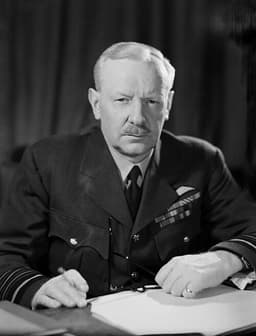
Arthur Harris
General · Modern
59.5Total
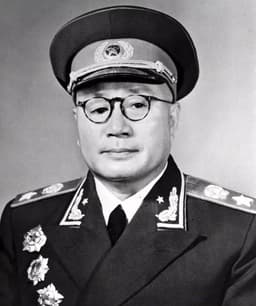
Liu Bocheng
General · Modern
62.8Total
Basic Information
Born
1892
1892
Died
1984
1986
Era
Modern
Modern
Nationality
United Kingdom
China
Occupation
General
General
Civilization
Western
Eastern
Score Comparison
Military (10%)
67.3
74.0
Political (20%)
43.7
72.0
Influence (20%)
65.0
55.0
Legacy (20%)
52.0
55.0
Leadership (15%)
65.0
68.0
Strategy (15%)
72.0
69.2
TOTAL
59.5
62.8
Arthur Harris — Complete Timeline
1942 AD
Appointed Commander-in-Chief of Bomber CommandPolitical Action◆ Major
Harris was appointed Commander-in-Chief of RAF Bomber Command. He implemented the area bombing directive, targeting German cities to destroy civilian morale and industrial capacity, a strategy that remained controversial.
World War IIBombingRoyal Air Force
Impact: global
1943 AD
Battle of the RuhrWar◆ Major
Harris directed a sustained bombing campaign against the Ruhr industrial region, using new tactics like the 'Oboe' navigation system. The campaign damaged German war production but also caused heavy bomber losses.
World War IIStrategic BombingGermany
Impact: regionaldestructive
Bombing of Hamburg (Operation Gomorrah)War◆ Major
Harris ordered a series of raids on Hamburg that created a firestorm, killing an estimated 37,000 civilians and destroying much of the city. The operation used 'Window' (chaff) to confuse German radar, reducing bomber losses.
World War IIStrategic BombingCivilian Casualties
Impact: regionaldestructive
1945 AD
Bombing of DresdenWar◆ Major
Harris ordered the bombing of Dresden, resulting in a firestorm that killed an estimated 25,000 civilians. The raid became a symbol of the moral controversy surrounding area bombing, though its military necessity was debated.
World War IIStrategic BombingCivilian Casualties
Impact: regionaldestructive
Liu Bocheng — Complete Timeline
1916 AD
Lost an Eye in BattleWar
Liu Bocheng was shot in the eye during a battle against warlord forces. The injury required surgery without anesthesia, earning him the nickname 'One-eyed Dragon.' He continued to serve as a commander despite the injury.
InjuryWarlord Era
Impact: nationaltragic
1940 AD
Commander of the 129th Division in the Hundred Regiments OffensiveWar◆ Major
Liu Bocheng commanded the 129th Division of the Eighth Route Army in the Hundred Regiments Offensive against Japanese forces. The campaign involved large-scale guerrilla attacks on Japanese supply lines and positions.
Second Sino-Japanese WarGuerrilla Warfare
Impact: regional
1945 AD
Co-commander of the Second Field Army in the Chinese Civil WarWar◆ Major
Liu Bocheng co-commanded the Second Field Army with Deng Xiaoping. They led campaigns that captured key cities in central and southwestern China, including the Battle of Huaihai, a decisive Communist victory.
Chinese Civil WarMilitary Campaign
Impact: nationaldestructive
1951 AD
President of the Military Academy of the People's Liberation ArmyPolitical Action◆ Major
Liu Bocheng was appointed president of the newly established Military Academy of the PLA. He modernized military education, introducing Soviet-style training and emphasizing professional military science.
Military EducationModernization
Impact: nationalconstructive
Expert Analysis
Origins
Arthur Travers Harris was born on April 13, 1892, in Cheltenham, England, to a colonial civil servant family. He spent part of his youth in Rhodesia (now Zimbabwe), where he developed a rugged independence. After attending the Royal Military College, Sandhurst, he joined the Royal Flying Corps in 1915, transitioning from army to air service. His early exposure to the vast African landscape and his experience in World War I as a pilot and squadron commander shaped his belief in the decisive power of air forces.
Liu Bocheng was born on December 4, 1892, in Kaizhou, Sichuan Province, China, to a poor farming family. Despite poverty, he received an education in classical Chinese texts and later enrolled in a military academy. He joined the Kuomintang (KMT) but switched allegiance to the Communist Party after the 1927 split. His early military experience came from fighting warlords and participating in the Northern Expedition. Liu lost an eye in 1916 during a battle against warlord forces, undergoing surgery without anesthesia, earning the nickname "One-Eyed Dragon."
Rise to Power
Harris rose through the RAF ranks between the wars, serving in Iraq and Palestine, where he advocated for aerial policing as a cost-effective method of colonial control. His big break came in 1942 when he was appointed Commander-in-Chief of RAF Bomber Command. He immediately implemented the Area Bombing Directive, shifting from precision bombing to targeting German cities to destroy civilian morale and industrial capacity. The Battle of the Ruhr (March-July 1943) showcased his tactics, using the Oboe navigation system to improve accuracy. Harris's unwavering advocacy for strategic bombing made him a dominant figure in the Allied air war.
Liu Bocheng's rise paralleled the growth of the Chinese Communist Party's military. After the Long March (1934-1935), he became the chief of staff of the Eighth Route Army. During the Second Sino-Japanese War, he commanded the 129th Division in the Hundred Regiments Offensive (August-December 1940), a large-scale guerrilla campaign against Japanese supply lines and garrisons. His tactical skills earned him recognition as one of the PLA's finest strategists. In the Chinese Civil War, he co-commanded the Second Field Army with Deng Xiaoping, leading campaigns that captured key cities like Nanjing and Chengdu, contributing decisively to the Communist victory in 1949.
Leadership & Governance
Harris's leadership was characterized by relentless determination and a narrow focus on strategic bombing. He micromanaged Bomber Command's operations, insisting on area bombing despite growing evidence that it did not break German morale and cost heavy aircrew casualties. He resisted diversions to support the Battle of the Atlantic or tactical bombing before D-Day, arguing that his campaign could win the war alone. His governance style was autocratic; he protected his command from outside interference but failed to adapt to changing strategic needs.
Liu Bocheng was a methodical and innovative commander, known for his emphasis on education and planning. He established the Military Academy of the PLA in 1951, introducing Soviet-style training and modernizing Chinese military doctrine. His leadership stressed guerrilla tactics, mobility, and the integration of political indoctrination with military skill. Unlike Harris, Liu worked closely with political commissars like Deng Xiaoping, reflecting the PLA's dual command system. He was also a skilled diplomat, negotiating with local warlords and ethnic minorities to secure Communist control in southwest China.
Triumph & Tragedy
Harris's greatest triumph was the damage inflicted on Germany's industrial capacity. The bombing of Hamburg (Operation Gomorrah, July 1943) created a firestorm that killed 37,000 civilians and destroyed 60% of the city. The campaign forced Germany to divert resources to air defense and reconstruction. However, his greatest failure was the inability to achieve a decisive victory. The bombing of Dresden (February 1945) killed 25,000 civilians but had minimal strategic impact, and postwar analysis showed that area bombing did not significantly reduce German war production until late 1944. Harris also failed to anticipate the threat from German night fighters, leading to heavy bomber losses.
Liu Bocheng's triumphs include the successful campaigns of the Second Field Army, which captured large territories with minimal resources. His tactics in the Huaihai Campaign (1948-1949) helped encircle and destroy KMT forces, a key turning point in the civil war. His tragedy came after 1949: during the Cultural Revolution, he was purged and criticized for his Soviet-style military reforms. He was rehabilitated later but his influence waned. His greatest personal loss was his eye, but he turned that into a symbol of resilience.
Character & Destiny
Harris was stubborn, single-minded, and often tactless. He refused to accept the moral criticism of area bombing, defending it as necessary to shorten the war. His character led him to be sidelined after the war; he was not given a peerage and wrote a defensive memoir. His destiny was to be remembered as a controversial figure, embodying the moral dilemmas of total war.
Liu Bocheng was pragmatic, disciplined, and intellectually curious. He studied military theory extensively and wrote manuals on guerrilla warfare. His character allowed him to survive political purges by maintaining a low profile and focusing on professional military education. He died in 1986 at age 93, respected within the PLA for his strategic mind.
Legacy
Harris's legacy is mixed. He pioneered large-scale strategic bombing, influencing Cold War air power doctrine. However, the moral controversy over area bombing overshadows his technical achievements. Bomber Command was not given a separate campaign medal until 2013. His scores reflect this: Military 67.3, Legacy 52.0.
Liu Bocheng's legacy is more positive within China. He is celebrated as a founding father of the PLA's military education system and a master of guerrilla warfare. His strategies influenced Mao's doctrine of "people's war." Outside China, he is less known. His scores: Military 74.0, Legacy 55.0.
Conclusion
Liu Bocheng had a greater overall impact, scoring 62.8 vs Harris's 59.5. While Harris's strategic bombing was technologically significant, it failed to achieve its stated goals and caused massive civilian casualties without decisive effect. Liu Bocheng's guerrilla and conventional campaigns directly contributed to the Communist victory in China, shaping the world's most populous nation. His military education reforms also had lasting institutional impact. Harris's influence was confined to a single, controversial tactic, while Liu's strategic adaptability and legacy in military education provide a more enduring contribution to military science.
Rankings
🥇
Liu BochengLeader
Mil: 74.0Pol: 72.0Inf: 55.0
62.8
🥈
Arthur Harris
Mil: 67.3Pol: 43.7Inf: 65.0
59.5
+3.3 behind
How This Comparison Works
Algorithm
Each figure is scored on 6 dimensions (0—100 scale) based on structured historical data: Military (10%), Political (20%), Influence (20%), Legacy (20%), Leadership (15%), Strategy (15%). The weighted total produces the final ranking.
Data Sources
Scores are computed from structured sub-indicators in the database. Scale factors adjust for era (Ancient ×0.85, Modern ×1.0) and civilization size (Eastern ×1.05, Other ×0.80) to account for differences in population and military scale.
Maximum 3 Figures
Comparisons are limited to 2—3 figures to ensure readability and statistical meaningfulness.
Error Margins
±5 points per dimension — Sub-scores are derived from historical records with inherent uncertainty. Two figures within 5 points on a dimension should be considered roughly equivalent in that area.
Total Score Accuracy
±3 points overall — The weighted combination of 6 dimensions produces a total score with approximately ±3 points of uncertainty. Differences of less than 3 points are not statistically significant— the figures are effectively tied.
Known Limitations
- Historical records are incomplete and uneven across civilizations
- Figures from oral-tradition societies may be underrepresented
- Occupation labels can misclassify multi-role figures
- Scores measure capability and impact, not moral character
- Quantitative scoring is a comparison tool, not absolute truth
Capability Radar
Military (10%) — Battles & Warfare
Battles
75
85
Win Rate
70
80
Expansion
60
70
Political (20%) — Governance & Reform
Reform
40
55
Diplomacy
30
65
Economy
20
50
Influence (20%) — Cultural & Global Reach
Cultural
55
55
Global
65
50
Legacy (20%) — Historical Impact
Historical
70
70
Longevity
50
60
Leadership (15%) — Power & Stability
Tenure
60
60
Stability
20
60
Strategy (15%) — Tactics & Innovation
Strategy
80
88
Tactics
85
90
Reform
90
75
Similar Comparisons
Comments & Discussion
No comments yet. Be the first to share your thoughts!