Loading...
This comparison has not been analyzed yet.
One-time AI generation (~1 minute). Scores and timeline are already available below.
Bantu Holomisa vs Martin Torrijos
Martin Torrijos leads by 3.6 pts · 2 figures compared
…

Bantu Holomisa
Politician · Modern
47.5Total
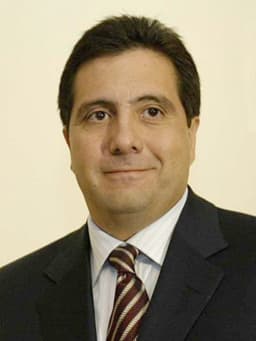
Martin Torrijos
Politician · Modern
51.1Total
Basic Information
Born
1955
1963
Died
—
—
Era
Modern
Modern
Nationality
South Africa
Panama
Occupation
Politician
Politician
Civilization
Other
Western
Score Comparison
Military (10%)
39.9
49.7
Political (20%)
37.9
68.0
Influence (20%)
49.4
49.4
Legacy (20%)
40.8
39.2
Leadership (15%)
65.7
65.0
Strategy (15%)
54.6
40.3
TOTAL
47.5
51.1
Bantu Holomisa — Complete Timeline
1987 AD
Led a Military Coup in TranskeiPolitical Action◆ Major
Bantu Holomisa led a military coup in the nominally independent homeland of Transkei, overthrowing the government of Prime Minister Stella Sigcau. He became the head of state, ruling as military dictator until 1994.
CoupTranskeiMilitary Rule
Impact: regionaldestructive
1994 AD
Integrated Transkei into Post-Apartheid South AfricaPolitical Action◆ Major
Holomisa oversaw the dissolution of the Transkei homeland and its reintegration into South Africa after the end of apartheid. He facilitated the transition to democratic governance, supporting the ANC-led government.
TransitionDemocracyReintegration
Impact: nationalconstructive
1997 AD
Co-founded the United Democratic MovementPolitical Action◆ Major
Holomisa co-founded the United Democratic Movement (UDM) with Roelf Meyer, a former National Party minister. The UDM positioned itself as a centrist alternative to the ANC, advocating for good governance and anti-corruption.
UDMPolitical PartyAnti-Corruption
Impact: nationalconstructive
Martin Torrijos — Complete Timeline
2004 AD
Elected President of PanamaPolitical Action◆ Major
Martin Torrijos, son of former military leader Omar Torrijos, won the 2004 presidential election as the candidate of the Democratic Revolutionary Party (PRD). His victory marked the return of the PRD to power after a decade out of office.
ElectionPRDDynasty
Impact: national
Presidency (2004-2009)Political Action◆ Major
Torrijos's presidency was marked by economic growth, social reforms, and the initiation of the canal expansion. He also pursued anti-corruption measures and improved relations with the United States. He left office with relatively high approval ratings.
PresidencyReformGrowth
Impact: nationalconstructive
2006 AD
Panama Canal Expansion ProjectPolitical Action
Torrijos proposed and secured approval for a major expansion of the Panama Canal through a national referendum in 2006. The project aimed to build a third set of locks to accommodate larger ships, significantly increasing the canal's capacity and economic impact.
CanalInfrastructureReferendum
Impact: globalconstructive
This comparison has not been analyzed yet.
One-time AI generation (~1 minute). Scores and timeline are already available below.
Rankings
🥇
Martin TorrijosLeader
Mil: 49.7Pol: 68.0Inf: 49.4
51.1
🥈
Bantu Holomisa
Mil: 39.9Pol: 37.9Inf: 49.4
47.5
+3.6 behind
How This Comparison Works
Algorithm
Each figure is scored on 6 dimensions (0—100 scale) based on structured historical data: Military (10%), Political (20%), Influence (20%), Legacy (20%), Leadership (15%), Strategy (15%). The weighted total produces the final ranking.
Data Sources
Scores are computed from structured sub-indicators in the database. Scale factors adjust for era (Ancient ×0.85, Modern ×1.0) and civilization size (Eastern ×1.05, Other ×0.80) to account for differences in population and military scale.
Maximum 3 Figures
Comparisons are limited to 2—3 figures to ensure readability and statistical meaningfulness.
Error Margins
±5 points per dimension — Sub-scores are derived from historical records with inherent uncertainty. Two figures within 5 points on a dimension should be considered roughly equivalent in that area.
Total Score Accuracy
±3 points overall — The weighted combination of 6 dimensions produces a total score with approximately ±3 points of uncertainty. Differences of less than 3 points are not statistically significant— the figures are effectively tied.
Known Limitations
- Historical records are incomplete and uneven across civilizations
- Figures from oral-tradition societies may be underrepresented
- Occupation labels can misclassify multi-role figures
- Scores measure capability and impact, not moral character
- Quantitative scoring is a comparison tool, not absolute truth
Capability Radar
Military (10%) — Battles & Warfare
Battles
10
30
Win Rate
10
32
Expansion
5
33
Political (20%) — Governance & Reform
Reform
35
40
Diplomacy
30
45
Economy
20
50
Influence (20%) — Cultural & Global Reach
Cultural
20
15
Global
15
20
Legacy (20%) — Historical Impact
Historical
25
20
Longevity
20
15
Leadership (15%) — Power & Stability
Tenure
40
35
Stability
25
45
Strategy (15%) — Tactics & Innovation
Strategy
10
35
Tactics
10
39
Reform
15
41
Similar Comparisons
Comments & Discussion
No comments yet. Be the first to share your thoughts!