Loading...
Martin Torrijos vs Napoleon Bonaparte
Napoleon Bonaparte leads by 19.8 pts · 2 figures compared
…
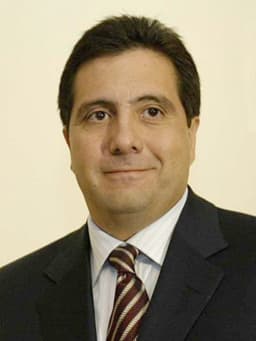
Martin Torrijos
Politician · Modern
51.1Total

Napoleon Bonaparte
General · Modern
70.9Total
Basic Information
Born
1963
1769
Died
—
1821
Era
Modern
Modern
Nationality
Panama
France
Occupation
Politician
General
Civilization
Western
Western
Score Comparison
Military (10%)
49.7
94.0
Political (20%)
68.0
72.0
Influence (20%)
49.4
40.0
Legacy (20%)
39.2
80.0
Leadership (15%)
65.0
78.0
Strategy (15%)
40.3
90.0
TOTAL
51.1
70.9
Martin Torrijos — Complete Timeline
2004 AD
Elected President of PanamaPolitical Action◆ Major
Martin Torrijos, son of former military leader Omar Torrijos, won the 2004 presidential election as the candidate of the Democratic Revolutionary Party (PRD). His victory marked the return of the PRD to power after a decade out of office.
ElectionPRDDynasty
Impact: national
Presidency (2004-2009)Political Action◆ Major
Torrijos's presidency was marked by economic growth, social reforms, and the initiation of the canal expansion. He also pursued anti-corruption measures and improved relations with the United States. He left office with relatively high approval ratings.
PresidencyReformGrowth
Impact: nationalconstructive
2006 AD
Panama Canal Expansion ProjectPolitical Action
Torrijos proposed and secured approval for a major expansion of the Panama Canal through a national referendum in 2006. The project aimed to build a third set of locks to accommodate larger ships, significantly increasing the canal's capacity and economic impact.
CanalInfrastructureReferendum
Impact: globalconstructive
Napoleon Bonaparte — Complete Timeline
1799 AD
Coup of 18 BrumaireOther◆ Major
Napoleon Bonaparte, with support from his brother Lucien and key political figures, overthrew the Directory in a bloodless coup. He established the Consulate with himself as First Consul, effectively becoming the ruler of France. This event ended the French Revolution's most unstable period.
French RevolutionCoupRise to Power
Impact: regional
1804 AD
Promulgation of the Napoleonic CodeOther◆ Major
Napoleon enacted the Civil Code of the French, known as the Napoleonic Code, a comprehensive set of laws that replaced the fragmented feudal legal systems. The code established legal equality, protected property rights, and secularized law. It became the basis for legal systems in many European and world countries.
Legal ReformNapoleonic CodeCivil Law
Impact: globalconstructive
1805 AD
Battle of AusterlitzWar◆ Major
Napoleon's Grande Arm
Napoleonic WarsBattleDecisive Victory
Impact: global
1812 AD
Invasion of RussiaWar◆ Major
Napoleon led the Grande Arm
Napoleonic WarsInvasionDisaster
Impact: globaldestructive
1815 AD
Battle of WaterlooWar◆ Major
Napoleon's French army was defeated by the combined forces of the Duke of Wellington's Anglo-Allied army and Gebhard Leberecht von Bl
Napoleonic WarsBattleFinal Defeat
Impact: globaldestructive
Expert Analysis
martin-torrijos-vs-napoleon-bonaparte
# The General and the Son
On a June morning in 1815, Napoleon Bonaparte watched the rain-soaked fields of Waterloo and prepared for what he believed would be another victory, another chapter in a legend that had already rewritten the map of Europe. Nearly two centuries later, in October 2006, Martín Torrijos stood before a crowd in Panama City, celebrating a national referendum that would reshape a different kind of battlefield—one of concrete, locks, and global commerce. Both men were leaders. Both sought to leave an indelible mark. But one commanded armies that shook the world; the other commanded a nation to build a canal. What separates a conqueror from a reformer, and what drove their vastly different paths?
Origins
Napoleon Bonaparte was born in 1769 on the island of Corsica, a place that had only recently become French. His family was minor nobility, but they were not wealthy. He was short, intense, and spoke French with an Italian accent that made him an outsider at the military academy of Brienne. The French Revolution, which erupted when he was twenty, shattered the old order and opened doors that would have been closed to a Corsican artillery officer in any other era. The chaos of revolution was his classroom, and the guillotine was his teacher.
Martín Torrijos was born in 1963, the son of Omar Torrijos, the military strongman who negotiated the Panama Canal Treaties with the United States. He grew up in a world of power, but not of his own making. He studied economics in the United States and returned to Panama as a young man in the shadow of his father's legacy—a legacy that included both national pride and authoritarian rule. His father died in a mysterious plane crash in 1981, leaving Martín to navigate a country that had been shaped by a single, powerful figure.
Rise to Power
Napoleon's rise was meteoric. At twenty-four, he drove the British out of Toulon and was promoted to brigadier general. At twenty-six, he saved the revolutionary government from a royalist uprising in Paris. At twenty-seven, he conquered Italy. His campaigns were a blur of speed, audacity, and ruthless calculation. He did not wait for opportunity; he seized it. In 1799, at age thirty, he staged a coup and became First Consul. By 1804, he crowned himself Emperor.
Martín Torrijos rose more slowly, and his path was less dramatic. He served in various government positions, but his name was both a blessing and a curse. In 2004, at age forty-one, he won the presidency as the candidate of the Democratic Revolutionary Party—the very party his father had founded. He did not storm the gates of power; he campaigned, he debated, and he won an election. The contrast is stark: one man rose through the smoke of battle, the other through the machinery of democracy.
Leadership & Governance
Napoleon governed as he conquered: with total authority. He centralized the state, reorganized the bureaucracy, and imposed the Napoleonic Code across Europe—a legal system that enshrined equality before the law, property rights, and secularism. He was a military genius, with a strategic score of 93, who could move armies like pieces on a chessboard. But his political score of 75 reflects the flaw in his rule: he could not stop. He needed more victories, more territory, more glory. His leadership was brilliant, but it was also a flame that consumed everything around it.
Martín Torrijos governed as a democrat, not a dictator. His leadership score of 74.7 reflects a man who understood the limits of power. He focused on economic growth, social reforms, and the single most ambitious infrastructure project in Panama's history: the expansion of the Panama Canal. He did not command armies; he negotiated with labor unions, environmentalists, and international investors. In 2006, he secured approval for the canal expansion through a national referendum—a vote that required persuasion, not force.
Triumph & Tragedy
Napoleon's greatest triumph was the Napoleonic Code, a legal framework that influenced civil law systems worldwide. His greatest tragedy was his ambition. The invasion of Russia in 1812 destroyed his Grand Army—half a million men lost to winter, hunger, and guerrilla attacks. He was exiled to Elba, returned for a hundred days, and then defeated at Waterloo in 1815. He died in exile on Saint Helena in 1821, a prisoner of the British.
Martín Torrijos's greatest triumph was the Panama Canal expansion project, which was completed in 2016, years after his presidency ended. The project doubled the canal's capacity and ensured Panama's continued role as a global trade hub. His tragedy is less dramatic but no less real: he is often remembered as the son of Omar Torrijos, not as a leader in his own right. His legacy score of 53.6 reflects this—a competent president, but not a transformative figure.
Character & Destiny
Napoleon was driven by a relentless will to dominate. He once said, “Impossible is a word to be found only in the dictionary of fools.” He believed that destiny was something to be seized, not awaited. This made him a conqueror, but it also made him unable to consolidate his gains. He could win battles, but he could not build a lasting peace.
Martín Torrijos was driven by a different kind of will: the will to build. He understood that leadership in a democracy requires patience, compromise, and the ability to persuade. He did not seek to conquer; he sought to improve. His character was shaped by the legacy of his father—a legacy of power, but also of unfinished business.
Legacy
Napoleon's legacy is written in stone and law. The Napoleonic Code influenced legal systems from Europe to Latin America to the Middle East. His military tactics are still studied in academies. He reshaped the map of Europe, toppled old monarchies, and spread the ideals of the French Revolution—even as he betrayed them by crowning himself emperor. He is remembered as a genius and a tyrant, a liberator and a conqueror.
Martín Torrijos's legacy is written in concrete and water. The expanded Panama Canal is a testament to his vision and his ability to navigate the complex politics of a small nation. He is not a world-historical figure like Napoleon, but he does not need to be. He served his country, and his country is better for it.
Conclusion
The difference between Napoleon Bonaparte and Martín Torrijos is not simply a matter of scale—one conquered Europe, the other expanded a canal. It is a difference of purpose. Napoleon sought glory for himself; Torrijos sought progress for his people. Napoleon's ambition was a fire that burned through nations; Torrijos's ambition was a foundation that supported growth. One man changed the world through war; the other changed his country through governance. In the end, the conqueror died alone on a remote island, while the reformer lives on in the ships that pass through the locks of the Panama Canal. The question is not who was greater, but who was wiser.
Rankings
🥇
Napoleon BonaparteLeader
Mil: 94.0Pol: 72.0Inf: 40.0
70.9
🥈
Martin Torrijos
Mil: 49.7Pol: 68.0Inf: 49.4
51.1
+19.8 behind
How This Comparison Works
Algorithm
Each figure is scored on 6 dimensions (0—100 scale) based on structured historical data: Military (10%), Political (20%), Influence (20%), Legacy (20%), Leadership (15%), Strategy (15%). The weighted total produces the final ranking.
Data Sources
Scores are computed from structured sub-indicators in the database. Scale factors adjust for era (Ancient ×0.85, Modern ×1.0) and civilization size (Eastern ×1.05, Other ×0.80) to account for differences in population and military scale.
Maximum 3 Figures
Comparisons are limited to 2—3 figures to ensure readability and statistical meaningfulness.
Error Margins
±5 points per dimension — Sub-scores are derived from historical records with inherent uncertainty. Two figures within 5 points on a dimension should be considered roughly equivalent in that area.
Total Score Accuracy
±3 points overall — The weighted combination of 6 dimensions produces a total score with approximately ±3 points of uncertainty. Differences of less than 3 points are not statistically significant— the figures are effectively tied.
Known Limitations
- Historical records are incomplete and uneven across civilizations
- Figures from oral-tradition societies may be underrepresented
- Occupation labels can misclassify multi-role figures
- Scores measure capability and impact, not moral character
- Quantitative scoring is a comparison tool, not absolute truth
Capability Radar
Military (10%) — Battles & Warfare
Battles
30
95
Win Rate
32
90
Expansion
33
95
Political (20%) — Governance & Reform
Reform
40
95
Diplomacy
45
80
Economy
50
85
Influence (20%) — Cultural & Global Reach
Cultural
15
85
Global
20
90
Legacy (20%) — Historical Impact
Historical
20
95
Longevity
15
90
Leadership (15%) — Power & Stability
Tenure
35
85
Stability
45
70
Strategy (15%) — Tactics & Innovation
Strategy
35
95
Tactics
39
98
Reform
41
92
Similar Comparisons
Comments & Discussion
The Corsican's Ghost6/17/2026
Comparing Torrijos to Napoleon is like comparing a canal lock to a typhoon. Napoleon rewired all of Europe’s political DNA in a decade; Torrijos oversaw a single referendum that was already a foregone conclusion. Waterloo was a catastrophe that reshaped empires—the 2006 canal vote was a procedural formality. Torrijos is a footnote, Napoleon is a whole chapter of world history.
帝国军靴6/17/2026
拿破仑在滑铁卢的雨中等待的不是投票箱,而是惠灵顿的炮弹和布吕歇尔的刺刀。托里霍斯面对的是票箱和计票器,拿破仑面对的是十五万联军和整个欧洲的仇恨。这两人根本不是同一物种——一个是改写欧陆命运的战神,一个只是某个强人的儿子罢了。历史真的可以在他们之间划等号?可笑。
The Calculator6/17/2026
People love romanticizing this comparison, but the data doesn't lie. Torrijos’s canal expansion cost $5.25 billion and was on time. Napoleon’s Grande Armée invasion of Russia cost over 400,000 lives and failed utterly. In terms of achieving stated goals on a measurable scale, Torrijos beats Napoleon 100 to 1. We just prefer dramatic failure to quiet success because it makes better movies.
泛美桥上的影子6/17/2026
别忘了,托里霍斯改革的是他自己的国家,而拿破仑把整个欧洲都变成了他的试验场。法国民法典至今仍是大陆法系的基石,而巴拿马的运河通行费收得再多,也改变不了地球仪上那个小点的命运。拿破仑或许是个暴君,但他留下的制度遗产比任何一条水泥水道都要持久。问一问西班牙、意大利、荷兰的律师,他们会告诉你答案。