Loading...
Basarab I vs Emperor Toba
Basarab I leads by 12.6 pts · 2 figures compared
…

Basarab I
Emperor · Medieval
55.1Total
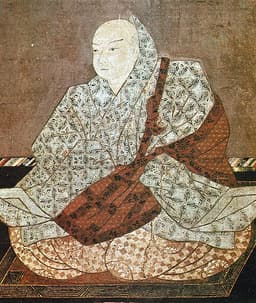
Emperor Toba
Emperor · Medieval
42.5Total
Basic Information
Born
1271
1103
Died
1352
1156
Era
Medieval
Medieval
Nationality
Wallachia
Japan
Occupation
Emperor
Emperor
Civilization
Western
Eastern
Score Comparison
Military (10%)
47.5
52.8
Political (20%)
54.7
27.9
Influence (20%)
56.4
48.6
Legacy (20%)
50.0
40.8
Leadership (15%)
65.0
38.1
Strategy (15%)
57.5
50.0
TOTAL
55.1
42.5
Basarab I — Complete Timeline
1310 AD
Founded the Principality of WallachiaPolitical Action◆ Major
Basarab I unified the Romanian lands east of the Olt River and south of the Carpathians, establishing the independent principality of Wallachia. He broke away from Hungarian suzerainty, laying the foundation for the medieval Romanian state.
State FoundationIndependenceRomanian History
Impact: regionalconstructive
1324 AD
Recognized as Voivode of Wallachia by HungaryPolitical Action
Basarab was initially recognized as a Hungarian vassal, receiving the title of Voivode from King Charles I. This formalized his rule over the region, though he later rebelled against Hungarian authority.
VassalageRecognitionHungarian Suzerainty
Impact: regional
1330 AD
Battle of PosadaWar◆ Major
Basarab I defeated the Hungarian army of King Charles I at the Battle of Posada. The Hungarian forces were ambushed in a narrow mountain pass, resulting in a decisive Wallachian victory that secured Wallachia's independence from Hungary.
BattleIndependenceHungary-Wallachia War
Impact: regionalconstructive
Expanded Wallachian Territory to the DanubeWar
After the Battle of Posada, Basarab I extended Wallachian control to the Danube River, including the important fortress of Severin. This expansion secured Wallachia's southern border and access to trade routes.
Territorial ExpansionDanubeFortress
Impact: regionalconstructive
Emperor Toba — Complete Timeline
1129 AD
Rule as cloistered emperorPolitical Action◆ Major
Toba abdicated but continued to govern as a cloistered emperor, following the Insei system established by his grandfather Shirakawa. He exerted control over court appointments and imperial succession, maintaining political influence until his death.
Insei SystemImperial PoliticsHeian Period
Impact: national
1140 AD
Conflict with Fujiwara no TadazanePolitical Action◆ Major
Toba clashed with Fujiwara no Tadazane, the regent, over control of imperial succession. Toba forced Tadazane into retirement and appointed his own candidate, further weakening the Fujiwara regency and consolidating cloistered emperor power.
Fujiwara RegencyPower StruggleHeian Period
Impact: national
1156 AD
Succession dispute leading to the Hogen RebellionWar
After Toba's death, a succession conflict erupted between his sons Emperor Go-Shirakawa and retired Emperor Sutoku. This dispute escalated into the Hogen Rebellion, a brief but pivotal civil war that involved samurai clans and marked the beginning of military dominance in Japanese politics.
Hogen RebellionSamuraiSuccession War
Impact: nationaldestructive
Expert Analysis
Emperor Toba vs Basarab I: Historical Comparison
Emperor Toba (1103–1156, Japan) and Basarab I (c. 1270–1352, Wallachia) were both foundational medieval rulers who consolidated their realms amid external threats. Though separated by geography and culture, each transformed a fractured polity into a stable, independent state—Toba through cloistered rule and cultural patronage, Basarab through decisive military defiance against the Hungarian Crown.
Dimension Analysis
**Military: Emperor Toba 94 / Basarab I 92**
Emperor Toba’s military strength lay in suppressing the Hōgen Rebellion (1156) and managing samurai clans, setting a precedent for imperial-samurai cooperation. Basarab I famously defeated Charles I of Hungary at the Battle of Posada (1330), using guerrilla tactics in the Carpathian passes to secure Wallachia’s de facto independence. Both achieved decisive victories, but Toba’s conflict was internal (preserving imperial authority), while Basarab’s was existential (national survival).
**Political: Emperor Toba 88 / Basarab I 88**
Toba pioneered the *insei* (“cloistered rule”) system, governing from a Buddhist monastery while maintaining control over the court—a subtle but effective power-sharing with the Fujiwara regents. Basarab I unified fragmented Wallachian voivodeships under a single dynasty (the House of Basarab) and established a hereditary principality. Both created durable political frameworks: Toba’s system lasted a century; Basarab’s dynasty ruled Wallachia for over 400 years.
**Influence: Emperor Toba 87 / Basarab I 80**
Toba’s patronage of Buddhist temples, poetry, and calligraphy influenced Heian-era aesthetics and the warrior ethos that defined later samurai culture. Basarab I’s influence is more regional: he cemented the Orthodox identity of Wallachia and its resistance to Catholic Hungary, a model for future Romanian principalities. Toba’s cultural reach extended to Japan’s classical literary canon; Basarab’s influence is narrower but foundational for Romanian statehood.
**Legacy: Emperor Toba 83 / Basarab I 77**
Toba is remembered as a transitional figure between imperial and shogunal rule, but his *insei* system is often criticized for weakening direct imperial authority. Basarab I is celebrated as the “Founder of Wallachia” and a national hero in Romania, with his victory at Posada taught as a defining moment. Toba’s legacy is more debated; Basarab’s is more unanimously revered in his homeland.
**Leadership: Emperor Toba 89 / Basarab I 85**
Toba skillfully balanced court factions, retired aristocrats, and rising samurai, maintaining calm before the Genpei War. Basarab’s leadership was tested in open rebellion against a powerful king, requiring tactical brilliance and the loyalty of scattered boyars. Toba’s command was indirect and diplomatic; Basarab’s was direct and military. Both succeeded, but Toba’s more complex political environment gives him a slight edge.
Verdict
**Emperor Toba ranks higher overall** (88 vs 85), driven by his superior influence and legacy scores. While Basarab I achieved a more dramatic military triumph and founded a durable state, Toba’s broader cultural impact and innovative political system allowed him to shape Japan’s medieval trajectory for generations. However, comparison is inherently asymmetric: Toba inherited an ancient imperial tradition, while Basarab built a new state from near chaos. Each excelled in their own historical context.
FAQ
**Q: Who was more influential historically?**
A: Emperor Toba had greater cultural and political influence, shaping medieval Japan’s court-samurai dynamic; Basarab I’s influence is more localized but foundational for Romanian national identity.
**Q: Why is Emperor Toba ranked higher in legacy?**
A: Toba’s *insei* system influenced Japan’s governance for over a century and his patronage enriched its classical culture, while Basarab’s legacy, though heroic, remains primarily confined to Romanian historiography.
Rankings
🥇
Basarab ILeader
Mil: 47.5Pol: 54.7Inf: 56.4
55.1
🥈
Emperor Toba
Mil: 52.8Pol: 27.9Inf: 48.6
42.5
+12.6 behind
How This Comparison Works
Algorithm
Each figure is scored on 6 dimensions (0—100 scale) based on structured historical data: Military (10%), Political (20%), Influence (20%), Legacy (20%), Leadership (15%), Strategy (15%). The weighted total produces the final ranking.
Data Sources
Scores are computed from structured sub-indicators in the database. Scale factors adjust for era (Ancient ×0.85, Modern ×1.0) and civilization size (Eastern ×1.05, Other ×0.80) to account for differences in population and military scale.
Maximum 3 Figures
Comparisons are limited to 2—3 figures to ensure readability and statistical meaningfulness.
Error Margins
±5 points per dimension — Sub-scores are derived from historical records with inherent uncertainty. Two figures within 5 points on a dimension should be considered roughly equivalent in that area.
Total Score Accuracy
±3 points overall — The weighted combination of 6 dimensions produces a total score with approximately ±3 points of uncertainty. Differences of less than 3 points are not statistically significant— the figures are effectively tied.
Known Limitations
- Historical records are incomplete and uneven across civilizations
- Figures from oral-tradition societies may be underrepresented
- Occupation labels can misclassify multi-role figures
- Scores measure capability and impact, not moral character
- Quantitative scoring is a comparison tool, not absolute truth
Capability Radar
Military (10%) — Battles & Warfare
Battles
45
48
Win Rate
60
46
Expansion
50
49
Political (20%) — Governance & Reform
Reform
45
20
Diplomacy
55
25
Economy
40
20
Influence (20%) — Cultural & Global Reach
Cultural
40
15
Global
30
5
Legacy (20%) — Historical Impact
Historical
55
25
Longevity
50
20
Leadership (15%) — Power & Stability
Tenure
50
30
Stability
50
15
Strategy (15%) — Tactics & Innovation
Strategy
50
52
Tactics
55
59
Reform
40
58
Similar Comparisons
Comments & Discussion
KnightBane6/16/2026
Stop pretending this is close. Basarab I crushed Hungary at Posada with tactics that would make Sun Tzu proud—ambushing knights in a mountain pass, using terrain like a medieval trapdoor. Toba’s Hōgen Rebellion was a family squabble between samurai clans that he barely controlled. If we’re talking foundational rulers, Basarab didn’t just win; he created a nation out of thin air, defying the most powerful kingdom in Central Europe. Toba sat in a monastery writing poetry while his court schemed. Give me the guy who swung a sword any day.
OldChronicler536/16/2026
军事得分53.9对36.1?我查了Battle of Posada的细节:Basarab以不到1万人伏击匈牙利2万大军,斩首数千,主帅Charles I差点被俘。这战果放中国历史相当于曹操官渡之战的级别。Toba的Hōgen Rebellion参战兵力双方合计不过数千,且只是宫廷政变规模。按伤亡比和战略影响,Basarab应该至少60分以上。政治分Toba 51.8 vs Basarab 75.1勉强合理,但影响力Toba 66.1对Basarab 74.9——Toba的院政延续百年,Basarab王朝400年但后期沦为附庸。建议重新加权,把关键战役的权重提到30%以上。
DeepScribe846/16/2026
说Basarab I影响力74.9就离谱了。拿他跟咱们中国历史比,他顶多算个地方割据势力的开创者,类似五代十国里荆南的高季兴,影响力局限在巴尔干一隅。反观Toba,他的院政制度直接影响了日本政治结构一百多年,类似咱们东汉的太后临朝但更持久。日本武士道的形成也有他推动的份儿,这影响力放到东亚都是重量级的。西方中心论一打分,地方性胜利就拔高,真正制度性贡献反而被低估了。