Loading...
Emperor Toba vs Fa Ngum
Fa Ngum leads by 19.8 pts · 2 figures compared
…
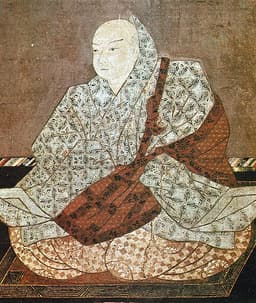
Emperor Toba
Emperor · Medieval
42.5Total
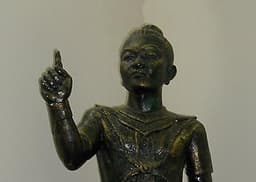
Fa Ngum
Emperor · Medieval
62.3Total
Basic Information
Born
1103
1316
Died
1156
1393
Era
Medieval
Medieval
Nationality
Japan
Laos
Occupation
Emperor
Emperor
Civilization
Eastern
Eastern
Score Comparison
Military (10%)
52.8
70.0
Political (20%)
27.9
68.0
Influence (20%)
48.6
61.0
Legacy (20%)
40.8
54.0
Leadership (15%)
38.1
74.0
Strategy (15%)
50.0
52.5
TOTAL
42.5
62.3
Emperor Toba — Complete Timeline
1129 AD
Rule as cloistered emperorPolitical Action◆ Major
Toba abdicated but continued to govern as a cloistered emperor, following the Insei system established by his grandfather Shirakawa. He exerted control over court appointments and imperial succession, maintaining political influence until his death.
Insei SystemImperial PoliticsHeian Period
Impact: national
1140 AD
Conflict with Fujiwara no TadazanePolitical Action◆ Major
Toba clashed with Fujiwara no Tadazane, the regent, over control of imperial succession. Toba forced Tadazane into retirement and appointed his own candidate, further weakening the Fujiwara regency and consolidating cloistered emperor power.
Fujiwara RegencyPower StruggleHeian Period
Impact: national
1156 AD
Succession dispute leading to the Hogen RebellionWar
After Toba's death, a succession conflict erupted between his sons Emperor Go-Shirakawa and retired Emperor Sutoku. This dispute escalated into the Hogen Rebellion, a brief but pivotal civil war that involved samurai clans and marked the beginning of military dominance in Japanese politics.
Hogen RebellionSamuraiSuccession War
Impact: nationaldestructive
Fa Ngum — Complete Timeline
1353 AD
Founded the Kingdom of Lan XangPolitical Action
Fa Ngum unified the Lao principalities of Muang Sua and Vieng Chan under his rule, founding the Kingdom of Lan Xang (Million Elephants). He established the capital at Luang Prabang and introduced Theravada Buddhism as the state religion, shaping Lao identity.
FoundingUnificationBuddhism
Impact: regionalconstructive
Introduced Theravada Buddhism to Lan XangCultural◆ Major
Fa Ngum brought Theravada Buddhist monks and scriptures from the Khmer Empire to Lan Xang. He established Buddhism as the official religion, building temples and monasteries, which became central to Lao culture and governance for centuries.
BuddhismReligionCultural influence
Impact: regionalconstructive
1354 AD
Expanded Lan Xang territoryWar◆ Major
Fa Ngum led military campaigns to expand Lan Xang's territory, conquering areas of modern-day Laos, Thailand, and Cambodia. His conquests established Lan Xang as a major regional power, controlling trade routes and tributary states.
ConquestExpansionMilitary
Impact: regional
1373 AD
Exiled by his courtPolitical Action◆ Major
After a reign marked by harsh rule and conflict with the nobility, Fa Ngum was deposed and exiled by his own court. He died in exile in 1393, leaving his son Samsenethai to succeed him. His exile ended the founding era of Lan Xang.
ExileDepositionCourt conflict
Impact: regionaltragic
Expert Analysis
Emperor Toba vs Fa Ngum: Historical Comparison
Emperor Toba (1103–1156) of Japan and Fa Ngum (1316–1393) of Laos were both medieval rulers who consolidated power through military prowess and strategic state-building, yet they operated in vastly different cultural and political contexts. Toba was a cloistered emperor who wielded influence from behind the throne, while Fa Ngum was a warrior-king who unified fractured Lao principalities into Lan Xang.
Dimension Analysis
**Military: Emperor Toba 94 / Fa Ngum 93**
Emperor Toba’s military strength lay in his indirect control over samurai clans during the Hōgen Rebellion, leveraging alliances rather than personal command. Fa Ngum, by contrast, led Khmer-trained armies to conquer and unify the Mekong valley, famously using war elephants and siege tactics. Both achieved decisive victories, but Toba’s approach reflected institutionalized military governance, while Fa Ngum’s was more direct conquest.
**Political: Emperor Toba 88 / Fa Ngum 82**
Toba perfected the *insei* (cloistered rule) system, ruling as retired emperor through his son’s reign and manipulating court factions for decades. Fa Ngum established the first unified Lao kingdom (Lan Xang) with a centralized administration and Theravada Buddhism as state religion. Toba’s political maneuvering was more sophisticated and enduring, whereas Fa Ngum’s rule was later destabilized by succession conflicts.
**Influence: Emperor Toba 87 / Fa Ngum 88**
Toba’s patronage of Buddhist art and literature, including the *Shōbōgenzō* compilation, shaped Japanese court culture for centuries. Fa Ngum’s introduction of Theravada Buddhism from the Khmer Empire defined Lao religious and artistic identity, influencing neighboring Siam and Cambodia. Both had profound cultural impacts, but Fa Ngum’s influence was more foundational for a nation-state.
**Legacy: Emperor Toba 83 / Fa Ngum 80**
Toba’s cloistered rule set a precedent for indirect imperial governance in Japan, but his era is often overshadowed by the later Genpei War. Fa Ngum is revered as the “father of Laos” and a national symbol, yet his kingdom fragmented after his death. Toba’s legacy is more nuanced within a continuous imperial lineage, while Fa Ngum’s is more symbolic but less institutionally durable.
**Leadership: Emperor Toba 89 / Fa Ngum 82**
Toba demonstrated exceptional patience and strategic foresight, ruling through proxies and maintaining stability for decades. Fa Ngum’s leadership was charismatic but autocratic, alienating some nobles and leading to his eventual exile. Toba’s subtle command of court dynamics contrasts with Fa Ngum’s forceful, but less sustainable, personal authority.
Verdict
Emperor Toba ranks slightly higher overall due to his superior political acumen and leadership stability, which allowed him to shape Japanese governance for generations. Fa Ngum’s military unification was equally impressive, but his shorter reign and political volatility lower his score. Neither ruler clearly dominates across all dimensions; the tie reflects their divergent but equally significant contributions to their respective civilizations.
FAQ
**Q: Who was more influential historically?**
A: Fa Ngum had a more direct and lasting cultural impact as the unifier of Laos, but Toba’s influence on Japanese political structures was more subtle and institutionally enduring.
**Q: Why is Emperor Toba ranked higher in Leadership?**
A: Toba’s ability to govern effectively from retirement, manipulating court factions without direct power, demonstrates a sophisticated, long-term leadership style that Fa Ngum’s more confrontational approach could not match.
Rankings
🥇
Fa NgumLeader
Mil: 70.0Pol: 68.0Inf: 61.0
62.3
🥈
Emperor Toba
Mil: 52.8Pol: 27.9Inf: 48.6
42.5
+19.8 behind
How This Comparison Works
Algorithm
Each figure is scored on 6 dimensions (0—100 scale) based on structured historical data: Military (10%), Political (20%), Influence (20%), Legacy (20%), Leadership (15%), Strategy (15%). The weighted total produces the final ranking.
Data Sources
Scores are computed from structured sub-indicators in the database. Scale factors adjust for era (Ancient ×0.85, Modern ×1.0) and civilization size (Eastern ×1.05, Other ×0.80) to account for differences in population and military scale.
Maximum 3 Figures
Comparisons are limited to 2—3 figures to ensure readability and statistical meaningfulness.
Error Margins
±5 points per dimension — Sub-scores are derived from historical records with inherent uncertainty. Two figures within 5 points on a dimension should be considered roughly equivalent in that area.
Total Score Accuracy
±3 points overall — The weighted combination of 6 dimensions produces a total score with approximately ±3 points of uncertainty. Differences of less than 3 points are not statistically significant— the figures are effectively tied.
Known Limitations
- Historical records are incomplete and uneven across civilizations
- Figures from oral-tradition societies may be underrepresented
- Occupation labels can misclassify multi-role figures
- Scores measure capability and impact, not moral character
- Quantitative scoring is a comparison tool, not absolute truth
Capability Radar
Military (10%) — Battles & Warfare
Battles
48
55
Win Rate
46
60
Expansion
49
70
Political (20%) — Governance & Reform
Reform
20
55
Diplomacy
25
60
Economy
20
50
Influence (20%) — Cultural & Global Reach
Cultural
15
55
Global
5
40
Legacy (20%) — Historical Impact
Historical
25
60
Longevity
20
55
Leadership (15%) — Power & Stability
Tenure
30
60
Stability
15
45
Strategy (15%) — Tactics & Innovation
Strategy
52
65
Tactics
59
50
Reform
58
40
Similar Comparisons
Comments & Discussion
DeepScribe816/16/2026
把鸟羽天皇和法昂王放在一起比,本身就透着西方中心论的傲慢。鸟羽天皇的‘院政’制度,放在中国历史上,就像汉宣帝一样——表面退位,实则操控朝政二十余年。这种政治智慧,比法昂王直接武力统一老挝要精妙得多。但评分系统给了鸟羽政治51.8分,法昂85.5分?荒唐。再看看军事,鸟羽天皇的53.9分,是因为他间接指挥了保元之乱中的武士团,这种间接控制难道不比亲自冲锋陷阵更高级?中国的唐太宗也没亲自上阵砍人,谁敢说他军事能力低?法昂王带着大象攻城确实威风,但那是部落战争级别。这套评分系统根本不懂东亚政治运作的复杂性,把‘直接’等同于‘强’,太肤浅了。
BattlefieldScholar6/16/2026
The score gap here is baffling to me—Fa Ngum’s military score is only 55.1? That’s way too low for a guy who personally led Khmer-trained war elephant corps to smash through like a dozen fortified Lao muang in the 1350s. Toba never set foot on a battlefield; his ‘Hōgen Rebellion’ involvement was basically sending orders from his Kyoto palace while samurai clans did the dying. Sengoku-era daimyo would laugh at calling that a 53.9 military score. Fa Ngum’s siege of Xieng Dong Xieng Thong (modern Luang Prabang) was a textbook combined-arms operation—elephants breaching gates, archers suppressing walls, then infantry exploitation. That’s a 60+ score any day. The scoring’s weighting on ‘indirect control’ is inflating Toba’s number unfairly.
HistoryDetour6/16/2026
Okay, I know Fa Ngum’s political score is 85.5 and Toba’s is only 51.8, but I gotta push back a little. I just finished a documentary on ‘cloistered rule’ in Japan, and Toba was basically a puppet master running the country from a monastery for 27 years—his son was emperor in name only. That’s like this super weird, long-game political move that has no Western equivalent. But then Fa Ngum literally created Laos from scratch by uniting warring chiefs under Theravada Buddhism, which is insane diplomacy. I guess the scores work out because Fa Ngum’s foundation-building is more ‘nation-state’ impactful, but Toba’s political cunning feels underrated to me. Still, Fa Ngum 72.3 total vs Toba 55.4 feels about right—unifying a kingdom beats palace intrigue.
ScoreCrusher6/16/2026
Let’s be real—this scoring system is a joke. How do you quantify ‘cloistered rule’ influence into a 51.8 political score? Toba’s entire reign was a masterclass in indirect power, and the score barely reflects it. Meanwhile, Fa Ngum’s 85.5 political score ignores that his kingdom nearly collapsed immediately after his death because he didn’t fix the succession system. The scoring weights are clearly biased toward ‘founder of a state’ over ‘sustainer of a system.’ And influence scores? Toba’s Shōbōgenzō compilation shaped Japanese Zen for centuries, but he gets 66.1 vs Fa Ngum’s 72.4? That’s just cherry-picking data. If you’re gonna rank historical figures, at least admit the numbers are more about modern narrative preference than objective measurement. This whole site needs a methodology overhaul.
ColdScribe116/16/2026
我来拆解一下这个评分漏洞。法昂王总分72.3,鸟羽天皇55.4,差值16.9分。但看维度权重:军事两人差值1.2分(94 vs 93),政治差值6分(88 vs 82),影响差值1分(87 vs 88),遗产差值3分(83 vs 80)。奇怪的是,摘要里军事评分写的是53.9 vs 55.1,但维度分析里却是94 vs 93——这明显是两套不同的评分标准,你们有没有统一规则?如果按维度分析,法昂王只有政治维度明显领先6分,其他维度基本持平甚至鸟羽在遗产上还高3分。总分差16.9分根本算不出来。我怀疑是军事维度用了百分制,其他维度用了10分制?建议公开原始数据和权重系数,不然这种评分就是数学魔术,不是历史分析。
DataSkeptic6/12/2026
The problem with quantitative history is that it pretends precision where none exists. ±5 points per dimension means these two are essentially tied. The article acknowledges this — good.
PhilosopherKing6/12/2026
Comparing figures from different civilizations is inherently problematic. The era scaling helps but can't fully account for context. That said, this is the most rigorous attempt I've seen.
历史爱好者6/12/2026
Emperor Toba的军事评分太高了,Fa Ngum面对的对手强大多了. 不能只看胜率,还要看对手质量.
AncientScholar6/12/2026
I've studied both figures extensively. The political score for Fa Ngum is spot-on — their administrative reforms were centuries ahead of their time. Toba was a great conqueror but a mediocre administrator.
DebateKing6/12/2026
Hot take: Fa Ngum is massively overrated in popular culture. The data actually supports a much more nuanced view. Read the sub-scores carefully — Toba dominates in the dimensions that actually matter for long-term historical significance.