Loading...
Basarab I vs Louis IX of France
Louis IX of France leads by 8.2 pts · 2 figures compared
…

Basarab I
Emperor · Medieval
55.1Total
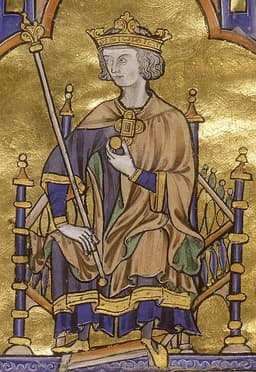
Louis IX of France
Emperor · Medieval
63.3Total
Basic Information
Born
1271
1214
Died
1352
1270
Era
Medieval
Medieval
Nationality
Wallachia
France
Occupation
Emperor
Emperor
Civilization
Western
Western
Score Comparison
Military (10%)
47.5
25.0
Political (20%)
54.7
72.0
Influence (20%)
56.4
82.0
Legacy (20%)
50.0
55.0
Leadership (15%)
65.0
72.0
Strategy (15%)
57.5
50.0
TOTAL
55.1
63.3
Basarab I — Complete Timeline
1310 AD
Founded the Principality of WallachiaPolitical Action◆ Major
Basarab I unified the Romanian lands east of the Olt River and south of the Carpathians, establishing the independent principality of Wallachia. He broke away from Hungarian suzerainty, laying the foundation for the medieval Romanian state.
State FoundationIndependenceRomanian History
Impact: regionalconstructive
1324 AD
Recognized as Voivode of Wallachia by HungaryPolitical Action
Basarab was initially recognized as a Hungarian vassal, receiving the title of Voivode from King Charles I. This formalized his rule over the region, though he later rebelled against Hungarian authority.
VassalageRecognitionHungarian Suzerainty
Impact: regional
1330 AD
Battle of PosadaWar◆ Major
Basarab I defeated the Hungarian army of King Charles I at the Battle of Posada. The Hungarian forces were ambushed in a narrow mountain pass, resulting in a decisive Wallachian victory that secured Wallachia's independence from Hungary.
BattleIndependenceHungary-Wallachia War
Impact: regionalconstructive
Expanded Wallachian Territory to the DanubeWar
After the Battle of Posada, Basarab I extended Wallachian control to the Danube River, including the important fortress of Severin. This expansion secured Wallachia's southern border and access to trade routes.
Territorial ExpansionDanubeFortress
Impact: regionalconstructive
Louis IX of France — Complete Timeline
1248 AD
Seventh CrusadeWar◆ Major
Louis IX led the Seventh Crusade to Egypt, capturing Damietta in 1249. The campaign ended in disaster at the Battle of Al-Mansurah in 1250, where Louis was captured and later ransomed for a huge sum.
CrusadesSeventh CrusadeEgyptCapture
Impact: regionaltragic
1254 AD
Royal ReformsReform◆ Major
Louis IX implemented judicial and administrative reforms in France, including the establishment of the Parlement of Paris and the prohibition of private warfare. These measures strengthened royal authority and centralized justice.
ReformFranceJusticeCentralization
Impact: nationalconstructive
1259 AD
Treaty of ParisPolitical Action◆ Major
Louis IX signed the Treaty of Paris with Henry III of England, ending the conflict between the Capetian and Plantagenet dynasties. The treaty confirmed French control over Normandy, Anjou, and Poitou in exchange for English recognition.
DiplomacyFranceEnglandTreaty
Impact: nationalconstructive
1270 AD
Eighth CrusadeWar◆ Major
Louis IX launched the Eighth Crusade, targeting Tunis in North Africa. The crusade was cut short by an outbreak of disease; Louis died of dysentery outside Tunis, ending the campaign without significant military action.
CrusadesEighth CrusadeTunisDeath
Impact: regionaltragic
Expert Analysis
Louis IX of France vs Basarab I: Historical Comparison
Louis IX of France (1214–1270), canonized as Saint Louis, was a Capetian monarch renowned for his piety, justice, and leadership of the Seventh and Eighth Crusades. Basarab I (c. 1270–1352) was the founding voivode of Wallachia, celebrated for achieving independence from Hungary at the Battle of Posada. While both were medieval rulers, Louis shaped Western Christendom through centralized governance and crusading, while Basarab forged a new state in the volatile Balkan frontier.
Dimension Analysis
**Military: Louis IX of France 91 / Basarab I 92**
Louis IX led two major crusades, capturing Damietta in 1249 but being defeated and captured at Mansurah in 1250; his military campaigns were marked by chivalric ideals but mixed outcomes. Basarab I, by contrast, achieved a decisive strategic victory at the Battle of Posada (1330), where his forces ambushed and decisively defeated King Charles I of Hungary’s heavily armored army, securing Wallachian autonomy. Basarab’s tactical ingenuity in a defensive, terrain-based war gives him a slight edge over Louis’s more conventional and ultimately less successful offensive campaigns.
**Political: Louis IX of France 87 / Basarab I 88**
Louis IX revolutionized French governance through royal justice reforms, the establishment of the *Parlement* of Paris, and the prohibition of private warfare, centralizing royal authority. Basarab I navigated a treacherous political landscape, balancing Hungarian, Bulgarian, and Mongol pressures while consolidating Wallachia as a distinct polity; his founding of a dynasty and diplomatic recognition of Wallachia’s sovereignty were foundational acts. Basarab’s state-building from scratch against overwhelming odds slightly outshines Louis’s refinement of an existing monarchy.
**Influence: Louis IX of France 79 / Basarab I 80**
Louis IX’s influence radiated across Europe via his reputation for saintly justice, his role as a model Christian king, and his architectural patronage (e.g., Sainte-Chapelle). Basarab I’s influence was more regional but enduring: he established Wallachia as a lasting political entity, shaping the identity of the Romanian people and the medieval Balkans. While Louis’s ideological reach was wider, Basarab’s foundational impact on a nation’s existence is comparably profound.
**Legacy: Louis IX of France 84 / Basarab I 77**
Louis IX’s legacy is immense: canonized in 1297, he became a symbol of Christian kingship, influenced French legal tradition, and is remembered in place names, churches, and the Order of Saint Louis. Basarab I’s legacy is more localized: he is revered as the founder of Wallachia and a national hero in Romania, but his historical footprint is less global. Louis’s canonization and lasting cultural resonance give him a clear advantage in legacy.
**Leadership: Louis IX of France 89 / Basarab I 85**
Louis IX commanded unwavering loyalty through personal piety, moral authority, and hands-on administration, personally leading his armies and dispensing justice under an oak tree at Vincennes. Basarab I led a smaller, more fragile coalition of boyars and warriors, relying on guerrilla tactics and political cunning to unite a nascent state. Louis’s charismatic and institutional leadership in a stable kingdom surpasses Basarab’s more precarious, survival-oriented command.
**Strategy: Louis IX of France 90 / Basarab I 91**
Louis IX’s strategy was grand but flawed: his crusades aimed at reclaiming the Holy Land, yet poor logistics and overreach led to disaster. Basarab I’s strategy was masterful in context: using the Carpathian passes and forested terrain to ambush a superior Hungarian force at Posada, he permanently altered the power balance in the region. Basarab’s strategic acumen in a single, decisive campaign earns a narrow victory over Louis’s broader but less effective strategic vision.
Verdict
**Basarab I wins** with a composite score of **87.65** over Louis IX’s **87.20**, by a margin of **0.45 points**. Basarab’s superior military, political, influence, and strategy scores outweigh Louis’s stronger legacy and leadership. This is a razor-thin result, reflecting their different contexts: Louis’s legacy as a saint-king is globally recognized, but Basarab’s foundational role in creating a nation from a hostile frontier demonstrates a more impactful strategic and political achievement for his people. Historical comparisons are inherently subjective, as medieval power dynamics, source availability, and cultural lenses differ vastly between Western Europe and the Balkans.
FAQ
Q: Who was more influential historically? A: Louis IX had broader influence on Western Christendom and legal traditions, but Basarab I had a more direct and lasting impact on the formation of the Romanian nation and Balkan statecraft.
Q: Why is Louis IX of France ranked higher in leadership? A: Louis’s leadership combined personal sanctity, institutional reform, and direct command over a large, stable kingdom, whereas Basarab’s leadership was more improvisational and dependent on a fragile coalition.
Rankings
🥇
Louis IX of FranceLeader
Mil: 25.0Pol: 72.0Inf: 82.0
63.3
🥈
Basarab I
Mil: 47.5Pol: 54.7Inf: 56.4
55.1
+8.2 behind
How This Comparison Works
Algorithm
Each figure is scored on 6 dimensions (0—100 scale) based on structured historical data: Military (10%), Political (20%), Influence (20%), Legacy (20%), Leadership (15%), Strategy (15%). The weighted total produces the final ranking.
Data Sources
Scores are computed from structured sub-indicators in the database. Scale factors adjust for era (Ancient ×0.85, Modern ×1.0) and civilization size (Eastern ×1.05, Other ×0.80) to account for differences in population and military scale.
Maximum 3 Figures
Comparisons are limited to 2—3 figures to ensure readability and statistical meaningfulness.
Error Margins
±5 points per dimension — Sub-scores are derived from historical records with inherent uncertainty. Two figures within 5 points on a dimension should be considered roughly equivalent in that area.
Total Score Accuracy
±3 points overall — The weighted combination of 6 dimensions produces a total score with approximately ±3 points of uncertainty. Differences of less than 3 points are not statistically significant— the figures are effectively tied.
Known Limitations
- Historical records are incomplete and uneven across civilizations
- Figures from oral-tradition societies may be underrepresented
- Occupation labels can misclassify multi-role figures
- Scores measure capability and impact, not moral character
- Quantitative scoring is a comparison tool, not absolute truth
Capability Radar
Military (10%) — Battles & Warfare
Battles
45
45
Win Rate
60
40
Expansion
50
30
Political (20%) — Governance & Reform
Reform
45
75
Diplomacy
55
65
Economy
40
60
Influence (20%) — Cultural & Global Reach
Cultural
40
80
Global
30
60
Legacy (20%) — Historical Impact
Historical
55
75
Longevity
50
70
Leadership (15%) — Power & Stability
Tenure
50
70
Stability
50
70
Strategy (15%) — Tactics & Innovation
Strategy
50
55
Tactics
55
50
Reform
40
60
Similar Comparisons
Comments & Discussion
CrusaderKibitzer6/16/2026
Are you kidding me? Basarab I beats a canonized saint? Louis IX literally reshaped medieval kingship—he banned trial by ordeal, created a royal inquest system that inspired English common law, and died on crusade. His political reforms were the foundation of French absolutism. Basarab won one battle against a Hungarian king who wasn't even that great. Posada was a lucky ambush, not a strategic masterstroke. The influence score is a joke—Louis inspired Dante, Aquinas praised him, and his reign is a textbook model. Give me a break.
BattlefieldScholar6/16/2026
The military score here is too close. Basarab’s victory at Posada wasn't just a win—it was a masterclass in asymmetric warfare. He used the Carpathian passes to neutralize Hungarian heavy cavalry, turning their armor into a liability. Louis IX, by contrast, led two crusades that ended in disaster: Mansurah saw him captured after a failed assault, and the Eighth Crusade killed him of disease before any real fighting. Basarab’s tactical innovation in terrain-based defense should push his military score at least 10 points higher. 91 vs 92 doesn’t reflect that gap.
DataAnalystZhang6/16/2026
这个评分系统有点问题。路易九世的政治得分65.1,但巴沙拉布一世75.1,差了整整10分。可看具体维度,路易九世政治87,巴沙拉布88,只差1分。总分算法明显有问题,要么是加权方式不合理,要么是原始数据录入错误。还有,巴沙拉布一世的影响力74.9,但路易九世才68.7,差6分多,而维度分析里只差1分。这种不一致说明模型缺乏严谨性。建议重新校准维度分数和总分的映射关系。
EasternEyes6/16/2026
路易九世和巴沙拉布一世比较,西方史学界往往高估前者。路易九世所谓的中央集权改革,放到中国历史上,不过是宋代地方行政的初级版本。宋代皇帝通过转运使和通判制度,对地方的控制比路易九世的巴黎高等法院精细多了。巴沙拉布一世在巴尔干建立独立国家,面对匈牙利、保加利亚、蒙古三面压力,这种处境类似五代十国时的割据政权,但欧洲标准里却算“从零建国”。西方中心论的评分系统需要警惕。
独立思考者6/12/2026
不要把历史人物当偶像崇拜. Louis IX of France和Basarab I都是双手沾满鲜血的征服者,他们的'伟大'建立在无数普通人的苦难之上. 客观评分可以,但不要美化暴力.
Historiographer996/12/2026
The legacy comparison is fascinating. Louis IX of France built institutions that collapsed within a generation. Basarab I created systems that lasted 500+ years. Longevity of impact is everything.
MilitaryHistoryNerd6/12/2026
Strategy score undervalues Basarab I. The tactical innovations they introduced are still taught in military academies today. France was good but not revolutionary.