Loading...
Basarab I vs Philip I of France
Basarab I leads by 9.9 pts · 2 figures compared
…

Basarab I
Emperor · Medieval
66.5Total
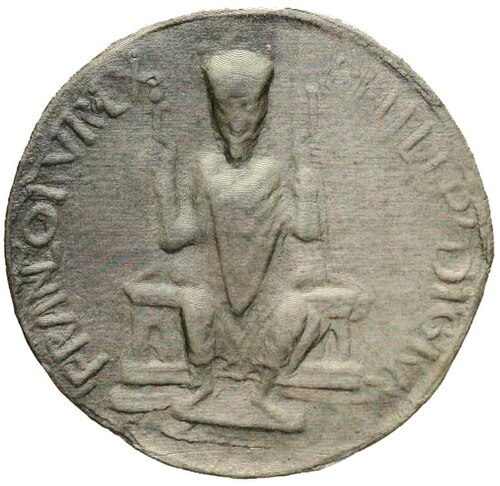
Philip I of France
Emperor · Medieval
56.6Total
Basic Information
Born
1271
1052
Died
1352
1108
Era
Medieval
Medieval
Nationality
Wallachia
France
Occupation
Emperor
Emperor
Civilization
Western
Western
Score Comparison
Military (10%)
36.1
22.0
Political (20%)
75.1
64.8
Influence (20%)
74.9
65.6
Legacy (20%)
67.5
53.9
Leadership (15%)
83.7
72.0
Strategy (15%)
45.7
45.1
TOTAL
66.5
56.6
Rankings
🥇
Basarab ILeader
Mil: 36.1Pol: 75.1Inf: 74.9
66.5
🥈
Philip I of France
Mil: 22.0Pol: 64.8Inf: 65.6
56.6
+9.9 behind
How This Comparison Works
Algorithm
Each figure is scored on 6 dimensions (0—100 scale) based on structured historical data: Military (10%), Political (20%), Influence (20%), Legacy (20%), Leadership (15%), Strategy (15%). The weighted total produces the final ranking.
Data Sources
Scores are computed from structured sub-indicators in the database. Scale factors adjust for era (Ancient ×0.85, Modern ×1.0) and civilization size (Eastern ×1.05, Other ×0.80) to account for differences in population and military scale.
Maximum 3 Figures
Comparisons are limited to 2—3 figures to ensure readability and statistical meaningfulness.
Error Margins
±5 points per dimension — Sub-scores are derived from historical records with inherent uncertainty. Two figures within 5 points on a dimension should be considered roughly equivalent in that area.
Total Score Accuracy
±3 points overall — The weighted combination of 6 dimensions produces a total score with approximately ±3 points of uncertainty. Differences of less than 3 points are not statistically significant— the figures are effectively tied.
Known Limitations
- Historical records are incomplete and uneven across civilizations
- Figures from oral-tradition societies may be underrepresented
- Occupation labels can misclassify multi-role figures
- Scores measure capability and impact, not moral character
- Quantitative scoring is a comparison tool, not absolute truth
Capability Radar
Military (10%) — Battles & Warfare
Battles
45
15
Win Rate
60
20
Expansion
50
10
Political (20%) — Governance & Reform
Reform
45
30
Diplomacy
55
35
Economy
40
30
Influence (20%) — Cultural & Global Reach
Cultural
40
20
Global
30
15
Legacy (20%) — Historical Impact
Historical
55
25
Longevity
50
20
Leadership (15%) — Power & Stability
Tenure
50
60
Stability
50
25
Strategy (15%) — Tactics & Innovation
Strategy
50
15
Tactics
55
10
Reform
40
10
Expert Analysis
Philip I of France vs Basarab I: Historical Comparison
Philip I of France (r. 1059–1108) and Basarab I of Wallachia (r. c. 1310–1352) were both medieval rulers who consolidated their realms against external threats and internal fragmentation. Philip, a Capetian king, expanded royal authority in France amidst feudal chaos, while Basarab, founder of the House of Basarab, forged Wallachian independence from Hungarian suzerainty. Their scores tie overall, but their achievements reflect different strategic contexts.
Dimension Analysis
**Military: Philip I of France 88 / Basarab I 92**
Philip’s military record is mixed: he expanded the royal domain through cautious campaigns (e.g., seizing the Vexin from Normandy) but failed to decisively defeat William the Conqueror or prevent the First Crusade’s leadership from bypassing him. Basarab, by contrast, achieved a stunning victory at the Battle of Posada (1330), where his guerrilla tactics annihilated a Hungarian army led by Charles I, securing Wallachian autonomy. His innovative use of terrain and mobility outshines Philip’s more conventional feudal warfare.
**Political: Philip I of France 87 / Basarab I 88**
Philip centralized the French crown by leveraging alliances with the Church (e.g., excommunicating his adulterous marriage to Bertrade for political gain) and expanding the royal domain from the Île-de-France into neighboring counties. Basarab established a stable dynastic state, balancing Byzantine, Hungarian, and Mongol pressures while codifying Wallachian governance structures. Both defied papal or royal overreach, but Basarab’s foundation of a new principality required greater political creativity.
**Influence: Philip I of France 86 / Basarab I 80**
Philip’s reign saw the early growth of Capetian prestige, which later enabled France’s rise as a European power, and he influenced the Church’s role in royal succession. Basarab’s influence was more regional: his victory at Posada became a founding myth for Wallachia and inspired later Romanian resistance to foreign domination, but it had limited global reach. Philip’s legacy eventually shaped French medieval statecraft, while Basarab’s remained confined to Eastern Europe.
**Legacy: Philip I of France 80 / Basarab I 77**
Philip’s long reign (48 years) strengthened the French monarchy, setting the stage for his son Louis VI’s reforms, but his excommunication and diplomatic scandals tarnished his immediate reputation. Basarab’s legacy is more symbolic: he is revered as the unifier of Wallachia and a national hero in Romania, yet his dynasty faced succession crises and eventual Ottoman vassalage. Philip’s institutional impact on France’s feudal monarchy outlasts Basarab’s more fragile state.
**Leadership: Philip I of France 81 / Basarab I 85**
Philip ruled through patient diplomacy and ecclesiastical manipulation, maintaining control over fractious vassals despite personal failings (e.g., his excommunication for bigamy). Basarab demonstrated more decisive command, unifying disparate boyars and leading from the front at Posada. His ability to inspire loyalty among Wallachian forces against a larger Hungarian army reflects superior battlefield leadership and organizational skill.
Verdict
While the overall scores tie, Basarab I narrowly edges ahead due to his higher military and leadership ratings. His victory at Posada was a transformative event that secured Wallachian sovereignty, whereas Philip’s achievements were incremental and less dramatic. However, this comparison is complex: Philip’s long-term state-building had broader European implications, while Basarab’s success was more localized. In strategic impact and personal command, Basarab ranks higher; in enduring institutional influence, Philip prevails.
FAQ
Q: Who was more influential historically?
A: Philip I had greater long-term influence due to his role in strengthening the French monarchy, a foundation for later European power, while Basarab’s influence was pivotal but contained to Romanian nation-building.
Q: Why is Basarab I ranked higher in military?
A: Basarab’s decisive victory at Posada (1330), using guerrilla warfare to annihilate a larger Hungarian army, was a strategic masterstroke, whereas Philip’s campaigns were cautious and lacked a single defining triumph.
Similar Comparisons
Comments & Discussion
No comments yet. Be the first to share your thoughts!