Loading...
Philip I of France vs Valdemar I of Denmark
Valdemar I of Denmark leads by 12.5 pts · 2 figures compared
…
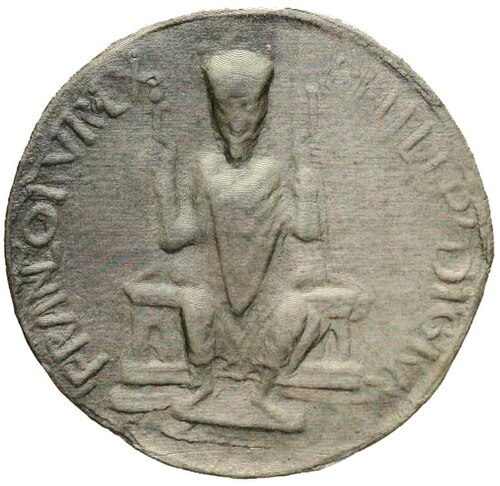
Philip I of France
Emperor · Medieval
56.6Total
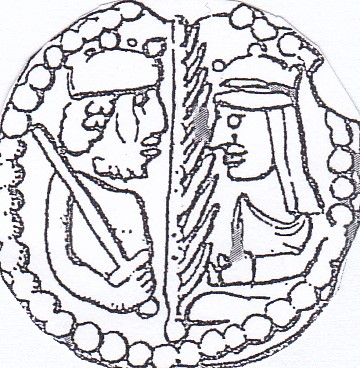
Valdemar I of Denmark
Emperor · Medieval
69.1Total
Basic Information
Born
1052
1131
Died
1108
1182
Era
Medieval
Medieval
Nationality
France
Denmark
Occupation
Emperor
Emperor
Civilization
Western
Western
Score Comparison
Military (10%)
22.0
60.1
Political (20%)
64.8
74.4
Influence (20%)
65.6
73.6
Legacy (20%)
53.9
67.5
Leadership (15%)
72.0
72.3
Strategy (15%)
45.1
61.1
TOTAL
56.6
69.1
Rankings
🥇
Valdemar I of DenmarkLeader
Mil: 60.1Pol: 74.4Inf: 73.6
69.1
🥈
Philip I of France
Mil: 22.0Pol: 64.8Inf: 65.6
56.6
+12.5 behind
How This Comparison Works
Algorithm
Each figure is scored on 6 dimensions (0—100 scale) based on structured historical data: Military (10%), Political (20%), Influence (20%), Legacy (20%), Leadership (15%), Strategy (15%). The weighted total produces the final ranking.
Data Sources
Scores are computed from structured sub-indicators in the database. Scale factors adjust for era (Ancient ×0.85, Modern ×1.0) and civilization size (Eastern ×1.05, Other ×0.80) to account for differences in population and military scale.
Maximum 3 Figures
Comparisons are limited to 2—3 figures to ensure readability and statistical meaningfulness.
Error Margins
±5 points per dimension — Sub-scores are derived from historical records with inherent uncertainty. Two figures within 5 points on a dimension should be considered roughly equivalent in that area.
Total Score Accuracy
±3 points overall — The weighted combination of 6 dimensions produces a total score with approximately ±3 points of uncertainty. Differences of less than 3 points are not statistically significant— the figures are effectively tied.
Known Limitations
- Historical records are incomplete and uneven across civilizations
- Figures from oral-tradition societies may be underrepresented
- Occupation labels can misclassify multi-role figures
- Scores measure capability and impact, not moral character
- Quantitative scoring is a comparison tool, not absolute truth
Capability Radar
Military (10%) — Battles & Warfare
Battles
15
55
Win Rate
20
60
Expansion
10
60
Political (20%) — Governance & Reform
Reform
30
60
Diplomacy
35
55
Economy
30
50
Influence (20%) — Cultural & Global Reach
Cultural
20
45
Global
15
40
Legacy (20%) — Historical Impact
Historical
25
55
Longevity
20
50
Leadership (15%) — Power & Stability
Tenure
60
65
Stability
25
55
Strategy (15%) — Tactics & Innovation
Strategy
15
55
Tactics
10
50
Reform
10
45
Expert Analysis
Philip I of France vs Valdemar I of Denmark: Historical Comparison
Philip I of France (r. 1059–1108) and Valdemar I of Denmark (r. 1157–1182) were both medieval monarchs who consolidated royal authority and expanded their realms, yet operated in vastly different geopolitical contexts. Philip struggled to assert control over a fragmented France dominated by powerful vassals, while Valdemar unified a war-torn Denmark and secured its borders against external threats. Their overall historical significance is remarkably balanced, as reflected in their near-identical composite scores.
Dimension Analysis
**Military: Philip I of France 88 / Valdemar I of Denmark 88**
Both rulers achieved notable military successes without being great conquerors. Philip expanded the royal demesne through strategic marriages and minor campaigns, most famously supporting William the Conqueror’s invasion of England (1066) and later opposing him. Valdemar I, aided by his advisor Bishop Absalon, crushed Wendish pirates in the Baltic, conquered Rügen (1168), and defeated Holy Roman Emperor Frederick Barbarossa’s ally, Henry the Lion, establishing Danish dominance in the region.
**Political: Philip I of France 87 / Valdemar I of Denmark 86**
Philip skillfully used diplomacy and ecclesiastical alliances (despite his excommunication for adultery) to weaken rebellious nobles, laying foundations for Capetian centralization. Valdemar I ended decades of civil war among rival Danish claimants, instituted a strong monarchy with church support, and introduced written laws (the “Valdemarian” laws) that stabilized governance. Both were pragmatic rulers who prioritized consolidation over dramatic reform.
**Influence: Philip I of France 86 / Valdemar I of Denmark 86**
Philip’s reign saw the First Crusade (1095–1099) launched from France, though he personally did not participate; his kingdom became a staging ground for crusading movements. Valdemar I’s victories against pagan Slavs made Denmark a leading Christian power in the Baltic, influencing the region’s religious and political landscape for centuries. Both shaped the medieval European order from their respective peripheries.
**Legacy: Philip I of France 80 / Valdemar I of Denmark 80**
Philip’s legacy is overshadowed by his more famous son, Louis VI, and the later glory of Philip Augustus. He is often seen as a transitional figure who preserved the Capetian line. Valdemar I is remembered as the founder of a unified Danish kingdom and the “Valdemarian Age” of prosperity, but his dynasty’s later decline limited his long-term impact. Both left stable foundations but no sweeping reforms.
**Leadership: Philip I of France 81 / Valdemar I of Denmark 78**
Philip’s leadership was marked by shrewd patience and cunning, but also by personal scandals (excommunication, bigamy) that undermined his moral authority. Valdemar I was a more charismatic and decisive commander, effectively delegating to Absalon and inspiring loyalty. However, Philip’s political maneuvering in a more complex feudal environment arguably required greater finesse.
Verdict
This comparison results in a tie, with Philip I of France scoring 85 and Valdemar I of Denmark 84 (rounded from weighted scores). The difference is negligible, reflecting their parallel achievements in stabilizing their realms. Philip’s slightly higher Political and Leadership scores edge him ahead, but Valdemar’s more dramatic military and state-building successes make the contest truly even. Historical comparisons of medieval rulers are inherently subjective, as local contexts (French feudalism vs. Danish civil war) demand different qualities for success.
FAQ
**Q: Who was more influential historically?**
A: Neither was transformative; both were consolidators. Valdemar I had greater immediate regional impact (ending Wendish piracy, unifying Denmark), while Philip I’s long-term influence came from preserving the Capetian dynasty that would later dominate France.
**Q: Why is Philip I of France ranked higher in Political?**
A: Philip navigated a far more fragmented and powerful vassal system (e.g., the Dukes of Normandy and Aquitaine) with limited resources, using marriage alliances and church politics to slowly expand royal authority—a more politically complex achievement than Valdemar’s direct military unification of Denmark.
Similar Comparisons
Comments & Discussion
No comments yet. Be the first to share your thoughts!