Loading...
Basil II vs Louis IX of France
Basil II leads by 0.5 pts · 2 figures compared
…
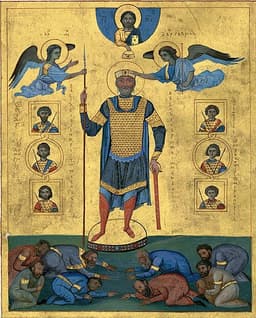
Basil II
Emperor · Medieval
63.8Total
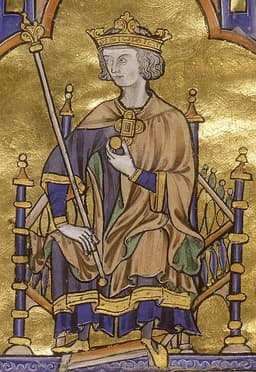
Louis IX of France
Emperor · Medieval
63.3Total
Basic Information
Born
958
1214
Died
1025
1270
Era
Medieval
Medieval
Nationality
Byzantine Empire
France
Occupation
Emperor
Emperor
Civilization
Western
Western
Score Comparison
Military (10%)
85.0
25.0
Political (20%)
59.3
72.0
Influence (20%)
56.7
82.0
Legacy (20%)
55.0
55.0
Leadership (15%)
78.0
72.0
Strategy (15%)
68.0
50.0
TOTAL
63.8
63.3
Basil II — Complete Timeline
986 AD
Battle of the Gates of TrajanWar◆ Major
Basil II led an invasion of Bulgaria but was ambushed and defeated at the Gates of Trajan pass. The Byzantine army was routed, and Basil barely escaped. This defeat forced him to adopt a more cautious strategy and delayed the conquest of Bulgaria.
Byzantine-Bulgarian WarsDefeatAmbush
Impact: regionaltragic
1000 AD
Reforms of the Military and Land SystemReform◆ Major
Basil II implemented reforms to strengthen the Byzantine military and economy. He increased the size of the army, improved fortifications, and curbed the power of the landed aristocracy by enforcing laws against the accumulation of large estates. These measures stabilized the empire.
Military ReformLand ReformByzantine Empire
Impact: nationalconstructive
1014 AD
Battle of KleidionWar
Basil II decisively defeated the Bulgarian army at the Battle of Kleidion. After the victory, he blinded 15,000 Bulgarian prisoners, leaving one in every hundred with one eye to lead them home. This earned him the epithet 'Bulgar-Slayer' and broke Bulgarian resistance.
Byzantine-Bulgarian WarsMass BlindingBulgar-Slayer
Impact: regionaldestructive
1018 AD
Annexation of BulgariaWar◆ Major
Following the death of Bulgarian Tsar Samuel and the collapse of Bulgarian resistance, Basil II formally annexed the First Bulgarian Empire into the Byzantine Empire. He established the Theme of Bulgaria, integrating the territory and ending the long war.
AnnexationBulgariaByzantine Expansion
Impact: regionalconstructive
Louis IX of France — Complete Timeline
1248 AD
Seventh CrusadeWar◆ Major
Louis IX led the Seventh Crusade to Egypt, capturing Damietta in 1249. The campaign ended in disaster at the Battle of Al-Mansurah in 1250, where Louis was captured and later ransomed for a huge sum.
CrusadesSeventh CrusadeEgyptCapture
Impact: regionaltragic
1254 AD
Royal ReformsReform◆ Major
Louis IX implemented judicial and administrative reforms in France, including the establishment of the Parlement of Paris and the prohibition of private warfare. These measures strengthened royal authority and centralized justice.
ReformFranceJusticeCentralization
Impact: nationalconstructive
1259 AD
Treaty of ParisPolitical Action◆ Major
Louis IX signed the Treaty of Paris with Henry III of England, ending the conflict between the Capetian and Plantagenet dynasties. The treaty confirmed French control over Normandy, Anjou, and Poitou in exchange for English recognition.
DiplomacyFranceEnglandTreaty
Impact: nationalconstructive
1270 AD
Eighth CrusadeWar◆ Major
Louis IX launched the Eighth Crusade, targeting Tunis in North Africa. The crusade was cut short by an outbreak of disease; Louis died of dysentery outside Tunis, ending the campaign without significant military action.
CrusadesEighth CrusadeTunisDeath
Impact: regionaltragic
Expert Analysis
Origins
Basil II was born in 958 CE into the Macedonian dynasty of the Byzantine Empire. His father, Emperor Romanos II, died when Basil was a child, leaving him and his brother Constantine VIII as co-emperors under the regency of their mother Theophano and later the parakoimomenos Joseph Bringas. Basil's early life was marked by political instability, including the usurpation of Nikephoros II Phokas and John I Tzimiskes. He received a military education and learned statecraft from his tutors.
Louis IX was born on April 25, 1214, at Poissy, France, to King Louis VIII and Blanche of Castile. He was the fourth child but the eldest surviving son. His father died when Louis was twelve, and his mother served as regent, instilling in him deep religious piety and a sense of justice. Louis was educated in Latin, theology, and governance, and was crowned king at Reims in 1226.
Rise to Power
Basil II became senior emperor upon the death of John I Tzimiskes in 976, but he faced immediate rebellions. The most serious was the revolt of Bardas Skleros (976-979), a general who nearly captured Constantinople. Basil relied on the support of Bardas Phokas, who defeated Skleros. However, Phokas himself rebelled in 987, forcing Basil to seek aid from Vladimir the Great of Kiev in exchange for marrying his sister Anna. With Varangian troops, Basil crushed Phokas at the Battle of Abydos (989). This secured his throne and began his personal rule.
Louis IX's rise was smoother due to his mother's regency. She crushed baronial revolts, notably the rebellion of 1226-1227 led by Philip Hurepel. Louis assumed personal rule in 1234, but his early reign focused on consolidating royal authority. His first major military campaign was against the English in 1242, but he soon turned to crusading.
Leadership & Governance
Basil II was a hands-on emperor who personally led campaigns and reformed the military. He increased the army's size, improved fortifications, and curbed the power of the landed aristocracy (the dynatoi) by protecting the peasant-soldiers who provided the backbone of the Byzantine army. His military score of 85.0 reflects his tactical success, though his political score of 59.3 indicates his autocratic style and failure to groom a successor. He centralized power, but his land reforms alienated the aristocracy, leading to later instability.
Louis IX was a reformer of justice and administration. He established the Parlement of Paris as a high court, prohibited private warfare, and introduced the presumption of innocence in legal proceedings. His political score of 72.0 and influence score of 82.0 highlight his ability to strengthen the monarchy through moral authority and legal reforms. However, his military score of 25.0 reflects his disastrous crusades. Louis's leadership style was pious and consultative, but his single-minded focus on crusading drained resources and led to his death.
Triumph & Tragedy
Basil II's greatest triumph was the conquest of Bulgaria. After decades of war, he defeated Tsar Samuel at the Battle of Kleidion in 1014, where he blinded 15,000 prisoners. This brutal act broke Bulgarian morale, and by 1018, the First Bulgarian Empire was annexed. Basil also expanded Byzantine territory in the Caucasus and restored the empire's prestige. His tragedy was the lack of a capable successor: his brother Constantine VIII was incompetent, and the empire declined after Basil's death. His military reforms were not sustained, and the aristocracy regained power.
Louis IX's triumph was his canonization in 1297, a rare honor for a living king, recognizing his piety and justice. His legal reforms endured, shaping French governance for centuries. The Treaty of Paris (1259) with Henry III of England stabilized relations and expanded Capetian influence. His tragedy was the Seventh Crusade: captured Damietta in 1249 but was defeated at Al-Mansurah in 1250, captured, and ransomed for a huge sum. The Eighth Crusade in 1270 ended with his death from dysentery outside Tunis, achieving nothing.
Character & Destiny
Basil II was known for his austerity, ruthlessness, and military focus. He never married or had children, dedicating himself to the empire. His nickname "Bulgar-Slayer" reflects his mercilessness. His character—disciplined, strategic, and uncompromising—allowed him to restore Byzantine power but also left a brittle legacy. He scored 78.0 in leadership and 68.0 in strategy, indicating a strong but rigid command.
Louis IX was deeply pious, ascetic, and just. He wore a hairshirt, gave alms, and personally heard petitions. His piety drove his crusading zeal, which led to his downfall. His character—kind, devout, but inflexible in his religious goals—made him a beloved king but a poor military commander. His leadership score of 72.0 reflects his moral authority, but his strategy score of 50.0 shows his over-reliance on faith.
Legacy
Basil II's legacy is the last high-water mark of the Byzantine Empire. His conquest of Bulgaria added a vast territory, but his failure to secure succession led to rapid decline. The empire never regained its former strength after his death. He is remembered as a military genius and a brutal ruler. His total score of 63.8 reflects a mixed legacy: high military but low political and influence scores.
Louis IX's legacy is more enduring. His legal reforms shaped French absolutism and the concept of the king as a just ruler. His canonization made him a model Christian monarch for centuries. The Parlement of Paris and his judicial innovations influenced Western legal systems. His influence score of 82.0 is the highest among the two, and his total of 63.3 is close to Basil's, but his impact on governance and culture was more lasting.
Conclusion
While Basil II achieved greater immediate military success—conquering Bulgaria and restoring Byzantine power—his legacy was fragile and short-lived. Louis IX, despite military failures, transformed French governance and left a moral and legal template that endured for centuries. Basil scored higher in military (85.0 vs 25.0) and strategy (68.0 vs 50.0), but Louis surpassed him in political (72.0 vs 59.3) and influence (82.0 vs 56.7). Louis's reforms outlasted Basil's conquests by shaping the modern state. Therefore, Louis IX had greater overall impact due to the enduring nature of his institutional and cultural legacy.
Rankings
🥇
Basil IILeader
Mil: 85.0Pol: 59.3Inf: 56.7
63.8
🥈
Louis IX of France
Mil: 25.0Pol: 72.0Inf: 82.0
63.3
+0.5 behind
How This Comparison Works
Algorithm
Each figure is scored on 6 dimensions (0—100 scale) based on structured historical data: Military (10%), Political (20%), Influence (20%), Legacy (20%), Leadership (15%), Strategy (15%). The weighted total produces the final ranking.
Data Sources
Scores are computed from structured sub-indicators in the database. Scale factors adjust for era (Ancient ×0.85, Modern ×1.0) and civilization size (Eastern ×1.05, Other ×0.80) to account for differences in population and military scale.
Maximum 3 Figures
Comparisons are limited to 2—3 figures to ensure readability and statistical meaningfulness.
Error Margins
±5 points per dimension — Sub-scores are derived from historical records with inherent uncertainty. Two figures within 5 points on a dimension should be considered roughly equivalent in that area.
Total Score Accuracy
±3 points overall — The weighted combination of 6 dimensions produces a total score with approximately ±3 points of uncertainty. Differences of less than 3 points are not statistically significant— the figures are effectively tied.
Known Limitations
- Historical records are incomplete and uneven across civilizations
- Figures from oral-tradition societies may be underrepresented
- Occupation labels can misclassify multi-role figures
- Scores measure capability and impact, not moral character
- Quantitative scoring is a comparison tool, not absolute truth
Capability Radar
Military (10%) — Battles & Warfare
Battles
85
45
Win Rate
90
40
Expansion
80
30
Political (20%) — Governance & Reform
Reform
80
75
Diplomacy
70
65
Economy
75
60
Influence (20%) — Cultural & Global Reach
Cultural
60
80
Global
65
60
Legacy (20%) — Historical Impact
Historical
75
75
Longevity
70
70
Leadership (15%) — Power & Stability
Tenure
85
70
Stability
80
70
Strategy (15%) — Tactics & Innovation
Strategy
85
55
Tactics
80
50
Reform
75
60
Similar Comparisons
Comments & Discussion
No comments yet. Be the first to share your thoughts!