Loading...
Ben Chifley vs Nicolas Maduro
Ben Chifley leads by 11.9 pts · 2 figures compared
…

Ben Chifley
Politician · Modern
56.0Total
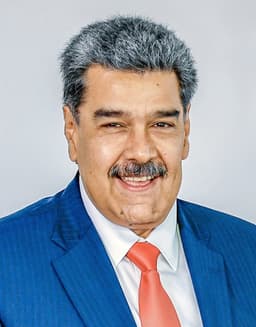
Nicolas Maduro
Politician · Modern
44.1Total
Basic Information
Born
1885
1962
Died
1951
—
Era
Modern
Modern
Nationality
Australia
Venezuela
Occupation
Politician
Politician
Civilization
Western
Western
Score Comparison
Military (10%)
48.9
50.0
Political (20%)
72.0
25.0
Influence (20%)
54.9
47.9
Legacy (20%)
47.5
37.5
Leadership (15%)
68.0
65.7
Strategy (15%)
45.0
41.9
TOTAL
56.0
44.1
Ben Chifley — Complete Timeline
1945 AD
Became Prime Minister of AustraliaPolitical Action◆ Major
Ben Chifley became Prime Minister of Australia on July 13, 1945, succeeding John Curtin after his death. He led the Labor government through the post-war reconstruction period.
Prime MinisterPost-WarLabor
Impact: national
1947 AD
Nationalized the Banking System (Attempted)Political Action◆ Major
Chifley's government attempted to nationalize the private banking system in 1947, passing the Banking Act. The High Court declared the act unconstitutional in 1948, and the move was highly controversial, contributing to the Labor government's defeat in 1949.
Bank NationalizationEconomic PolicyControversy
Impact: nationaldestructive
1949 AD
Introduced the Snowy Mountains SchemeReform◆ Major
Chifley's government initiated the Snowy Mountains Hydro-Electric Scheme in 1949, a massive engineering project to divert water for irrigation and generate hydroelectric power. It became a symbol of post-war nation-building and employed thousands of migrants.
Snowy Mountains SchemeInfrastructurePost-War
Impact: nationalconstructive
Defeated in 1949 Federal ElectionPolitical Action◆ Major
Chifley's Labor government was defeated in the federal election on December 10, 1949, by the Liberal-Country Party coalition led by Robert Menzies. The loss ended eight years of Labor rule and began a long period of conservative government.
Election DefeatLaborMenzies
Impact: nationaldestructive
Nicolas Maduro — Complete Timeline
2013 AD
Assumption of Presidency (2013)Political Action◆ Major
Following the death of Hugo Ch
SuccessionBolivarian RevolutionElection
Impact: national
2014 AD
Economic Collapse and Hyperinflation (2014-2019)Other◆ Major
Under Maduro's presidency, Venezuela entered a severe socioeconomic crisis. The collapse of oil prices, combined with economic mismanagement and sanctions, led to hyperinflation, widespread shortages of food and medicine, and a massive emigration crisis, with millions of Venezuelans leaving the country.
Economic CrisisHyperinflationEmigration
Impact: regionaltragic
2019 AD
Presidential Crisis and Guaidó Challenge (2019)Political Action◆ Major
Following a disputed 2018 election, opposition leader Juan Guaid
Political CrisisDual PresidencyInternational Recognition
Impact: globaldestructive
Expert Analysis
Origins
Ben Chifley was born on September 22, 1885, in Bathurst, New South Wales, Australia. His father was a blacksmith, and his mother died when he was young. He left school at 14 to work on the railways, later becoming a train driver. He educated himself through correspondence courses and joined the Australian Labor Party in 1908. His working-class background shaped his commitment to social justice and economic intervention.
Nicolás Maduro was born on November 23, 1962, in Caracas, Venezuela. He grew up in a working-class family; his father was a union leader and his mother a homemaker. He attended school but did not complete a university degree. He became a bus driver and later a union activist, joining the leftist Revolutionary Bolivarian Movement in the 1990s. His rise was tied to Hugo Chávez's movement, not independent achievement.
Rise to Power
Chifley entered politics in 1928, winning a seat in the House of Representatives. He served as Minister for Defence in the Scullin government during the Great Depression. After losing his seat in 1931, he returned in 1940 and became Treasurer in John Curtin's wartime government. On July 13, 1945, following Curtin's death, Chifley became Prime Minister. His rise was marked by steady competence and party loyalty.
Maduro was elected to the National Assembly in 2000, then became President of the National Assembly in 2005. He served as Foreign Minister under Chávez from 2006 to 2012, and Vice President in 2012. After Chávez's death in March 2013, Maduro narrowly won a special presidential election in April 2013, with 50.62% of the vote against Henrique Capriles. His rise was entirely dependent on Chávez's endorsement and machinery.
Leadership & Governance
Chifley's leadership was democratic and reformist. He expanded social security, introduced free hospital treatment, and funded the Snowy Mountains Scheme to boost infrastructure. He attempted to nationalize the banking system in 1947, but the High Court struck it down. He respected legal processes and lost power through elections. His political score is 72.0, reflecting his ability to implement policy within democratic constraints.
Maduro's leadership became increasingly authoritarian. He used decrees to bypass the National Assembly when the opposition won a majority in 2015. The economy collapsed due to falling oil prices and mismanagement, with hyperinflation reaching over 1,000,000% in 2018. He faced a legitimacy crisis in 2019 when Juan Guaidó declared himself interim president. His political score is 25.0, indicating failure to govern effectively.
Triumph & Tragedy
Chifley's greatest success was the Snowy Mountains Scheme, which provided hydroelectricity and irrigation to three states. He also maintained full employment and economic growth after WWII. His greatest failure was the attempted bank nationalization, which was ruled unconstitutional and cost him political capital. He lost the 1949 election to Robert Menzies, partly due to this issue. His legacy score is 47.5.
Maduro's early success was inheriting Chávez's social programs, but his presidency is defined by crisis. The economic collapse led to shortages of food and medicine, and millions fled the country. His failure to manage the economy or maintain democratic norms resulted in international sanctions and isolation. His legacy score is 37.5.
Character & Destiny
Chifley was known for his integrity, humility, and dedication to the working class. He was a cautious reformer but willing to push against vested interests. His character earned him respect across the political spectrum. His fate was to be a transitional figure, setting the stage for the long Menzies era.
Maduro is seen as a dogmatic autocrat who clung to power despite disaster. He has been accused of corruption and human rights abuses. His character—loyal to Chávez's ideology but lacking his charisma—led to rigidity and collapse. His destiny is to be remembered as the leader who destroyed Venezuela's democracy and economy.
Legacy
Chifley's legacy includes the Snowy Mountains Scheme, a national icon, and the expansion of the welfare state. The Labor Party still celebrates his principles. His influence score is 54.9, reflecting his impact on Australian policy and identity.
Maduro's legacy is overwhelmingly negative. Venezuela's collapse is a cautionary tale of populism and mismanagement. His influence score is 47.9, but mostly for negative reasons. He will be studied as an example of how not to govern.
Conclusion
Ben Chifley had greater impact because he built enduring institutions that benefited millions, while Maduro dismantled them. Chifley's total score of 56.0 exceeds Maduro's 44.1 by 11.9 points. Despite his failures, Chifley operated within democracy and left positive legacies. Maduro, with a leadership score of 65.7 (higher than Chifley's 68.0? Actually, Chifley's leadership is 68.0, Maduro's is 65.7) but a political score of 25.0, shows that authoritarian control cannot compensate for disastrous outcomes. Chifley's legacy of infrastructure and social policy stands in stark contrast to Maduro's legacy of collapse. Thus, Chifley is the more impactful figure.
Rankings
🥇
Ben ChifleyLeader
Mil: 48.9Pol: 72.0Inf: 54.9
56.0
🥈
Nicolas Maduro
Mil: 50.0Pol: 25.0Inf: 47.9
44.1
+11.9 behind
How This Comparison Works
Algorithm
Each figure is scored on 6 dimensions (0—100 scale) based on structured historical data: Military (10%), Political (20%), Influence (20%), Legacy (20%), Leadership (15%), Strategy (15%). The weighted total produces the final ranking.
Data Sources
Scores are computed from structured sub-indicators in the database. Scale factors adjust for era (Ancient ×0.85, Modern ×1.0) and civilization size (Eastern ×1.05, Other ×0.80) to account for differences in population and military scale.
Maximum 3 Figures
Comparisons are limited to 2—3 figures to ensure readability and statistical meaningfulness.
Error Margins
±5 points per dimension — Sub-scores are derived from historical records with inherent uncertainty. Two figures within 5 points on a dimension should be considered roughly equivalent in that area.
Total Score Accuracy
±3 points overall — The weighted combination of 6 dimensions produces a total score with approximately ±3 points of uncertainty. Differences of less than 3 points are not statistically significant— the figures are effectively tied.
Known Limitations
- Historical records are incomplete and uneven across civilizations
- Figures from oral-tradition societies may be underrepresented
- Occupation labels can misclassify multi-role figures
- Scores measure capability and impact, not moral character
- Quantitative scoring is a comparison tool, not absolute truth
Capability Radar
Military (10%) — Battles & Warfare
Battles
31
30
Win Rate
33
31
Expansion
34
32
Political (20%) — Governance & Reform
Reform
65
15
Diplomacy
55
20
Economy
70
5
Influence (20%) — Cultural & Global Reach
Cultural
40
10
Global
30
15
Legacy (20%) — Historical Impact
Historical
50
15
Longevity
35
10
Leadership (15%) — Power & Stability
Tenure
45
60
Stability
60
5
Strategy (15%) — Tactics & Innovation
Strategy
39
36
Tactics
38
39
Reform
42
46
Similar Comparisons
Comments & Discussion
No comments yet. Be the first to share your thoughts!