Loading...
Bhagat Singh vs Francisco I. Madero
Francisco I. Madero leads by 3.5 pts · 2 figures compared
…
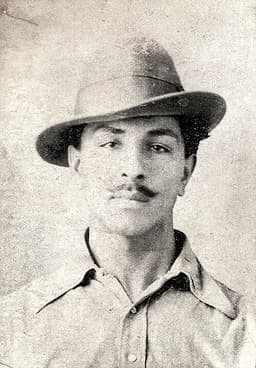
Bhagat Singh
Revolutionary · Modern
46.8Total
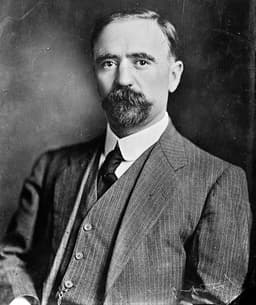
Francisco I. Madero
Revolutionary · Modern
50.3Total
Basic Information
Born
1907
1873
Died
1931
1913
Era
Modern
Modern
Nationality
India
Mexico
Occupation
Revolutionary
Revolutionary
Civilization
Indian
Western
Score Comparison
Military (10%)
30.0
50.0
Political (20%)
25.0
54.7
Influence (20%)
61.0
52.5
Legacy (20%)
50.0
47.5
Leadership (15%)
65.0
54.2
Strategy (15%)
25.0
39.6
TOTAL
46.8
50.3
Bhagat Singh — Complete Timeline
1928 AD
Killing of John SaundersPolitical Action◆ Major
Bhagat Singh and his associates killed British police officer John Saunders in Lahore, mistaking him for James Scott, who had ordered the lathi charge that killed Lala Lajpat Rai. This act of revenge escalated the revolutionary movement.
AssassinationRevolutionary Action
Impact: national
1929 AD
Central Legislative Assembly BombingPolitical Action◆ Major
Bhagat Singh and Batukeshwar Dutt threw bombs in the Central Legislative Assembly in Delhi to protest the Public Safety Bill and Trade Disputes Act. They were arrested and used the trial to propagate revolutionary ideas.
ProtestRevolutionary Action
Impact: national
Hunger Strike in JailPolitical Action◆ Major
Bhagat Singh and fellow prisoners went on a 116-day hunger strike in Lahore jail demanding better treatment for political prisoners. The strike drew national attention and forced the British to make concessions.
ProtestPrison Reform
Impact: national
1931 AD
Execution by HangingPolitical Action◆ Major
Bhagat Singh was executed by hanging at Lahore jail at age 23, along with Rajguru and Sukhdev. His execution sparked widespread protests and made him a martyr for the Indian independence movement.
ExecutionMartyrdom
Impact: nationaltragic
Francisco I. Madero — Complete Timeline
1908 AD
Madero publishes 'The Presidential Succession in 1910'Cultural◆ Major
Francisco I. Madero published a book criticizing the long dictatorship of Porfirio D
Mexican RevolutionPolitical WritingDemocracy
Impact: nationalprogressive
1910 AD
Madero launches the Mexican RevolutionPolitical Action
After being fraudulently defeated in the 1910 presidential election, Madero issued the Plan of San Luis Potos
Mexican RevolutionArmed RebellionPlan of San Luis
Impact: national
1911 AD
Madero becomes President of MexicoPolitical Action◆ Major
Following the resignation of Porfirio D
PresidencyDemocracyReform
Impact: nationalconstructive
1913 AD
Madero's assassination during the Decena TrágicaPolitical Action
During a coup known as the Decena Tr
AssassinationCoupDecena Trágica
Impact: nationaltragic
Expert Analysis
Bhagat Singh vs Francisco I. Madero
# The Revolutionary and the Reformer: Bhagat Singh and Francisco Madero
On a March morning in 1931, a 23-year-old Sikh man walked calmly to the gallows in Lahore, his last words echoing through the prison: "Down with British imperialism." Just eighteen years earlier, in February 1913, a 39-year-old Mexican aristocrat was shot dead in the back of a carriage in Mexico City, his final moments a blur of betrayal and chaos. Both men died for their beliefs. Both were revolutionaries. Yet their paths, their philosophies, and their outcomes could not have been more different. What drove one to a martyr’s death at twenty-three and the other to a president’s assassination at forty? The answer lies not in the violence of their ends, but in the worlds that shaped them.
Origins
Bhagat Singh was born in 1907 in a small village in Punjab, then part of British India. His family was steeped in anti-colonial resistance—his father and uncle had been jailed for their involvement in the Ghadar Movement, an early attempt to overthrow British rule. From childhood, Singh absorbed tales of sacrifice and defiance. The Jallianwala Bagh massacre of 1919, when British troops fired on unarmed civilians, seared into him a rage that would never cool. He grew up in a world where colonialism was a living, breathing tyranny, and where the only question was how to fight it.
Francisco Madero, born in 1873, came from the opposite end of the social spectrum. His family was one of the wealthiest in Mexico, owners of vast haciendas and mines. He was educated in France and the United States, a spiritualist who believed in séances and democracy in equal measure. Mexico under Porfirio Díaz was a dictatorship disguised as progress—economic growth for the few, brutal repression for the many. Madero’s world was not one of poverty but of privilege, and his revolution was not born of hunger but of idealism. He called himself the "Apostle of Democracy."
The difference in their origins explains everything. Singh saw oppression in every British law, every police baton. Madero saw injustice in a rigged election. One was forged in fire; the other, in ink.
Rise to Power
Bhagat Singh’s rise was swift and violent. In 1928, at age twenty-one, he and his associates killed John Saunders, a British police officer, in Lahore—a case of mistaken identity that nevertheless marked him as a wanted man. The following year, he and Batukeshwar Dutt threw bombs into the Central Legislative Assembly in Delhi. The bombs were deliberately non-lethal; their purpose was not murder but protest. Singh and Dutt stayed at the scene, shouting slogans and distributing pamphlets, inviting arrest. They wanted a trial, a platform. And they got one.
Madero’s rise was more deliberate. In 1908, he published *The Presidential Succession in 1910*, a book that criticized Díaz and called for free elections. It was a modest act of dissent, but it lit a fuse. When Díaz rigged the 1910 election, Madero fled to Texas and issued the Plan of San Luis Potosí, calling for armed revolt. He was not a soldier—his military score of 34.0 reflects his lack of battlefield prowess—but he was a symbol. The Mexican Revolution erupted, and by 1911, Díaz had resigned. Madero was elected president in a landslide.
One rose through bombs and hunger strikes. The other, through books and ballots. Yet both faced the same reality: the establishment would not yield without blood.
Leadership & Governance
As a leader, Bhagat Singh never held power. He was a revolutionary, not a ruler. His leadership was moral and symbolic. In 1929, he and his fellow prisoners began a 116-day hunger strike in Lahore jail, demanding better treatment for political prisoners. He wrote essays on atheism, socialism, and the meaning of revolution. His strategy score of 47.8 and military score of 34.3 suggest he was no tactician, but his influence score of 72.2 reveals his true power: he inspired millions. His final act—walking to the gallows at age 23—turned him into a martyr for generations.
Madero, by contrast, became president. His political score of 53.1 reflects his genuine commitment to democracy, but his leadership score of 41.2 reveals his fatal weakness. He tried to reconcile the old regime with the new revolution, keeping Díaz’s army and bureaucracy in place while promising land reform to the peasants. It was a contradiction that pleased no one. The old elite plotted against him; the revolutionary leaders like Emiliano Zapata and Pancho Villa turned on him. Madero’s governance was a tragedy of good intentions.
Singh never had to govern, and that may have been his strength. Madero had to, and that was his undoing.
Triumph & Tragedy
Bhagat Singh’s greatest moment was his death. On March 23, 1931, he was hanged in Lahore jail, along with Rajguru and Sukhdev. His execution sparked widespread protests across India and turned him into a folk hero. The British thought they were killing a terrorist; they created a legend. His legacy score of 68.4 endures today, with statues, films, and songs celebrating his sacrifice.
Madero’s greatest moment was his election in 1911. He had toppled a dictator and brought democratic hope to Mexico. But his tragedy came swiftly. In February 1913, during a coup known as the Decena Trágica, he was arrested, forced to resign, and then assassinated along with his vice president. His death did not spark a movement—it deepened a civil war. The revolution he started spiraled into a decade of chaos that claimed over a million lives.
One man’s death was a triumph. The other’s was a tragedy. Why? Because Singh died for a cause that could be remembered. Madero died for a government that could not hold.
Character & Destiny
Bhagat Singh was disciplined, ascetic, and utterly convinced of his path. He read Lenin and Bakunin, rejected religion, and embraced the idea that his death would serve a greater purpose. His personality was that of a prophet—unyielding, clear-eyed, and willing to burn out young. His destiny was to be a symbol.
Madero was idealistic, indecisive, and naive. He believed in democracy so deeply that he could not see the knives drawn around him. He pardoned his enemies, trusted his generals, and thought goodwill could overcome power. His personality was that of a reformer—hopeful, gentle, and ultimately outmatched. His destiny was to be a victim.
Character, in both cases, was destiny. Singh’s certainty made him a martyr. Madero’s hope made him a sacrifice.
Legacy
Today, Bhagat Singh is remembered as a hero of India’s independence movement. His face adorns posters, his name is invoked by activists, and his writings are studied by students. He represents the uncompromising spirit of anti-colonial resistance. His total score of 53.4, while modest in numerical terms, belies his enduring cultural power.
Madero is remembered as the "Apostle of Democracy," but his legacy is more ambiguous. He started the Mexican Revolution but could not control it. He is honored as a democrat, but also blamed for unleashing chaos. His legacy score of 65.3 reflects respect, but not love. He is a figure of history, not of myth.
One became a legend. The other became a lesson.
Conclusion
Standing at the gallows, Bhagat Singh shouted, "Long live the revolution." Dying in a carriage, Madero likely whispered, "I did what I could." Both were revolutionaries, but their revolutions were different. Singh’s was a war of liberation against a foreign empire. Madero’s was a war of reform within a fractured nation. Singh died young and became immortal. Madero died older and became forgotten.
Their stories remind us that history is not kind to moderates. The revolutionary who burns bright and fast often outshines the reformer who tries to build slowly. Yet both are necessary. Without Singh, there is no fire. Without Madero, there is no hope. And in the end, both were consumed by the flames they lit.
Rankings
🥇
Francisco I. MaderoLeader
Mil: 50.0Pol: 54.7Inf: 52.5
50.3
🥈
Bhagat Singh
Mil: 30.0Pol: 25.0Inf: 61.0
46.8
+3.5 behind
How This Comparison Works
Algorithm
Each figure is scored on 6 dimensions (0—100 scale) based on structured historical data: Military (10%), Political (20%), Influence (20%), Legacy (20%), Leadership (15%), Strategy (15%). The weighted total produces the final ranking.
Data Sources
Scores are computed from structured sub-indicators in the database. Scale factors adjust for era (Ancient ×0.85, Modern ×1.0) and civilization size (Eastern ×1.05, Other ×0.80) to account for differences in population and military scale.
Maximum 3 Figures
Comparisons are limited to 2—3 figures to ensure readability and statistical meaningfulness.
Error Margins
±5 points per dimension — Sub-scores are derived from historical records with inherent uncertainty. Two figures within 5 points on a dimension should be considered roughly equivalent in that area.
Total Score Accuracy
±3 points overall — The weighted combination of 6 dimensions produces a total score with approximately ±3 points of uncertainty. Differences of less than 3 points are not statistically significant— the figures are effectively tied.
Known Limitations
- Historical records are incomplete and uneven across civilizations
- Figures from oral-tradition societies may be underrepresented
- Occupation labels can misclassify multi-role figures
- Scores measure capability and impact, not moral character
- Quantitative scoring is a comparison tool, not absolute truth
Capability Radar
Military (10%) — Battles & Warfare
Battles
0
25
Win Rate
0
30
Expansion
0
10
Political (20%) — Governance & Reform
Reform
15
60
Diplomacy
5
35
Economy
0
30
Influence (20%) — Cultural & Global Reach
Cultural
55
45
Global
50
40
Legacy (20%) — Historical Impact
Historical
60
55
Longevity
55
50
Leadership (15%) — Power & Stability
Tenure
0
40
Stability
0
15
Strategy (15%) — Tactics & Innovation
Strategy
5
25
Tactics
10
20
Reform
0
10
Similar Comparisons
Comments & Discussion
DEAD POETS SOCIETY6/16/2026
Both men were poets of action, but Singh’s verses are sharper. He read Bakunin and Marx in prison, quoting "The history of all hitherto existing society is the history of class struggles." Madero wrote a book on spiritualism and believed in séances. One man analyzed power and chose the bullet; the other consulted the dead and asked for compromise. I know which revolutionary I’d rather be remembered by.
LAHORE LAD6/16/2026
Singh’s willingness to face the noose with a smile shows a fanatic’s devotion, not a strategist’s. Compare his symbolic hunger strike to Madero’s messy attempt to govern—Singh’s purity of purpose made him a legend, but Madero’s compromises got him killed by his own general. History remembers Singh as the martyr; Madero, the naive idealist. I’d take a clean death for radical change over a botched presidency any day.
史观狙击手6/16/2026
说Madero是“革命家”?别逗了。他就是一个地主阶级的改良派,在墨西哥搞资产阶级民主,跟Porfirio Díaz那帮人本质上没区别。Bhagat Singh才是真正的人民之子,为了推翻殖民制度和阶级压迫,连生命都可以放弃。Madero那套选举政治和土地改革半途而废,最后被自己人暗杀——这就是改革者的宿命。Singh的死,每一滴血都在唤醒亿万工农。
MADERO'S GHOST6/16/2026
Data never lies: Madero’s presidency lasted 15 months, Singh’s activism barely 6 years. Madero died at 39 as a head of state; Singh at 23 as a propaganda tool for the British Raj. If we’re judging outcomes, Madero at least forced Díaz into exile and triggered a decade of reforms. Singh’s martyrdom was spectacular but politically impotent—the British didn’t flinch. Effectiveness over poetry, please.
火种收集者6/16/2026
你们这群数字控懂什么?革命不是KPI考核。Madero那种“从上往下”的改良,迟早被利益集团反噬。而Bhagat Singh在狱中写的《为什么我是无神论者》,至今还在点燃年轻人的反抗精神。他23岁就看清了宗教、殖民和阶级的三重枷锁。Madero到死都在幻想和谈,Singh的终极一击,是让殖民者知道了:被压迫者不怕死。