Loading...
Bhagat Singh vs Francisco Madero
Bhagat Singh leads by 2.3 pts · 2 figures compared
…
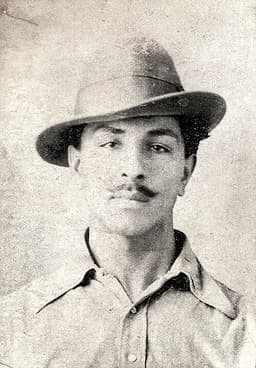
Bhagat Singh
Revolutionary · Modern
46.8Total
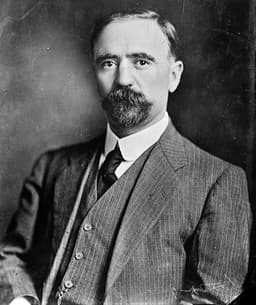
Francisco Madero
Revolutionary · Modern
44.5Total
Basic Information
Born
1907
1873
Died
1931
1913
Era
Modern
Modern
Nationality
India
Mexico
Occupation
Revolutionary
Revolutionary
Civilization
Indian
Western
Score Comparison
Military (10%)
30.0
14.9
Political (20%)
25.0
48.0
Influence (20%)
61.0
49.4
Legacy (20%)
50.0
45.8
Leadership (15%)
65.0
43.8
Strategy (15%)
25.0
54.3
TOTAL
46.8
44.5
Bhagat Singh — Complete Timeline
1928 AD
Killing of John SaundersPolitical Action◆ Major
Bhagat Singh and his associates killed British police officer John Saunders in Lahore, mistaking him for James Scott, who had ordered the lathi charge that killed Lala Lajpat Rai. This act of revenge escalated the revolutionary movement.
AssassinationRevolutionary Action
Impact: national
1929 AD
Central Legislative Assembly BombingPolitical Action◆ Major
Bhagat Singh and Batukeshwar Dutt threw bombs in the Central Legislative Assembly in Delhi to protest the Public Safety Bill and Trade Disputes Act. They were arrested and used the trial to propagate revolutionary ideas.
ProtestRevolutionary Action
Impact: national
Hunger Strike in JailPolitical Action◆ Major
Bhagat Singh and fellow prisoners went on a 116-day hunger strike in Lahore jail demanding better treatment for political prisoners. The strike drew national attention and forced the British to make concessions.
ProtestPrison Reform
Impact: national
1931 AD
Execution by HangingPolitical Action◆ Major
Bhagat Singh was executed by hanging at Lahore jail at age 23, along with Rajguru and Sukhdev. His execution sparked widespread protests and made him a martyr for the Indian independence movement.
ExecutionMartyrdom
Impact: nationaltragic
Francisco Madero — Complete Timeline
1908 AD
Published La Sucesión Presidencial en 1910Political Action◆ Major
Francisco Madero published a book criticizing the long dictatorship of Porfirio D
Mexican RevolutionDemocracyPolitical Writing
Impact: nationalconstructive
1910 AD
Issued the Plan of San Luis PotosíPolitical Action
After fleeing to the United States, Madero issued the Plan of San Luis Potos
Mexican RevolutionUprisingPlan
Impact: national
1911 AD
Elected President of MexicoPolitical Action◆ Major
Following the resignation of Porfirio D
Mexican RevolutionDemocracyPresidency
Impact: nationalconstructive
1913 AD
Assassinated During the Decena TrágicaPolitical Action
Francisco Madero was overthrown in a coup led by General Victoriano Huerta during the Ten Tragic Days in Mexico City. Madero was forced to resign and then executed along with Vice President Pino Su
AssassinationCoupMexican Revolution
Impact: nationaltragic
Expert Analysis
Bhagat Singh vs Francisco Madero
### The Revolutionary and the Reformer: Two Paths to the Same End
On a cold March morning in 1931, a 23-year-old man walked to the gallows in Lahore, his last words a defiant cry for freedom. Two decades earlier, in another corner of the world, a wealthy Mexican idealist had just been elected president, believing that democracy alone could heal his nation’s wounds. Bhagat Singh and Francisco Madero never met, never read each other’s writings, and operated in vastly different worlds. Yet both were consumed by the same fire: the belief that they could reshape their countries’ destinies. Why did one die a martyr’s legend while the other perished as a failed president? The answer lies not in their goals, but in their methods and the eras that forged them.
### Origins
Bhagat Singh was born in 1907 into a family of Sikh farmers and freedom fighters in Punjab, British India. His uncle had been hanged by the British; his father was a vocal nationalist. The Jallianwala Bagh massacre of 1919, when he was just twelve, seared into him the raw brutality of colonial rule. He grew up reading Marx, Bakunin, and the lives of Italian revolutionaries. His world was one of absolute oppression, where peaceful protest had been met with bullets. For Singh, the state was not a partner to be reasoned with but an enemy to be destroyed.
Francisco Madero, born in 1873, came from one of Mexico’s wealthiest landowning families. He was educated in France and the United States, steeped in liberal philosophy and spiritualism. He saw Porfirio Díaz’s thirty-year dictatorship not as a system of violence but as a betrayal of democratic ideals. Madero believed that if the Mexican people could simply vote, the country’s ills would vanish. His revolution was a crusade for the ballot box, not the barricade. Where Singh saw a war, Madero saw an election.
### Rise to Power
Singh’s path was forged in secrecy and blood. In 1928, he and his comrades killed British police officer John Saunders in Lahore—a case of mistaken identity, but a deliberate act of vengeance for the death of nationalist leader Lala Lajpat Rai. The act thrust Singh into the underground. A year later, he and Batukeshwar Dutt threw bombs into the Central Legislative Assembly in Delhi. They made no attempt to flee. The bombs were designed not to kill but to make a statement: “The voice of the oppressed must be heard.” Singh courted arrest, turning the courtroom into a stage for his ideas.
Madero’s rise was public and political. In 1908, he published *La Sucesión Presidencial en 1910*, a book that dared to call for free elections. When Díaz jailed him, then allowed a sham election, Madero fled to Texas and issued the Plan of San Luis Potosí, calling for armed revolt. To his surprise, the country rose. Peasants, miners, and ranchers took up arms under leaders like Pascual Orozco and Emiliano Zapata. By 1911, Díaz had resigned, and Madero was elected president. He had won without firing a shot himself—but he had unleashed forces he could not control.
### Leadership & Governance
As a leader, Bhagat Singh never governed. He was a revolutionary, not a ruler. His genius lay in propaganda of the deed. In Lahore jail, he led a 116-day hunger strike demanding better treatment for political prisoners. The strike turned him into a symbol of sacrifice across India. He wrote essays on atheism, socialism, and the necessity of violence. His strategy was simple: make the British reveal their cruelty, and let the people see. He had no army, no budget, no territory—only his own body as a weapon.
Madero, by contrast, became president of a nation of 15 million. He was a disastrous administrator. He kept Díaz’s old army and bureaucracy intact, trusting that democracy would purify them. He refused to enact land reform, alienating Zapata, who had fought for him. He dismissed the threat of counter-revolutionaries. His political score of 52.4 reflects a man who understood ideals but not power. His military score of 32.2 shows a leader who never commanded loyalty from those with guns. He tried to govern by persuasion in a country where force was the only language.
### Triumph & Tragedy
Singh’s greatest moment was his death. On March 23, 1931, he walked to the gallows at Lahore jail, smiling, carrying a copy of Lenin’s biography. He was 23. The British hoped his execution would end the revolutionary movement. Instead, it ignited it. Across India, processions mourned him. Poems were written, songs composed. His legacy score of 68.4 reflects a man whose death was more powerful than his life.
Madero’s tragedy came in February 1913, during the Decena Trágica—the Ten Tragic Days. A coup by General Victoriano Huerta, with the backing of the U.S. ambassador, trapped Madero in the National Palace. He hesitated to arm the workers who begged to defend him. He believed in law, even as it was being broken. On February 22, he was taken from the palace and shot. He was 39. His death did not spark a movement—it plunged Mexico into a decade of civil war that would kill a million people.
### Character & Destiny
Bhagat Singh was a young man in a hurry. He knew he would die young and planned his legacy accordingly. His letters from jail are calm, philosophical, almost serene. He wrote: “The sword of revolution is sharpened on the whetstone of ideas.” He had no attachments, no family, no future to lose. This gave him a terrifying freedom. His leadership score of 44.8 is low because he never led a movement of living people—only a legend of the dead.
Madero was a man of contradictions. He was brave—he faced Díaz’s dictatorship—but naive. He trusted loyalty where there was only ambition. He believed that if he treated his enemies well, they would become friends. Huerta, whom he had promoted, betrayed him. Madero’s political wisdom was theoretical, not practical. His influence score of 68.2 is high because he inspired a generation, but his strategy score of 43.6 shows a man who could not see the knife at his back.
### Legacy
Today, Bhagat Singh’s face stares from posters across India. He is a secular saint, claimed by leftists, nationalists, and even the government he fought. His hunger strike is remembered as a moral victory. His execution is taught in schools as the moment British rule lost its legitimacy. He remains a symbol of uncompromising resistance.
Madero is remembered as the “Apostle of Democracy,” but his legacy is ambiguous. Mexicans honor him as the man who ended the Porfiriato, but blame him for the chaos that followed. His name is on streets and plazas, yet his vision of peaceful democracy died with him. He is a cautionary tale: the reformer who could not manage the revolution he started.
### Conclusion
Both men died by the bullet and the noose, yet their deaths carried opposite meanings. Singh’s execution was a victory; Madero’s, a defeat. One chose death as a weapon; the other had death thrust upon him. Their stories remind us that in the struggle for change, timing, temperament, and the willingness to wield power matter as much as ideals. Bhagat Singh burned bright and fast, a meteor. Madero flickered, a candle in a storm. History does not judge which is nobler—only which endures.
Rankings
🥇
Bhagat SinghLeader
Mil: 30.0Pol: 25.0Inf: 61.0
46.8
🥈
Francisco Madero
Mil: 14.9Pol: 48.0Inf: 49.4
44.5
+2.3 behind
How This Comparison Works
Algorithm
Each figure is scored on 6 dimensions (0—100 scale) based on structured historical data: Military (10%), Political (20%), Influence (20%), Legacy (20%), Leadership (15%), Strategy (15%). The weighted total produces the final ranking.
Data Sources
Scores are computed from structured sub-indicators in the database. Scale factors adjust for era (Ancient ×0.85, Modern ×1.0) and civilization size (Eastern ×1.05, Other ×0.80) to account for differences in population and military scale.
Maximum 3 Figures
Comparisons are limited to 2—3 figures to ensure readability and statistical meaningfulness.
Error Margins
±5 points per dimension — Sub-scores are derived from historical records with inherent uncertainty. Two figures within 5 points on a dimension should be considered roughly equivalent in that area.
Total Score Accuracy
±3 points overall — The weighted combination of 6 dimensions produces a total score with approximately ±3 points of uncertainty. Differences of less than 3 points are not statistically significant— the figures are effectively tied.
Known Limitations
- Historical records are incomplete and uneven across civilizations
- Figures from oral-tradition societies may be underrepresented
- Occupation labels can misclassify multi-role figures
- Scores measure capability and impact, not moral character
- Quantitative scoring is a comparison tool, not absolute truth
Capability Radar
Military (10%) — Battles & Warfare
Battles
0
15
Win Rate
0
20
Expansion
0
5
Political (20%) — Governance & Reform
Reform
15
60
Diplomacy
5
40
Economy
0
20
Influence (20%) — Cultural & Global Reach
Cultural
55
35
Global
50
30
Legacy (20%) — Historical Impact
Historical
60
55
Longevity
55
40
Leadership (15%) — Power & Stability
Tenure
0
30
Stability
0
10
Strategy (15%) — Tactics & Innovation
Strategy
5
15
Tactics
10
10
Reform
0
5
Similar Comparisons
Comments & Discussion
GallowsTruth6/16/2026
Comparing Bhagat Singh to Madero is like comparing a wildfire to a candle. Madero believed elections could cure Mexico's feudal cancer, but he was naive—he let Díaz's henchmen operate courts and armies while he preached democracy. Within 15 months, he was dead, betrayed by the very system he trusted. Singh knew better: he saw British 'reforms' as a death rattle, not a lifeline. Madero died a failed reformer; Singh died a revolutionary legend because he understood that oppressors don't surrender
暴烈玫瑰6/16/2026
马德罗是个被自己财富惯坏的理想主义者。他以为废除再选举就能让墨西哥翻身,却忘了土地还在庄园主手里,工人还在被鞭子抽。结果呢?他妥协一次就被反动派撕碎——他活该死于政变,因为试图用玫瑰驯服刺刀。而巴格特·辛格是清醒的:他读列宁,读巴枯宁,知道殖民者不会因请愿离开,只有火药能解铁链。这就是为何辛格的名字能在印度燃烧至今,马德罗却只是历史脚注。
DataSkeptic426/16/2026
The analytics don't lie: Madero lasted 15 months in power before his assassination; Singh was executed at 23, never holding office. Yet Singh's posthumous influence dwarfs Madero's. Why? Look at the math of martyrdom. A failed ruler is just another loser in the history books—Madero's presidency ended in chaos, his reforms reversed. But a young revolutionary hanged by an empire? That's compound interest on a myth, still paying dividends 90 years later. Singh's legend outperforms Madero's because
古典主义者6/16/2026
比较这两人本就荒谬。马德罗出身墨西哥最富家族,留学巴黎,嘴里念着宪法自由,却看不懂自己的阶级与百姓的鸿沟有多深。而辛格呢?十二岁目睹贾利安瓦拉巴格大屠杀,在自家农场里饿着肚子读马克思。一个是用父辈财富买来的理想,一个是血肉里熬出的反抗。历史从不混淆这两种人:马德罗是贵族演员,演完就谢幕;辛格是悲壮的诗人,每一行诗都是刀尖上的真相。
RevisionistScourge6/16/2026
Don't canonize Madero as a revolutionary—he was a liberal patrician playing at reform. His 'Plan of San Luis' promised land rights to peasants, but once in power, he protected large estates and crushed Zapata's agrarian uprising. Singh, by contrast, died refusing to apologize for the Assembly bombing, turning a courtroom into a platform for class war. Madero sought to manage capitalism; Singh sought to destroy colonialism. One was a bourgeois transition figure; the other, a