Loading...
This comparison has not been analyzed yet.
One-time AI generation (~1 minute). Scores and timeline are already available below.
Bhunu vs Mensa Bonsu
Mensa Bonsu leads by 6.5 pts · 2 figures compared
…

Bhunu
Emperor · Modern
43.4Total
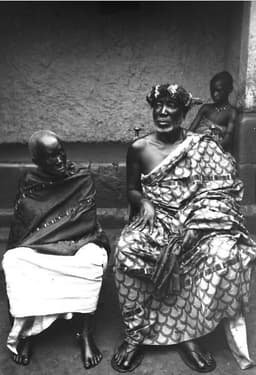
Mensa Bonsu
Emperor · Modern
49.9Total
Basic Information
Born
1876
1840
Died
1899
1896
Era
Modern
Modern
Nationality
Swaziland
Ashanti Empire
Occupation
Emperor
Emperor
Civilization
Other
Other
Score Comparison
Military (10%)
43.3
55.0
Political (20%)
30.8
43.7
Influence (20%)
47.1
51.8
Legacy (20%)
35.8
41.7
Leadership (15%)
55.3
62.2
Strategy (15%)
54.3
51.7
TOTAL
43.4
49.9
Bhunu — Complete Timeline
1889 AD
Accession to the ThronePolitical Action◆ Major
Bhunu became king of Swaziland at age 13 after the death of his father Mbandzeni. His reign began during a period of increasing European colonial pressure on Swazi sovereignty.
SuccessionColonial EraMinor King
Impact: national
1890 AD
Signing of the First Swazi ConcessionPolitical Action◆ Major
Bhunu granted extensive land and mineral concessions to European settlers, including the British and Boers. These concessions eroded Swazi territorial control and led to the establishment of a colonial administration.
Colonial ConcessionsLand LossSovereignty Erosion
Impact: nationaldestructive
1894 AD
Establishment of the Swaziland ProtectoratePolitical Action◆ Major
Bhunu accepted British protection over Swaziland, making it a protectorate under the British South Africa Company. This ended Swazi independence and placed the kingdom under colonial rule.
ColonialismProtectorateLoss of Independence
Impact: nationaltragic
1899 AD
Death and Succession CrisisPolitical Action◆ Major
Bhunu died suddenly at age 23, leaving an infant son Sobhuza II as heir. This created a power vacuum that led to Queen Regent Labotsibeni Mdluli assuming control during the colonial period.
Succession CrisisRegencyColonial Transition
Impact: nationaltragic
Mensa Bonsu — Complete Timeline
1874 AD
Reign during internal strifePolitical Action◆ Major
Mensa Bonsu became Asantehene after the deposition of Kofi Karikari. His reign was marked by internal conflicts, including rebellions from provincial chiefs and factions within the royal family, weakening the Ashanti Empire.
Internal StrifeRebellionAshanti
Impact: nationaldestructive
1880 AD
Attempt to restore Ashanti powerPolitical Action
Mensa Bonsu attempted to rebuild the Ashanti military and reassert control over rebellious provinces. However, his efforts were hampered by continued internal divisions and British pressure.
RestorationMilitaryAshanti
Impact: nationalconstructive
1883 AD
Deposition and exilePolitical Action◆ Major
Mensa Bonsu was deposed by the Ashanti council due to his inability to resolve internal conflicts and restore stability. He was exiled from Kumasi, and his reign ended in failure.
DepositionExileAshanti
Impact: nationaltragic
This comparison has not been analyzed yet.
One-time AI generation (~1 minute). Scores and timeline are already available below.
Rankings
🥇
Mensa BonsuLeader
Mil: 55.0Pol: 43.7Inf: 51.8
49.9
🥈
Bhunu
Mil: 43.3Pol: 30.8Inf: 47.1
43.4
+6.5 behind
How This Comparison Works
Algorithm
Each figure is scored on 6 dimensions (0—100 scale) based on structured historical data: Military (10%), Political (20%), Influence (20%), Legacy (20%), Leadership (15%), Strategy (15%). The weighted total produces the final ranking.
Data Sources
Scores are computed from structured sub-indicators in the database. Scale factors adjust for era (Ancient ×0.85, Modern ×1.0) and civilization size (Eastern ×1.05, Other ×0.80) to account for differences in population and military scale.
Maximum 3 Figures
Comparisons are limited to 2—3 figures to ensure readability and statistical meaningfulness.
Error Margins
±5 points per dimension — Sub-scores are derived from historical records with inherent uncertainty. Two figures within 5 points on a dimension should be considered roughly equivalent in that area.
Total Score Accuracy
±3 points overall — The weighted combination of 6 dimensions produces a total score with approximately ±3 points of uncertainty. Differences of less than 3 points are not statistically significant— the figures are effectively tied.
Known Limitations
- Historical records are incomplete and uneven across civilizations
- Figures from oral-tradition societies may be underrepresented
- Occupation labels can misclassify multi-role figures
- Scores measure capability and impact, not moral character
- Quantitative scoring is a comparison tool, not absolute truth
Capability Radar
Military (10%) — Battles & Warfare
Battles
5
45
Win Rate
5
40
Expansion
5
20
Political (20%) — Governance & Reform
Reform
20
35
Diplomacy
25
30
Economy
15
25
Influence (20%) — Cultural & Global Reach
Cultural
15
30
Global
5
20
Legacy (20%) — Historical Impact
Historical
15
35
Longevity
10
25
Leadership (15%) — Power & Stability
Tenure
30
40
Stability
20
20
Strategy (15%) — Tactics & Innovation
Strategy
5
45
Tactics
5
50
Reform
5
30
Similar Comparisons
Comments & Discussion
No comments yet. Be the first to share your thoughts!