Loading...
This comparison has not been analyzed yet.
One-time AI generation (~1 minute). Scores and timeline are already available below.
Julius of Brunswick vs Mensa Bonsu
Mensa Bonsu leads by 0.3 pts · 2 figures compared
…

Julius of Brunswick
Emperor · Modern
49.6Total
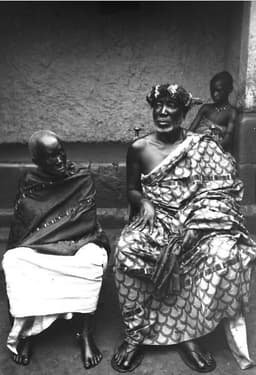
Mensa Bonsu
Emperor · Modern
49.9Total
Basic Information
Born
1528
1840
Died
1589
1896
Era
Modern
Modern
Nationality
Brunswick
Ashanti Empire
Occupation
Emperor
Emperor
Civilization
Western
Other
Score Comparison
Military (10%)
20.0
55.0
Political (20%)
68.0
43.7
Influence (20%)
53.3
51.8
Legacy (20%)
42.5
41.7
Leadership (15%)
53.2
62.2
Strategy (15%)
54.6
51.7
TOTAL
49.6
49.9
Julius of Brunswick — Complete Timeline
1568 AD
Introduced the Reformation in Brunswick-WolfenbüttelReform◆ Major
Julius introduced the Lutheran Reformation in his duchy, adopting the Augsburg Confession and establishing a state church. He dissolved monasteries, secularized church property, and appointed Protestant clergy, making the duchy a center of Lutheranism.
ReformationLutheranism
Impact: regionalprogressive
Became Duke of Brunswick-WolfenbüttelPolitical Action◆ Major
Julius inherited the Duchy of Brunswick-Wolfenb
InheritanceReformation
Impact: regionalprogressive
1570 AD
Implemented Economic ReformsReform
Julius implemented economic reforms to strengthen his duchy, including the promotion of mining, trade, and infrastructure. He improved roads, established markets, and supported the mining of silver and copper, boosting the duchy's prosperity.
Economic ReformDevelopment
Impact: regionalconstructive
Built the Castle of WolfenbüttelCultural
Julius expanded and renovated the Castle of Wolfenb
ArchitectureRenaissance
constructive
1572 AD
Established the Wolfenbüttel LibraryCultural◆ Major
Julius established the Herzog August Library in Wolfenb
LibraryScholarship
Impact: regionalconstructive
1576 AD
Founded the University of HelmstedtCultural◆ Major
Julius founded the University of Helmstedt, also known as Academia Julia, which became a leading Protestant university in northern Germany. It attracted scholars from across Europe and played a key role in the education of Lutheran clergy and officials.
UniversityEducation
Impact: regionalconstructive
Mensa Bonsu — Complete Timeline
1874 AD
Reign during internal strifePolitical Action◆ Major
Mensa Bonsu became Asantehene after the deposition of Kofi Karikari. His reign was marked by internal conflicts, including rebellions from provincial chiefs and factions within the royal family, weakening the Ashanti Empire.
Internal StrifeRebellionAshanti
Impact: nationaldestructive
1880 AD
Attempt to restore Ashanti powerPolitical Action
Mensa Bonsu attempted to rebuild the Ashanti military and reassert control over rebellious provinces. However, his efforts were hampered by continued internal divisions and British pressure.
RestorationMilitaryAshanti
Impact: nationalconstructive
1883 AD
Deposition and exilePolitical Action◆ Major
Mensa Bonsu was deposed by the Ashanti council due to his inability to resolve internal conflicts and restore stability. He was exiled from Kumasi, and his reign ended in failure.
DepositionExileAshanti
Impact: nationaltragic
This comparison has not been analyzed yet.
One-time AI generation (~1 minute). Scores and timeline are already available below.
Rankings
🥇
Mensa BonsuLeader
Mil: 55.0Pol: 43.7Inf: 51.8
49.9
🥈
Julius of Brunswick
Mil: 20.0Pol: 68.0Inf: 53.3
49.6
+0.3 behind
How This Comparison Works
Algorithm
Each figure is scored on 6 dimensions (0—100 scale) based on structured historical data: Military (10%), Political (20%), Influence (20%), Legacy (20%), Leadership (15%), Strategy (15%). The weighted total produces the final ranking.
Data Sources
Scores are computed from structured sub-indicators in the database. Scale factors adjust for era (Ancient ×0.85, Modern ×1.0) and civilization size (Eastern ×1.05, Other ×0.80) to account for differences in population and military scale.
Maximum 3 Figures
Comparisons are limited to 2—3 figures to ensure readability and statistical meaningfulness.
Error Margins
±5 points per dimension — Sub-scores are derived from historical records with inherent uncertainty. Two figures within 5 points on a dimension should be considered roughly equivalent in that area.
Total Score Accuracy
±3 points overall — The weighted combination of 6 dimensions produces a total score with approximately ±3 points of uncertainty. Differences of less than 3 points are not statistically significant— the figures are effectively tied.
Known Limitations
- Historical records are incomplete and uneven across civilizations
- Figures from oral-tradition societies may be underrepresented
- Occupation labels can misclassify multi-role figures
- Scores measure capability and impact, not moral character
- Quantitative scoring is a comparison tool, not absolute truth
Capability Radar
Military (10%) — Battles & Warfare
Battles
5
45
Win Rate
5
40
Expansion
5
20
Political (20%) — Governance & Reform
Reform
65
35
Diplomacy
40
30
Economy
45
25
Influence (20%) — Cultural & Global Reach
Cultural
40
30
Global
20
20
Legacy (20%) — Historical Impact
Historical
35
35
Longevity
30
25
Leadership (15%) — Power & Stability
Tenure
50
40
Stability
50
20
Strategy (15%) — Tactics & Innovation
Strategy
5
45
Tactics
5
50
Reform
10
30
Similar Comparisons
Comments & Discussion
No comments yet. Be the first to share your thoughts!