Loading...
This comparison has not been analyzed yet.
One-time AI generation (~1 minute). Scores and timeline are already available below.
Bildad Kaggia vs Farouk al-Sharaa
Bildad Kaggia leads by 0.6 pts · 2 figures compared
…

Bildad Kaggia
Politician · Modern
43.9Total
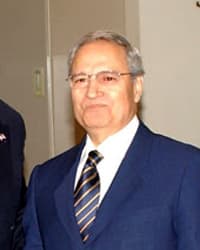
Farouk al-Sharaa
Politician · Modern
43.3Total
Basic Information
Born
1921
1938
Died
—
—
Era
Modern
Modern
Nationality
Kenya
Syria
Occupation
Politician
Politician
Civilization
Other
Middle Eastern
Score Comparison
Military (10%)
39.9
29.8
Political (20%)
32.2
37.9
Influence (20%)
50.2
48.6
Legacy (20%)
41.7
39.2
Leadership (15%)
45.0
55.3
Strategy (15%)
53.8
43.5
TOTAL
43.9
43.3
Bildad Kaggia — Complete Timeline
1952 AD
Imprisonment During the Mau Mau UprisingPolitical Action◆ Major
Bildad Kaggia was arrested and detained by British colonial authorities for his role in the Mau Mau movement. He was held in detention camps for several years, where he underwent harsh treatment. His imprisonment solidified his commitment to land reform and social justice.
Mau MauDetentionColonial Repression
Impact: nationaltragic
1963 AD
Election to Parliament and Land Reform AdvocacyPolitical Action◆ Major
Bildad Kaggia was elected to the Kenyan Parliament as a member for Kandara constituency. He became a vocal advocate for land redistribution to the landless poor, criticizing the new government for failing to fulfill Mau Mau promises. His populist stance brought him into conflict with President Jomo Kenyatta.
Land ReformPopulismParliament
Impact: nationalconstructive
1966 AD
Expulsion from KANU and Political MarginalizationPolitical Action◆ Major
Bildad Kaggia was expelled from the ruling Kenya African National Union (KANU) for his radical land reform views. He subsequently formed the Kenya People's Union (KPU) with Oginga Odinga. The KPU was banned in 1969, and Kaggia was detained again, effectively ending his political career.
Political ExpulsionOpposition PartyDetention
Impact: nationaldestructive
Farouk al-Sharaa — Complete Timeline
1984 AD
Appointed Syrian Foreign MinisterPolitical Action◆ Major
Farouk al-Sharaa was appointed Minister of Foreign Affairs of Syria in 1984, serving under President Hafez al-Assad. He held this position for over 22 years, becoming a key architect of Syrian foreign policy. He was involved in negotiations with Israel, Lebanon, and other regional actors, and was known for his pragmatic approach.
Syrian DiplomacyHafez al-AssadForeign Minister
Impact: regional
2006 AD
Appointed Vice President of SyriaPolitical Action◆ Major
In 2006, al-Sharaa was appointed Vice President of Syria by President Bashar al-Assad, a position he held until 2014. As Vice President, he was involved in high-level decision-making, though his influence waned during the Syrian Civil War. He was seen as a potential reformist within the regime.
Vice PresidentBashar al-AssadSyrian Government
Impact: national
2014 AD
Defected from Assad RegimePolitical Action◆ Major
In 2014, al-Sharaa reportedly defected from the Assad regime, though he did not publicly announce it. He was removed from his position as Vice President and placed under house arrest. His defection was seen as a significant blow to the regime, though he remained in Syria and did not join the opposition.
DefectionSyrian Civil WarAssad Regime
Impact: national
This comparison has not been analyzed yet.
One-time AI generation (~1 minute). Scores and timeline are already available below.
Rankings
🥇
Bildad KaggiaLeader
Mil: 39.9Pol: 32.2Inf: 50.2
43.9
🥈
Farouk al-Sharaa
Mil: 29.8Pol: 37.9Inf: 48.6
43.3
+0.6 behind
How This Comparison Works
Algorithm
Each figure is scored on 6 dimensions (0—100 scale) based on structured historical data: Military (10%), Political (20%), Influence (20%), Legacy (20%), Leadership (15%), Strategy (15%). The weighted total produces the final ranking.
Data Sources
Scores are computed from structured sub-indicators in the database. Scale factors adjust for era (Ancient ×0.85, Modern ×1.0) and civilization size (Eastern ×1.05, Other ×0.80) to account for differences in population and military scale.
Maximum 3 Figures
Comparisons are limited to 2—3 figures to ensure readability and statistical meaningfulness.
Error Margins
±5 points per dimension — Sub-scores are derived from historical records with inherent uncertainty. Two figures within 5 points on a dimension should be considered roughly equivalent in that area.
Total Score Accuracy
±3 points overall — The weighted combination of 6 dimensions produces a total score with approximately ±3 points of uncertainty. Differences of less than 3 points are not statistically significant— the figures are effectively tied.
Known Limitations
- Historical records are incomplete and uneven across civilizations
- Figures from oral-tradition societies may be underrepresented
- Occupation labels can misclassify multi-role figures
- Scores measure capability and impact, not moral character
- Quantitative scoring is a comparison tool, not absolute truth
Capability Radar
Military (10%) — Battles & Warfare
Battles
10
19
Win Rate
10
26
Expansion
5
26
Political (20%) — Governance & Reform
Reform
30
20
Diplomacy
20
50
Economy
15
15
Influence (20%) — Cultural & Global Reach
Cultural
25
10
Global
15
20
Legacy (20%) — Historical Impact
Historical
30
20
Longevity
20
15
Leadership (15%) — Power & Stability
Tenure
20
40
Stability
15
10
Strategy (15%) — Tactics & Innovation
Strategy
15
31
Tactics
15
34
Reform
5
35
Similar Comparisons
Comments & Discussion
No comments yet. Be the first to share your thoughts!