Loading...
Farouk al-Sharaa vs Vaclav Havel
Vaclav Havel leads by 21.1 pts · 2 figures compared
…
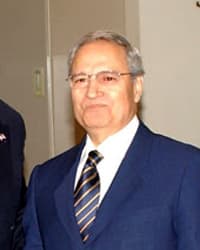
Farouk al-Sharaa
Politician · Modern
43.3Total
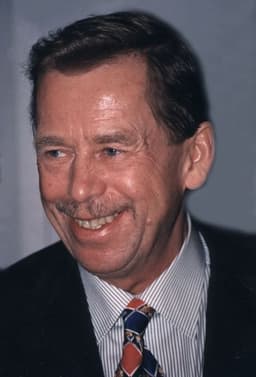
Vaclav Havel
Politician · Modern
64.4Total
Basic Information
Born
1938
1936
Died
—
—
Era
Modern
Modern
Nationality
Syria
Czech Republic
Occupation
Politician
Politician
Civilization
Middle Eastern
Western
Score Comparison
Military (10%)
29.8
50.0
Political (20%)
37.9
82.0
Influence (20%)
48.6
65.0
Legacy (20%)
39.2
55.0
Leadership (15%)
55.3
78.0
Strategy (15%)
43.5
54.3
TOTAL
43.3
64.4
Farouk al-Sharaa — Complete Timeline
1984 AD
Appointed Syrian Foreign MinisterPolitical Action◆ Major
Farouk al-Sharaa was appointed Minister of Foreign Affairs of Syria in 1984, serving under President Hafez al-Assad. He held this position for over 22 years, becoming a key architect of Syrian foreign policy. He was involved in negotiations with Israel, Lebanon, and other regional actors, and was known for his pragmatic approach.
Syrian DiplomacyHafez al-AssadForeign Minister
Impact: regional
2006 AD
Appointed Vice President of SyriaPolitical Action◆ Major
In 2006, al-Sharaa was appointed Vice President of Syria by President Bashar al-Assad, a position he held until 2014. As Vice President, he was involved in high-level decision-making, though his influence waned during the Syrian Civil War. He was seen as a potential reformist within the regime.
Vice PresidentBashar al-AssadSyrian Government
Impact: national
2014 AD
Defected from Assad RegimePolitical Action◆ Major
In 2014, al-Sharaa reportedly defected from the Assad regime, though he did not publicly announce it. He was removed from his position as Vice President and placed under house arrest. His defection was seen as a significant blow to the regime, though he remained in Syria and did not join the opposition.
DefectionSyrian Civil WarAssad Regime
Impact: national
Vaclav Havel — Complete Timeline
1977 AD
Charter 77 foundingPolitical Action◆ Major
Havel became a leading figure and spokesperson for Charter 77, a Czechoslovak human rights manifesto that criticized the communist government for failing to implement its own laws on human rights. This led to his persecution and imprisonment.
Human RightsDissidenceCold War
Impact: nationalconstructive
1989 AD
Velvet Revolution leadershipPolitical Action
Havel co-founded the Civic Forum and emerged as the key leader of the non-violent Velvet Revolution in Czechoslovakia. Mass protests forced the communist government to resign, ending 41 years of one-party rule.
RevolutionDemocracyCold War
Impact: globalconstructive
Elected President of CzechoslovakiaPolitical Action◆ Major
Following the Velvet Revolution, Havel was elected President of Czechoslovakia by the Federal Assembly. He became the first non-communist leader of the country since 1948, symbolizing the transition to democracy.
DemocracyPresidencyPost-Communism
Impact: nationalconstructive
1993 AD
Dissolution of CzechoslovakiaPolitical Action◆ Major
Havel resigned as President of Czechoslovakia in July 1992 after failing to prevent the country's dissolution. The Czech Republic and Slovakia separated peacefully on January 1, 1993. Havel then became the first President of the Czech Republic.
State DissolutionNationalismPost-Communism
Impact: regional
1999 AD
NATO accession of Czech RepublicPolitical Action◆ Major
Under Havel's presidency, the Czech Republic joined NATO in 1999. This marked a major shift in foreign policy, integrating the country into Western security structures and moving away from its Soviet-era alignment.
NATOForeign PolicyPost-Communism
Impact: regionalconstructive
Expert Analysis
Origins
Farouk al-Sharaa was born in 1938 in Daraa, Syria, into a middle-class Sunni Muslim family. He studied English literature at the University of Damascus, graduating in 1963, and later earned a diploma in law. His early career included teaching and working as a lawyer before entering diplomacy. In contrast, Vaclav Havel was born in 1936 in Prague, Czechoslovakia, into a wealthy intellectual family. His family's bourgeois background led to educational restrictions under communism; he worked as a lab technician and studied economics for two years. Havel found his calling in theater, becoming a playwright and essayist, with his works often critiquing totalitarianism.
Rise to Power
Al-Sharaa's rise was gradual within the Syrian Ba'athist bureaucracy. He joined the Ministry of Foreign Affairs in the 1970s, serving as ambassador to Italy and later as deputy foreign minister. In 1984, he was appointed Foreign Minister under Hafez al-Assad, a position he held for 22 years. His longevity stemmed from loyalty and diplomatic skill. Havel's ascent was revolutionary. He co-founded Charter 77 in 1977, a human rights petition that led to his imprisonment. During the Velvet Revolution in 1989, he co-founded the Civic Forum and became the face of the non-violent uprising. By December 1989, he was elected President of Czechoslovakia, a dramatic shift from dissident to head of state.
Leadership & Governance
Al-Sharaa's leadership was defined by subservience to the Assad regime. As Foreign Minister, he negotiated with Israel (1991 Madrid Conference) and maintained Syria's alliance with Iran. He had little independent power; his political score of 37.9 reflects his limited autonomy. Havel, with a political score of 82.0, led differently. He pushed for democratic reforms, human rights, and integration into Western institutions. He oversaw the peaceful dissolution of Czechoslovakia in 1993 and later led the Czech Republic into NATO in 1999. His leadership was moral and symbolic, contrasting with al-Sharaa's bureaucratic style.
Triumph & Tragedy
Al-Sharaa's greatest triumph was his longevity: 22 years as Foreign Minister and 8 as Vice President, surviving multiple regime shifts. However, his tragedy was his complicity in the Assad regime's brutal crackdowns, including the 1982 Hama massacre. His defection in 2014 came too late to salvage his legacy. Havel's triumph was the Velvet Revolution and his presidency; he inspired a nation without violence. His tragedy was the dissolution of Czechoslovakia, which he opposed, and his inability to prevent the rise of nationalism. Yet, his moral authority remained intact.
Character & Destiny
Al-Sharaa was cautious, pragmatic, and loyal, traits that kept him in power but also tethered him to a dictatorship. His character prevented him from becoming a reformer. Havel was principled, courageous, and idealistic. His dissident background shaped his presidency, but also led to political naivety. He scored 78.0 in leadership, reflecting his ability to inspire, but his strategy score of 54.3 shows he struggled with political maneuvering. Al-Sharaa's strategy score of 43.5 indicates similar challenges, albeit in a different context.
Legacy
Al-Sharaa's legacy is minimal. He is remembered as a loyalist who failed to effect change. His scores: military 29.8, influence 48.6, legacy 39.2. Havel's legacy is vast: he is a symbol of peaceful resistance and democratic transition. His influence score of 65.0 and legacy of 55.0 reflect his enduring impact. The Czech Republic's NATO membership and democratic institutions are his tangible achievements.
Conclusion
Vaclav Havel had greater impact. His total score of 64.4 far exceeds al-Sharaa's 43.3. Havel's role in ending communism and building a democratic state changed his nation's trajectory. Al-Sharaa, despite holding high office, remained a functionary of an authoritarian regime. Havel's moral leadership and lasting legacy make him the more significant figure.
Rankings
🥇
Vaclav HavelLeader
Mil: 50.0Pol: 82.0Inf: 65.0
64.4
🥈
Farouk al-Sharaa
Mil: 29.8Pol: 37.9Inf: 48.6
43.3
+21.1 behind
How This Comparison Works
Algorithm
Each figure is scored on 6 dimensions (0—100 scale) based on structured historical data: Military (10%), Political (20%), Influence (20%), Legacy (20%), Leadership (15%), Strategy (15%). The weighted total produces the final ranking.
Data Sources
Scores are computed from structured sub-indicators in the database. Scale factors adjust for era (Ancient ×0.85, Modern ×1.0) and civilization size (Eastern ×1.05, Other ×0.80) to account for differences in population and military scale.
Maximum 3 Figures
Comparisons are limited to 2—3 figures to ensure readability and statistical meaningfulness.
Error Margins
±5 points per dimension — Sub-scores are derived from historical records with inherent uncertainty. Two figures within 5 points on a dimension should be considered roughly equivalent in that area.
Total Score Accuracy
±3 points overall — The weighted combination of 6 dimensions produces a total score with approximately ±3 points of uncertainty. Differences of less than 3 points are not statistically significant— the figures are effectively tied.
Known Limitations
- Historical records are incomplete and uneven across civilizations
- Figures from oral-tradition societies may be underrepresented
- Occupation labels can misclassify multi-role figures
- Scores measure capability and impact, not moral character
- Quantitative scoring is a comparison tool, not absolute truth
Capability Radar
Military (10%) — Battles & Warfare
Battles
19
28
Win Rate
26
31
Expansion
26
36
Political (20%) — Governance & Reform
Reform
20
85
Diplomacy
50
80
Economy
15
55
Influence (20%) — Cultural & Global Reach
Cultural
10
70
Global
20
70
Legacy (20%) — Historical Impact
Historical
20
75
Longevity
15
65
Leadership (15%) — Power & Stability
Tenure
40
65
Stability
10
60
Strategy (15%) — Tactics & Innovation
Strategy
31
39
Tactics
34
43
Reform
35
41
Similar Comparisons
Comments & Discussion
No comments yet. Be the first to share your thoughts!