Loading...
Bill Clinton vs Khaltmaagiin Battulga
Bill Clinton leads by 22.9 pts · 2 figures compared
…

Bill Clinton
Politician · Modern
66.2Total
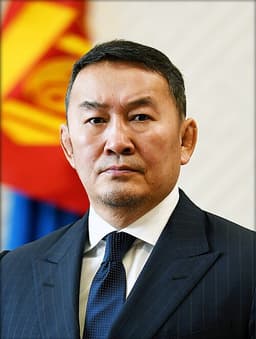
Khaltmaagiin Battulga
Politician · Modern
43.3Total
Basic Information
Born
1946
1963
Died
—
—
Era
Modern
Modern
Nationality
United States
Mongolia
Occupation
Politician
Politician
Civilization
Western
Eastern
Score Comparison
Military (10%)
49.5
13.7
Political (20%)
72.0
40.8
Influence (20%)
82.0
49.4
Legacy (20%)
56.0
37.5
Leadership (15%)
78.0
74.0
Strategy (15%)
42.3
30.0
TOTAL
66.2
43.3
Bill Clinton — Complete Timeline
1992 AD
Election as President of the United StatesPolitical Action◆ Major
Clinton defeated incumbent George H. W. Bush in the presidential election, becoming the 42nd president. His victory ended 12 years of Republican control of the White House, and he focused on economic recovery and healthcare reform.
ElectionPresidencyDemocratic Party
Impact: globalconstructive
1993 AD
Signing of the Oslo AccordsPolitical Action◆ Major
Clinton hosted the signing of the Oslo Accords between Israel and the PLO at the White House. The agreement marked a breakthrough in the Israeli-Palestinian peace process, establishing the Palestinian Authority and a framework for future negotiations.
Middle East PeaceOslo AccordsDiplomacy
Impact: globalconstructive
1998 AD
Impeachment by the House of RepresentativesPolitical Action◆ Major
The House of Representatives impeached Clinton on charges of perjury and obstruction of justice related to the Monica Lewinsky scandal. He was acquitted by the Senate in 1999 and remained in office, but the scandal damaged his legacy.
ImpeachmentLewinsky ScandalPolitical Crisis
Impact: nationaldestructive
Khaltmaagiin Battulga — Complete Timeline
2008 AD
Won Gold Medal at 2008 Beijing Olympics in JudoCultural◆ Major
Battulga won the gold medal in men's 100 kg judo at the 2008 Summer Olympics in Beijing, defeating Askhat Zhitkeyev of Kazakhstan. This was Mongolia's first Olympic gold medal in judo.
OlympicsJudoGold Medal
Impact: nationalconstructive
2017 AD
Elected President of MongoliaPolitical Action◆ Major
Battulga won the 2017 presidential election as the Democratic Party candidate, defeating Miyeegombyn Enkhbold in a runoff. His campaign focused on economic nationalism and anti-corruption.
ElectionPresidency
Impact: nationalconstructive
Controversial Pardon of Former President EnkhbayarPolitical Action
Shortly after taking office, Battulga pardoned former President Nambaryn Enkhbayar, who had been convicted of corruption. The pardon was criticized as politically motivated and undermined anti-corruption efforts.
PardonCorruptionPolitics
Impact: nationaldestructive
2018 AD
Signed the 'Mongolia-China Free Trade Agreement'Political Action◆ Major
Battulga signed a free trade agreement with China during a state visit, aiming to boost bilateral trade and investment. The agreement faced criticism for potential economic dependency on China.
Trade AgreementChinaEconomic Policy
Impact: regionalconstructive
2020 AD
Declared a State of Emergency During COVID-19 PandemicPolitical Action◆ Major
Battulga declared a state of emergency in March 2020 in response to the COVID-19 pandemic, imposing strict lockdowns and border closures. The measures were credited with keeping Mongolia's infection rate low initially.
COVID-19Public HealthEmergency
Impact: national
Expert Analysis
Origins
Bill Clinton, born William Jefferson Blythe III on August 19, 1946, in Hope, Arkansas, was raised by his mother and grandparents after his father died before his birth. He excelled academically, attending Georgetown University, then as a Rhodes Scholar at Oxford, and earned a law degree from Yale. His early exposure to politics came through meeting President John F. Kennedy in 1963, which inspired his political ambitions.
Khaltmaagiin Battulga was born on March 3, 1963, in Ulaanbaatar, Mongolia. He grew up in a working-class family and showed early talent in judo, training at the Mongolian National Institute of Physical Education. He graduated from the Institute of Fine Arts in 1982 but focused on sports, becoming a successful businessman in the 1990s, founding a trading company and later venturing into real estate and media.
Rise to Power
Clinton's political rise began as Arkansas Attorney General in 1976 and Governor of Arkansas in 1978. After a defeat in 1980, he regained the governorship in 1982 and held it for a decade, focusing on education reform. In 1992, he won the Democratic presidential nomination and defeated incumbent George H. W. Bush, ending 12 years of Republican control. His campaign emphasized economic issues, symbolized by the phrase "It's the economy, stupid." He won with 43% of the popular vote against Bush's 37.4% and Ross Perot's 18.9%.
Battulga's path to power was unconventional. After retiring from judo, he entered politics in 2004, winning a seat in the State Great Khural (parliament). He served as Minister of Road, Transport, Construction and Urban Development from 2008 to 2012, focusing on infrastructure projects. In 2017, he won the Democratic Party's presidential primary and then the runoff election against Miyeegombyn Enkhbold, securing 50.6% of the vote. His campaign appealed to nationalist sentiments and economic concerns, leveraging his Olympic fame.
Leadership & Governance
Clinton's leadership style was centrist and pragmatic. He signed the North American Free Trade Agreement (NAFTA) in 1993, which expanded trade but faced criticism from labor groups. Domestically, he implemented welfare reform in 1996, requiring work for benefits, and oversaw the Balanced Budget Act of 1997, leading to budget surpluses. His political score of 72.0 reflects his ability to navigate a divided government, but his strategy score of 42.3 indicates tactical missteps, such as the failed healthcare reform effort in 1994.
Battulga governed with a nationalist and protectionist bent. He signed the Mongolia-China Free Trade Agreement in 2018, aiming to boost trade but sparking concerns over Chinese influence. He declared a state of emergency during COVID-19, imposing strict border closures. His leadership score of 74.0 is high, reflecting his decisive actions, but his political score of 40.8 suggests limited political maneuvering in a fractious parliament. He also pardoned former President Nambaryn Enkhbayar, a controversial move seen as political favor.
Triumph & Tragedy
Clinton's greatest triumph was presiding over the longest peacetime economic expansion in US history, with unemployment falling to 4.0% and a budget surplus of $236 billion by 2000. His foreign policy successes included the Oslo Accords (1993) and NATO expansion. However, his impeachment in 1998 over the Monica Lewinsky scandal tarnished his legacy; he was acquitted by the Senate. The scandal was a personal and political tragedy, though his approval ratings remained high.
Battulga's greatest triumph was winning Olympic gold in 2008, which made him a national hero. As president, he prioritized infrastructure, including a road project connecting Mongolia to China. His failures include a struggling economy under his tenure, with GDP growth slowing from 5.1% in 2017 to 1.6% in 2020. The free trade agreement with China was criticized for lacking transparency. His COVID-19 response, while strict, led to economic hardship.
Character & Destiny
Clinton was charismatic and intellectually sharp, with a talent for connecting with people. His resilience after the 1994 midterm defeat and impeachment showed political survival skills. However, his personal indiscretions and strategic errors, like healthcare reform, limited his potential. His influence score of 82.0 reflects his global stature, but his legacy score of 56.0 indicates mixed long-term impact.
Battulga is disciplined and determined, traits from his judo career. His nationalist rhetoric resonated with Mongols seeking identity after the communist era. However, his insular approach and limited political experience hampered his effectiveness. His military score of 13.7 is negligible, but his leadership score of 74.0 suggests strong will. His legacy is still unfolding, but his influence score of 49.4 is modest.
Legacy
Clinton's legacy includes the expansion of global trade through NAFTA and the promotion of peace in Northern Ireland and the Middle East. His presidency marked a shift toward centrist Democratic policies, influencing later leaders like Barack Obama. The Clinton Foundation continues his humanitarian work. However, his impeachment remains a cautionary tale. His total score of 66.2 reflects a successful but flawed tenure.
Battulga's legacy is tied to Mongolia's democratic resilience and his role as a sports hero turned politician. The free trade agreement with China may have long-term economic effects, but his presidency did not fundamentally alter Mongolia's trajectory. His total score of 43.3 is lower, reflecting limited impact.
Conclusion
Bill Clinton had a greater impact than Khaltmaagiin Battulga, as evidenced by his higher total score (66.2 vs 43.3). Clinton's presidency shaped US and global politics, with lasting economic and diplomatic consequences. Battulga's achievements, while notable for Mongolia, lack comparable scope. The 22.9-point gap reflects the difference between a superpower leader and a smaller nation's president. Clinton's influence endures, while Battulga's is confined to a specific context. Thus, Clinton is the more significant figure.
Rankings
🥇
Bill ClintonLeader
Mil: 49.5Pol: 72.0Inf: 82.0
66.2
🥈
Khaltmaagiin Battulga
Mil: 13.7Pol: 40.8Inf: 49.4
43.3
+22.9 behind
How This Comparison Works
Algorithm
Each figure is scored on 6 dimensions (0—100 scale) based on structured historical data: Military (10%), Political (20%), Influence (20%), Legacy (20%), Leadership (15%), Strategy (15%). The weighted total produces the final ranking.
Data Sources
Scores are computed from structured sub-indicators in the database. Scale factors adjust for era (Ancient ×0.85, Modern ×1.0) and civilization size (Eastern ×1.05, Other ×0.80) to account for differences in population and military scale.
Maximum 3 Figures
Comparisons are limited to 2—3 figures to ensure readability and statistical meaningfulness.
Error Margins
±5 points per dimension — Sub-scores are derived from historical records with inherent uncertainty. Two figures within 5 points on a dimension should be considered roughly equivalent in that area.
Total Score Accuracy
±3 points overall — The weighted combination of 6 dimensions produces a total score with approximately ±3 points of uncertainty. Differences of less than 3 points are not statistically significant— the figures are effectively tied.
Known Limitations
- Historical records are incomplete and uneven across civilizations
- Figures from oral-tradition societies may be underrepresented
- Occupation labels can misclassify multi-role figures
- Scores measure capability and impact, not moral character
- Quantitative scoring is a comparison tool, not absolute truth
Capability Radar
Military (10%) — Battles & Warfare
Battles
30
15
Win Rate
33
16
Expansion
33
20
Political (20%) — Governance & Reform
Reform
65
30
Diplomacy
75
40
Economy
85
25
Influence (20%) — Cultural & Global Reach
Cultural
60
20
Global
70
15
Legacy (20%) — Historical Impact
Historical
65
15
Longevity
55
10
Leadership (15%) — Power & Stability
Tenure
70
55
Stability
70
35
Strategy (15%) — Tactics & Innovation
Strategy
38
23
Tactics
42
26
Reform
41
31
Similar Comparisons
Comments & Discussion
No comments yet. Be the first to share your thoughts!