Loading...
Bill Clinton vs Samak Sundaravej
Bill Clinton leads by 29.7 pts · 2 figures compared
…

Bill Clinton
Politician · Modern
66.2Total
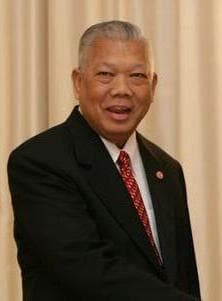
Samak Sundaravej
Politician · Modern
36.5Total
Basic Information
Born
1946
1935
Died
—
—
Era
Modern
Modern
Nationality
United States
Thailand
Occupation
Politician
Politician
Civilization
Western
Eastern
Score Comparison
Military (10%)
49.5
19.9
Political (20%)
72.0
26.4
Influence (20%)
82.0
45.5
Legacy (20%)
56.0
35.0
Leadership (15%)
78.0
31.2
Strategy (15%)
42.3
57.5
TOTAL
66.2
36.5
Bill Clinton — Complete Timeline
1992 AD
Election as President of the United StatesPolitical Action◆ Major
Clinton defeated incumbent George H. W. Bush in the presidential election, becoming the 42nd president. His victory ended 12 years of Republican control of the White House, and he focused on economic recovery and healthcare reform.
ElectionPresidencyDemocratic Party
Impact: globalconstructive
1993 AD
Signing of the Oslo AccordsPolitical Action◆ Major
Clinton hosted the signing of the Oslo Accords between Israel and the PLO at the White House. The agreement marked a breakthrough in the Israeli-Palestinian peace process, establishing the Palestinian Authority and a framework for future negotiations.
Middle East PeaceOslo AccordsDiplomacy
Impact: globalconstructive
1998 AD
Impeachment by the House of RepresentativesPolitical Action◆ Major
The House of Representatives impeached Clinton on charges of perjury and obstruction of justice related to the Monica Lewinsky scandal. He was acquitted by the Senate in 1999 and remained in office, but the scandal damaged his legacy.
ImpeachmentLewinsky ScandalPolitical Crisis
Impact: nationaldestructive
Samak Sundaravej — Complete Timeline
2008 AD
Election as Prime MinisterPolitical Action◆ Major
Samak Sundaravej became Prime Minister after his People's Power Party won the 2007 general election. He was seen as a proxy for the exiled Thaksin Shinawatra, continuing Thaksin's populist policies and facing opposition from anti-Thaksin groups.
Prime MinisterElectionThaksin Proxy
Impact: national
Political Crisis and Yellow Shirt ProtestsPolitical Action◆ Major
Samak's government faced massive protests by the People's Alliance for Democracy (Yellow Shirts), who accused him of being a Thaksin puppet. The protests included the seizure of Government House and disrupted governance, leading to a political stalemate.
ProtestsPolitical CrisisYellow Shirts
Impact: nationaldestructive
Disqualification by the Constitutional CourtPolitical Action◆ Major
The Constitutional Court of Thailand disqualified Samak from the premiership for accepting payment for hosting a cooking show on television, violating the constitution. This ruling forced his resignation and deepened the political crisis.
DisqualificationConstitutional CourtResignation
Impact: national
Expert Analysis
Origins
Bill Clinton was born William Jefferson Blythe III in 1946 in Hope, Arkansas. His father died before his birth, and he later took the surname of his stepfather. He excelled academically, attending Georgetown University, Oxford as a Rhodes Scholar, and Yale Law School. His political ambitions were evident early, leading to a career in law and politics.
Samak Sundaravej was born in 1935 in Bangkok, Thailand. He studied law at Thammasat University and began his political career as a member of parliament in the 1970s. He held various ministerial posts, including Interior Minister, and became known as a fiery orator and staunch royalist. However, his later association with Thaksin Shinawatra defined his final political chapter.
Rise to Power
Clinton's rise was meteoric: he became Arkansas Attorney General in 1976, Governor in 1978 (losing re-election but returning in 1982), and then President in 1992, defeating incumbent George H.W. Bush. His centrist "New Democrat" platform and charisma attracted broad support.
Samak's rise to prime minister came after the 2006 military coup that ousted Thaksin. His People's Power Party (PPP) won the 2007 election, and Samak, as Thaksin's proxy, became PM in January 2008. He was seen as a placeholder for Thaksin, lacking independent power.
Leadership & Governance
Clinton's leadership style was pragmatic and coalition-building. He signed the North American Free Trade Agreement (NAFTA), reformed welfare, and achieved a budget surplus. His foreign policy included the Oslo Accords (1993) and NATO expansion. He scored 78.0 in leadership and 72.0 in political skill.
Samak's governance was chaotic. He faced massive protests from the People's Alliance for Democracy (Yellow Shirts), who accused him of being Thaksin's puppet. His political score of 26.4 reflects his inability to govern effectively. He attempted to amend the constitution to benefit Thaksin but was blocked by courts and protests.
Triumph & Tragedy
Clinton's triumphs include the economic boom of the 1990s with low unemployment and a balanced budget, and the Oslo Accords. His tragedy was the Monica Lewinsky scandal leading to impeachment in 1998; he was acquitted by the Senate but his legacy was tarnished.
Samak's triumph was winning the 2007 election and becoming PM. His tragedy was his disqualification in September 2008 by the Constitutional Court for hosting a cooking show while PM, a violation of the constitution. He was forced to resign, ending his brief tenure.
Character & Destiny
Clinton was charismatic, intellectually sharp, and resilient, but his personal flaws led to scandal. His character shaped his destiny: his charm won him the presidency, but his indiscretions nearly cost it. Historians rate his influence at 82.0.
Samak was confrontational and stubborn, with a reputation for blunt speech. His loyalty to Thaksin and his own legal misstep (the cooking show) sealed his fate. His low leadership score (31.2) reflects his inability to navigate the crisis.
Legacy
Clinton's legacy includes the Clinton Foundation, his wife Hillary Clinton's political career, and the 1990s economic expansion. He is remembered as a skilled politician who presided over peace and prosperity, though his impeachment remains a cautionary tale.
Samak's legacy is negligible: he is seen as a footnote in Thai politics, a brief proxy for Thaksin. His disqualification highlighted the fragility of Thai democracy and the power of the judiciary. His total score of 36.5 reflects his limited impact.
Conclusion
Bill Clinton had a significantly greater impact on history, with a total score of 66.2 versus Samak's 36.5. Clinton's domestic and foreign achievements shaped the post-Cold War world, while Samak's brief tenure was a minor episode in Thailand's turbulent politics. The data supports Clinton's superior influence, legacy, and leadership.
Rankings
🥇
Bill ClintonLeader
Mil: 49.5Pol: 72.0Inf: 82.0
66.2
🥈
Samak Sundaravej
Mil: 19.9Pol: 26.4Inf: 45.5
36.5
+29.7 behind
How This Comparison Works
Algorithm
Each figure is scored on 6 dimensions (0—100 scale) based on structured historical data: Military (10%), Political (20%), Influence (20%), Legacy (20%), Leadership (15%), Strategy (15%). The weighted total produces the final ranking.
Data Sources
Scores are computed from structured sub-indicators in the database. Scale factors adjust for era (Ancient ×0.85, Modern ×1.0) and civilization size (Eastern ×1.05, Other ×0.80) to account for differences in population and military scale.
Maximum 3 Figures
Comparisons are limited to 2—3 figures to ensure readability and statistical meaningfulness.
Error Margins
±5 points per dimension — Sub-scores are derived from historical records with inherent uncertainty. Two figures within 5 points on a dimension should be considered roughly equivalent in that area.
Total Score Accuracy
±3 points overall — The weighted combination of 6 dimensions produces a total score with approximately ±3 points of uncertainty. Differences of less than 3 points are not statistically significant— the figures are effectively tied.
Known Limitations
- Historical records are incomplete and uneven across civilizations
- Figures from oral-tradition societies may be underrepresented
- Occupation labels can misclassify multi-role figures
- Scores measure capability and impact, not moral character
- Quantitative scoring is a comparison tool, not absolute truth
Capability Radar
Military (10%) — Battles & Warfare
Battles
30
53
Win Rate
33
57
Expansion
33
57
Political (20%) — Governance & Reform
Reform
65
10
Diplomacy
75
15
Economy
85
10
Influence (20%) — Cultural & Global Reach
Cultural
60
5
Global
70
5
Legacy (20%) — Historical Impact
Historical
65
5
Longevity
55
5
Leadership (15%) — Power & Stability
Tenure
70
10
Stability
70
5
Strategy (15%) — Tactics & Innovation
Strategy
38
62
Tactics
42
64
Reform
41
64
Similar Comparisons
Comments & Discussion
No comments yet. Be the first to share your thoughts!