Loading...
Bimbisara vs Mursili II
Bimbisara leads by 1.0 pts · 2 figures compared
…
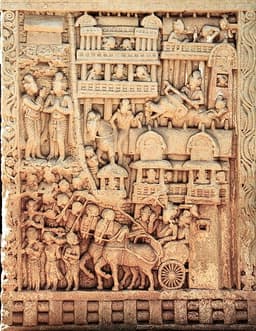
Bimbisara
Emperor · Ancient
57.3Total

Mursili II
Emperor · Ancient
56.3Total
Basic Information
Born
-558
-1321
Died
-491
-1295
Era
Ancient
Ancient
Nationality
India
Hittite Empire
Occupation
Emperor
Emperor
Civilization
Indian
Middle Eastern
Score Comparison
Military (10%)
60.0
74.0
Political (20%)
60.0
45.0
Influence (20%)
55.7
56.4
Legacy (20%)
49.2
48.3
Leadership (15%)
72.0
66.0
Strategy (15%)
52.5
61.2
TOTAL
57.3
56.3
Bimbisara — Complete Timeline
550 BC
Married Princess Chellana of LicchaviPolitical Action
Bimbisara married Chellana, daughter of the Licchavi chief Chetaka of Vaishali. This marriage alliance strengthened Magadha's ties with the powerful Licchavi republic and produced his son Ajatashatru.
Marriage AllianceDiplomacy
Impact: regional
540 BC
Conquered AngaWar◆ Major
Bimbisara annexed the kingdom of Anga (modern Bihar) to the Magadha empire. This conquest gave Magadha control over the Ganges river trade route and access to the sea, strengthening its economic and military power.
ConquestMagadha Expansion
Impact: regional
530 BC
Established Diplomatic Relations with the BuddhaPolitical Action◆ Major
Bimbisara met Gautama Buddha and became a lay follower, donating the Veluvana Bamboo Grove monastery near Rajagriha. This patronage helped establish Buddhism in Magadha and provided the Buddha with a permanent residence during the rainy season.
BuddhismPatronageReligion
Impact: regionalconstructive
491 BC
Imprisoned and Killed by AjatashatruPolitical Action◆ Major
Bimbisara was imprisoned by his son Ajatashatru, who seized the throne. According to Buddhist sources, Bimbisara died in captivity, possibly by starvation or suicide. This event marked a violent succession in Magadha.
Succession CrisisPatricide
Impact: nationaltragic
Mursili II — Complete Timeline
1318 BC
Conquest of ArzawaWar◆ Major
Mursili II launched a decisive campaign against the Arzawa states in western Anatolia. He defeated King Uhha-Ziti and annexed Arzawa territory, ending the Arzawa threat and restoring Hittite dominance in the west.
Hittite EmpireArzawaConquest
Impact: regionalconstructive
1315 BC
Composition of the Plague PrayersCultural◆ Major
Mursili II composed a series of prayers to the gods, known as the Plague Prayers, seeking to end a devastating plague that had killed his brother and many subjects. These texts provide insight into Hittite religion and royal ideology.
Hittite EmpireReligionLiterature
Impact: regional
1312 BC
Campaign against the KaskaWar◆ Major
Mursili II conducted a series of campaigns against the Kaska tribes in the Pontic mountains. He defeated them and secured the northern border of the Hittite heartland, preventing further invasions of Hattusa.
Hittite EmpireKaskaCampaign
Impact: regionalconstructive
1305 BC
Suppression of the Rebellion of PiyamaraduWar
Mursili II suppressed a rebellion led by Piyamaradu, a local ruler in western Anatolia who had allied with the Ahhiyawa (Mycenaeans). The campaign reasserted Hittite control over the region and checked Ahhiyawan influence.
Hittite EmpireAhhiyawaRebellion
Impact: regional
Expert Analysis
Origins
Bimbisara (c. 558–491 BCE) was born into the Haryanka dynasty of Magadha, one of the sixteen Mahajanapadas in ancient India. His father was King Bhattiya, and he ascended the throne around 543 BCE at the age of 15. He received a traditional Kshatriya education, focused on statecraft, warfare, and administration. The early Magadha kingdom was centered around Rajagriha, a city protected by hills.
Mursili II (c. 1340–1295 BCE) was a younger son of the Hittite king Suppiluliuma I and his queen Henti. He was not initially expected to rule; his older brother Arnuwanda II was the heir. Mursili grew up in the Hittite capital Hattusa, immersed in court politics and military training. The Hittite Empire was at its peak, but a plague brought from Egyptian prisoners weakened the royal family.
Rise to Power
Bimbisara became king at 15 after his father's death. He immediately pursued an expansionist policy, beginning with the conquest of Anga (c. 543 BCE). This victory gave Magadha control of the Ganges river trade route, boosting economic power. He secured alliances through marriage: he married Chellana of the Licchavi clan of Vaishali, and also married a princess of Kosala, receiving Kashi as a dowry. These marriages strengthened Magadha's position among rival kingdoms.
Mursili II ascended the throne in 1321 BCE after his brother Arnuwanda II died of the plague that had already killed their father. He was young and inexperienced, facing a crumbling empire with rebellions on multiple fronts. His first campaigns targeted the Kaska tribes in the north, whom he defeated in his first year. He then turned to Arzawa in the west, where King Uhha-Ziti had allied with other states. Mursili's decisive victory in 1318 BCE ended Arzawan independence and secured Hittite control over western Anatolia.
Leadership & Governance
Bimbisara ruled Magadha for 52 years, focusing on administrative consolidation. He established a centralized bureaucracy, with officials overseeing tax collection, justice, and public works. He built roads and fortifications, and his patronage of Buddhism—donating Veluvana Bamboo Grove—helped legitimize his rule and integrate diverse populations. His military score of 60.0 reflects moderate success, while his political score of 60.0 indicates effective statecraft.
Mursili II led the Hittite Empire through crisis with aggressive military campaigns. His military score of 74.0 is significantly higher, reflecting his conquest of Arzawa and suppression of the Kaska. He also wrote the Plague Prayers, seeking divine favor to end the epidemic—a unique blend of religious and political leadership. However, his political score of 45.0 is lower, as he failed to stabilize the empire long-term. His leadership score of 66.0 shows competence, but his strategic score of 61.2 indicates sound but not exceptional planning.
Triumph & Tragedy
Bimbisara's greatest triumph was the conquest of Anga, which laid the foundation for Magadha's future imperial expansion. His patronage of Buddhism also had enduring cultural impact. His tragedy came at the end: his son Ajatashatru imprisoned him, and he died in captivity, possibly by starvation. This filial betrayal overshadowed his achievements.
Mursili II's greatest success was the conquest of Arzawa, which eliminated a major rival and expanded Hittite territory. His Plague Prayers are a unique historical document, showing his efforts to address the crisis. His tragedy was the ongoing plague that killed his father and brother and continued to weaken the empire. Despite his victories, the Hittite Empire declined after his reign.
Character & Destiny
Bimbisara is remembered as a wise and capable ruler, but his leniency toward his son cost him his life. His willingness to embrace new ideas like Buddhism shows openness, but his failure to secure his succession led to his downfall. Historical assessments note his diplomatic skill but also his inability to manage family dynamics.
Mursili II is portrayed as a determined and pious king, who overcame personal tragedy to lead his empire. His Plague Prayers reveal a man desperate to appease the gods. His character was shaped by constant warfare and disease; he was decisive in battle but struggled with the empire's long-term stability.
Legacy
Bimbisara's legacy is foundational: he turned Magadha into a major power, setting the stage for the Maurya Empire. His support of Buddhism helped its spread across India. He scored 49.2 in legacy, reflecting his indirect but crucial role in later history.
Mursili II's legacy is more immediate: his conquests preserved the Hittite Empire for another century. The Plague Prayers provide insight into Hittite religion and governance. His legacy score of 48.3 is similar to Bimbisara's, but his impact was more ephemeral.
Conclusion
Bimbisara had a greater long-term impact. His political and diplomatic strategies created a stable base for Magadha's rise, influencing Indian history for centuries. Mursili II was a more skilled military commander (74.0 vs 60.0), but his achievements were contained within the Hittite Empire's decline. Bimbisara's total score of 57.3 edges out Mursili's 56.3, reflecting his superior political and leadership abilities. While Mursili conquered territory, Bimbisara built institutions that outlasted his reign. Thus, Bimbisara is the more influential figure in world history.
Rankings
🥇
BimbisaraLeader
Mil: 60.0Pol: 60.0Inf: 55.7
57.3
🥈
Mursili II
Mil: 74.0Pol: 45.0Inf: 56.4
56.3
+1.0 behind
How This Comparison Works
Algorithm
Each figure is scored on 6 dimensions (0—100 scale) based on structured historical data: Military (10%), Political (20%), Influence (20%), Legacy (20%), Leadership (15%), Strategy (15%). The weighted total produces the final ranking.
Data Sources
Scores are computed from structured sub-indicators in the database. Scale factors adjust for era (Ancient ×0.85, Modern ×1.0) and civilization size (Eastern ×1.05, Other ×0.80) to account for differences in population and military scale.
Maximum 3 Figures
Comparisons are limited to 2—3 figures to ensure readability and statistical meaningfulness.
Error Margins
±5 points per dimension — Sub-scores are derived from historical records with inherent uncertainty. Two figures within 5 points on a dimension should be considered roughly equivalent in that area.
Total Score Accuracy
±3 points overall — The weighted combination of 6 dimensions produces a total score with approximately ±3 points of uncertainty. Differences of less than 3 points are not statistically significant— the figures are effectively tied.
Known Limitations
- Historical records are incomplete and uneven across civilizations
- Figures from oral-tradition societies may be underrepresented
- Occupation labels can misclassify multi-role figures
- Scores measure capability and impact, not moral character
- Quantitative scoring is a comparison tool, not absolute truth
Capability Radar
Military (10%) — Battles & Warfare
Battles
45
75
Win Rate
50
80
Expansion
65
80
Political (20%) — Governance & Reform
Reform
75
65
Diplomacy
70
70
Economy
65
60
Influence (20%) — Cultural & Global Reach
Cultural
55
55
Global
40
45
Legacy (20%) — Historical Impact
Historical
60
60
Longevity
55
50
Leadership (15%) — Power & Stability
Tenure
70
70
Stability
60
65
Strategy (15%) — Tactics & Innovation
Strategy
55
75
Tactics
40
70
Reform
60
60
Similar Comparisons
Comments & Discussion
No comments yet. Be the first to share your thoughts!