Loading...
Binali Yildirim vs Li Peng
Li Peng leads by 5.0 pts · 2 figures compared
…

Binali Yildirim
Politician · Modern
47.0Total
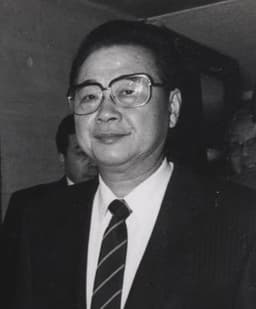
Li Peng
Politician · Modern
52.0Total
Basic Information
Born
1955
1928
Died
—
—
Era
Modern
Modern
Nationality
Turkey
China
Occupation
Politician
Politician
Civilization
Middle Eastern
Eastern
Score Comparison
Military (10%)
45.7
13.0
Political (20%)
40.8
68.0
Influence (20%)
53.3
58.0
Legacy (20%)
39.2
50.0
Leadership (15%)
58.8
72.0
Strategy (15%)
43.8
26.9
TOTAL
47.0
52.0
Binali Yildirim — Complete Timeline
2016 AD
Appointed Prime Minister of TurkeyPolitical Action◆ Major
Yildirim was appointed Prime Minister on May 24, 2016, succeeding Ahmet Davutoglu. He served as the last Prime Minister of Turkey before the constitutional referendum abolished the post, transitioning the country to a presidential system.
Turkish PoliticsPrime MinisterConstitutional Change
Impact: national
2017 AD
2017 Turkish constitutional referendumPolitical Action◆ Major
Yildirim campaigned for the 'Yes' vote in the April 16, 2017 referendum that narrowly approved a shift from a parliamentary to an executive presidential system. The change abolished the prime minister post, ending his role as the last PM.
Constitutional ReformPresidential SystemReferendum
Impact: national
2018 AD
Resigned as Prime MinisterPolitical Action◆ Major
Following the June 2018 presidential election, Yildirim resigned as Prime Minister on July 9, 2018, as the post was abolished. He was appointed Speaker of the Grand National Assembly, a position he held until 2019.
Turkish PoliticsTransitionSpeaker
Impact: national
Li Peng — Complete Timeline
1987 AD
Became Premier of the People's Republic of ChinaPolitical Action◆ Major
Li Peng was appointed Premier, succeeding Zhao Ziyang. He was a conservative leader who emphasized economic stability and political control, opposing rapid political reforms.
PremierEconomic PolicyConservatism
Impact: national
1988 AD
Implemented austerity measures to control inflationReform◆ Major
Li Peng introduced austerity measures to curb double-digit inflation, including price controls and credit tightening. These measures slowed economic growth but stabilized prices, though they were unpopular.
Economic PolicyInflationAusterity
Impact: nationalconstructive
1989 AD
Ordered the Tiananmen Square crackdownPolitical Action
As Premier, Li Peng was a key figure in the decision to use military force against the Tiananmen Square protests. He signed the order declaring martial law and authorized the People's Liberation Army to clear the square.
Tiananmen SquareCrackdownMartial Law
Impact: globaldestructive
1992 AD
Oversaw the Three Gorges Dam project approvalPolitical Action◆ Major
Li Peng pushed through the National People's Congress approval for the Three Gorges Dam, the world's largest hydroelectric project. The project was controversial due to environmental and displacement concerns.
Three Gorges DamInfrastructureHydroelectric
Impact: nationalconstructive
1998 AD
Retired from active politicsPolitical Action
Li Peng stepped down as Premier and was succeeded by Zhu Rongji. He remained a member of the Politburo Standing Committee until 2002, but his influence waned.
RetirementPolitical TransitionElder Statesman
Impact: national
Expert Analysis
Origins
Binali Yildirim was born on December 20, 1955, in Refahiye, Erzincan, Turkey, into a modest family. He studied marine engineering at Istanbul Technical University and later earned a master's degree in maritime affairs. His early career was in the state-owned Turkish Maritime Organization, rising to become its director general. Li Peng was born on October 20, 1928, in Shanghai, China, into a revolutionary family; his father was an early Communist martyr. He studied electrical engineering in the Soviet Union at Moscow Power Engineering Institute (1948-1955), returning to China as a technocrat. His early work was in power plant management, eventually becoming Minister of Electric Power.
Rise to Power
Yildirim entered politics in 2001 as a founding member of the Justice and Development Party (AKP). He served as Minister of Transport from 2002 to 2013, overseeing major infrastructure projects like the Marmaray tunnel and high-speed rail. He became Prime Minister on May 24, 2016, after Ahmet Davutoglu's resignation, largely due to his loyalty to President Erdogan. Li Peng rose through the Communist Party ranks, becoming Vice Premier in 1982 and Premier in 1987. His rise was aided by his technocratic background and conservative stance, succeeding Zhao Ziyang. He became a key figure in the Tiananmen Square protests in 1989, when he ordered martial law and military crackdown, solidifying his power as a hardliner.
Leadership & Governance
Yildirim's leadership style was that of a loyal executor of Erdogan's policies. He campaigned for the 'Yes' vote in the 2017 constitutional referendum (scored 53.3 in influence), which narrowly passed with 51.4% approval, shifting Turkey from parliamentary to executive presidential system. His governance focused on continuity, not innovation. Li Peng's leadership was authoritative and conservative. He implemented austerity measures to control double-digit inflation in the late 1980s, including price controls and credit tightening, which slowed economic growth but stabilized the economy. He also pushed through the Three Gorges Dam project, the world's largest hydroelectric scheme, despite environmental and social controversies. His political score of 68.0 reflects his firm control, while his strategy score of 26.9 indicates inflexibility.
Triumph & Tragedy
Yildirim's greatest success was overseeing the transition to the presidential system, effectively ending the parliamentary system that had governed Turkey since 1923. His key failure was the 2017 referendum, which critics saw as a power grab that eroded democratic checks. He also faced the 2016 coup attempt just months after taking office, but his role was secondary to Erdogan's. Li Peng's triumph was managing China's economy during a turbulent period, including taming inflation and advancing infrastructure like the Three Gorges Dam (scored 50.0 in legacy). His tragedy is his indelible association with the Tiananmen Square crackdown, where he signed the martial law order and authorized force against protesters. This event defined his legacy negatively, especially in the West, and he remains a controversial figure.
Character & Destiny
Yildirim was known as a loyalist and a technocrat, lacking the charisma of his predecessor Davutoglu or the dominance of Erdogan. His destiny was to be the last PM, a transitional figure. He accepted a lesser role as Speaker of Parliament after the 2018 elections. Li Peng was a rigid, ideologically conservative leader who prioritized stability over freedom. His decisions during Tiananmen sealed his fate as a symbol of state repression. Historical assessments note his economic pragmatism but condemn his political ruthlessness. His leadership score of 72.0 reflects his ability to enforce decisions, but his strategy score of 26.9 shows a lack of flexibility.
Legacy
Yildirim's legacy is largely institutional: he was the final Prime Minister of Turkey, marking the end of a 95-year-old parliamentary tradition. The presidential system he helped implement has concentrated power in Erdogan. His individual impact is minimal compared to the systemic change he facilitated. Li Peng's legacy is more complex. He is remembered in China as a leader who maintained stability and economic growth, with the Three Gorges Dam as a physical monument. Internationally, he is vilified for the Tiananmen crackdown. His political score of 68.0 and influence of 58.0 reflect his lasting impact on China's governance model, which remains authoritarian.
Conclusion
While Yildirim scored 47.0 overall and Li Peng 52.0, the gap of 5.0 points understates the difference in historical impact. Li Peng's decisions shaped China's trajectory for decades, from economic policy to political repression. Yildirim was a caretaker who facilitated a constitutional change but did not drive it. Li Peng's higher political and leadership scores (68.0 and 72.0) reflect his ability to navigate and control a vast nation during crisis. Yildirim's influence (53.3) was derivative of Erdogan. Therefore, Li Peng had greater impact, both positive (economic stability, infrastructure) and negative (human rights abuses). His legacy endures in China's political system, while Yildirim's is largely a footnote in Turkey's shift to presidentialism.
Rankings
🥇
Li PengLeader
Mil: 13.0Pol: 68.0Inf: 58.0
52.0
🥈
Binali Yildirim
Mil: 45.7Pol: 40.8Inf: 53.3
47.0
+5.0 behind
How This Comparison Works
Algorithm
Each figure is scored on 6 dimensions (0—100 scale) based on structured historical data: Military (10%), Political (20%), Influence (20%), Legacy (20%), Leadership (15%), Strategy (15%). The weighted total produces the final ranking.
Data Sources
Scores are computed from structured sub-indicators in the database. Scale factors adjust for era (Ancient ×0.85, Modern ×1.0) and civilization size (Eastern ×1.05, Other ×0.80) to account for differences in population and military scale.
Maximum 3 Figures
Comparisons are limited to 2—3 figures to ensure readability and statistical meaningfulness.
Error Margins
±5 points per dimension — Sub-scores are derived from historical records with inherent uncertainty. Two figures within 5 points on a dimension should be considered roughly equivalent in that area.
Total Score Accuracy
±3 points overall — The weighted combination of 6 dimensions produces a total score with approximately ±3 points of uncertainty. Differences of less than 3 points are not statistically significant— the figures are effectively tied.
Known Limitations
- Historical records are incomplete and uneven across civilizations
- Figures from oral-tradition societies may be underrepresented
- Occupation labels can misclassify multi-role figures
- Scores measure capability and impact, not moral character
- Quantitative scoring is a comparison tool, not absolute truth
Capability Radar
Military (10%) — Battles & Warfare
Battles
23
15
Win Rate
22
15
Expansion
29
22
Political (20%) — Governance & Reform
Reform
20
55
Diplomacy
40
50
Economy
35
60
Influence (20%) — Cultural & Global Reach
Cultural
10
30
Global
20
50
Legacy (20%) — Historical Impact
Historical
15
55
Longevity
10
40
Leadership (15%) — Power & Stability
Tenure
30
65
Stability
25
45
Strategy (15%) — Tactics & Innovation
Strategy
31
25
Tactics
32
28
Reform
36
26
Similar Comparisons
Comments & Discussion
No comments yet. Be the first to share your thoughts!