Loading...
Cecil Rhodes vs Li Peng
Cecil Rhodes leads by 10.6 pts · 2 figures compared
…
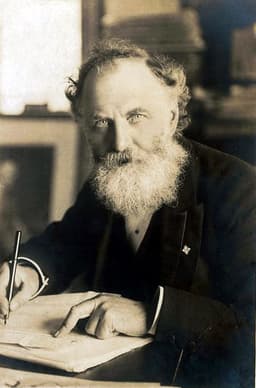
Cecil Rhodes
Politician · Modern
62.6Total

Li Peng
Politician · Modern
52.0Total
Basic Information
Born
1853
1928
Died
1902
—
Era
Modern
Modern
Nationality
United Kingdom
China
Occupation
Politician
Politician
Civilization
Western
Eastern
Score Comparison
Military (10%)
50.0
13.0
Political (20%)
72.0
68.0
Influence (20%)
72.0
58.0
Legacy (20%)
55.0
50.0
Leadership (15%)
64.0
72.0
Strategy (15%)
54.1
26.9
TOTAL
62.6
52.0
Cecil Rhodes — Complete Timeline
1888 AD
Founding of De Beers Mining CompanyPolitical Action◆ Major
Cecil Rhodes consolidated diamond mining operations in Kimberley, South Africa, into De Beers Consolidated Mines. The company gained near-monopoly control over the global diamond supply, generating immense wealth for Rhodes and funding his imperial ambitions.
Diamond IndustryMonopolyEconomic Imperialism
Impact: global
1890 AD
Founding of RhodesiaPolitical Action◆ Major
Rhodes's British South Africa Company sent the Pioneer Column into Mashonaland, establishing Fort Salisbury (Harare). This led to the colonization of the territory later named Rhodesia, which became a British colony and later a white-ruled state.
ColonialismSouthern AfricaImperialism
Impact: regionaldestructive
1895 AD
Jameson RaidWar◆ Major
Rhodes orchestrated the Jameson Raid, an armed incursion into the Transvaal Republic led by Leander Starr Jameson. The raid failed, causing a political scandal that forced Rhodes to resign as Prime Minister of the Cape Colony and damaged British relations with the Boers.
Boer WarImperialismPolitical Scandal
Impact: regionaldestructive
1899 AD
Siege of KimberleyWar◆ Major
During the Second Boer War, Rhodes was trapped in Kimberley during a 124-day siege by Boer forces. His presence and demands for relief caused friction with British military commanders, but the siege ended with the relief of Kimberley in February 1900.
Boer WarSiegeMilitary History
Impact: regional
1902 AD
Establishment of the Rhodes ScholarshipCultural◆ Major
Rhodes's will established the Rhodes Scholarship program, funding students from British colonies, the United States, and Germany to study at Oxford University. The program aimed to promote international understanding and Anglo-Saxon leadership, and continues to operate.
EducationScholarshipLegacy
Impact: globalconstructive
Li Peng — Complete Timeline
1987 AD
Became Premier of the People's Republic of ChinaPolitical Action◆ Major
Li Peng was appointed Premier, succeeding Zhao Ziyang. He was a conservative leader who emphasized economic stability and political control, opposing rapid political reforms.
PremierEconomic PolicyConservatism
Impact: national
1988 AD
Implemented austerity measures to control inflationReform◆ Major
Li Peng introduced austerity measures to curb double-digit inflation, including price controls and credit tightening. These measures slowed economic growth but stabilized prices, though they were unpopular.
Economic PolicyInflationAusterity
Impact: nationalconstructive
1989 AD
Ordered the Tiananmen Square crackdownPolitical Action
As Premier, Li Peng was a key figure in the decision to use military force against the Tiananmen Square protests. He signed the order declaring martial law and authorized the People's Liberation Army to clear the square.
Tiananmen SquareCrackdownMartial Law
Impact: globaldestructive
1992 AD
Oversaw the Three Gorges Dam project approvalPolitical Action◆ Major
Li Peng pushed through the National People's Congress approval for the Three Gorges Dam, the world's largest hydroelectric project. The project was controversial due to environmental and displacement concerns.
Three Gorges DamInfrastructureHydroelectric
Impact: nationalconstructive
1998 AD
Retired from active politicsPolitical Action
Li Peng stepped down as Premier and was succeeded by Zhu Rongji. He remained a member of the Politburo Standing Committee until 2002, but his influence waned.
RetirementPolitical TransitionElder Statesman
Impact: national
Expert Analysis
Origins
Cecil Rhodes was born in 1853 in Bishop's Stortford, England, into a large family of modest means. His father was a vicar, and Rhodes suffered from poor health, which led to his family sending him to South Africa at age 17 to join his brother's cotton farm. There, he quickly adapted to the rough environment and began his involvement in diamond mining. In contrast, Li Peng was born in 1928 in Shanghai, China, into a revolutionary family. His father, a communist martyr, was executed by the Kuomintang, and Li was raised by the Communist Party, eventually studying in the Soviet Union. His early life was shaped by war and ideological training, leading to a rigid, party-loyal worldview.
Rise to Power
Rhodes's rise was driven by ruthless business consolidation. In 1870, he began buying diamond claims, and by 1888, he merged his holdings with others to form De Beers Consolidated Mines, controlling 90% of the world's diamond production. His political power grew as he entered the Cape Parliament in 1880, becoming Prime Minister in 1890. Li Peng rose through the Chinese Communist Party's ranks after the civil war, studying engineering in Moscow and later working in power plants. He became a protégé of Deng Xiaoping and was appointed Premier in 1987, just as economic reforms were accelerating. His rise was marked by bureaucratic maneuvering and loyalty to conservative factions.
Leadership & Governance
Rhodes governed as an imperialist, expanding British influence through his British South Africa Company. He founded Rhodesia in 1890 by sending the Pioneer Column into Mashonaland, displacing indigenous peoples. His leadership style was autocratic, but he also promoted infrastructure like railways and telegraphs. Li Peng's governance was technocratic and authoritarian. He prioritized economic stability over political freedom, implementing austerity measures in 1988-89 to curb inflation. However, his most defining act was ordering the Tiananmen Square crackdown in 1989, using military force to suppress pro-democracy protests. Both leaders used state power for their visions, but Rhodes operated in a colonial context while Li Peng controlled a sovereign communist state.
Triumph & Tragedy
Rhodes's greatest success was the creation of De Beers, which dominated the diamond trade for a century. He also established the Rhodes Scholarship in his will, funding international students at Oxford. His failures include the Jameson Raid in 1895, an ill-fated attempt to overthrow the Transvaal Republic, which forced his resignation as Prime Minister and damaged his reputation. Li Peng's triumph was overseeing the approval of the Three Gorges Dam in 1992, the world's largest hydroelectric project, which controlled floods and generated power. His tragedy is the Tiananmen crackdown, which resulted in hundreds of deaths and cemented his legacy as a suppressor of dissent. The event overshadowed his economic achievements.
Character & Destiny
Rhodes was ambitious, visionary, and ruthless. He once said, "I would annex the planets if I could." His character drove him to accumulate wealth and territory, but his impatience led to the disastrous Jameson Raid. Li Peng was cautious, conservative, and obedient to party doctrine. He lacked charisma but was reliable to his superiors. His character made him the enforcer of the crackdown, as he believed stability outweighed democracy. Historical assessments view Rhodes as a symbol of colonialism and Li Peng as a symbol of communist repression.
Legacy
Rhodes's legacy is mixed: his scholarships endure, but his colonial policies are condemned. Rhodesia (now Zimbabwe and Zambia) reflects his impact. In scores, Rhodes scored 55.0 in Legacy, while Li Peng scored 50.0. Li Peng's legacy is primarily negative in the West, but within China, he is remembered for economic stability and infrastructure. The Three Gorges Dam remains a monument to his tenure. However, his political legacy is largely erased from mainstream Chinese discourse.
Conclusion
Cecil Rhodes had a greater impact on world history than Li Peng. Rhodes's total score of 62.6 versus Li Peng's 52.0 reflects his broader influence across continents and centuries. Rhodes shaped global diamond trade, established a colony, and created an educational program that still operates. Li Peng's impact was more contained within China's borders and tied to a single tragic event. While both leaders used authoritarian methods, Rhodes's innovations in business and colonization had longer-lasting, global effects. Li Peng's legacy, though significant, is more localized and negative. Thus, Rhodes emerges as the more consequential figure.
Rankings
🥇
Cecil RhodesLeader
Mil: 50.0Pol: 72.0Inf: 72.0
62.6
🥈
Li Peng
Mil: 13.0Pol: 68.0Inf: 58.0
52.0
+10.6 behind
How This Comparison Works
Algorithm
Each figure is scored on 6 dimensions (0—100 scale) based on structured historical data: Military (10%), Political (20%), Influence (20%), Legacy (20%), Leadership (15%), Strategy (15%). The weighted total produces the final ranking.
Data Sources
Scores are computed from structured sub-indicators in the database. Scale factors adjust for era (Ancient ×0.85, Modern ×1.0) and civilization size (Eastern ×1.05, Other ×0.80) to account for differences in population and military scale.
Maximum 3 Figures
Comparisons are limited to 2—3 figures to ensure readability and statistical meaningfulness.
Error Margins
±5 points per dimension — Sub-scores are derived from historical records with inherent uncertainty. Two figures within 5 points on a dimension should be considered roughly equivalent in that area.
Total Score Accuracy
±3 points overall — The weighted combination of 6 dimensions produces a total score with approximately ±3 points of uncertainty. Differences of less than 3 points are not statistically significant— the figures are effectively tied.
Known Limitations
- Historical records are incomplete and uneven across civilizations
- Figures from oral-tradition societies may be underrepresented
- Occupation labels can misclassify multi-role figures
- Scores measure capability and impact, not moral character
- Quantitative scoring is a comparison tool, not absolute truth
Capability Radar
Military (10%) — Battles & Warfare
Battles
15
15
Win Rate
20
15
Expansion
60
22
Political (20%) — Governance & Reform
Reform
30
55
Diplomacy
65
50
Economy
80
60
Influence (20%) — Cultural & Global Reach
Cultural
40
30
Global
65
50
Legacy (20%) — Historical Impact
Historical
70
55
Longevity
60
40
Leadership (15%) — Power & Stability
Tenure
55
65
Stability
20
45
Strategy (15%) — Tactics & Innovation
Strategy
25
25
Tactics
10
28
Reform
5
26
Similar Comparisons
Comments & Discussion
No comments yet. Be the first to share your thoughts!