Loading...
Bindusara vs Constantine IV
Constantine IV leads by 16.5 pts · 2 figures compared
…
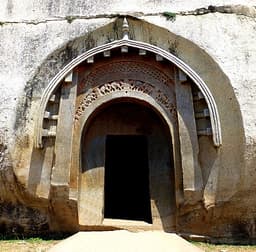
Bindusara
Emperor · Ancient
44.7Total

Constantine IV
Emperor · Ancient
61.2Total
Basic Information
Born
-320
-650
Died
-272
—
Era
Ancient
Ancient
Nationality
India
Byzantine Empire
Occupation
Emperor
Emperor
Civilization
Indian
Western
Score Comparison
Military (10%)
30.0
67.3
Political (20%)
40.8
62.7
Influence (20%)
47.1
58.0
Legacy (20%)
38.3
52.0
Leadership (15%)
65.0
72.0
Strategy (15%)
45.0
67.2
TOTAL
44.7
61.2
Bindusara — Complete Timeline
295 BC
Extended Mauryan Empire SouthwardWar◆ Major
Bindusara, son of Chandragupta Maurya, launched military campaigns into the Deccan plateau, conquering territories as far south as Mysore. He added the region of Kalinga (though not fully subdued) and parts of the Deccan to the Mauryan Empire.
ExpansionDeccanConquest
Impact: regional
290 BC
Maintained Diplomatic Relations with SeleucidsPolitical Action
Bindusara maintained friendly relations with the Seleucid Empire, exchanging ambassadors. He received Deimachus as an envoy from Antiochus I Soter, continuing the diplomatic ties established by his father.
DiplomacySeleucidsForeign Relations
Impact: regionalconstructive
285 BC
Patronized Ajivika SectCultural
Bindusara was a patron of the Ajivika sect, a non-Buddhist ascetic tradition. He supported their monasteries and teachings, reflecting the religious diversity of the Mauryan court before Ashoka's conversion to Buddhism.
ReligionAjivikaPatronage
Impact: regional
280 BC
Suppressed Taxila RebellionWar◆ Major
Bindusara sent his son Ashoka to quell a rebellion in the northwestern city of Taxila. The rebellion was suppressed without major bloodshed, demonstrating Ashoka's military capability and administrative skill.
RebellionTaxilaAshoka
Impact: regional
Constantine IV — Complete Timeline
678 AD
Defeated the Arab siege of ConstantinopleWar
Constantine IV successfully defended Constantinople against a massive Arab siege that lasted from 674 to 678. The Byzantine victory, aided by the use of Greek fire, forced the Umayyad Caliphate to sue for peace and pay tribute.
Arab-Byzantine WarsSiegeGreek Fire
Impact: globalconstructive
680 AD
Reorganized the Byzantine army into themesReform◆ Major
Constantine IV continued the reorganization of the Byzantine military into thematic provinces. This system, which combined civil and military authority, proved effective in defending the empire against external threats.
Military ReformAdministrationByzantine Empire
Impact: nationalconstructive
Convened the Third Council of ConstantinopleCultural◆ Major
Constantine IV convened the Third Council of Constantinople, which condemned Monothelitism as a heresy. The council restored religious unity between Constantinople and Rome, ending a long-standing theological dispute.
Ecumenical CouncilReligious UnityByzantine Empire
Impact: regionalconstructive
Expert Analysis
Origins
Bindusara (c. 320–272 BCE) was the second Mauryan emperor, son of Chandragupta Maurya, the founder of the empire. He was born into a newly unified Indian subcontinent and received a rigorous education in statecraft and military strategy. His mother, Durdhara, was from a modest background, but Bindusara inherited a vast realm stretching from the Indus to the Ganges. He was known as 'Amitraghata' (Slayer of Enemies) in Greek sources, indicating his reputation as a conqueror.
Constantine IV (c. 652–685 CE) was the eldest son of Constans II and was born into the Heraclian dynasty of the Byzantine Empire. He grew up in Constantinople, the capital under constant threat from Arab expansion. His early life was marked by military training and exposure to court intrigue. He became co-emperor with his father in 654 and sole emperor in 668 after his father's assassination.
Rise to Power
Bindusara ascended the throne around 297 BCE after his father's abdication. He faced no immediate internal opposition, as Chandragupta had consolidated the core territories. His key turning point was the decision to expand southward into the Deccan, a region of independent kingdoms and tribes. He sent his son Ashoka to suppress a rebellion in Taxila, demonstrating his reliance on capable family members.
Constantine IV became senior emperor in 668 after his father Constans II was murdered in Sicily. He immediately faced the Arab siege of Constantinople (674–678), a turning point in his reign. He organized the defense using the newly developed Greek fire and a fortified city wall. His successful defense solidified his authority and earned him the epithet 'Pogonatus' (Bearded).
Leadership & Governance
Bindusara ruled over a centralized Mauryan bureaucracy, continuing his father's administrative system. He maintained diplomatic relations with the Seleucid Empire, exchanging ambassadors like Deimachus. He patronized the Ajivika sect, reflecting religious tolerance. However, his governance was less transformative than his father's or son's; he focused on expansion rather than internal reform. His leadership score of 65.0 reflects competent but not exceptional rule.
Constantine IV was a hands-on military leader, personally overseeing the defense of Constantinople. After the siege, he reorganized the Byzantine army into themes (military districts), combining civil and military authority to improve efficiency. He also convened the Third Council of Constantinople (680–681), which condemned Monothelitism and restored religious unity. His governance scores (Political 62.7, Leadership 72.0) highlight his effective crisis management.
Triumph & Tragedy
Bindusara's greatest triumph was extending the Mauryan Empire into the Deccan, adding territories that later formed the core of Ashoka's empire. He also maintained stability and diplomatic ties with Hellenistic kingdoms. His greatest failure was perhaps not completing the conquest of Kalinga, which his son Ashoka later achieved with great bloodshed. Additionally, his patronage of the Ajivikas may have contributed to religious tensions later.
Constantine IV's triumph was the defeat of the Arab siege of Constantinople, a pivotal event that saved the Byzantine Empire from collapse. He also restored religious unity with the Third Council of Constantinople. His tragedy was the loss of the Byzantine fleet in a storm during a campaign against the Arabs in 678, and his failure to fully recover the lost provinces of Syria and Egypt. He died relatively young at 33, possibly from dysentery.
Character & Destiny
Bindusara was known as 'Amitraghata' (Slayer of Enemies), suggesting a warlike character. He was pragmatic, using diplomacy and military force as needed. His decision to send Ashoka to Taxila showed strategic delegation. However, his lack of major administrative reforms meant his legacy was overshadowed by his father and son. Historians often view him as a transitional figure, competent but not transformative.
Constantine IV was a determined and capable leader, personally brave in battle. His decision to convene the church council showed his commitment to unity. He was also ruthless, executing his brothers Heraclius and Tiberius to prevent civil war. His early death cut short a promising reign, but his defense of Constantinople ensured his place in Byzantine history.
Legacy
Bindusara's legacy is primarily as the consolidator of the Mauryan Empire, paving the way for Ashoka's later conquests. His expansion into the Deccan brought the region under centralized rule for the first time. However, his religious patronage had little lasting impact, as Buddhism later dominated under Ashoka. His influence score of 47.1 reflects his moderate but not enduring impact.
Constantine IV's legacy is more significant: his victory at Constantinople prevented Arab conquest of Europe and preserved the Byzantine Empire for centuries. The thematic reorganization strengthened the empire's defenses, and the Third Council of Constantinople shaped Orthodox Christian doctrine. He is remembered as a savior of Christendom. His influence score of 58.0 and legacy score of 52.0 reflect this.
Conclusion
Constantine IV had a greater direct impact on world history than Bindusara. His defense of Constantinople in 674–678 altered the course of European history, while Bindusara's expansion was later overshadowed by Ashoka's empire. Constantine IV's scores (Military 67.3, Leadership 72.0, TOTAL 61.2) significantly exceed Bindusara's (Military 30.0, Leadership 65.0, TOTAL 44.7). The gap of 16.5 points is decisive. Constantine IV's actions had immediate and long-term consequences for the survival of the Byzantine state, whereas Bindusara's reign was a stepping stone. Therefore, Constantine IV is the more impactful figure.
Rankings
🥇
Constantine IVLeader
Mil: 67.3Pol: 62.7Inf: 58.0
61.2
🥈
Bindusara
Mil: 30.0Pol: 40.8Inf: 47.1
44.7
+16.5 behind
How This Comparison Works
Algorithm
Each figure is scored on 6 dimensions (0—100 scale) based on structured historical data: Military (10%), Political (20%), Influence (20%), Legacy (20%), Leadership (15%), Strategy (15%). The weighted total produces the final ranking.
Data Sources
Scores are computed from structured sub-indicators in the database. Scale factors adjust for era (Ancient ×0.85, Modern ×1.0) and civilization size (Eastern ×1.05, Other ×0.80) to account for differences in population and military scale.
Maximum 3 Figures
Comparisons are limited to 2—3 figures to ensure readability and statistical meaningfulness.
Error Margins
±5 points per dimension — Sub-scores are derived from historical records with inherent uncertainty. Two figures within 5 points on a dimension should be considered roughly equivalent in that area.
Total Score Accuracy
±3 points overall — The weighted combination of 6 dimensions produces a total score with approximately ±3 points of uncertainty. Differences of less than 3 points are not statistically significant— the figures are effectively tied.
Known Limitations
- Historical records are incomplete and uneven across civilizations
- Figures from oral-tradition societies may be underrepresented
- Occupation labels can misclassify multi-role figures
- Scores measure capability and impact, not moral character
- Quantitative scoring is a comparison tool, not absolute truth
Capability Radar
Military (10%) — Battles & Warfare
Battles
30
75
Win Rate
30
80
Expansion
60
40
Political (20%) — Governance & Reform
Reform
30
55
Diplomacy
40
70
Economy
40
60
Influence (20%) — Cultural & Global Reach
Cultural
20
50
Global
20
60
Legacy (20%) — Historical Impact
Historical
30
65
Longevity
20
55
Leadership (15%) — Power & Stability
Tenure
50
65
Stability
50
65
Strategy (15%) — Tactics & Innovation
Strategy
40
75
Tactics
30
70
Reform
20
60
Similar Comparisons
Comments & Discussion
No comments yet. Be the first to share your thoughts!