Loading...
Bindusara vs Napoleon Bonaparte
Napoleon Bonaparte leads by 26.2 pts · 2 figures compared
…
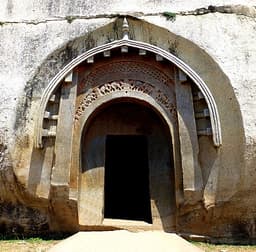
Bindusara
Emperor · Ancient
44.7Total

Napoleon Bonaparte
General · Modern
70.9Total
Basic Information
Born
-320
1769
Died
-272
1821
Era
Ancient
Modern
Nationality
India
France
Occupation
Emperor
General
Civilization
Indian
Western
Score Comparison
Military (10%)
30.0
94.0
Political (20%)
40.8
72.0
Influence (20%)
47.1
40.0
Legacy (20%)
38.3
80.0
Leadership (15%)
65.0
78.0
Strategy (15%)
45.0
90.0
TOTAL
44.7
70.9
Bindusara — Complete Timeline
295 BC
Extended Mauryan Empire SouthwardWar◆ Major
Bindusara, son of Chandragupta Maurya, launched military campaigns into the Deccan plateau, conquering territories as far south as Mysore. He added the region of Kalinga (though not fully subdued) and parts of the Deccan to the Mauryan Empire.
ExpansionDeccanConquest
Impact: regional
290 BC
Maintained Diplomatic Relations with SeleucidsPolitical Action
Bindusara maintained friendly relations with the Seleucid Empire, exchanging ambassadors. He received Deimachus as an envoy from Antiochus I Soter, continuing the diplomatic ties established by his father.
DiplomacySeleucidsForeign Relations
Impact: regionalconstructive
285 BC
Patronized Ajivika SectCultural
Bindusara was a patron of the Ajivika sect, a non-Buddhist ascetic tradition. He supported their monasteries and teachings, reflecting the religious diversity of the Mauryan court before Ashoka's conversion to Buddhism.
ReligionAjivikaPatronage
Impact: regional
280 BC
Suppressed Taxila RebellionWar◆ Major
Bindusara sent his son Ashoka to quell a rebellion in the northwestern city of Taxila. The rebellion was suppressed without major bloodshed, demonstrating Ashoka's military capability and administrative skill.
RebellionTaxilaAshoka
Impact: regional
Napoleon Bonaparte — Complete Timeline
1799 AD
Coup of 18 BrumaireOther◆ Major
Napoleon Bonaparte, with support from his brother Lucien and key political figures, overthrew the Directory in a bloodless coup. He established the Consulate with himself as First Consul, effectively becoming the ruler of France. This event ended the French Revolution's most unstable period.
French RevolutionCoupRise to Power
Impact: regional
1804 AD
Promulgation of the Napoleonic CodeOther◆ Major
Napoleon enacted the Civil Code of the French, known as the Napoleonic Code, a comprehensive set of laws that replaced the fragmented feudal legal systems. The code established legal equality, protected property rights, and secularized law. It became the basis for legal systems in many European and world countries.
Legal ReformNapoleonic CodeCivil Law
Impact: globalconstructive
1805 AD
Battle of AusterlitzWar◆ Major
Napoleon's Grande Arm
Napoleonic WarsBattleDecisive Victory
Impact: global
1812 AD
Invasion of RussiaWar◆ Major
Napoleon led the Grande Arm
Napoleonic WarsInvasionDisaster
Impact: globaldestructive
1815 AD
Battle of WaterlooWar◆ Major
Napoleon's French army was defeated by the combined forces of the Duke of Wellington's Anglo-Allied army and Gebhard Leberecht von Bl
Napoleonic WarsBattleFinal Defeat
Impact: globaldestructive
Expert Analysis
bindusara-vs-napoleon-bonaparte
# The Emperor and the Conqueror: Why Bindusara Faded While Napoleon Burnished Eternity
On a June morning in 1815, Napoleon Bonaparte stood on a muddy field near Waterloo, watching his Imperial Guard march into the mouths of British cannons. Thousands of miles away and two millennia earlier, another emperor—Bindusara of the Mauryan dynasty—sat in his palace at Pataliputra, receiving ambassadors from the Greek world while his son Ashoka prepared to crush a rebellion in Taxila. One man would change the legal and political architecture of Europe; the other would be remembered largely as the father of a greater son. Their fates, separated by time and geography, pose a haunting question: why does history remember some rulers as titans and others as footnotes?
Origins
Napoleon was born in 1769 on Corsica, an island that had just become French property. His family belonged to the minor nobility, but they were not wealthy. The boy grew up speaking Italian-accented French, an outsider in a nation that would one day worship him. Bindusara, by contrast, was born around 320 BCE into the most powerful family in India. His father, Chandragupta Maurya, had founded an empire stretching from the Hindu Kush to Bengal. Where Napoleon had to claw his way upward, Bindusara inherited a throne already warm.
These origins shaped everything. Napoleon’s hunger came from scarcity—he had to prove himself in a society that saw him as a foreigner. Bindusara’s confidence came from certainty—he was the son of a conqueror, born into an empire that already commanded the world’s respect. The Corsican outsider would spend his life trying to conquer Europe; the Mauryan prince would spend his reign consolidating what his father had seized.
Rise to Power
Napoleon’s ascent was a miracle of timing and talent. The French Revolution had shattered the aristocracy, opening military command to men of ability. At 24, he drove the British out of Toulon; at 26, he crushed a royalist uprising in Paris; at 30, he made himself First Consul. Each step was a gamble, each victory a foundation for the next. Bindusara’s rise was far quieter. When Chandragupta abdicated around 298 BCE to become a Jain ascetic, Bindusara simply assumed the throne. No coup, no war of succession—just a peaceful transfer of power.
The difference in their paths tells us something about their worlds. Napoleon rose in a Europe torn by revolution, where old certainties had collapsed and a brilliant soldier could seize the moment. Bindusara ruled in an India where dynasties were expected to pass from father to son, where stability was valued more than spectacle. The Frenchman had to fight for everything; the Mauryan received everything as his birthright.
Leadership & Governance
Napoleon governed with the energy of a man who knew power could be lost at any moment. He reformed French law through the Napoleonic Code, centralized the bureaucracy, established the Bank of France, and created a system of lycées that educated a generation. His military genius—scoring 93 in strategy and 94 in military command—was matched by an almost manic capacity for work. He could dictate four letters simultaneously, sleep four hours a night, and remember the face of every officer he had ever met.
Bindusara governed with the patience of a man who expected to rule for decades. He extended the Mauryan Empire southward into the Deccan plateau around 295 BCE, but his campaigns were more about consolidation than conquest. His greatest diplomatic achievement came around 290 BCE when he maintained friendly relations with the Seleucid Empire, exchanging ambassadors with Antiochus I. The Greek historian Strabo records that Bindusara even asked the Seleucid king to send him a Greek philosopher—a request that was politely refused.
Where Napoleon was a revolutionary, Bindusara was a steward. The Frenchman rewrote the rules of war and governance; the Mauryan kept his father’s empire running smoothly. Napoleon’s political score of 75 reflects his brilliance as a reformer but also his fatal inability to compromise. Bindusara’s political score of 50.4 suggests a ruler who managed what he had rather than creating something new.
Triumph & Tragedy
Napoleon’s greatest triumph was Austerlitz in 1805, where he destroyed the combined armies of Russia and Austria in a single day. His greatest tragedy was the invasion of Russia in 1812, where 600,000 men marched east and fewer than 100,000 returned. The pattern was clear: Napoleon could win battles but could not secure peace. He conquered Europe but could not hold it.
Bindusara’s triumphs were quieter. He suppressed a rebellion in Taxila around 280 BCE, sending his son Ashoka to restore order. He patronized the Ajivika sect, a non-Buddhist ascetic tradition, supporting their monasteries and teachings. His tragedy was that his greatest achievement—raising Ashoka to be his heir—would eclipse his own memory entirely. Bindusara ruled for nearly 30 years, but his son would become one of the most famous rulers in world history.
Character & Destiny
Napoleon’s character was driven by an insatiable ambition. “Impossible,” he once said, “is a word to be found only in the dictionary of fools.” He believed that he could shape history through sheer will, and for a decade, he was right. But the same ambition that lifted him to power also destroyed him. He could not stop conquering, could not make peace, could not share authority. His exile to Elba in 1814 and then to Saint Helena in 1815 were the logical conclusions of a life that knew no limits.
Bindusara’s character remains more mysterious. The historical records tell us little about his personality—no famous quotes, no dramatic gestures. He appears to have been a competent administrator who kept his father’s empire intact and prepared his son to inherit it. His destiny was to be the bridge between two giants: Chandragupta, who founded the empire, and Ashoka, who transformed it. He was the middle son of history, necessary but not celebrated.
Legacy
Napoleon’s legacy is written across Europe. The Napoleonic Code influenced legal systems from Italy to Louisiana. His military tactics are still studied at war colleges. His name became a synonym for ambition and genius. With a legacy score of 78 and an influence score of 82, he remains one of the most studied figures in Western history.
Bindusara’s legacy is far more modest. With a legacy score of 52 and an influence score of 64, he is known primarily as Ashoka’s father. The Mauryan Empire he maintained would reach its greatest extent under his son, but Bindusara himself left no great monuments, no famous laws, no enduring myth. His name survives in Buddhist texts and Greek records, a shadow behind the light of his son.
Conclusion
The contrast between Napoleon and Bindusara is not a story of better versus worse, but of different worlds and different purposes. Napoleon lived in an age of revolution, where a single man could reshape a continent. Bindusara lived in an age of dynasty, where the highest virtue was to preserve what your ancestors had built. The Corsican outsider had to conquer to prove his worth; the Mauryan prince had only to rule.
Perhaps the deepest lesson is this: history remembers the disruptors, not the stewards. Napoleon broke the world and rebuilt it in his image; Bindusara kept the world his father had made. One became a legend, the other a footnote. But empires need both kinds of rulers—the ones who build and the ones who maintain—even if only one of them gets a monument in Paris.
Rankings
🥇
Napoleon BonaparteLeader
Mil: 94.0Pol: 72.0Inf: 40.0
70.9
🥈
Bindusara
Mil: 30.0Pol: 40.8Inf: 47.1
44.7
+26.2 behind
How This Comparison Works
Algorithm
Each figure is scored on 6 dimensions (0—100 scale) based on structured historical data: Military (10%), Political (20%), Influence (20%), Legacy (20%), Leadership (15%), Strategy (15%). The weighted total produces the final ranking.
Data Sources
Scores are computed from structured sub-indicators in the database. Scale factors adjust for era (Ancient ×0.85, Modern ×1.0) and civilization size (Eastern ×1.05, Other ×0.80) to account for differences in population and military scale.
Maximum 3 Figures
Comparisons are limited to 2—3 figures to ensure readability and statistical meaningfulness.
Error Margins
±5 points per dimension — Sub-scores are derived from historical records with inherent uncertainty. Two figures within 5 points on a dimension should be considered roughly equivalent in that area.
Total Score Accuracy
±3 points overall — The weighted combination of 6 dimensions produces a total score with approximately ±3 points of uncertainty. Differences of less than 3 points are not statistically significant— the figures are effectively tied.
Known Limitations
- Historical records are incomplete and uneven across civilizations
- Figures from oral-tradition societies may be underrepresented
- Occupation labels can misclassify multi-role figures
- Scores measure capability and impact, not moral character
- Quantitative scoring is a comparison tool, not absolute truth
Capability Radar
Military (10%) — Battles & Warfare
Battles
30
95
Win Rate
30
90
Expansion
60
95
Political (20%) — Governance & Reform
Reform
30
95
Diplomacy
40
80
Economy
40
85
Influence (20%) — Cultural & Global Reach
Cultural
20
85
Global
20
90
Legacy (20%) — Historical Impact
Historical
30
95
Longevity
20
90
Leadership (15%) — Power & Stability
Tenure
50
85
Stability
50
70
Strategy (15%) — Tactics & Innovation
Strategy
40
95
Tactics
30
98
Reform
20
92
Similar Comparisons
Comments & Discussion
THE_ASHOKA_COMPLEX6/17/2026
Bindusara wasn't a footnote—he was the bridge between Chandragupta's conquest and Ashoka's consolidation. Call him "Alexander's hangover guy": he sent envoys to Antioch, managed the Deccan plateau's submission without the rockstar treatment, and kept an empire intact. Napoleon burned bright but crashed hard, leaving Europe in chaos. Bindusara's steady hand let Ashoka become Ashoka. History’s obsession with "great men" just ignores the boring glue that holds empires together.
数据求真者6/17/2026
别被“版图大小”骗了。拿破仑的帝国最多80万平方公里,维持了十年;宾头娑罗继承了印度河到恒河的200万平方公里,统治了二十五年。真要算“成就”,稳定控制比短暂爆发难得多。拿战史数据说话,拿破仑败仗比率(滑铁卢、莱比锡、别列津纳河)远高于宾头娑罗的零记录。History给赢家贴金,但数字不撒谎——耐久力才是真本事。
LATINISTA6/17/2026
Comparisons like this are absurd until you realize the key metric is cultural persistence. Napoleon exported the Napoleonic Code, the metric system, and modern warfare organization—structures that still define Europe today. Bindusara? He imported Greek satraps and hosted Seleucid ambassadors, but what trace did he leave on Indian law, tax, or administration? Ashoka’s edicts are remembered; Bindusara’s reign is a silent placeholder. Intriguing middle child, but in the game of legacy, Napoleon sco
孙子的学生6/17/2026
拿破仑是“无根之木”——从科西嘉爬到帝国之巅,靠的是个人野心和火药技术。宾头娑罗继承了“孔雀王朝体系”,这体系包括了官僚制、统一度量衡、皇家公路网,还有对付耆那教和佛教的宗教宽容政策。拿破仑的军事天才更像是战术赌博,而宾头娑罗的战略稳重让帝国度过了最脆弱的传承期。历史记住谁?通常是那个会演的人,不是那个会守的人。
REVISIONIST_CURMUDGEON6/17/2026
Stop romanticizing the conqueror who died shackling Europe in a bankrupt imperial fantasy. Napoleon’s "greatness" is a 19th-century propaganda job—he was a military dictator who suppressed democracy, restored slavery, and got 400,000 Frenchmen killed in Russia for personal glory. Bindusara expanded an already vast empire through diplomacy and stable administration. One is called a genius, the other a footnote. Classic case of history written by people who prefer drama over competence.