Loading...
Bipin Rawat vs Lavr Kornilov
Bipin Rawat leads by 12.1 pts · 2 figures compared
…
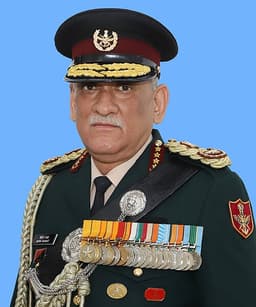
Bipin Rawat
General · Modern
55.0Total
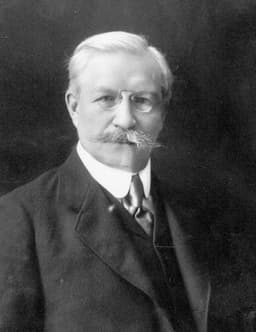
Lavr Kornilov
General · Modern
42.9Total
Basic Information
Born
1958
1870
Died
—
1918
Era
Modern
Modern
Nationality
India
Russia
Occupation
General
General
Civilization
Indian
Western
Score Comparison
Military (10%)
40.0
25.0
Political (20%)
68.0
35.1
Influence (20%)
59.0
55.7
Legacy (20%)
45.0
46.7
Leadership (15%)
62.0
30.0
Strategy (15%)
55.0
50.0
TOTAL
55.0
42.9
Bipin Rawat — Complete Timeline
2016 AD
Led Counter-Insurgency Operations in KashmirWar
As Army Chief, Rawat oversaw intensified counter-insurgency operations in Kashmir following the 2016 unrest. He advocated for a tough approach against militants, leading to increased military presence.
KashmirCounter-insurgencyMilitary Operations
Impact: regional
Served as Chief of Army StaffPolitical Action◆ Major
Rawat was appointed Chief of Army Staff in 2016. He oversaw operations in Jammu and Kashmir, including the 2016 surgical strikes across the Line of Control, and focused on counter-insurgency.
Army ChiefSurgical StrikesCounter-insurgency
Impact: national
2019 AD
Appointed First Chief of Defence Staff of IndiaPolitical Action
General Bipin Rawat was appointed as India's first Chief of Defence Staff (CDS), a new position created to integrate the three armed services. He was tasked with improving jointness and military efficiency.
CDSMilitary ReformIntegration
Impact: nationalconstructive
2021 AD
Died in Helicopter CrashOther◆ Major
General Rawat, his wife, and 11 others died in a helicopter crash in Tamil Nadu. The crash occurred while he was traveling to a military event, and an inquiry attributed it to weather and pilot error.
DeathAccidentHelicopter Crash
Impact: nationaltragic
Lavr Kornilov — Complete Timeline
1917 AD
Kornilov AffairPolitical Action
General Kornilov, as Commander-in-Chief, marched troops toward Petrograd in an attempt to seize power from the Provisional Government. The coup failed due to lack of support and resistance from workers and soldiers. Kornilov was arrested and imprisoned.
Kornilov AffairCoup AttemptProvisional Government
Impact: nationaldestructive
1918 AD
Command of the White Army in the Russian Civil WarWar◆ Major
After escaping from prison, Kornilov became the commander of the Volunteer Army, the core of the White forces in southern Russia. He led the First Kuban Campaign, a strategic retreat through hostile territory, but was killed by a shell in April 1918.
White ArmyRussian Civil WarVolunteer Army
Impact: national
Death at the Battle of YekaterinodarWar◆ Major
Kornilov was killed by a direct hit from a Bolshevik shell while besieging Yekaterinodar. His death was a severe blow to the White movement. The Bolsheviks exhumed his body and publicly displayed it before burning it.
DeathWhite ArmyYekaterinodar
Impact: nationaltragic
Expert Analysis
Origins
Bipin Rawat was born on March 16, 1958, in Pauri, Uttarakhand, India, into a military family. His father, Lakshman Singh Rawat, was a senior army officer. Rawat attended St. Edward's School, Shimla, and later the National Defence Academy, Khadakwasla, and the Indian Military Academy, Dehradun. He was commissioned into the 5th Battalion of the 11th Gorkha Rifles in 1978.
Lavr Kornilov was born on August 18, 1870, in Ust-Kamenogorsk, Russian Empire (now Kazakhstan), to a Cossack family. His father was a Cossack officer. Kornilov studied at the Siberian Cadet Corps, the Mikhailovsky Artillery School, and the General Staff Academy in St. Petersburg. He served in the Russo-Japanese War and World War I, earning a reputation for bravery.
Rise to Power
Rawat rose through the ranks with staff and command assignments, including a tenure as Director General of Military Operations. He was appointed Vice Chief of Army Staff in 2015 and Chief of Army Staff in December 2016. His tenure saw the 2016 surgical strikes across the Line of Control, which he oversaw. In January 2020, he was appointed India's first Chief of Defence Staff (CDS), a role created to integrate the three armed services.
Kornilov rose to prominence during World War I, commanding the 48th Infantry Division and later the 8th Army. After the February Revolution, he was appointed Commander-in-Chief of the Russian Army in July 1917. He attempted to march on Petrograd in August 1917 to seize power from the Provisional Government, an event known as the Kornilov Affair. After the Bolsheviks took power, he escaped and became commander of the Volunteer Army, the core of the White forces in southern Russia.
Leadership & Governance
Rawat advocated for jointness and integration among the Indian armed services, pushing for theater commands and a more unified command structure. He was known for his tough stance on counter-insurgency operations in Jammu and Kashmir, emphasizing a policy of 'hot pursuit' and surgical strikes. His leadership style was decisive and action-oriented, earning him both praise and criticism for his outspokenness.
Kornilov was a strict disciplinarian who believed in strong centralized authority. He opposed the liberalization of the army and the influence of the soviets. His attempted coup highlighted his willingness to use force to achieve political goals. As a White Army commander, he led with personal courage but lacked political acumen, alienating potential allies. His governance approach was autocratic and militaristic.
Triumph & Tragedy
Rawat's greatest triumph was his appointment as India's first CDS, a landmark in military reform. He successfully oversaw the 2016 surgical strikes, which were a significant operational success. However, his tenure also saw controversies, including a reported rift with the Navy and Air Force over integration plans. His death in a helicopter crash on December 8, 2021, near Coonoor, Tamil Nadu, was a national tragedy, cutting short his efforts at military reform.
Kornilov's triumph was his leadership of the Volunteer Army in the early stages of the Russian Civil War, where he inspired the White movement. He achieved a notable victory in the First Kuban Campaign. His tragedy was the failed Kornilov Affair, which weakened the Provisional Government and inadvertently helped the Bolsheviks. His death at the Battle of Yekaterinodar on April 13, 1918, from a direct artillery hit, was a severe blow to the White cause.
Character & Destiny
Rawat was known for his straightforwardness, strategic vision, and commitment to military integration. He was a workaholic who often bypassed protocol, which sometimes caused friction. His character shaped his destiny as a reformer; he was on a mission to transform India's military, but his untimely death left many initiatives incomplete. Historians view him as a pivotal figure in Indian military history, with a legacy still being assessed.
Kornilov was courageous, stubborn, and politically naive. His belief in military dictatorship and his contempt for civilian government led him to attempt a coup, which backfired. His character made him a symbol of counter-revolution, but his lack of political flexibility limited his effectiveness. His death at the front epitomized his personal bravery but also the disarray of the White movement.
Legacy
Rawat's legacy includes the creation of the CDS post and the push for theater commands, which are ongoing. He influenced India's defense policy towards greater integration. His military score of 40.0 reflects his operational experience, while his political score of 68.0 indicates his impact on defense bureaucracy. His influence score of 59.0 and legacy score of 45.0 show his mixed but significant impact.
Kornilov's legacy is tied to the Kornilov Affair, which discredited the Provisional Government and accelerated Bolshevik takeover. He is remembered as a symbol of the White resistance. His military score of 25.0 is low due to his failed coup, but his influence score of 55.7 reflects his role in the Civil War. His legacy score of 46.7 indicates his lasting mark on Russian history.
Conclusion
Bipin Rawat had greater overall impact, with a total score of 55.0 against Kornilov's 42.9. Rawat's institutional reforms in India's military structure have enduring effects, whereas Kornilov's actions, while dramatic, ultimately weakened his cause. Rawat's leadership in integrating India's armed forces and his operational successes outweigh Kornilov's flawed political intervention. The score gap of 12.1 points underscores Rawat's more significant and positive legacy.
Rankings
🥇
Bipin RawatLeader
Mil: 40.0Pol: 68.0Inf: 59.0
55.0
🥈
Lavr Kornilov
Mil: 25.0Pol: 35.1Inf: 55.7
42.9
+12.1 behind
How This Comparison Works
Algorithm
Each figure is scored on 6 dimensions (0—100 scale) based on structured historical data: Military (10%), Political (20%), Influence (20%), Legacy (20%), Leadership (15%), Strategy (15%). The weighted total produces the final ranking.
Data Sources
Scores are computed from structured sub-indicators in the database. Scale factors adjust for era (Ancient ×0.85, Modern ×1.0) and civilization size (Eastern ×1.05, Other ×0.80) to account for differences in population and military scale.
Maximum 3 Figures
Comparisons are limited to 2—3 figures to ensure readability and statistical meaningfulness.
Error Margins
±5 points per dimension — Sub-scores are derived from historical records with inherent uncertainty. Two figures within 5 points on a dimension should be considered roughly equivalent in that area.
Total Score Accuracy
±3 points overall — The weighted combination of 6 dimensions produces a total score with approximately ±3 points of uncertainty. Differences of less than 3 points are not statistically significant— the figures are effectively tied.
Known Limitations
- Historical records are incomplete and uneven across civilizations
- Figures from oral-tradition societies may be underrepresented
- Occupation labels can misclassify multi-role figures
- Scores measure capability and impact, not moral character
- Quantitative scoring is a comparison tool, not absolute truth
Capability Radar
Military (10%) — Battles & Warfare
Battles
45
45
Win Rate
50
40
Expansion
30
20
Political (20%) — Governance & Reform
Reform
55
30
Diplomacy
50
20
Economy
30
10
Influence (20%) — Cultural & Global Reach
Cultural
35
25
Global
30
20
Legacy (20%) — Historical Impact
Historical
40
40
Longevity
20
30
Leadership (15%) — Power & Stability
Tenure
40
15
Stability
45
5
Strategy (15%) — Tactics & Innovation
Strategy
65
50
Tactics
60
55
Reform
75
60
Similar Comparisons
Comments & Discussion
No comments yet. Be the first to share your thoughts!