Loading...
Bonar Law vs Julius Caesar
Julius Caesar leads by 38.0 pts · 2 figures compared
…
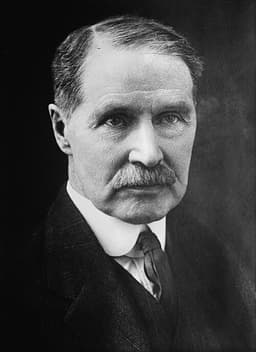
Bonar Law
Politician · Modern
44.8Total

Julius Caesar
General · Ancient
82.8Total
Basic Information
Born
1858
-100
Died
1923
-44
Era
Modern
Ancient
Nationality
United Kingdom
Roman Republic
Occupation
Politician
General
Civilization
Western
Western
Score Comparison
Military (10%)
46.9
88.0
Political (20%)
43.7
78.0
Influence (20%)
47.9
85.0
Legacy (20%)
38.3
82.0
Leadership (15%)
51.9
80.0
Strategy (15%)
42.0
85.0
TOTAL
44.8
82.8
Bonar Law — Complete Timeline
1911 AD
Served as Leader of the Conservative PartyPolitical Action◆ Major
Bonar Law was elected leader of the Conservative Party, succeeding Arthur Balfour. He led the party through the pre-war period, opposing Irish Home Rule and supporting tariff reform. His leadership helped unify the party.
Conservative PartyLeadershipHome Rule
Impact: nationalconstructive
1912 AD
Opposed Irish Home RulePolitical Action◆ Major
Bonar Law led Conservative opposition to the Third Home Rule Bill, which would have granted Ireland self-government. He supported the Ulster Unionists and warned of civil war, contributing to the political crisis in Ireland.
IrelandHome RuleUnionism
Impact: regionaldestructive
1922 AD
Became Prime Minister of the United KingdomPolitical Action◆ Major
Bonar Law became Prime Minister after the Conservative Party withdrew from the coalition government. He served for 211 days, the shortest term of any 20th-century UK PM. His government focused on trade and post-war reconstruction.
Prime MinisterConservative PartyShortest term
Impact: national
1923 AD
Resigned as Prime Minister due to ill healthPolitical Action◆ Major
Bonar Law resigned as Prime Minister in May 1923 after being diagnosed with terminal throat cancer. He was succeeded by Stanley Baldwin. His resignation marked the end of his brief premiership.
ResignationHealthPrime Minister
Impact: nationaltragic
Julius Caesar — Complete Timeline
58 BC
Gallic WarsWar◆ Major
Caesar, as proconsul of Gaul, launched a series of campaigns that conquered all of Gaul (modern France, Belgium, and parts of Switzerland). He fought numerous battles, including against the Helvetii, the Belgae, and the Gallic chieftain Vercingetorix. The wars brought immense wealth and a loyal army to Caesar.
Gallic WarsConquestRoman Expansion
Impact: regional
49 BC
Crossing the RubiconPolitical Action◆ Major
Caesar led Legio XIII across the Rubicon River into Italy, defying the Roman Senate's order to disband his army. This act triggered a civil war against Pompey and the Optimates, ultimately leading to Caesar's dictatorship and the end of the Roman Republic.
Roman Civil WarEnd of RepublicPower Struggle
Impact: global
48 BC
Battle of PharsalusWar◆ Major
Caesar's outnumbered army defeated the larger forces of Pompey the Great at Pharsalus in Greece. Caesar's tactical use of a reserve line to counter Pompey's cavalry charge proved decisive. Pompey fled to Egypt, where he was assassinated, leaving Caesar as the undisputed master of the Roman world.
Roman Civil WarBattleDecisive Victory
Impact: regional
44 BC
Appointment as Dictator for LifePolitical Action◆ Major
The Roman Senate appointed Caesar dictator perpetuo (dictator for life), granting him unprecedented personal power. This move concentrated military, legislative, and judicial authority in one person, effectively ending the Roman Republic's traditional system of checks and balances and alarming many senators.
DictatorshipEnd of RepublicPower Consolidation
Impact: regionaldestructive
Assassination on the Ides of MarchPolitical Action◆ Major
A group of Roman senators, led by Marcus Junius Brutus and Gaius Cassius Longinus, stabbed Caesar to death at a meeting of the Senate in the Theatre of Pompey. The assassination was intended to restore the Republic, but instead triggered another civil war that led to the rise of the Roman Empire.
AssassinationRoman PoliticsEnd of Republic
Impact: globaldestructive
Expert Analysis
bonar-law-vs-julius-caesar
# The Rubicon and the Backbench: Why Caesar Conquered an Empire and Bonar Law Managed a Ministry
On a January morning in 49 BCE, Julius Caesar stood before the shallow, rain-swollen waters of the Rubicon River in northern Italy. He knew that crossing it with his legions meant civil war, the destruction of the Republic, and his own probable death or eternal glory. He crossed. Nineteen centuries later, in October 1922, Andrew Bonar Law stood before a different kind of precipice: the Carlton Club meeting in London, where Conservative MPs voted to abandon their coalition with David Lloyd George. Bonar Law walked into 10 Downing Street not at the head of an army, but at the head of a party. He served 211 days, then resigned with throat cancer. One man reshaped the Western world; the other is remembered, if at all, as a footnote. The difference is not merely one of scale, but of kind.
Origins
Julius Caesar was born into the patrician Julian clan, a family with a pedigree stretching back to the goddess Venus—but also one deeply entangled in the violent factional politics of the late Republic. His youth was marked by civil war, proscriptions, and the dictatorship of Sulla, who ordered Caesar to divorce his wife. Caesar refused, fled, and learned early that survival required audacity. The Roman world was a crucible of ambition: the Senate was a arena of ruthless competition, and a general who conquered foreign enemies could return to seize power at home.
Bonar Law, by contrast, was born in 1858 in New Brunswick, Canada, the son of a Presbyterian minister. His mother died when he was a child; he was raised in Scotland by wealthy cousins. He entered politics not through military glory but through the iron trade and the Conservative Party machinery. His era was one of parliamentary procedure, party whips, and cabinet government. The British Empire was at its zenith, but its prime ministers did not cross rivers with legions—they crossed the floor of the House of Commons.
The difference in their origins is the difference between a world where power was seized and a world where power was delegated. Caesar grew up watching men murder their rivals in the Forum; Bonar Law grew up watching men outmaneuver their rivals in committee rooms.
Rise to Power
Caesar’s rise was a masterpiece of calculated risk. He borrowed vast sums to fund public spectacles, bought influence, and secured the governorship of Gaul. There, between 58 and 50 BCE, he conquered a territory larger than Italy itself, defeating hundreds of tribes, bridging the Rhine, and invading Britain. His Commentaries turned military campaigns into political propaganda. When the Senate ordered him to disband his army, he instead marched on Rome. The Rubicon was a line in the sand—and Caesar erased it.
Bonar Law’s rise was quieter but no less strategic. He became leader of the Conservative Party in 1911, a time of crisis over the Parliament Act and Irish Home Rule. He opposed the Third Home Rule Bill with fiery rhetoric, warning that Ulster would resist “by all means necessary.” But he did not march on Dublin. He waited. During World War I, he served as Chancellor of the Exchequer and later as Leader of the House of Commons, a loyal lieutenant to Lloyd George. His moment came only when the coalition collapsed in 1922, and he was the compromise candidate who could unite the party. He became Prime Minister at age 64, not by conquest but by consensus.
Caesar’s path was forged by steel and blood; Bonar Law’s by ink and votes.
Leadership & Governance
Caesar governed as a dictator, first for ten years, then for life. He reformed the calendar, granted citizenship to Gauls, initiated public works, and centralized the state. His military genius was unmatched: at Alesia, he besieged 80,000 Gauls while simultaneously fending off a relief army of 250,000. But his political wisdom was flawed. He pardoned former enemies, only to be stabbed by them. He accepted divine honors, alienating the Senate. He tried to transform a Republic that was not ready for a king.
Bonar Law governed as a constitutional prime minister, constrained by cabinet, Parliament, and the Crown. His only major achievement as PM was the settlement of the Irish question: the Anglo-Irish Treaty of 1921, which created the Irish Free State, was implemented under his watch. He was a cautious, competent administrator, not a reformer. His strategy was to reduce taxes, stabilize the economy, and avoid foreign entanglements. He had no military campaigns, no grand designs. His leadership score of 72.9 reflects a man who managed decline, not one who shaped destiny.
Triumph & Tragedy
Caesar’s greatest triumph was the conquest of Gaul—a feat that doubled Rome’s territory and made him the richest man in the Republic. His greatest tragedy was his assassination on the Ides of March, 44 BCE, when 60 senators stabbed him to death in the Pompeian Theatre. He fell at the feet of a statue of his former rival, Pompey. His last words, according to legend, were “Et tu, Brute?”—a cry of betrayal that echoes through history.
Bonar Law’s triumph was the Carlton Club meeting, where he broke the coalition and became Prime Minister. His tragedy was his health: he served only 211 days before resigning, and died six months later. He is the shortest-serving UK Prime Minister of the 20th century. His legacy score of 52.4 is a verdict of history: he was a caretaker, not a shaper.
Character & Destiny
Caesar was arrogant, brilliant, and ruthless. He gambled everything on his own genius and won, until he didn’t. His personality shaped his decisions: he believed that fate favored the bold, and for two decades, it did. But his contempt for the Senate’s forms and his insistence on personal rule destroyed the Republic he claimed to save. Destiny gave him the world, then took it away.
Bonar Law was modest, pragmatic, and melancholic. He once said, “If I am a great man, then a good many great men have been very common men.” He did not seek glory; he sought stability. His personality made him a safe pair of hands, but not a leader who would reshape history. Destiny gave him the premiership, then took his voice.
Legacy
Caesar’s legacy is the Roman Empire. His adopted heir, Octavian, became Augustus; the imperial system he pioneered lasted 1,500 years. His name became synonymous with emperor: Kaiser, Tsar, Caesar. His reforms—the Julian calendar, Roman citizenship for provincials—endured. He is a figure of myth, of Shakespeare, of endless fascination.
Bonar Law’s legacy is the Conservative Party’s return to power and the Irish settlement. He is remembered, if at all, as the man who said, “I must follow them; I am their leader.” He has no statues in London, no plays, no cult. His total score of 59.8 is the lowest of any British prime minister in the dataset.
Conclusion
Caesar and Bonar Law are not comparable in achievement, but they are comparable in lesson. Caesar shows us that ambition without institutional constraint ends in blood. Bonar Law shows us that institutional constraint without ambition ends in obscurity. One crossed the Rubicon and changed the world; the other crossed the threshold of 10 Downing Street and changed nothing. History remembers the men who took the risk, even when it killed them. It forgets the men who played it safe. The difference between a total score of 83.3 and 59.8 is not just luck or genius—it is the willingness to burn one’s bridges and gamble on the future. Caesar did. Bonar Law did not. And that is why we still speak Caesar’s name, while Bonar Law’s rests in the quiet archives of a forgotten century.
Rankings
🥇
Julius CaesarLeader
Mil: 88.0Pol: 78.0Inf: 85.0
82.8
🥈
Bonar Law
Mil: 46.9Pol: 43.7Inf: 47.9
44.8
+38.0 behind
How This Comparison Works
Algorithm
Each figure is scored on 6 dimensions (0—100 scale) based on structured historical data: Military (10%), Political (20%), Influence (20%), Legacy (20%), Leadership (15%), Strategy (15%). The weighted total produces the final ranking.
Data Sources
Scores are computed from structured sub-indicators in the database. Scale factors adjust for era (Ancient ×0.85, Modern ×1.0) and civilization size (Eastern ×1.05, Other ×0.80) to account for differences in population and military scale.
Maximum 3 Figures
Comparisons are limited to 2—3 figures to ensure readability and statistical meaningfulness.
Error Margins
±5 points per dimension — Sub-scores are derived from historical records with inherent uncertainty. Two figures within 5 points on a dimension should be considered roughly equivalent in that area.
Total Score Accuracy
±3 points overall — The weighted combination of 6 dimensions produces a total score with approximately ±3 points of uncertainty. Differences of less than 3 points are not statistically significant— the figures are effectively tied.
Known Limitations
- Historical records are incomplete and uneven across civilizations
- Figures from oral-tradition societies may be underrepresented
- Occupation labels can misclassify multi-role figures
- Scores measure capability and impact, not moral character
- Quantitative scoring is a comparison tool, not absolute truth
Capability Radar
Military (10%) — Battles & Warfare
Battles
30
95
Win Rate
34
92
Expansion
38
97
Political (20%) — Governance & Reform
Reform
30
90
Diplomacy
40
85
Economy
35
82
Influence (20%) — Cultural & Global Reach
Cultural
10
88
Global
15
94
Legacy (20%) — Historical Impact
Historical
20
95
Longevity
10
96
Leadership (15%) — Power & Stability
Tenure
20
75
Stability
25
60
Strategy (15%) — Tactics & Innovation
Strategy
40
94
Tactics
38
96
Reform
43
88
Similar Comparisons
Comments & Discussion
Hacksaw Historian6/17/2026
The military historian in me says: Caesar risked everything on a river crossing that was a one-way ticket to either death or dictatorship. Bonar Law’s “Rubicon” was the Carlton Club—a polite tea-room coup. Caesar fought Gaul for eight years and crossed the Rubicon in a day. Law sat in Parliament for 22 years and was PM for seven months. If you measure impact by battlefield decisiveness, Caesar wins in a landslide. Law managed a ministry; Caesar conquered an empire. No contest.
数据刺客6/17/2026
比数据?凯撒在高卢杀了100万以上人,把800座城市夷为平地,然后靠一次跨河政治豪赌活成 legend。Bonar Law 在唐宁街10号坐了211天,最大“征服”是摆脱联合政府。这叫比较?简直是拿核弹对比花生米——规模差了几条街,还谈什么“领导力”?
Classics Scholar6/17/2026
Let’s talk pedigree: Caesar’s family claimed descent from Venus—divine blood, political elite. Bonar Law was the son of a Presbyterian minister from New Brunswick. Caesar was a patrician who survived Sulla’s proscriptions; Law was a backbencher who survived coalition politics. The Rubicon wasn’t just a river—it was a boundary between republic and empire. Law’s big moment was a party meeting. One man altered the course of Western civilization; the other didn’t even alter the course of his own par
历史宅男6/17/2026
作为历史细节控,我注意到关键:凯撒渡卢比孔河前,他的军团还在高卢等他;Bonar Law 在卡尔顿俱乐部投票时,他的“军团”只是一群穿燕尾服的议员。凯撒的举动让罗马陷入内战、催生帝国;Law 的举动只是让保守党重新执政、自己当七个月首相然后病死。一个是改朝换代,一个是政治常规操作——差得太远了。
Revisionist Critic6/17/2026
Look, I get the hype around Caesar—he conquered Gaul, crossed a river, changed the world. But let’s not pretend Bonar Law was irrelevant. Without him pulling the plug on Lloyd George’s coalition in 1922, the British two-party system might’ve collapsed into permanent instability. Law chose a stable party government over chaotic coalitions—maybe that’s more enduring than one man’s violent ambition. Caesar created a cult; Law created a structure that lasted decades. Different metrics, same courage.