Loading...
Boris III of Bulgaria vs Mongkut
Mongkut leads by 10.5 pts · 2 figures compared
…

Boris III of Bulgaria
Emperor · Modern
47.5Total
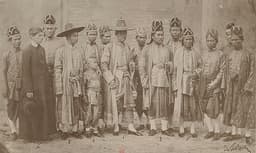
Mongkut
Emperor · Modern
58.0Total
Basic Information
Born
1894
1804
Died
1943
1868
Era
Modern
Modern
Nationality
Bulgaria
Thailand
Occupation
Emperor
Emperor
Civilization
Western
Eastern
Score Comparison
Military (10%)
21.2
21.2
Political (20%)
53.8
78.0
Influence (20%)
52.5
56.7
Legacy (20%)
41.7
58.0
Leadership (15%)
66.0
78.0
Strategy (15%)
38.6
38.3
TOTAL
47.5
58.0
Boris III of Bulgaria — Complete Timeline
1918 AD
Accession to the ThronePolitical Action◆ Major
Boris III became Tsar of Bulgaria after his father Ferdinand I abdicated following World War I. He inherited a defeated nation facing territorial losses and political instability.
AccessionPost-WWIMonarchy
Impact: national
1935 AD
Establishment of Personal DictatorshipPolitical Action◆ Major
Boris III abolished the constitution and established a royal dictatorship, ruling through a series of prime ministers. He centralized power to prevent political fragmentation.
DictatorshipAuthoritarianismConstitutional Crisis
Impact: nationaldestructive
1941 AD
Alliance with Nazi GermanyPolitical Action◆ Major
Boris III signed the Tripartite Pact, aligning Bulgaria with Nazi Germany. Bulgaria gained territories in Macedonia and Thrace but avoided active participation in the invasion of the USSR.
World War IIAxis AllianceTerritorial Gains
Impact: regionaldestructive
1943 AD
Refusal to Deport Bulgarian JewsPolitical Action◆ Major
Boris III resisted German pressure to deport Bulgaria's 48,000 Jews to death camps. This saved the Jewish population within Bulgaria's pre-war borders, though Jews in occupied territories were not protected.
HolocaustJewish RescueHumanitarian
Impact: nationalconstructive
Mysterious DeathOther◆ Major
Boris III died suddenly after a meeting with Adolf Hitler. The cause of death remains disputed, with theories ranging from heart attack to poisoning. His death destabilized Bulgaria's wartime leadership.
DeathMysteryWorld War II
Impact: nationaltragic
Mongkut — Complete Timeline
1851 AD
Corresponded with Western leaders and scholarsCultural
Mongkut engaged in extensive correspondence with Western leaders, including President James Buchanan and Pope Pius IX, and with missionaries and scholars. He sought to learn about Western science, technology, and governance.
DiplomacyIntellectual ExchangeModernization
Impact: nationalconstructive
Reformed Buddhist monastic educationCultural
As a former monk, Mongkut reformed Buddhist monastic education by emphasizing Pali studies and scriptural accuracy. He founded the Dhammayuttika Nikaya order, which focused on strict adherence to Buddhist teachings.
BuddhismReligious ReformEducation
Impact: nationalconstructive
1855 AD
Hired Western advisors to modernize SiamReform
Mongkut employed Western advisors, including Anna Leonowens, to teach his children and assist in modernizing the court. He also hired European experts to help with military, legal, and administrative reforms.
AdvisorsModernizationEducation
Impact: nationalconstructive
Signed the Bowring Treaty with BritainPolitical Action◆ Major
King Mongkut signed the Bowring Treaty with Britain, opening Siam to free trade and granting extraterritorial rights to British subjects. This treaty ended Siam's isolation and set a precedent for relations with other Western powers.
TreatyTradeWestern Influence
Impact: regional
Expert Analysis
Origins
**Boris III of Bulgaria** was born on January 30, 1894, in Sofia, Bulgaria, the son of Tsar Ferdinand I and Princess Marie Louise of Bourbon-Parma. He was educated at the Sofia Military Academy and later at the University of Sofia. His upbringing was marked by the instability of the Balkan Wars and World War I, which shaped his cautious and pragmatic personality. After Bulgaria's defeat in WWI, his father abdicated, and Boris ascended the throne on October 3, 1918, inheriting a shattered nation.
**Mongkut** (Rama IV) was born on October 18, 1804, in Bangkok, Siam, the son of King Rama II and Queen Sri Suriyendra. He spent 27 years as a Buddhist monk before ascending the throne, a period that allowed him to study Western languages, science, and philosophy. His education was unconventional for a prince: he learned Latin, English, and astronomy from missionaries. This monastic background gave him a unique perspective on reform and diplomacy.
Rise to Power
Boris III became tsar at age 24 after his father's abdication in 1918. The country was in turmoil, having lost territory and facing economic collapse. He initially worked with a coalition government but gradually centralized power. In 1935, he abolished the constitution and established a royal dictatorship, ruling through prime ministers. His rise was marked by a series of political maneuvers to stabilize Bulgaria amid the rise of fascism in Europe.
Mongkut became king at age 47 on April 1, 1851, after his half-brother King Rama III died. His long monastic career had kept him away from court intrigue, but it also gave him a reputation for piety and learning. He ascended the throne with a clear vision: to modernize Siam and avoid colonization by European powers. His rise was peaceful, supported by the nobility who saw his intellectual prowess as an asset.
Leadership & Governance
Boris III ruled Bulgaria as a constitutional monarch until 1935, when he turned to authoritarianism. He personally approved all government decisions, cycling through prime ministers to prevent any from gaining too much power. His leadership score of 66.0 reflects his ability to maintain stability, but his political score of 53.8 shows the limitations of his autocratic style. He signed the Tripartite Pact with Nazi Germany on March 1, 1941, to regain lost territories, but he resisted full military involvement. His strategy score of 38.6 indicates a reactive rather than proactive approach.
Mongkut, with a leadership score of 78.0 and political score of 78.0, was a reformer. He signed the Bowring Treaty with Britain in 1855, opening Siam to free trade while maintaining sovereignty. He hired Western advisors, including Anna Leonowens, to modernize education and administration. He also reformed Buddhist monastic education by founding the Dhammayuttika Nikaya order. His governance was a delicate balance between tradition and modernization, earning him high marks for political acumen.
Triumph & Tragedy
Boris III's greatest triumph was his refusal to deport Bulgaria's 48,000 Jews to Nazi death camps. Despite immense pressure from Hitler, he saved them within Bulgaria's pre-war borders. However, his alliance with Nazi Germany also allowed Bulgaria to occupy parts of Macedonia and Thrace, where Bulgarian authorities deported over 11,000 Jews from these territories. His mysterious death on August 28, 1943, after a meeting with Hitler, remains a tragedy—possibly a heart attack, possibly poisoning by the Nazis. His legacy score of 41.7 reflects this mixed record.
Mongkut's triumph was preserving Siam's independence while modernizing. The Bowring Treaty led to economic growth and diplomatic recognition. He also corresponded with Western leaders like President James Buchanan and Pope Pius IX, raising Siam's international profile. However, his openness to Western influence came at a cost: extraterritorial rights for British subjects undermined Siamese legal authority. His death on October 1, 1868, from malaria contracted during a solar eclipse expedition, was a tragic end for a king of science.
Character & Destiny
Boris III was cautious, pragmatic, and secretive. He survived numerous assassination attempts and political crises by playing factions against each other. His decision to align with Germany was driven by territorial ambitions, but his refusal to deport Jews showed moral courage. His sudden death at 49 cut short his rule, leaving Bulgaria to fall under Soviet influence. Historians often view him as a tragic figure trapped between great powers.
Mongkut was intellectual, curious, and diplomatic. His 27 years as a monk gave him patience and a scholarly approach. He saw Western encroachment as an opportunity to learn rather than a threat. His correspondence with Western leaders and his willingness to adopt foreign ideas made him a visionary. His death, ironically, occurred while proving his astronomical calculations about a solar eclipse, cementing his image as a modernizer.
Legacy
Boris III is remembered in Bulgaria as a savior of Jews, but his legacy is contested. His authoritarianism and alliance with Nazi Germany tarnish his image. Yad Vashem recognized him as Righteous Among the Nations in 1998, but his role in the Holocaust in occupied territories remains controversial. His total score of 47.5 reflects this ambiguity.
Mongkut's legacy is more positive. He is revered as the father of Thai modernization, having set the stage for his son Chulalongkorn's reforms. The Bowring Treaty is seen as a masterstroke of diplomacy. His influence score of 56.7 and legacy score of 58.0 reflect his enduring impact on Thailand's independence and identity.
Conclusion
Mongkut had a greater impact than Boris III. With a total score of 58.0 against Boris's 47.5, Mongkut's political and leadership skills were superior. He successfully navigated Siam through the age of imperialism, preserving independence while modernizing. Boris, though he saved Jews, ultimately failed to secure Bulgaria's sovereignty, as it fell into the Soviet orbit after his death. Mongkut's reforms laid the foundation for Thailand's stability, while Boris's authoritarianism and alliance with Hitler left a mixed legacy. The score gap of 10.5 points reflects this difference in long-term influence.
Rankings
🥇
MongkutLeader
Mil: 21.2Pol: 78.0Inf: 56.7
58.0
🥈
Boris III of Bulgaria
Mil: 21.2Pol: 53.8Inf: 52.5
47.5
+10.5 behind
How This Comparison Works
Algorithm
Each figure is scored on 6 dimensions (0—100 scale) based on structured historical data: Military (10%), Political (20%), Influence (20%), Legacy (20%), Leadership (15%), Strategy (15%). The weighted total produces the final ranking.
Data Sources
Scores are computed from structured sub-indicators in the database. Scale factors adjust for era (Ancient ×0.85, Modern ×1.0) and civilization size (Eastern ×1.05, Other ×0.80) to account for differences in population and military scale.
Maximum 3 Figures
Comparisons are limited to 2—3 figures to ensure readability and statistical meaningfulness.
Error Margins
±5 points per dimension — Sub-scores are derived from historical records with inherent uncertainty. Two figures within 5 points on a dimension should be considered roughly equivalent in that area.
Total Score Accuracy
±3 points overall — The weighted combination of 6 dimensions produces a total score with approximately ±3 points of uncertainty. Differences of less than 3 points are not statistically significant— the figures are effectively tied.
Known Limitations
- Historical records are incomplete and uneven across civilizations
- Figures from oral-tradition societies may be underrepresented
- Occupation labels can misclassify multi-role figures
- Scores measure capability and impact, not moral character
- Quantitative scoring is a comparison tool, not absolute truth
Capability Radar
Military (10%) — Battles & Warfare
Battles
10
10
Win Rate
15
10
Expansion
5
10
Political (20%) — Governance & Reform
Reform
40
75
Diplomacy
70
85
Economy
50
70
Influence (20%) — Cultural & Global Reach
Cultural
30
55
Global
25
60
Legacy (20%) — Historical Impact
Historical
40
65
Longevity
20
60
Leadership (15%) — Power & Stability
Tenure
60
65
Stability
55
75
Strategy (15%) — Tactics & Innovation
Strategy
25
20
Tactics
20
15
Reform
30
30
Similar Comparisons
Comments & Discussion
No comments yet. Be the first to share your thoughts!