Loading...
Mongkut vs Osei Kwadwo
Mongkut leads by 2.2 pts · 2 figures compared
…
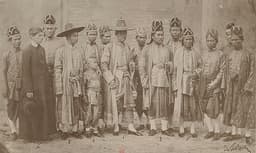
Mongkut
Emperor · Modern
58.0Total
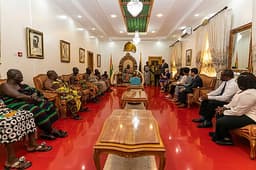
Osei Kwadwo
Emperor · Modern
55.8Total
Basic Information
Born
1804
1735
Died
1868
1777
Era
Modern
Modern
Nationality
Thailand
Ashanti Empire
Occupation
Emperor
Emperor
Civilization
Eastern
Other
Score Comparison
Military (10%)
21.2
45.0
Political (20%)
78.0
59.3
Influence (20%)
56.7
54.9
Legacy (20%)
58.0
45.8
Leadership (15%)
78.0
85.0
Strategy (15%)
38.3
45.0
TOTAL
58.0
55.8
Mongkut — Complete Timeline
1851 AD
Corresponded with Western leaders and scholarsCultural
Mongkut engaged in extensive correspondence with Western leaders, including President James Buchanan and Pope Pius IX, and with missionaries and scholars. He sought to learn about Western science, technology, and governance.
DiplomacyIntellectual ExchangeModernization
Impact: nationalconstructive
Reformed Buddhist monastic educationCultural
As a former monk, Mongkut reformed Buddhist monastic education by emphasizing Pali studies and scriptural accuracy. He founded the Dhammayuttika Nikaya order, which focused on strict adherence to Buddhist teachings.
BuddhismReligious ReformEducation
Impact: nationalconstructive
1855 AD
Hired Western advisors to modernize SiamReform
Mongkut employed Western advisors, including Anna Leonowens, to teach his children and assist in modernizing the court. He also hired European experts to help with military, legal, and administrative reforms.
AdvisorsModernizationEducation
Impact: nationalconstructive
Signed the Bowring Treaty with BritainPolitical Action◆ Major
King Mongkut signed the Bowring Treaty with Britain, opening Siam to free trade and granting extraterritorial rights to British subjects. This treaty ended Siam's isolation and set a precedent for relations with other Western powers.
TreatyTradeWestern Influence
Impact: regional
Osei Kwadwo — Complete Timeline
1760 AD
Reorganization of the Ashanti bureaucracyReform◆ Major
Osei Kwadwo restructured the Ashanti government by creating a more formal bureaucracy with appointed officials, including the Gyaasewahene (treasurer) and other administrative roles. This reduced the influence of hereditary chiefs and improved efficiency.
BureaucracyReformAshanti
Impact: nationalconstructive
1765 AD
Introduction of the 'Osei Kwadwo' system of successionReform◆ Major
Osei Kwadwo implemented a new system for selecting the Asantehene, moving away from strict matrilineal inheritance to allow for the appointment of the most capable candidate from the royal family. This aimed to ensure competent leadership.
Succession ReformAshantiPolitical
Impact: nationalconstructive
1770 AD
Military campaigns against the Akyem and AkwamuWar
Osei Kwadwo led military campaigns to suppress rebellions and expand Ashanti territory, particularly against the Akyem and Akwamu states. These campaigns reinforced Ashanti dominance in the region.
Military CampaignAkyemAkwamu
Impact: regional
Expert Analysis
Origins
King Mongkut (Rama IV) was born in 1804 in Bangkok, Siam, as the son of King Rama II. He spent 27 years as a Buddhist monk before ascending the throne, during which he studied Western science and languages with missionaries. His monastic background shaped his intellectual and reformist outlook. Osei Kwadwo was born around 1730 in the Ashanti Empire (modern-day Ghana). He was a member of the Oyoko clan and rose through the ranks of the Ashanti military and bureaucracy. His early career as a military commander and provincial governor gave him experience in administration and warfare.
Rise to Power
Mongkut became king in 1851 after his half-brother Rama III died. His long monastic period had kept him away from court intrigue, but his reputation for learning and piety made him a consensus candidate. He quickly moved to assert Siam's independence amid growing European colonialism. Osei Kwadwo became Asantehene in 1764 after a succession dispute. He gained power by military prowess and political maneuvering, defeating rivals and consolidating control. His rise was marked by campaigns against rebellious provinces and neighboring states like Akyem and Akwamu.
Leadership & Governance
Mongkut's leadership was characterized by cautious modernization. He signed the Bowring Treaty in 1855 with Britain, opening Siam to free trade while preserving sovereignty through extraterritoriality. He hired Western advisors, including Anna Leonowens (later fictionalized), to modernize the court and education. He reformed Buddhist monastic education by founding the Dhammayuttika Nikaya, emphasizing scriptural accuracy. His political score of 78.0 reflects his adept diplomacy. In contrast, Osei Kwadwo reorganized the Ashanti government by creating a formal bureaucracy with appointed officials like the Gyaasewahene (treasurer). He introduced the 'Osei Kwadwo' succession system, allowing the Asantehene to appoint a successor from eligible royals, reducing civil wars. His leadership score of 85.0 is high, but his political score of 59.3 is lower due to limited external engagement. Mongkut's strategy score of 38.3 indicates a less aggressive foreign policy, while Osei Kwadwo's military score of 45.0 reflects his campaigns to expand territory.
Triumph & Tragedy
Mongkut's greatest triumph was preserving Siam's independence through the Bowring Treaty and diplomatic correspondence with Western leaders like President James Buchanan. He modernized the monarchy and set the stage for his son Chulalongkorn's reforms. His tragedy was that the treaty granted extraterritorial rights, limiting legal sovereignty, and his reforms were slow, leaving Siam vulnerable. Osei Kwadwo's triumph was stabilizing the Ashanti state through bureaucratic reforms and a stable succession system, which reduced internal conflict. His tragedy was that his military campaigns overstretched resources and alienated some provinces, leading to later rebellions. His legacy score of 45.8 is lower than Mongkut's 58.0, as his reforms were less enduring.
Character & Destiny
Mongkut was intellectual, open-minded, and diplomatic. His correspondence with Western scholars and his willingness to learn from outsiders allowed Siam to adapt. However, his cautious nature meant he did not push reforms as far as needed. Osei Kwadwo was pragmatic and authoritarian, focusing on internal organization and military strength. His centralized bureaucracy strengthened the state but also concentrated power, leading to succession disputes after his death. Historical assessments note Mongkut's role in Siam's peaceful modernization, while Osei Kwadwo is seen as a reformer who modernized Ashanti governance but failed to address external threats from European colonialism.
Legacy
Mongkut's legacy is that of a modernizing king who opened Siam to the West without losing independence. The Bowring Treaty set a precedent for later treaties and Siam's unique status as a buffer state. His educational reforms influenced Thai Buddhism and the monarchy's role. Osei Kwadwo's legacy is the bureaucratic and succession reforms that strengthened the Ashanti Empire until its eventual defeat by the British in 1896. His system of appointed officials influenced later governance structures. However, the Ashanti Empire ultimately fell to colonialism, while Siam remained independent. Mongkut's influence score of 56.7 and legacy score of 58.0 are higher than Osei Kwadwo's 54.9 and 45.8, reflecting his greater long-term impact.
Conclusion
While both rulers were reformers, Mongkut had a greater impact due to his successful navigation of colonialism, preserving Siam's independence and laying the foundation for modernization. Osei Kwadwo's internal reforms were significant but could not prevent the Ashanti Empire's eventual subjugation. Mongkut's total score of 58.0 exceeds Osei Kwadwo's 55.8, and his political and legacy scores are notably higher. Therefore, Mongkut is the more impactful figure in terms of global historical influence.
Rankings
🥇
MongkutLeader
Mil: 21.2Pol: 78.0Inf: 56.7
58.0
🥈
Osei Kwadwo
Mil: 45.0Pol: 59.3Inf: 54.9
55.8
+2.2 behind
How This Comparison Works
Algorithm
Each figure is scored on 6 dimensions (0—100 scale) based on structured historical data: Military (10%), Political (20%), Influence (20%), Legacy (20%), Leadership (15%), Strategy (15%). The weighted total produces the final ranking.
Data Sources
Scores are computed from structured sub-indicators in the database. Scale factors adjust for era (Ancient ×0.85, Modern ×1.0) and civilization size (Eastern ×1.05, Other ×0.80) to account for differences in population and military scale.
Maximum 3 Figures
Comparisons are limited to 2—3 figures to ensure readability and statistical meaningfulness.
Error Margins
±5 points per dimension — Sub-scores are derived from historical records with inherent uncertainty. Two figures within 5 points on a dimension should be considered roughly equivalent in that area.
Total Score Accuracy
±3 points overall — The weighted combination of 6 dimensions produces a total score with approximately ±3 points of uncertainty. Differences of less than 3 points are not statistically significant— the figures are effectively tied.
Known Limitations
- Historical records are incomplete and uneven across civilizations
- Figures from oral-tradition societies may be underrepresented
- Occupation labels can misclassify multi-role figures
- Scores measure capability and impact, not moral character
- Quantitative scoring is a comparison tool, not absolute truth
Capability Radar
Military (10%) — Battles & Warfare
Battles
10
20
Win Rate
10
25
Expansion
10
30
Political (20%) — Governance & Reform
Reform
75
75
Diplomacy
85
55
Economy
70
50
Influence (20%) — Cultural & Global Reach
Cultural
55
40
Global
60
30
Legacy (20%) — Historical Impact
Historical
65
45
Longevity
60
40
Leadership (15%) — Power & Stability
Tenure
65
60
Stability
75
60
Strategy (15%) — Tactics & Innovation
Strategy
20
35
Tactics
15
30
Reform
30
40
Similar Comparisons
Comments & Discussion
No comments yet. Be the first to share your thoughts!