Loading...
Boris Johnson vs Enrico Berlinguer
Boris Johnson leads by 4.3 pts · 2 figures compared
…
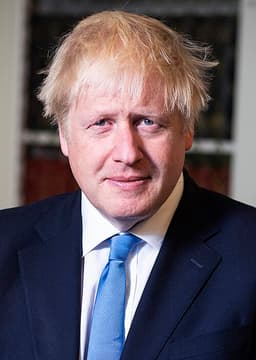
Boris Johnson
Politician · Modern
51.6Total

Enrico Berlinguer
Politician · Modern
47.3Total
Basic Information
Born
1964
1922
Died
—
—
Era
Modern
Modern
Nationality
United Kingdom
Italy
Occupation
Politician
Politician
Civilization
Western
Western
Score Comparison
Military (10%)
49.2
17.9
Political (20%)
43.7
45.0
Influence (20%)
55.0
58.3
Legacy (20%)
49.2
56.0
Leadership (15%)
65.7
40.0
Strategy (15%)
41.9
42.3
TOTAL
51.6
47.3
Boris Johnson — Complete Timeline
2008 AD
Elected Mayor of LondonPolitical Action◆ Major
Johnson was elected as the Conservative Mayor of London, defeating incumbent Ken Livingstone. He served two terms until 2016, overseeing the 2012 Olympic Games and introducing the New Routemaster bus.
London MayoraltyConservative Party
Impact: regional
2016 AD
Appointed Foreign SecretaryPolitical Action◆ Major
Prime Minister Theresa May appointed Johnson as Foreign Secretary, a role he held until July 2018. His tenure was marked by controversial statements and the resignation of his aide over a diplomatic incident with Iran.
CabinetForeign Office
Impact: national
2019 AD
Elected Prime MinisterPolitical Action
Johnson won the Conservative Party leadership election, succeeding Theresa May as Prime Minister. He promised to deliver Brexit by October 31, 2019, and formed a government with a mandate to leave the EU.
Prime MinisterBrexit
Impact: national
2020 AD
Delivered BrexitPolitical Action
Johnson oversaw the UK's formal departure from the European Union on January 31, 2020, following the ratification of the Withdrawal Agreement. This ended 47 years of EU membership and initiated a transition period.
BrexitEUReferendum
Impact: global
COVID-19 Pandemic ResponsePolitical Action◆ Major
Johnson led the UK government's response to the COVID-19 pandemic, including national lockdowns and a vaccination program. He was hospitalized with COVID-19 in April 2020. The response faced criticism over timing and deaths.
COVID-19Public Health
Impact: national
2022 AD
Resigned as Prime MinisterPolitical Action◆ Major
Johnson announced his resignation as Prime Minister following a series of ministerial resignations and the Partygate scandal. He remained in office until a successor was chosen, ending his tenure in September 2022.
ResignationScandal
Impact: national
Enrico Berlinguer — Complete Timeline
1972 AD
Secretary of the Italian Communist PartyPolitical Action◆ Major
Berlinguer was elected Secretary of the Italian Communist Party (PCI) in 1972. He led the party through a period of significant growth and ideological evolution, advocating for Eurocommunism and a break from Soviet orthodoxy.
Italian CommunismParty LeadershipEurocommunism
Impact: nationalconstructive
1973 AD
Historic CompromisePolitical Action◆ Major
Berlinguer proposed the Historic Compromise, a strategy of cooperation between the PCI and the Christian Democracy party to address Italy's economic and social crises. This policy aimed to integrate the PCI into the democratic system but faced opposition from both the left and the right.
Italian PoliticsCoalition StrategyDemocratic Integration
Impact: nationalconstructive
1975 AD
Break with the Soviet UnionPolitical Action◆ Major
Berlinguer publicly criticized the Soviet Union for its human rights violations and lack of democracy, leading to a formal break between the PCI and the Communist Party of the Soviet Union. This move solidified the PCI's independent Eurocommunist stance.
EurocommunismSoviet RelationsIdeological Split
Impact: globalconstructive
1976 AD
PCI electoral peakPolitical Action◆ Major
Under Berlinguer's leadership, the PCI achieved its highest ever electoral result in the 1976 general election, winning 34.4% of the vote. This made the PCI the second-largest party in Italy and a major force in national politics.
Italian ElectionsCommunist PartyElectoral Success
Impact: nationalconstructive
1978 AD
Aldo Moro kidnappingPolitical Action◆ Major
During the kidnapping of Aldo Moro by the Red Brigades, Berlinguer refused to negotiate with the terrorists, maintaining a hard line against political violence. This stance contributed to the collapse of the Historic Compromise and strained relations with the Christian Democracy.
TerrorismPolitical CrisisMoro Affair
Impact: nationaltragic
1984 AD
DeathOther◆ Major
Berlinguer died suddenly on June 11, 1984, after collapsing during a speech in Padua. His death triggered an unprecedented outpouring of public grief, with millions attending his funeral, marking the end of an era for the Italian Communist Party.
Italian PoliticsCommunist PartyDeath
Impact: nationaltragic
Expert Analysis
Origins
Boris Johnson (born 1964) was raised in a privileged Anglo-American family, educated at Eton and Oxford, where he studied Classics. His father was a writer and politician, and Johnson early displayed ambition and a talent for rhetoric. Enrico Berlinguer (born 1922) came from a Sardinian noble family, studied law at the University of Sassari, and joined the Italian Communist Party (PCI) in 1943. His father was a socialist deputy, and Berlinguer grew up under Fascism, shaping his commitment to democratic socialism.
Rise to Power
Johnson rose through journalism and Conservative Party politics. He was elected MP in 2001, served as Mayor of London (2008–2016), and became Foreign Secretary in 2016. His pivotal moment came in 2019 when he won the Conservative leadership election, succeeding Theresa May, and promised to deliver Brexit by October 31. Berlinguer rose within the PCI, becoming secretary in 1972. He proposed the Historic Compromise in 1973, aiming to bring the PCI into government with the Christian Democracy, and led the party to its peak vote share of 34.4% in 1976. Both figures capitalized on crises: Johnson on Brexit deadlock, Berlinguer on Italy's post-war instability.
Leadership & Governance
Johnson's leadership was populist and confrontational. He centralized power in No. 10, bypassed cabinet, and used aggressive media tactics. His governance focused on delivering Brexit, passing the Withdrawal Agreement, and managing the COVID-19 pandemic, which included lockdowns and a vaccine rollout. However, his style led to internal party rebellions and scandals (e.g., Partygate). Berlinguer led with ideological discipline and democratic centralism, but he advocated for Eurocommunism—a break from Soviet orthodoxy. He refused to negotiate with the Red Brigades during Aldo Moro's kidnapping, showing a hardline stance against terrorism. His governance emphasized social reforms and alliances with progressive forces, but he never held executive office.
Triumph & Tragedy
Johnson's greatest triumph was delivering Brexit on January 31, 2020, fulfilling a major political promise. His COVID-19 vaccination program was also successful. However, his tragedy includes the mishandling of the pandemic's early stages (he was hospitalized with COVID-19) and the Partygate scandal, which damaged his reputation. Berlinguer's triumph was the PCI's electoral success and his break with the Soviet Union, which gave the party moral authority. His tragedy was the failure of the Historic Compromise: the PCI never entered government, and Aldo Moro's murder undermined his strategy of dialogue.
Character & Destiny
Johnson was charismatic, opportunistic, and risk-tolerant. His character drove him to take bold gambles, like proroguing Parliament in 2019, which the Supreme Court ruled unlawful. This recklessness eventually led to his downfall. Berlinguer was principled, cautious, and intellectual. His moral stance against the USSR and terrorism earned respect but limited his political flexibility. His destiny was to lead a party that remained in opposition, never achieving power.
Legacy
Johnson's legacy is Brexit and its ongoing effects on UK politics and economy. He redefined the Conservative Party and left a polarized electorate. His total score of 51.6 reflects moderate overall impact, with high leadership (65.7) but low strategy (41.9). Berlinguer's legacy is Eurocommunism and the modernization of communist parties in Europe. He influenced later leftist movements, and his PCI eventually evolved into the Democratic Party. His total score of 47.3 is lower, but his political influence (58.3) and legacy (56.0) are comparable to Johnson's.
Conclusion
Boris Johnson had greater immediate impact on his country's political trajectory, delivering a historic constitutional change. However, Berlinguer's long-term influence on European leftist thought is more enduring. Taking a stance: Johnson's impact was more tangible but divisive; Berlinguer's was more principled but limited. On a net basis, Johnson's legacy of Brexit outweighs Berlinguer's ideological contributions. Johnson scores 51.6 to Berlinguer's 47.3, reflecting higher overall impact, but Berlinguer's moral authority provides a counterpoint.
Rankings
🥇
Boris JohnsonLeader
Mil: 49.2Pol: 43.7Inf: 55.0
51.6
🥈
Enrico Berlinguer
Mil: 17.9Pol: 45.0Inf: 58.3
47.3
+4.3 behind
How This Comparison Works
Algorithm
Each figure is scored on 6 dimensions (0—100 scale) based on structured historical data: Military (10%), Political (20%), Influence (20%), Legacy (20%), Leadership (15%), Strategy (15%). The weighted total produces the final ranking.
Data Sources
Scores are computed from structured sub-indicators in the database. Scale factors adjust for era (Ancient ×0.85, Modern ×1.0) and civilization size (Eastern ×1.05, Other ×0.80) to account for differences in population and military scale.
Maximum 3 Figures
Comparisons are limited to 2—3 figures to ensure readability and statistical meaningfulness.
Error Margins
±5 points per dimension — Sub-scores are derived from historical records with inherent uncertainty. Two figures within 5 points on a dimension should be considered roughly equivalent in that area.
Total Score Accuracy
±3 points overall — The weighted combination of 6 dimensions produces a total score with approximately ±3 points of uncertainty. Differences of less than 3 points are not statistically significant— the figures are effectively tied.
Known Limitations
- Historical records are incomplete and uneven across civilizations
- Figures from oral-tradition societies may be underrepresented
- Occupation labels can misclassify multi-role figures
- Scores measure capability and impact, not moral character
- Quantitative scoring is a comparison tool, not absolute truth
Capability Radar
Military (10%) — Battles & Warfare
Battles
31
22
Win Rate
30
27
Expansion
35
29
Political (20%) — Governance & Reform
Reform
40
60
Diplomacy
35
65
Economy
30
55
Influence (20%) — Cultural & Global Reach
Cultural
50
55
Global
55
55
Legacy (20%) — Historical Impact
Historical
55
60
Longevity
30
50
Leadership (15%) — Power & Stability
Tenure
45
45
Stability
20
50
Strategy (15%) — Tactics & Innovation
Strategy
39
30
Tactics
41
32
Reform
41
35
Similar Comparisons
Comments & Discussion
No comments yet. Be the first to share your thoughts!