Loading...
Boris Johnson vs Okram Ibobi Singh
Boris Johnson leads by 7.5 pts · 2 figures compared
…
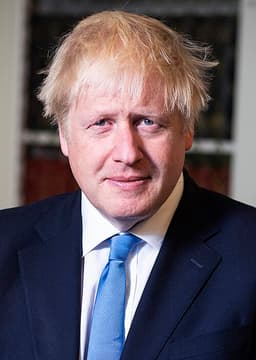
Boris Johnson
Politician · Modern
51.6Total

Okram Ibobi Singh
Politician · Modern
44.1Total
Basic Information
Born
1964
1948
Died
—
—
Era
Modern
Modern
Nationality
United Kingdom
India
Occupation
Politician
Politician
Civilization
Western
Indian
Score Comparison
Military (10%)
49.2
21.1
Political (20%)
43.7
39.4
Influence (20%)
55.0
47.9
Legacy (20%)
49.2
39.2
Leadership (15%)
65.7
65.7
Strategy (15%)
41.9
44.3
TOTAL
51.6
44.1
Boris Johnson — Complete Timeline
2008 AD
Elected Mayor of LondonPolitical Action◆ Major
Johnson was elected as the Conservative Mayor of London, defeating incumbent Ken Livingstone. He served two terms until 2016, overseeing the 2012 Olympic Games and introducing the New Routemaster bus.
London MayoraltyConservative Party
Impact: regional
2016 AD
Appointed Foreign SecretaryPolitical Action◆ Major
Prime Minister Theresa May appointed Johnson as Foreign Secretary, a role he held until July 2018. His tenure was marked by controversial statements and the resignation of his aide over a diplomatic incident with Iran.
CabinetForeign Office
Impact: national
2019 AD
Elected Prime MinisterPolitical Action
Johnson won the Conservative Party leadership election, succeeding Theresa May as Prime Minister. He promised to deliver Brexit by October 31, 2019, and formed a government with a mandate to leave the EU.
Prime MinisterBrexit
Impact: national
2020 AD
Delivered BrexitPolitical Action
Johnson oversaw the UK's formal departure from the European Union on January 31, 2020, following the ratification of the Withdrawal Agreement. This ended 47 years of EU membership and initiated a transition period.
BrexitEUReferendum
Impact: global
COVID-19 Pandemic ResponsePolitical Action◆ Major
Johnson led the UK government's response to the COVID-19 pandemic, including national lockdowns and a vaccination program. He was hospitalized with COVID-19 in April 2020. The response faced criticism over timing and deaths.
COVID-19Public Health
Impact: national
2022 AD
Resigned as Prime MinisterPolitical Action◆ Major
Johnson announced his resignation as Prime Minister following a series of ministerial resignations and the Partygate scandal. He remained in office until a successor was chosen, ending his tenure in September 2022.
ResignationScandal
Impact: national
Okram Ibobi Singh — Complete Timeline
2002 AD
Became Chief Minister of ManipurPolitical Action
Okram Ibobi Singh became Chief Minister of Manipur for the first time, leading a Congress-led government. He would go on to serve three consecutive terms, making him the longest-serving chief minister of the state.
Chief MinisterManipurCongress
Impact: regionalconstructive
2004 AD
Controversy over AFSPA withdrawalPolitical Action
Singh's government recommended the withdrawal of the Armed Forces Special Powers Act (AFSPA) from parts of Manipur, but the central government did not act on it. The issue remained contentious throughout his tenure.
AFSPAManipurSecurity
Impact: regional
2012 AD
Won 2012 Manipur Assembly electionPolitical Action◆ Major
Singh led the Congress to victory in the Manipur assembly election, winning 42 of 60 seats. This was his third consecutive term as chief minister.
ElectionManipurCongress
Impact: regionalconstructive
2017 AD
Lost 2017 Manipur Assembly electionPolitical Action◆ Major
Singh's Congress government was defeated by the BJP-led alliance, winning only 28 seats. He resigned as chief minister, ending his 15-year tenure.
ElectionManipurDefeat
Impact: regionaltragic
Expert Analysis
Origins
**Boris Johnson** was born on June 19, 1964, in New York City to a wealthy British family. His father, Stanley Johnson, was a writer and politician, and his mother, Charlotte Fawcett, was an artist. Johnson attended Eton College and then Balliol College, Oxford, where he studied Classics. His early career included journalism at *The Times* and *The Daily Telegraph*, where he gained a reputation for colorful reporting and Euroscepticism.
**Okram Ibobi Singh** was born on March 19, 1951, in a small village in Manipur, India, into a farming family. He earned a Bachelor of Arts degree from D.M. College of Arts, Imphal, and later studied law. Singh entered politics through student activism and joined the Indian National Congress. His early years were shaped by the complex ethnic dynamics of Manipur, a state with a history of insurgency and demands for greater autonomy.
Rise to Power
Johnson entered Parliament in 2001 as MP for Henley, quickly becoming a prominent figure due to his charisma and media presence. He was elected Mayor of London in 2008, defeating Ken Livingstone, and served two terms, overseeing the 2012 Olympics. His rise to national leadership culminated in winning the Conservative Party leadership in July 2019, succeeding Theresa May, with a mandate to deliver Brexit by October 31, 2019.
Ibobi Singh rose through the ranks of the Congress party in Manipur. He first became Chief Minister in 2002 after a period of political instability. His leadership consolidated power through coalition-building and patronage networks. He won re-election in 2007 and 2012, with his party securing 42 out of 60 seats in the 2012 election, marking his peak political strength.
Leadership & Governance
Johnson's leadership style was populist and confrontational. As Prime Minister, he prioritized Brexit, culminating in the UK's departure from the EU on January 31, 2020. His governance was marked by a centralization of power within Downing Street, often bypassing traditional cabinet processes. His handling of the COVID-19 pandemic drew criticism for delayed lockdowns, yet the vaccination rollout was a success. Johnson's political score is 43.7, reflecting his polarizing impact.
Ibobi Singh governed Manipur with a focus on stability and development, but his tenure was marred by allegations of corruption and human rights abuses. He maintained a strong grip on the state's political machinery, using a mix of welfare programs and coercion. His leadership score is 65.7, tied with Johnson, but his military score is low (21.1) due to Manipur's internal conflicts. He advocated for the withdrawal of the Armed Forces Special Powers Act (AFSPA) from parts of Manipur, but the central government did not fully comply.
Triumph & Tragedy
Johnson's greatest triumph was delivering Brexit, a promise that had eluded his predecessor. He also secured a landslide election victory in December 2019, winning 80 seats. His failures include the handling of the COVID-19 pandemic, which resulted in one of the highest death tolls in Europe. His legacy is also tainted by scandals over partying during lockdowns (Partygate) and his resignation in July 2022 amid a cabinet revolt.
Ibobi Singh's triumph was his unprecedented three consecutive terms as Chief Minister, providing rare political stability in a volatile region. He oversaw infrastructure projects and improved education indicators. His tragedy was the erosion of democratic institutions under his watch, with reports of extrajudicial killings and suppression of dissent. His defeat in 2017 to the BJP marked the end of an era, but his legacy is contested, with a legacy score of 39.2.
Character & Destiny
Johnson was characterized by ambition, intelligence, and a willingness to break norms. His personal life and gaffes often overshadowed his policy achievements. His destiny was shaped by the Brexit crisis, which he exploited to become Prime Minister. However, his lack of strategic depth (strategy score 41.9) ultimately led to his downfall.
Ibobi Singh was a shrewd political operator, known for his patience and ability to navigate Manipur's complex ethnic landscape. His authoritarian tendencies, however, alienated many. His destiny was tied to the Congress party's decline in the face of a resurgent BJP, which capitalized on anti-incumbency and corruption allegations.
Legacy
Johnson's legacy is indelibly linked to Brexit, which has reshaped British politics and its relationship with Europe. His influence score is 55.0, reflecting his impact on global perceptions of the UK. However, his long-term legacy is uncertain, with many historians viewing his tenure as chaotic and divisive.
Ibobi Singh's legacy is primarily regional. He is remembered as a dominant figure in Manipur politics, but his record on human rights and governance remains controversial. His influence score is 47.9, indicating limited impact beyond India. The AFSPA controversy continues to be a flashpoint in Manipur, with his government's recommendation for its partial withdrawal a notable but incomplete action.
Conclusion
Boris Johnson scored 51.6 overall, while Okram Ibobi Singh scored 44.1, a gap of 7.5 points. Johnson's impact on the global stage, through Brexit and his role as UK Prime Minister, surpasses Singh's regional influence. Despite his flaws, Johnson reshaped British politics and international relations, whereas Singh's tenure, while significant for Manipur, did not fundamentally alter India's trajectory. Therefore, Boris Johnson had a greater historical impact.
Rankings
🥇
Boris JohnsonLeader
Mil: 49.2Pol: 43.7Inf: 55.0
51.6
🥈
Okram Ibobi Singh
Mil: 21.1Pol: 39.4Inf: 47.9
44.1
+7.5 behind
How This Comparison Works
Algorithm
Each figure is scored on 6 dimensions (0—100 scale) based on structured historical data: Military (10%), Political (20%), Influence (20%), Legacy (20%), Leadership (15%), Strategy (15%). The weighted total produces the final ranking.
Data Sources
Scores are computed from structured sub-indicators in the database. Scale factors adjust for era (Ancient ×0.85, Modern ×1.0) and civilization size (Eastern ×1.05, Other ×0.80) to account for differences in population and military scale.
Maximum 3 Figures
Comparisons are limited to 2—3 figures to ensure readability and statistical meaningfulness.
Error Margins
±5 points per dimension — Sub-scores are derived from historical records with inherent uncertainty. Two figures within 5 points on a dimension should be considered roughly equivalent in that area.
Total Score Accuracy
±3 points overall — The weighted combination of 6 dimensions produces a total score with approximately ±3 points of uncertainty. Differences of less than 3 points are not statistically significant— the figures are effectively tied.
Known Limitations
- Historical records are incomplete and uneven across civilizations
- Figures from oral-tradition societies may be underrepresented
- Occupation labels can misclassify multi-role figures
- Scores measure capability and impact, not moral character
- Quantitative scoring is a comparison tool, not absolute truth
Capability Radar
Military (10%) — Battles & Warfare
Battles
31
22
Win Rate
30
22
Expansion
35
31
Political (20%) — Governance & Reform
Reform
40
30
Diplomacy
35
35
Economy
30
25
Influence (20%) — Cultural & Global Reach
Cultural
50
15
Global
55
10
Legacy (20%) — Historical Impact
Historical
55
20
Longevity
30
15
Leadership (15%) — Power & Stability
Tenure
45
45
Stability
20
20
Strategy (15%) — Tactics & Innovation
Strategy
39
29
Tactics
41
35
Reform
41
36
Similar Comparisons
Comments & Discussion
No comments yet. Be the first to share your thoughts!