Loading...
Boris Trajkovski vs Julius Caesar
Julius Caesar leads by 32.8 pts · 2 figures compared
…
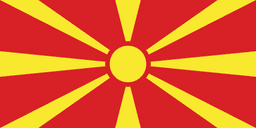
Boris Trajkovski
Politician · Modern
50.0Total

Julius Caesar
General · Ancient
82.8Total
Basic Information
Born
1956
-100
Died
—
-44
Era
Modern
Ancient
Nationality
North Macedonia
Roman Republic
Occupation
Politician
General
Civilization
Western
Western
Score Comparison
Military (10%)
48.4
88.0
Political (20%)
61.3
78.0
Influence (20%)
49.4
85.0
Legacy (20%)
39.2
82.0
Leadership (15%)
64.0
80.0
Strategy (15%)
42.5
85.0
TOTAL
50.0
82.8
Boris Trajkovski — Complete Timeline
1999 AD
Election as presidentPolitical Action◆ Major
Trajkovski was elected as the second president of independent Macedonia in November 1999, succeeding Gligorov. His election marked a shift in leadership during a period of ethnic tensions and economic challenges.
PresidencyElection
Impact: nationalconstructive
2001 AD
Ohrid Framework AgreementPolitical Action
Trajkovski played a key role in negotiating and signing the Ohrid Framework Agreement in August 2001, which ended the 2001 insurgency. The agreement granted greater rights to ethnic Albanians, including official language status and decentralization.
Peace agreementEthnic conflictReform
Impact: nationalconstructive
2004 AD
Death in plane crashOther◆ Major
Trajkovski died on February 26, 2004, when his plane crashed near Mostar, Bosnia and Herzegovina, while en route to an economic conference. The crash killed all nine people on board, including his advisors and crew.
DeathPlane crashTragedy
Impact: nationaltragic
Julius Caesar — Complete Timeline
58 BC
Gallic WarsWar◆ Major
Caesar, as proconsul of Gaul, launched a series of campaigns that conquered all of Gaul (modern France, Belgium, and parts of Switzerland). He fought numerous battles, including against the Helvetii, the Belgae, and the Gallic chieftain Vercingetorix. The wars brought immense wealth and a loyal army to Caesar.
Gallic WarsConquestRoman Expansion
Impact: regional
49 BC
Crossing the RubiconPolitical Action◆ Major
Caesar led Legio XIII across the Rubicon River into Italy, defying the Roman Senate's order to disband his army. This act triggered a civil war against Pompey and the Optimates, ultimately leading to Caesar's dictatorship and the end of the Roman Republic.
Roman Civil WarEnd of RepublicPower Struggle
Impact: global
48 BC
Battle of PharsalusWar◆ Major
Caesar's outnumbered army defeated the larger forces of Pompey the Great at Pharsalus in Greece. Caesar's tactical use of a reserve line to counter Pompey's cavalry charge proved decisive. Pompey fled to Egypt, where he was assassinated, leaving Caesar as the undisputed master of the Roman world.
Roman Civil WarBattleDecisive Victory
Impact: regional
44 BC
Appointment as Dictator for LifePolitical Action◆ Major
The Roman Senate appointed Caesar dictator perpetuo (dictator for life), granting him unprecedented personal power. This move concentrated military, legislative, and judicial authority in one person, effectively ending the Roman Republic's traditional system of checks and balances and alarming many senators.
DictatorshipEnd of RepublicPower Consolidation
Impact: regionaldestructive
Assassination on the Ides of MarchPolitical Action◆ Major
A group of Roman senators, led by Marcus Junius Brutus and Gaius Cassius Longinus, stabbed Caesar to death at a meeting of the Senate in the Theatre of Pompey. The assassination was intended to restore the Republic, but instead triggered another civil war that led to the rise of the Roman Empire.
AssassinationRoman PoliticsEnd of Republic
Impact: globaldestructive
Expert Analysis
boris-trajkovski-vs-julius-caesar
# The General and the Peacemaker
On a foggy morning in February 2004, a small plane carrying a Balkan president crashed into a mountainside near Mostar, Bosnia, killing everyone aboard. Boris Trajkovski, a former Methodist lay preacher turned statesman, was en route to an economic conference. He was forty-seven years old. Half a continent and two millennia away, on the Ides of March in 44 BCE, another leader fell—Julius Caesar, stabbed twenty-three times by senators in the Portico of Pompey. Both men died in the service of their ambitions, but their paths to power, their leadership, and their endings could not have been more different. One sought to conquer the world; the other to hold his fragile nation together. Their stories reveal how history shapes its protagonists as much as the protagonists shape history.
Origins
Julius Caesar was born into the patrician Julian clan, a family with ancient lineage but dwindling political influence in the late Roman Republic. His uncle by marriage, Gaius Marius, had been a populist general who reformed the army and clashed with the Senate. Caesar grew up in a Rome riven by class conflict, civil war, and the collapse of republican norms. He was educated in rhetoric, philosophy, and military arts—the tools of a Roman aristocrat destined for power. His childhood was marked by the terror of Sulla’s proscriptions, which forced him into hiding and taught him early that survival in politics meant audacity, cunning, and a willingness to risk everything.
Boris Trajkovski, born in 1956 in the small town of Monospitovo in what was then Yugoslavia, came from a family of farmers. His father was a priest in the Methodist Church, a minority faith in a predominantly Orthodox nation. Trajkovski studied law in Skopje and later theology, working as a construction manager before entering politics. He was a product of the late Cold War, a time when nationalism simmered beneath the surface of Tito’s federation. When Yugoslavia collapsed in the 1990s, Macedonia emerged as an independent state, poor, ethnically divided, and haunted by the threat of war with its neighbors. Trajkovski was not born to rule; he rose from the margins, a man of faith in a secular age, a peacemaker in a land of blood.
Rise to Power
Caesar’s ascent was a masterpiece of calculated risk. He served as military tribune, quaestor in Spain, and aedile in Rome, spending enormous sums on games and infrastructure to win popular favor. His appointment as governor of Gaul in 58 BCE gave him the command he needed. Over nine years, he conquered the entire region, earning wealth, a loyal army, and a reputation as one of history’s greatest generals. When the Senate ordered him to disband his legions and return to Rome as a private citizen, he refused. Crossing the Rubicon River in 49 BCE with a single legion, he plunged the Republic into civil war. Within four years, he was dictator for life.
Trajkovski’s path was quieter but no less consequential. He joined the Internal Macedonian Revolutionary Organization–Democratic Party for Macedonian National Unity (VMRO-DPMNE) in the early 1990s, a nationalist party that had emerged from the anti-communist opposition. He was not a firebrand; he was a moderate, a bridge-builder. In 1999, after the death of President Kiro Gligorov’s chosen successor, Trajkovski was elected president in a close and contentious vote. His political score of 68.3 reflects a man who navigated a fractured parliament and a skeptical public. Unlike Caesar, he did not seize power—he inherited a crisis.
Leadership & Governance
Caesar governed as a revolutionary. He reformed the calendar, granted citizenship to provincials, initiated public works, and centralized authority in his own hands. His military genius was undeniable—his conquest of Gaul (58–50 BCE) and his victories at Pharsalus (48 BCE) and Thapsus (46 BCE) demonstrated tactical brilliance and ruthless efficiency. But his political wisdom was flawed. He pardoned his enemies, only to be betrayed by them. He accumulated honors—dictator perpetuo, consul for ten years, father of the fatherland—without building lasting institutions. His strategy score of 88.0 matches his military prowess, but his political score of 78.0 reveals a leader who could win wars but not peace.
Trajkovski’s leadership was the opposite. He had no military background (his military score is 37.5) and commanded no legions. His power came from persuasion, not force. In 2001, when ethnic Albanian insurgents launched an insurgency that threatened to drag Macedonia into a full-scale war, Trajkovski refused to declare a state of emergency or call for a military crackdown. Instead, he mediated, traveling between Skopje and rebel strongholds, meeting with NATO and EU envoys. The result was the Ohrid Framework Agreement of August 2001, a power-sharing deal that granted greater rights to the Albanian minority while preserving Macedonia’s territorial integrity. His leadership score of 77.1 reflects a man who held a nation together through sheer will and diplomacy.
Triumph & Tragedy
Caesar’s greatest triumph was Gaul—a conquest that brought glory, wealth, and the adoration of his soldiers. His greatest tragedy was his assassination, a moment that has echoed through literature and history. “Et tu, Brute?” whether spoken or imagined, captures the ultimate betrayal. He died at the foot of a statue of Pompey, his former rival, in the Senate chamber he had sought to dominate. His reforms were undone by his death, and Rome descended into another round of civil war before Augustus finally established the empire.
Trajkovski’s triumph was the Ohrid Agreement, a fragile peace that ended the 2001 insurgency and prevented a Balkan war that could have drawn in Kosovo, Albania, and Greece. His tragedy was his sudden death in 2004, at a moment when Macedonia was still struggling to implement the agreement and build a multiethnic state. He died not by the dagger but by the crash, a victim of bad weather and human error. His legacy score of 53.6 is modest, but it understates his achievement: he left a country that was still intact, still at peace, still a democracy.
Character & Destiny
Caesar was driven by an insatiable ambition. He believed in his own destiny, cultivated an image of divine favor, and took risks that would have destroyed lesser men. His personality—arrogant, generous, calculating, and charismatic—shaped every decision. He crossed the Rubicon because he could not accept a diminished future. He pardoned Brutus because he believed loyalty could be commanded. He was wrong. His character led to his rise and his fall.
Trajkovski was modest, devout, and pragmatic. He once said, “I am not a hero. I am just a man who tries to do his duty.” He did not seek glory; he sought stability. His faith gave him patience, his background gave him humility, and his position gave him responsibility. Where Caesar gambled, Trajkovski built consensus. Where Caesar divided, Trajkovski unified. Their characters reflected their eras: one was forged in the furnace of empire, the other in the quiet struggle of a small nation to survive.
Legacy
Caesar’s legacy is monumental. The name “Caesar” became synonymous with imperial rule—Kaiser, Tsar, Qaysar. His writings, especially the *Commentaries on the Gallic War*, remain classics of military literature. He transformed the Roman world and set the stage for two millennia of Western history. His total score of 83.3 places him among history’s giants.
Trajkovski’s legacy is quieter but no less real. Macedonia, now North Macedonia, remains a sovereign state, its peace preserved. The Ohrid Framework Agreement, though imperfect, is still the foundation of its multiethnic democracy. He is remembered as a man who chose peace when war was easier, who trusted diplomacy when others reached for guns. In a region where nationalist leaders often left bloodshed, he left a treaty.
Conclusion
Standing at the edge of the Mostar valley, where the plane crashed and where Caesar’s ghost never walks, one is struck by the contrast. Caesar conquered Gaul and fell in Rome; Trajkovski conquered nothing and died in a foreign sky. One changed the world; the other saved a piece of it. History remembers the conqueror, but perhaps it should also remember the peacemaker. Both were men of their time, but they remind us that greatness comes in many forms—in the sword and in the handshake, in the triumph and in the treaty, in the fall of an emperor and the crash of a plane.
Rankings
🥇
Julius CaesarLeader
Mil: 88.0Pol: 78.0Inf: 85.0
82.8
🥈
Boris Trajkovski
Mil: 48.4Pol: 61.3Inf: 49.4
50.0
+32.8 behind
How This Comparison Works
Algorithm
Each figure is scored on 6 dimensions (0—100 scale) based on structured historical data: Military (10%), Political (20%), Influence (20%), Legacy (20%), Leadership (15%), Strategy (15%). The weighted total produces the final ranking.
Data Sources
Scores are computed from structured sub-indicators in the database. Scale factors adjust for era (Ancient ×0.85, Modern ×1.0) and civilization size (Eastern ×1.05, Other ×0.80) to account for differences in population and military scale.
Maximum 3 Figures
Comparisons are limited to 2—3 figures to ensure readability and statistical meaningfulness.
Error Margins
±5 points per dimension — Sub-scores are derived from historical records with inherent uncertainty. Two figures within 5 points on a dimension should be considered roughly equivalent in that area.
Total Score Accuracy
±3 points overall — The weighted combination of 6 dimensions produces a total score with approximately ±3 points of uncertainty. Differences of less than 3 points are not statistically significant— the figures are effectively tied.
Known Limitations
- Historical records are incomplete and uneven across civilizations
- Figures from oral-tradition societies may be underrepresented
- Occupation labels can misclassify multi-role figures
- Scores measure capability and impact, not moral character
- Quantitative scoring is a comparison tool, not absolute truth
Capability Radar
Military (10%) — Battles & Warfare
Battles
31
95
Win Rate
30
92
Expansion
37
97
Political (20%) — Governance & Reform
Reform
40
90
Diplomacy
55
85
Economy
35
82
Influence (20%) — Cultural & Global Reach
Cultural
20
88
Global
15
94
Legacy (20%) — Historical Impact
Historical
25
95
Longevity
10
96
Leadership (15%) — Power & Stability
Tenure
30
75
Stability
45
60
Strategy (15%) — Tactics & Innovation
Strategy
37
94
Tactics
42
96
Reform
44
88
Similar Comparisons
Comments & Discussion
No comments yet. Be the first to share your thoughts!