Loading...
This comparison has not been analyzed yet.
One-time AI generation (~1 minute). Scores and timeline are already available below.
Branko Crvenkovski vs Patrice Talon
Branko Crvenkovski leads by 5.2 pts · 2 figures compared
…
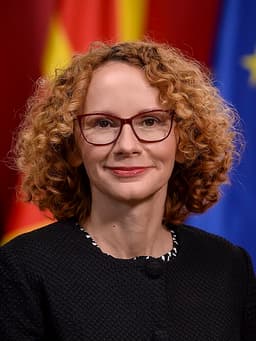
Branko Crvenkovski
Politician · Modern
53.0Total

Patrice Talon
Politician · Modern
47.8Total
Basic Information
Born
1962
1958
Died
—
—
Era
Modern
Modern
Nationality
North Macedonia
Benin
Occupation
Politician
Politician
Civilization
Western
Other
Score Comparison
Military (10%)
49.3
50.0
Political (20%)
68.0
68.0
Influence (20%)
49.4
49.4
Legacy (20%)
41.7
39.2
Leadership (15%)
72.0
40.0
Strategy (15%)
43.0
44.4
TOTAL
53.0
47.8
Branko Crvenkovski — Complete Timeline
1992 AD
Elected Prime Minister of MacedoniaPolitical Action◆ Major
Crvenkovski became the first post-communist Prime Minister of independent Macedonia, leading the country through its early years of independence, including the 2001 insurgency and economic transition.
IndependenceGovernmentMacedonia
Impact: nationalconstructive
2001 AD
Signed the Ohrid Framework AgreementPolitical Action
As Prime Minister, Crvenkovski signed the Ohrid Framework Agreement, ending the 2001 insurgency by ethnic Albanian rebels. The agreement granted greater rights to Albanians, including language and decentralization.
Peace AgreementEthnic ConflictOhrid
Impact: nationalconstructive
2004 AD
Elected President of MacedoniaPolitical Action◆ Major
Crvenkovski was elected President, serving until 2009. His presidency focused on Euro-Atlantic integration, but was marked by political instability and the unresolved name dispute with Greece.
PresidencyIntegrationMacedonia
Impact: nationalconstructive
2009 AD
Lost presidential re-election bidPolitical Action
Crvenkovski lost the presidential election to Gjorge Ivanov, ending his tenure. His defeat reflected public dissatisfaction with the pace of reforms and the ongoing name dispute.
ElectionDefeatPolitics
Impact: national
Patrice Talon — Complete Timeline
2016 AD
Cotton sector reformsReform◆ Major
As a former cotton magnate, Talon implemented reforms to liberalize Benin's cotton sector, including privatizing state-owned companies and improving farmer access to credit. These reforms boosted production and exports, making cotton a key economic driver.
EconomyAgricultureReform
Impact: nationalconstructive
Election as President of BeninPolitical Action◆ Major
Patrice Talon won the 2016 Beninese presidential election as an independent candidate, defeating incumbent Prime Minister Lionel Zinsou in a runoff. Talon, a wealthy cotton magnate, campaigned on promises to revive the economy and fight corruption.
ElectionBeninPresidency
Impact: nationalconstructive
2021 AD
Re-election amid political crisisPolitical Action◆ Major
Talon was re-elected in 2021 with over 86% of the vote, but the election was marred by opposition boycotts and allegations of repression. Critics accused Talon of authoritarian drift, including the arrest of opposition figures and restrictions on media.
ElectionBeninAuthoritarianism
Impact: nationaldestructive
This comparison has not been analyzed yet.
One-time AI generation (~1 minute). Scores and timeline are already available below.
Rankings
🥇
Branko CrvenkovskiLeader
Mil: 49.3Pol: 68.0Inf: 49.4
53.0
🥈
Patrice Talon
Mil: 50.0Pol: 68.0Inf: 49.4
47.8
+5.2 behind
How This Comparison Works
Algorithm
Each figure is scored on 6 dimensions (0—100 scale) based on structured historical data: Military (10%), Political (20%), Influence (20%), Legacy (20%), Leadership (15%), Strategy (15%). The weighted total produces the final ranking.
Data Sources
Scores are computed from structured sub-indicators in the database. Scale factors adjust for era (Ancient ×0.85, Modern ×1.0) and civilization size (Eastern ×1.05, Other ×0.80) to account for differences in population and military scale.
Maximum 3 Figures
Comparisons are limited to 2—3 figures to ensure readability and statistical meaningfulness.
Error Margins
±5 points per dimension — Sub-scores are derived from historical records with inherent uncertainty. Two figures within 5 points on a dimension should be considered roughly equivalent in that area.
Total Score Accuracy
±3 points overall — The weighted combination of 6 dimensions produces a total score with approximately ±3 points of uncertainty. Differences of less than 3 points are not statistically significant— the figures are effectively tied.
Known Limitations
- Historical records are incomplete and uneven across civilizations
- Figures from oral-tradition societies may be underrepresented
- Occupation labels can misclassify multi-role figures
- Scores measure capability and impact, not moral character
- Quantitative scoring is a comparison tool, not absolute truth
Capability Radar
Military (10%) — Battles & Warfare
Battles
27
19
Win Rate
34
27
Expansion
35
30
Political (20%) — Governance & Reform
Reform
55
40
Diplomacy
60
50
Economy
50
45
Influence (20%) — Cultural & Global Reach
Cultural
20
20
Global
15
15
Legacy (20%) — Historical Impact
Historical
30
20
Longevity
20
15
Leadership (15%) — Power & Stability
Tenure
65
60
Stability
45
35
Strategy (15%) — Tactics & Innovation
Strategy
40
31
Tactics
40
32
Reform
44
35
Similar Comparisons
Comments & Discussion
No comments yet. Be the first to share your thoughts!