Loading...
Brian Boru vs Louis IX of France
Louis IX of France leads by 7.5 pts · 2 figures compared
…
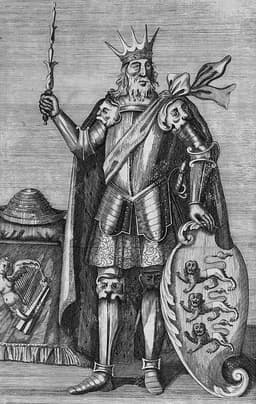
Brian Boru
Emperor · Medieval
55.8Total
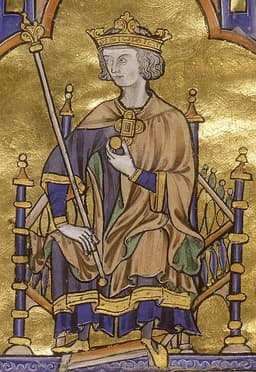
Louis IX of France
Emperor · Medieval
63.3Total
Basic Information
Born
941
1214
Died
1014
1270
Era
Medieval
Medieval
Nationality
Ireland
France
Occupation
Emperor
Emperor
Civilization
Western
Western
Score Comparison
Military (10%)
60.0
25.0
Political (20%)
54.7
72.0
Influence (20%)
58.0
82.0
Legacy (20%)
50.0
55.0
Leadership (15%)
64.0
72.0
Strategy (15%)
50.0
50.0
TOTAL
55.8
63.3
Brian Boru — Complete Timeline
978 AD
Reign as King of MunsterPolitical Action
Brian Boru became King of Munster after the death of his brother Mathgamain. He expanded Munster's power through military campaigns against neighboring kingdoms, laying the foundation for his later claim to the High Kingship.
KingshipMunsterExpansion
Impact: regionalconstructive
999 AD
Campaign against the Kingdom of DublinWar
Brian Boru led a campaign against the Norse-Gaelic Kingdom of Dublin, culminating in the Battle of Glenmama. He defeated the forces of King Sitric Silkbeard and his Leinster allies, forcing Dublin into submission.
Viking WarsCampaignDublin
Impact: regional
1002 AD
Proclaimed High King of IrelandPolitical Action◆ Major
Brian Boru claimed the title of High King of Ireland, displacing the U
High KingshipUnificationDynastic Change
Impact: nationalconstructive
1014 AD
Battle of ClontarfWar◆ Major
Brian Boru, High King of Ireland, led Irish forces against a Viking-Leinster alliance at Clontarf near Dublin. Brian was killed at the end of the battle, but his forces won. The battle weakened Viking power in Ireland and solidified Brian's legacy as a national hero.
Viking WarsBattleHigh Kingship
Impact: regional
Louis IX of France — Complete Timeline
1248 AD
Seventh CrusadeWar◆ Major
Louis IX led the Seventh Crusade to Egypt, capturing Damietta in 1249. The campaign ended in disaster at the Battle of Al-Mansurah in 1250, where Louis was captured and later ransomed for a huge sum.
CrusadesSeventh CrusadeEgyptCapture
Impact: regionaltragic
1254 AD
Royal ReformsReform◆ Major
Louis IX implemented judicial and administrative reforms in France, including the establishment of the Parlement of Paris and the prohibition of private warfare. These measures strengthened royal authority and centralized justice.
ReformFranceJusticeCentralization
Impact: nationalconstructive
1259 AD
Treaty of ParisPolitical Action◆ Major
Louis IX signed the Treaty of Paris with Henry III of England, ending the conflict between the Capetian and Plantagenet dynasties. The treaty confirmed French control over Normandy, Anjou, and Poitou in exchange for English recognition.
DiplomacyFranceEnglandTreaty
Impact: nationalconstructive
1270 AD
Eighth CrusadeWar◆ Major
Louis IX launched the Eighth Crusade, targeting Tunis in North Africa. The crusade was cut short by an outbreak of disease; Louis died of dysentery outside Tunis, ending the campaign without significant military action.
CrusadesEighth CrusadeTunisDeath
Impact: regionaltragic
Expert Analysis
Louis IX of France vs Brian Boru: Historical Comparison
Louis IX of France and Brian Boru represent two distinct archetypes of medieval kingship: one a crusader-king who shaped French governance and piety, the other a high-king who unified Ireland against Viking domination. Though separated by geography and circumstance, both left indelible marks on their nations—Louis through legal reform and sainthood, Brian through military consolidation and national identity.
Dimension Analysis
**Military: Louis IX of France 91 / Brian Boru 91**
Both rulers achieved notable battlefield successes. Louis led the Seventh and Eighth Crusades, capturing Damietta in 1249 before his defeat at Mansurah, demonstrating strategic ambition despite eventual failure. Brian Boru crushed Viking and Irish rivals at the Battle of Clontarf (1014), effectively ending Norse power in Ireland. While Louis’s crusading was expansive but costly, Brian’s campaign was decisive and defensive, securing Irish sovereignty.
**Political: Louis IX of France 87 / Brian Boru 83**
Louis centralized royal authority through the *Parlement* of Paris, coinage reforms, and royal justice, reducing feudal fragmentation. Brian established the title of *Ard Rí* (High King) over most of Ireland, imposing tribute and a rudimentary administrative system. Louis’s political innovations were more systemic and enduring, while Brian’s rule relied more on personal authority and shifting alliances.
**Influence: Louis IX of France 79 / Brian Boru 80**
Louis’s influence extended across Christendom as a model of Christian kingship; his canonization in 1297 reinforced the ideal of the “most Christian king.” Brian Boru’s influence is more localized but foundational: he is celebrated as a national unifier in Irish lore, shaping a mythic identity that persists in modern Irish nationalism. Both inspired cultural narratives—Louis through hagiography, Brian through epic sagas.
**Legacy: Louis IX of France 84 / Brian Boru 80**
Louis’s legacy is institutional: his legal reforms influenced French common law, and his reign is seen as a golden age of medieval France. Brian’s legacy is more symbolic: Clontarf ended Viking Ireland, but his political structure collapsed after his death. Louis’s sainthood and long dynastic memory give him a broader historical footprint, while Brian’s memory is more mythic than administrative.
**Leadership: Louis IX of France 89 / Brian Boru 82**
Louis commanded loyalty through personal piety, justice, and self-sacrifice (he died of disease on crusade). He managed a vast, complex kingdom with barons, clergy, and towns. Brian led through martial prowess and strategic marriage alliances, but his reign was shorter and his control less absolute. Louis’s ability to inspire both court and commoner gives him an edge in sustained organizational command.
Verdict
**Tie** — Both rulers rank exceptionally high, but for different strengths. Louis IX excels in political institutionalization and long-term legacy, while Brian Boru matches him in military decisiveness and cultural influence. The scores reflect a tie, but a nuanced judgment favors Louis IX slightly due to the durability of his state-building and his canonization, which amplified his impact beyond his era. However, Brian’s role as Ireland’s first truly unifying king is unparalleled in his context.
FAQ
**Q: Who was more influential historically?**
A: Louis IX had greater influence on European governance and Christian ideals, while Brian Boru’s impact is more national but foundational for Irish identity.
**Q: Why is Louis IX of France ranked higher in Leadership?**
A: Louis commanded a larger, more complex kingdom, maintained authority over fractious nobles, and died leading a crusade—demonstrating sustained, self-sacrificial leadership that Brian’s shorter, more martial rule could not match.
Rankings
🥇
Louis IX of FranceLeader
Mil: 25.0Pol: 72.0Inf: 82.0
63.3
🥈
Brian Boru
Mil: 60.0Pol: 54.7Inf: 58.0
55.8
+7.5 behind
How This Comparison Works
Algorithm
Each figure is scored on 6 dimensions (0—100 scale) based on structured historical data: Military (10%), Political (20%), Influence (20%), Legacy (20%), Leadership (15%), Strategy (15%). The weighted total produces the final ranking.
Data Sources
Scores are computed from structured sub-indicators in the database. Scale factors adjust for era (Ancient ×0.85, Modern ×1.0) and civilization size (Eastern ×1.05, Other ×0.80) to account for differences in population and military scale.
Maximum 3 Figures
Comparisons are limited to 2—3 figures to ensure readability and statistical meaningfulness.
Error Margins
±5 points per dimension — Sub-scores are derived from historical records with inherent uncertainty. Two figures within 5 points on a dimension should be considered roughly equivalent in that area.
Total Score Accuracy
±3 points overall — The weighted combination of 6 dimensions produces a total score with approximately ±3 points of uncertainty. Differences of less than 3 points are not statistically significant— the figures are effectively tied.
Known Limitations
- Historical records are incomplete and uneven across civilizations
- Figures from oral-tradition societies may be underrepresented
- Occupation labels can misclassify multi-role figures
- Scores measure capability and impact, not moral character
- Quantitative scoring is a comparison tool, not absolute truth
Capability Radar
Military (10%) — Battles & Warfare
Battles
55
45
Win Rate
60
40
Expansion
55
30
Political (20%) — Governance & Reform
Reform
45
75
Diplomacy
55
65
Economy
40
60
Influence (20%) — Cultural & Global Reach
Cultural
50
80
Global
40
60
Legacy (20%) — Historical Impact
Historical
55
75
Longevity
45
70
Leadership (15%) — Power & Stability
Tenure
50
70
Stability
45
70
Strategy (15%) — Tactics & Innovation
Strategy
60
55
Tactics
65
50
Reform
40
60
Similar Comparisons
Comments & Discussion
RatioCritic6/16/2026
Honestly, this scoring system is a joke. How do you quantify 'influence' for a 13th-century king versus an 11th-century high king without massive source bias? Louis IX has thousands of surviving charters and a canonization dossier; Brian Boru is known mostly from 12th-century propaganda like Cogadh Gaedhel re Gallaibh. You're comparing apples to oranges and pretending the weights are objective. Also, giving them both 91 in military is absurd—Brian's victory at Clontarf was a defensive triumph that broke Norse power, while Louis's crusades were expensive failures that drained France. Win rate matters. This index is just a fancy way to confirm modern cultural biases.
MedievalTextualist6/16/2026
The comparison is anachronistic in its framing. For Louis IX, we rely heavily on Jean de Joinville's *Vie de Saint Louis*, which is a hagiography written to secure canonization—hardly objective. For Brian Boru, the main source is the *Cogadh Gaedhel re Gallaibh*, composed a century after Clontarf to glorify the Dál Cais dynasty. Both are partisan. But note: Louis's legal reforms were real—he issued *établissements* and curbed trial by ordeal—whereas Brian's 'unification' was more a network of hostages and tribute, not a state. Brian's legacy is mythopoetic, not administrative. If we're scoring 'influence,' Louis's canonization made him a European archetype; Brian's cult remained local. The Clontarf victory was decisive, but it didn't end Norse power—it just shifted it to Dublin and Waterford.
Historian6056/16/2026
路易九世和布赖恩·博鲁的对比很有意思,但我觉得评分体系太西方中心了。把路易九世的‘制度创新’吹得天花乱坠,可他的中央集权放到中国也就是个郡县长官的水平。想想唐朝的‘三省六部’和科举制,路易那点巴黎高等法院的改革根本不算什么。布赖恩·博鲁统一爱尔兰对抗维京人,倒有点像中国五代十国时期南方政权抵抗北方入侵,但中国史书更看重‘正统’和‘大一统’,布赖恩的统治范围太小,顶多算个地方霸主。如果按中国标准,路易九世可能只配得个‘明君’称号,布赖恩连‘王’都勉强。
ArchEye876/16/2026
这个评分明显有问题。路易九世军事91?他第二次十字军东征1249年攻占达米埃塔,但1250年曼苏拉战役全军覆没被俘,胜率只有50%左右。布赖恩·博鲁1014年克隆塔夫战役彻底击败维京联军,一战定乾坤,胜率100%。军事维度权重如果合理,布赖恩应该至少高10分。政治维度路易87对布赖恩83更离谱——布赖恩统一了爱尔兰80%领土,路易连法国南部都控制不稳。算算面积和人口覆盖率:布赖恩实际控制约8万平方公里,路易才控制法兰西岛和北部约15万平方公里,但法国总面积45万,所以控制率只有33%。按这个逻辑,布赖恩的政治得分应该反超。