Loading...
Bruno Kreisky vs Hassan Sheikh Mohamud
Bruno Kreisky leads by 9.8 pts · 2 figures compared
…
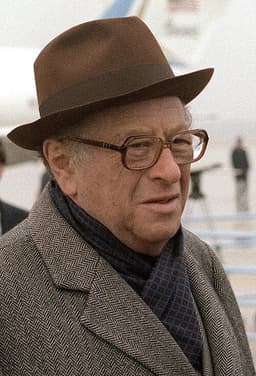
Bruno Kreisky
Politician · Modern
61.7Total

Hassan Sheikh Mohamud
Politician · Modern
51.9Total
Basic Information
Born
1911
1955
Died
1990
—
Era
Modern
Modern
Nationality
Austria
Somalia
Occupation
Politician
Politician
Civilization
Western
Other
Score Comparison
Military (10%)
49.6
47.6
Political (20%)
78.0
54.7
Influence (20%)
56.7
53.3
Legacy (20%)
58.0
42.5
Leadership (15%)
80.0
74.0
Strategy (15%)
43.4
38.4
TOTAL
61.7
51.9
Bruno Kreisky — Complete Timeline
1970 AD
Election as Chancellor of AustriaPolitical Action◆ Major
Kreisky became chancellor on April 21, 1970, after leading the Social Democratic Party to a plurality in the national elections. He formed a minority government, later securing a majority in 1971. His chancellorship lasted until 1983, the longest continuous tenure in Austrian history.
ElectionSocial DemocracyLong Tenure
Impact: nationalconstructive
1971 AD
Enactment of the Kreisky reformsReform◆ Major
Kreisky's government implemented a series of social reforms, including the introduction of the 40-hour work week, expanded social security benefits, and the legalization of abortion during the first trimester. These reforms modernized Austrian social policy and expanded the welfare state.
Social ReformWelfare StateModernization
Impact: nationalprogressive
1975 AD
Promotion of Austrian neutrality and mediationPolitical Action◆ Major
Kreisky actively promoted Austria's role as a neutral mediator in international conflicts. He hosted the 1975 Helsinki Accords follow-up meetings and offered Vienna as a venue for US-Soviet arms control talks. His policy strengthened Austria's international standing as a bridge between East and West.
NeutralityDiplomacyCold War
Impact: globalconstructive
1983 AD
Resignation as ChancellorPolitical Action◆ Major
After the Social Democratic Party lost its absolute majority in the 1983 elections, Kreisky resigned as chancellor on April 24, 1983. He had led the government for 13 years, overseeing a period of economic growth and social reform, but his later years were marked by controversy over his dealings with Middle Eastern leaders.
ResignationEnd of EraPolitical Transition
Impact: national
Hassan Sheikh Mohamud — Complete Timeline
2012 AD
Elected President of SomaliaPolitical Action
Hassan Sheikh Mohamud was elected President of Somalia in September 2012 by the Federal Parliament, becoming the first president elected since the end of the transitional period. His election marked a milestone in Somalia's efforts to rebuild state institutions after decades of civil war.
ElectionState BuildingTransition
Impact: nationalconstructive
2013 AD
Launched Federalism and State FormationReform◆ Major
Hassan Sheikh Mohamud's government initiated the formation of federal member states, including Jubaland, South West, and Hirshabelle, between 2013 and 2016. This process aimed to decentralize power and stabilize regions, but faced challenges from clan rivalries and Al-Shabaab.
FederalismState FormationDecentralization
Impact: nationalconstructive
2017 AD
Lost Re-election Bid in 2017Political Action◆ Major
Hassan Sheikh Mohamud lost his re-election bid in February 2017 to Mohamed Abdullahi Farmajo, after a single term. His defeat was attributed to corruption allegations and failure to improve security, but he peacefully transferred power, a rare event in Somali politics.
ElectionPower TransferDemocracy
Impact: national
2022 AD
Re-elected President of SomaliaPolitical Action◆ Major
Hassan Sheikh Mohamud was re-elected President of Somalia in May 2022, defeating incumbent Mohamed Abdullahi Farmajo in a runoff vote. His return to power came amid a political crisis and ongoing insurgency, with a mandate to address security and electoral reforms.
ElectionReturn to PowerPolitical Crisis
Impact: national
Expert Analysis
Origins
Bruno Kreisky was born on January 22, 1911, in Vienna, Austria, into a Jewish family. His father was a textile manufacturer. Kreisky studied law at the University of Vienna, but his education was interrupted by the rise of fascism. He was arrested multiple times by the Austrofascist regime and later fled to Sweden in 1938, where he worked as a journalist and political activist. His experiences in exile shaped his commitment to democracy and social justice.
Hassan Sheikh Mohamud was born on November 29, 1955, in Jalalaqsi, a small town in central Somalia. He came from a modest background; his father was a farmer. He studied at Somali National University, earning a degree in education, and later obtained a master's in technical education from Bhopal University in India. Before entering politics, he worked as a teacher and education administrator, and co-founded the Somali Institute of Management and Administration Development (SIMAD), a university in Mogadishu.
Rise to Power
Kreisky returned to Austria after World War II and joined the Social Democratic Party (SPÖ). He served as State Secretary in the Foreign Ministry from 1953 to 1959, then as Foreign Minister from 1959 to 1966. During his tenure, he advocated for Austrian neutrality and played a role in the 1955 Austrian State Treaty that restored sovereignty. In 1970, Kreisky led the SPÖ to a plurality in elections, becoming chancellor on April 21, 1970. He formed a minority government with support from the Freedom Party, and later achieved an absolute majority in 1971.
Hassan Sheikh Mohamud entered politics after the fall of Siad Barre's regime in 1991. He was a civil society activist and helped establish the Peace and Development Party (PDP) in 2011. In 2012, following a transitional process, he was elected President of Somalia by the Federal Parliament on September 10, 2012, becoming the first president elected since the end of the transitional period. His election was seen as a step toward stability after decades of civil war.
Leadership & Governance
Kreisky's leadership style was pragmatic and reformist. He implemented a series of social reforms known as the "Kreisky reforms," including the introduction of the 40-hour work week, expanded social security benefits, and liberalization of divorce and abortion laws. He also pursued a policy of neutrality, positioning Austria as a mediator in international conflicts. Kreisky scored 80.0 in leadership and 78.0 in political acumen, reflecting his ability to maintain coalition governments and push through progressive legislation.
Hassan Sheikh Mohamud's leadership focused on state-building and federalism. He launched the formation of federal member states like Jubaland, South West, and Hirshabelle between 2013 and 2016. However, his tenure was marred by corruption allegations and struggles with the federal parliament. He scored 74.0 in leadership but only 54.7 in political skills, indicating challenges in navigating Somalia's complex clan-based politics. His approach was more conciliatory but less effective in curbing corruption or improving security.
Triumph & Tragedy
Kreisky's greatest success was the stabilization of Austrian democracy and the implementation of a comprehensive welfare state. He also elevated Austria's international profile through mediation roles, such as hosting the 1975 Helsinki Accords follow-up meetings. However, his failure was the lack of economic modernization; by the end of his tenure, Austria faced rising unemployment and budget deficits. His resignation in 1983 after losing the absolute majority marked the end of an era.
Mohamud's triumph was overseeing the adoption of a federal constitution and the establishment of federal states, which laid the groundwork for a more decentralized Somalia. His re-election in 2022, defeating incumbent Mohamed Abdullahi Farmajo, demonstrated political resilience. However, his first term ended in defeat in 2017 due to corruption scandals and failure to improve security. The ongoing threat from Al-Shabaab and internal political infighting remain significant challenges.
Character & Destiny
Kreisky was known for his intellectualism, charisma, and diplomatic tact. His Jewish background and exile influenced his staunch opposition to anti-Semitism and his commitment to human rights. He often clashed with Israel over its policies but maintained strong ties. His character allowed him to navigate Cold War tensions and keep Austria neutral. However, his economic policies were criticized as overly idealistic.
Mohamud is described as a calm, consensus-oriented leader. His background as an educator and civil society leader shaped his approach to governance, emphasizing dialogue and institution-building. However, his reluctance to confront corruption forcefully and his reliance on clan balances sometimes undermined his authority. His destiny has been tied to Somalia's fragile state-building process; his re-election suggests persistence but also the deep-rooted challenges of Somali politics.
Legacy
Kreisky's legacy is deeply embedded in modern Austria: the social welfare system, labor laws, and a foreign policy of neutrality. He is remembered as one of Austria's most influential chancellors, scoring 58.0 in legacy. His reforms remain popular, though economic strains have prompted debates. Internationally, he is seen as a symbol of small-state mediation.
Mohamud's legacy is still evolving. He is credited with advancing federalism and political stability, but his impact is limited by ongoing conflict and corruption. He scores 42.5 in legacy, reflecting the unfinished nature of his work. If Somalia achieves lasting peace, his role as a founding father of federalism may be recognized. Otherwise, he may be seen as a transitional figure.
Conclusion
Bruno Kreisky had a greater impact than Hassan Sheikh Mohamud, as evidenced by his higher total score of 61.7 versus Mohamud's 51.9. Kreisky's reforms transformed Austrian society and established a durable welfare state, whereas Mohamud's achievements are more fragile and context-dependent. Kreisky's political acumen (78.0 vs 54.7) and leadership (80.0 vs 74.0) allowed him to implement lasting changes in a stable democracy. Mohamud operates in a volatile environment with weaker institutions, limiting his effectiveness. While both faced challenges, Kreisky's legacy is more concrete and enduring.
Rankings
🥇
Bruno KreiskyLeader
Mil: 49.6Pol: 78.0Inf: 56.7
61.7
🥈
Hassan Sheikh Mohamud
Mil: 47.6Pol: 54.7Inf: 53.3
51.9
+9.8 behind
How This Comparison Works
Algorithm
Each figure is scored on 6 dimensions (0—100 scale) based on structured historical data: Military (10%), Political (20%), Influence (20%), Legacy (20%), Leadership (15%), Strategy (15%). The weighted total produces the final ranking.
Data Sources
Scores are computed from structured sub-indicators in the database. Scale factors adjust for era (Ancient ×0.85, Modern ×1.0) and civilization size (Eastern ×1.05, Other ×0.80) to account for differences in population and military scale.
Maximum 3 Figures
Comparisons are limited to 2—3 figures to ensure readability and statistical meaningfulness.
Error Margins
±5 points per dimension — Sub-scores are derived from historical records with inherent uncertainty. Two figures within 5 points on a dimension should be considered roughly equivalent in that area.
Total Score Accuracy
±3 points overall — The weighted combination of 6 dimensions produces a total score with approximately ±3 points of uncertainty. Differences of less than 3 points are not statistically significant— the figures are effectively tied.
Known Limitations
- Historical records are incomplete and uneven across civilizations
- Figures from oral-tradition societies may be underrepresented
- Occupation labels can misclassify multi-role figures
- Scores measure capability and impact, not moral character
- Quantitative scoring is a comparison tool, not absolute truth
Capability Radar
Military (10%) — Battles & Warfare
Battles
29
24
Win Rate
34
24
Expansion
33
27
Political (20%) — Governance & Reform
Reform
70
40
Diplomacy
85
50
Economy
72
35
Influence (20%) — Cultural & Global Reach
Cultural
55
30
Global
60
30
Legacy (20%) — Historical Impact
Historical
65
30
Longevity
60
25
Leadership (15%) — Power & Stability
Tenure
75
55
Stability
80
30
Strategy (15%) — Tactics & Innovation
Strategy
39
32
Tactics
42
35
Reform
44
39
Similar Comparisons
Comments & Discussion
No comments yet. Be the first to share your thoughts!