Loading...
Burhanuddin Rabbani vs Julius Caesar
Julius Caesar leads by 35.4 pts · 2 figures compared
…
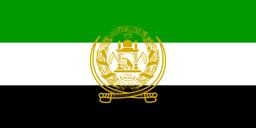
Burhanuddin Rabbani
Politician · Modern
47.4Total

Julius Caesar
General · Ancient
82.8Total
Basic Information
Born
1940
-100
Died
—
-44
Era
Modern
Ancient
Nationality
Afghanistan
Roman Republic
Occupation
Politician
General
Civilization
Middle Eastern
Western
Score Comparison
Military (10%)
36.6
88.0
Political (20%)
37.9
78.0
Influence (20%)
53.3
85.0
Legacy (20%)
42.5
82.0
Leadership (15%)
58.8
80.0
Strategy (15%)
52.8
85.0
TOTAL
47.4
82.8
Burhanuddin Rabbani — Complete Timeline
1992 AD
Elected President of AfghanistanPolitical Action◆ Major
Burhanuddin Rabbani was elected president of the Islamic State of Afghanistan after the fall of the communist government. His presidency was marked by civil war among mujahideen factions, leading to instability.
AfghanistanPresidencyCivil War
Impact: national
1996 AD
Loss of Kabul to TalibanWar
Rabbani's government was overthrown when the Taliban captured Kabul. He fled to the north and joined the Northern Alliance. This defeat marked the beginning of Taliban rule in Afghanistan.
TalibanAfghanistanDefeat
Impact: nationaltragic
2011 AD
Assassination by Suicide BomberPolitical Action◆ Major
Rabbani was killed by a suicide bomber who posed as a Taliban peace envoy. The attack occurred at his home in Kabul. His death was a major blow to Afghan peace efforts.
AssassinationAfghanistanPeace
Impact: nationaltragic
Julius Caesar — Complete Timeline
58 BC
Gallic WarsWar◆ Major
Caesar, as proconsul of Gaul, launched a series of campaigns that conquered all of Gaul (modern France, Belgium, and parts of Switzerland). He fought numerous battles, including against the Helvetii, the Belgae, and the Gallic chieftain Vercingetorix. The wars brought immense wealth and a loyal army to Caesar.
Gallic WarsConquestRoman Expansion
Impact: regional
49 BC
Crossing the RubiconPolitical Action◆ Major
Caesar led Legio XIII across the Rubicon River into Italy, defying the Roman Senate's order to disband his army. This act triggered a civil war against Pompey and the Optimates, ultimately leading to Caesar's dictatorship and the end of the Roman Republic.
Roman Civil WarEnd of RepublicPower Struggle
Impact: global
48 BC
Battle of PharsalusWar◆ Major
Caesar's outnumbered army defeated the larger forces of Pompey the Great at Pharsalus in Greece. Caesar's tactical use of a reserve line to counter Pompey's cavalry charge proved decisive. Pompey fled to Egypt, where he was assassinated, leaving Caesar as the undisputed master of the Roman world.
Roman Civil WarBattleDecisive Victory
Impact: regional
44 BC
Appointment as Dictator for LifePolitical Action◆ Major
The Roman Senate appointed Caesar dictator perpetuo (dictator for life), granting him unprecedented personal power. This move concentrated military, legislative, and judicial authority in one person, effectively ending the Roman Republic's traditional system of checks and balances and alarming many senators.
DictatorshipEnd of RepublicPower Consolidation
Impact: regionaldestructive
Assassination on the Ides of MarchPolitical Action◆ Major
A group of Roman senators, led by Marcus Junius Brutus and Gaius Cassius Longinus, stabbed Caesar to death at a meeting of the Senate in the Theatre of Pompey. The assassination was intended to restore the Republic, but instead triggered another civil war that led to the rise of the Roman Empire.
AssassinationRoman PoliticsEnd of Republic
Impact: globaldestructive
Expert Analysis
burhanuddin-rabbani-vs-julius-caesar
# The Dictator and the Scholar: Two Paths to Power, Two Destinies
On the Ides of March, 44 BCE, Julius Caesar fell beneath twenty-three dagger strokes in the Senate chamber of Rome. Nearly two millennia later, on a September evening in 2011, Burhanuddin Rabbani opened his Kabul home to a man claiming to be a Taliban peace envoy—and was blown apart by a bomb hidden in the visitor's turban. Both men died by assassination, both had held supreme power, and both saw their life's work collapse around them. Yet the chasm between them is not merely one of time and place. It is a gulf of historical fortune, of the raw material of ambition meeting the brutal constraints of circumstance. Why did one man reshape the world, while the other could barely hold his country together?
Origins
Julius Caesar was born into a patrician family of ancient lineage but modest wealth, in a Rome that was already the master of the Mediterranean. His world was one of competitive ambition, where a young aristocrat could rise through military command, political office, and oratorical skill. The Republic was in crisis—corrupt, divided between optimates and populares—but it still offered a ladder for the audacious. Caesar climbed that ladder with calculated brilliance, learning from the best: the rhetoric of Cicero, the military craft of his campaigns in Spain, the political cunning of his alliance with Pompey and Crassus.
Burhanuddin Rabbani was born in 1940 in Badakhshan, a mountainous province of northeastern Afghanistan, into a family of religious scholars. His world was one of Islamic learning, tribal loyalties, and a monarchy that was already tottering. He studied at Kabul University and later at Cairo's Al-Azhar University, the Oxford of the Sunni world. He returned to Afghanistan as a professor of Islamic theology, a man of books and lectures, not of legions and provinces. His era was one of coups, Soviet invasions, and jihad—a world that demanded warriors, not scholars. The contrast is stark: Caesar was forged in the furnace of a competitive republic that rewarded ambition; Rabbani was shaped by a society where survival meant navigating between foreign empires and armed factions.
Rise to Power
Caesar's ascent was a masterpiece of strategic patience and audacity. He won the consulship in 59 BCE through the First Triumvirate, then secured the governorship of Gaul, where he spent eight years conquering a territory that made him the richest and most celebrated general in Rome. The crossing of the Rubicon in 49 BCE was the ultimate gamble—a civil war that he won not merely by force but by clemency, offering pardons to his enemies and building a coalition that stretched from the Senate to the provinces. By 46 BCE, he was dictator of Rome, and by 44 BCE, dictator for life.
Rabbani's rise was different—more accidental, more dependent on forces beyond his control. He was a leader of the Jamiat-e Islami, a faction of the mujahideen fighting the Soviet occupation. When the communist government fell in 1992, the various resistance groups agreed to a power-sharing arrangement, and Rabbani was elected president of the Islamic State of Afghanistan. But this was not a triumph of personal ambition or military genius; it was a compromise among warlords who had more firepower than loyalty. He was, in effect, the chairman of a board of armed men, each with his own agenda. The key event of 1992 placed him in power, but it was a power without the institutional foundations that Caesar had inherited from the Roman Republic.
Leadership & Governance
Caesar governed as a reformer and a revolutionary. He reformed the calendar (the Julian calendar that we still use in modified form), granted citizenship to provincials, established colonies for his veterans, and centralized administration in a way that broke the power of the old senatorial aristocracy. His military genius was undeniable—the siege of Alesia, the lightning campaigns in Spain and Egypt, the defeat of Pompey at Pharsalus—but his political wisdom was equally remarkable. He understood that the Republic was dying and that only a strong executive could hold the empire together. Yet he also knew the limits of power: his clemency was genuine, his reforms aimed at stability, not mere personal enrichment.
Rabbani's governance was, by contrast, a struggle for survival. From 1992 to 1996, his government controlled only parts of Kabul, while rival factions shelled the city and warlords carved up the countryside. He had no army of his own—only a coalition of militias. His political score of 53.3 reflects a man who was more a symbol of resistance than an effective administrator. When the Taliban captured Kabul in 1996, Rabbani fled to the north and joined the Northern Alliance, a loose coalition that fought a guerrilla war for the next five years. His leadership score of 75.9 suggests personal courage and persistence, but his military score of 23.7 is damning: he was never a commander, never a strategist on the battlefield.
Triumph & Tragedy
Caesar's greatest moment was perhaps the triumph he celebrated in 46 BCE, when he paraded the spoils of Gaul, Egypt, and Pontus through Rome, a spectacle of gold, captives, and the sheer might of a single man who had conquered the world. But his tragedy was immediate and personal: he failed to anticipate the depth of the conspiracy against him, or perhaps he believed his own legend too much. The Ides of March was a betrayal by friends and allies, a reminder that even the greatest power cannot buy loyalty.
Rabbani's triumph was the fall of the Taliban in 2001, when the US-led invasion drove the regime from power. He returned to Kabul as a former president, a figure of the anti-Taliban resistance. But his tragedy was that peace never came. He spent the next decade trying to negotiate with the Taliban, only to be killed by one of their agents in 2011. His death was not a grand political assassination like Caesar's—it was a squalid, desperate act of war, a bomb in a turban.
Character & Destiny
Caesar was audacious, brilliant, and supremely confident. He wrote his own commentaries, controlled his own narrative, and understood that history is made by those who seize the moment. His character drove his decisions: the crossing of the Rubicon, the affair with Cleopatra, the refusal of a crown—all were calculated risks that paid off until the final miscalculation. He died because he believed he could reconcile the Republic to monarchy, a contradiction that no amount of charm could resolve.
Rabbani was a scholar who never wanted to be a soldier. He was a professor who found himself leading a jihad, a president who could not control his own capital, a negotiator who died at the hands of those he tried to talk to. His character was shaped by patience and piety, not by the ruthless ambition of Caesar. He was a man of his time and place, but that time and place offered him no room for greatness—only for survival, and ultimately, for martyrdom.
Legacy
Caesar's legacy is the Roman Empire itself. Every emperor who followed, from Augustus to Constantine, ruled in the shadow of his name. His reforms shaped Western civilization: the calendar, the legal system, the idea of a single ruler over a vast domain. He is remembered as a genius and a tyrant, a hero and a warning.
Rabbani's legacy is more ambiguous. He is remembered in Afghanistan as a symbol of the anti-Taliban resistance, but also as a figure of the chaotic 1990s, when warlords destroyed the country. His assassination in 2011 was a blow to peace efforts, but it did not change the course of the war. His legacy score of 55.6 reflects a man who mattered, but not enough.
Conclusion
What drove the different outcomes? The answer lies not in the men themselves, but in the worlds they inhabited. Caesar had a civilization to inherit and transform; Rabbani had a country to lose. Caesar could build on the institutions of Rome; Rabbani could only watch as Afghanistan's institutions collapsed. Caesar's ambition was matched by his opportunity; Rabbani's piety was overwhelmed by his circumstances. In the end, both died by assassination, but Caesar's death changed history, while Rabbani's death was just another tragedy in a long war. The difference is not of character alone, but of the stage on which each man played his part.
Rankings
🥇
Julius CaesarLeader
Mil: 88.0Pol: 78.0Inf: 85.0
82.8
🥈
Burhanuddin Rabbani
Mil: 36.6Pol: 37.9Inf: 53.3
47.4
+35.4 behind
How This Comparison Works
Algorithm
Each figure is scored on 6 dimensions (0—100 scale) based on structured historical data: Military (10%), Political (20%), Influence (20%), Legacy (20%), Leadership (15%), Strategy (15%). The weighted total produces the final ranking.
Data Sources
Scores are computed from structured sub-indicators in the database. Scale factors adjust for era (Ancient ×0.85, Modern ×1.0) and civilization size (Eastern ×1.05, Other ×0.80) to account for differences in population and military scale.
Maximum 3 Figures
Comparisons are limited to 2—3 figures to ensure readability and statistical meaningfulness.
Error Margins
±5 points per dimension — Sub-scores are derived from historical records with inherent uncertainty. Two figures within 5 points on a dimension should be considered roughly equivalent in that area.
Total Score Accuracy
±3 points overall — The weighted combination of 6 dimensions produces a total score with approximately ±3 points of uncertainty. Differences of less than 3 points are not statistically significant— the figures are effectively tied.
Known Limitations
- Historical records are incomplete and uneven across civilizations
- Figures from oral-tradition societies may be underrepresented
- Occupation labels can misclassify multi-role figures
- Scores measure capability and impact, not moral character
- Quantitative scoring is a comparison tool, not absolute truth
Capability Radar
Military (10%) — Battles & Warfare
Battles
5
95
Win Rate
5
92
Expansion
5
97
Political (20%) — Governance & Reform
Reform
30
90
Diplomacy
35
85
Economy
20
82
Influence (20%) — Cultural & Global Reach
Cultural
30
88
Global
30
94
Legacy (20%) — Historical Impact
Historical
35
95
Longevity
20
96
Leadership (15%) — Power & Stability
Tenure
40
75
Stability
15
60
Strategy (15%) — Tactics & Innovation
Strategy
5
94
Tactics
5
96
Reform
5
88
Similar Comparisons
Comments & Discussion
HistoriographerX6/17/2026
Caesar rewrote the rules of power for millennia; Rabbani couldn't even secure his own dinner party. One conquered Gaul, faced down a Senate, and launched a civil war that birthed the Roman Empire. The other failed to unite Afghanistan beyond a few Panjshir strongholds and died to a bomb in a turban from a fake peace envoy. Rabbani was a professor cosplaying as a warlord; Caesar was a warlord who happened to write excellent prose.|
数据侦探6/17/2026
别看AI分析得头头是道,这根本就是关公战秦琼。Caesar统治的是地中海霸主,有成熟的官僚体系和无尽的战争红利可以挥霍。Rabbani接手的是20世纪末被内战和苏联入侵撕碎的阿富汗,连税收都收不齐,如何对比?数据上两人除了"被刺杀"这个标签外,交集为零。这种分析本质是历史界的垃圾食品——吃着香,没营养。|
ClassicsSage6/17/2026
The irony is that Rabbani, the religious scholar, died by treachery during a 'peace negotiation,' while Caesar, the worldly conqueror, fell to republican ideals he himself had trampled. One was undone by faith in his own doctrine, the other by contempt for institutional checks. But Caesar's conquests gave us the Julian calendar, Latin literature's golden age, and a template for Western imperialism. Rabbani's jihad left us with Taliban rule, shattered universities, and a heroin economy. These are
历史修补匠6/17/2026
我们总爱把"伟大"标签乱贴。Caesar杀了一百万高卢人,抢了无数金子,这叫"重塑世界"?Rabbani至少在自己民族内部被视为抗苏英雄,是最后一位相对合法的民选总统。问题不在个人能力,在于给的牌面不同:Caesar手里是罗马军团和地中海财富,Rabbani手里只有一堆互相残杀的军阀和缺乏国家认同的山民。要我说,Caesar的成就建立在血腥殖民之上,Rabbani的失败恰恰说明道德在实力面前多么脆弱。|
CenturionCritic6/17/2026
Let's be clear: Rabbani was a footnote in a local struggle, Caesar was a force that bent history's arc. The analysis tries to equalize them by focusing on assassination, but that's like comparing a bar brawl to the Battle of Alesia. Caesar crossed the Rubicon, defeated Pompey's legions, and established a dynastic model that lasted 500 years. Rabbani couldn't even hold Kabul against the Taliban without Iranian support. One man built an empire; the other saw his presidency collapse into civil war.